Which Pizza Stone Material Should You Choose?
The best pizza stone material depends on your priority: choose cordierite for a durable porous stone, ceramic for traditional baking, or steel for faster heat transfer and strong durability.
On this page (12 sections)
- What is a pizza stone made out of?
- Which pizza stone material heats fastest?
- Is cordierite the best pizza stone material for grills?
- How does ceramic compare with cordierite?
- Which material is most durable?
- What pizza stone material is easiest to maintain?
- Does thickness matter more than material?
- Should you choose round or rectangular?
- Which pizza stone material should beginners choose?
- How should you match material to your cooking style?
- More guides on this topic
- Is the best pizza stone material worth the trade-off?
The best pizza stone material depends on what you value most. Choose cordierite for a durable porous stone, ceramic for traditional baking, or steel for faster heat transfer and strong durability.
The right choice also depends on your oven, grill, pizza size, and willingness to manage maintenance. A small home oven may suit a lighter stone, while a grill setup may need a surface made for outdoor heat.
If you are choosing a portable pizza oven, compare Gozney Roccbox and Tread. That comparison helps if you want a self contained cooker rather than a stone for an oven you already own.
To compare a steel surface with a dedicated oven, read pizza steel vs pizza oven. Steel changes the cooking surface, while a dedicated oven changes the whole setup, fuel, and space needed.
A stone needs gradual heating and cooling, while steel needs seasoning and rust prevention. Think about which routine you will actually follow after each bake, not only which surface sounds best on paper.
If you are still deciding between equipment types, compare an outdoor pizza oven with a stone setup before you buy. For a gas-fired option, see our guide to a propane burner for a pizza oven.
What is a pizza stone made out of?
A pizza stone is usually made from ceramic, cordierite, or another porous baking material. These materials absorb and store heat, then transfer it into the dough as the pizza cooks.
That stored heat is the main reason a stone works. A cold oven heats from the air around the pizza, while a hot stone brings steady heat from below and helps the base set before the toppings overcook.
Cordierite is a type of ceramic material designed for high-heat cooking. It is commonly used for oven and grill stones because it handles temperature changes better than many ordinary ceramic products.
Cordierite is still a stone, so careful handling matters. It is made for heat, but sudden changes in temperature or a hard knock can cause damage that a metal surface would not suffer in the same way.
Pizza steel is not a stone. It is a flat piece of steel that transfers heat more quickly and gives you a different cooking surface.
Steel does not absorb moisture the way a porous stone does. That difference can change how the dough feels on the surface and how much care you need to give before and after cooking.
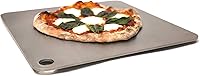
The THERMICHEF steel in this guide is a 16 x 16 in square, 3/8 in thick, and weighs 27 lb. Its size suits many full size ovens, but that weight is a real factor when you lift it in and out.
The Hans Grill stone in this guide is rectangular cordierite, about 15 x 12 in and 0.59 in thick, with a wooden peel included. At 7.8 lb it is easier to move than the steel, though it still needs a stable, heat safe place to rest.
Cast iron is another alternative, with its own weight, heat retention, and care requirements. Like steel, it needs seasoning and drying, and it can be heavy to handle when hot.
A nonstick pan is a separate path again. The Presto Pizzazz Plus uses a removable nonstick baking pan in a 12 in electric countertop oven, so cleanup and storage work differently from a loose stone or steel plate.
The material affects more than crust texture. It changes how long you need to preheat, how careful you must be with temperature changes, how you clean the surface, and how easy the item is to move.
It also changes where you can use it. Some surfaces suit an oven only, some suit a grill as well, and a countertop appliance avoids using your main oven at all.
Think about your usual pizza size before you choose. A surface that is too small can limit your dough, while a very large surface may be harder to store or move safely.
Think about frequency too. If you cook pizza often, durability and recovery between bakes matter more.
If you cook once in a while, simpler care may matter more than peak performance.
Your home setup should guide the decision. Check rack space, grill space, and counter space first, then match the material to the place where the pizza will actually be made.
Which pizza stone material heats fastest?
Steel heats and transfers heat fastest, while stone materials heat more gradually. A steel surface can send strong heat into the dough quickly, which suits thin crusts and cooks who want a crisp base.
A thick stone takes longer to preheat because the heat must move through the material. That longer preheat can create a stable baking surface once the stone is fully hot.
The THERMICHEF steel is 16 x 16 in, 3/8 in thick, and weighs 27 lb. Its product information says it conducts heat up to 20 times more efficiently than a ceramic pizza stone, and recommends preheating it at 500°F for 45 to 60 minutes.
Its 3/8 in thickness stores more heat than thinner steel. That can help when you are cooking several pizzas in a row, but the 27 lb weight makes it harder to move than a smaller stone.
For a direct comparison of these surfaces, read our guide to pizza stone vs pizza steel.
Is cordierite the best pizza stone material for grills?
Cordierite is a strong choice for grill and oven use because it is porous, heat resistant, and made to handle high cooking temperatures. It still needs careful heating and cooling because stone can crack from thermal shock.
The Hans Grill stone is rectangular cordierite measuring about 15 x 12 in and 0.59 in thick. It is heat resistant up to 1112°F and includes a wooden peel.
The rectangular shape gives you more usable edge-to-edge space than a small round stone. Its 7.8 lb weight is easier to manage than the THERMICHEF steel, though it still needs a stable place to cool.
Staining is normal with a porous stone and does not mean the surface has stopped working. Hans Grill recommends hand washing with warm water only, so avoid soap, soaking, and a dishwasher.
If you plan to cook outside, compare this material with the options in our guide to the best pizza stone for grill. You can also read can you use a pizza stone on a grill for setup advice.
How does ceramic compare with cordierite?
Ceramic is a broad category, while cordierite is a specific material often used in high-heat baking stones. Cordierite is usually the safer pick for repeated grill use, but ceramic can work well when you avoid sudden temperature changes.
A ceramic stone may offer the traditional porous baking surface many pizza cooks want. It can absorb some moisture from the dough and support a dry, crisp base after a full preheat.
Cordierite stones are also porous, but their design is aimed at high-temperature cooking. That does not make them unbreakable.
Dropping a stone, placing it on a cold surface while hot, or rinsing it with cold water can still cause damage.
The best option depends on how often you move the stone. If it will stay inside one oven, ceramic may be practical.
If you want one surface for an oven and BBQ grill, cordierite is often easier to justify.
For another traditional option, compare the best pizza stone for oven and the best outdoor pizza oven stone for different cooking locations.
Which material is most durable?
Steel is the most resistant to cracking, because it does not break from thermal shock like a ceramic stone. Stone can still last for years when handled carefully, but it needs more protection from drops and rapid temperature changes.
The THERMICHEF 16 x 16 in steel is made from a single piece of low-carbon steel. It has no Teflon, PFAS, or coating that can chip or wear off, and it is designed for use in an oven, grill, stovetop, or campfire.
Steel has a different weakness: it can rust if moisture remains on the surface. Scrape off food, hand wash it, dry it well, and apply a thin layer of oil after cleaning.
The Hans Grill cordierite stone is more vulnerable to physical damage, but it does not need seasoning. Its stains are normal, and its care is limited to hand washing with warm water.
For a handle-focused choice, see the best pizza stone with handles. If storage is your concern, compare the best pizza stone with rack.
What pizza stone material is easiest to maintain?
A steel surface is easy to maintain if you are comfortable seasoning cookware. Stone avoids seasoning, but it must stay dry and should not be soaked or washed with soap.
Use these care habits for each material:
| Material | Main benefit | Main care need | Main risk |
|---|---|---|---|
| Cordierite | High-heat oven and grill use | Hand wash with warm water only | Cracking from thermal shock |
| Ceramic | Traditional porous baking surface | Cool fully before cleaning | Cracking or breaking |
| Steel | Fast heat transfer and strong durability | Scrape, hand wash, dry, and oil | Rust if left wet |
| Nonstick pan | Easy cleanup and storage | Remove and clean the pan | It is not the same as a porous stone |
The Presto 03430 Pizzazz Plus uses a removable nonstick baking pan rather than a separate pizza stone. Its rotating tray turns continuously, and its top and bottom heating elements can be controlled separately.
This option suits someone who wants a contained countertop appliance and simple pan cleanup. It is not the right choice if your main goal is a traditional loose stone for a standard oven or grill.
The unit is 14.5 in deep, 15.8 in wide, and 10.3 in high. It includes the heating unit and pan, and it uses electricity.
If you are comparing a pan with a stone, read pizza stone vs pizza pan. For another appliance comparison, see pizza stone vs pizza oven.
Does thickness matter more than material?
Material sets the cooking behavior, but thickness affects heat storage and recovery. A thick stone or steel usually needs more time to preheat, then holds heat more steadily between pizzas.
The THERMICHEF steel is 3/8 in thick and weighs 27 lb. Its thickness suits back-to-back cooking, but it may be difficult to lift or store.
The Hans Grill stone is 0.59 in thick and weighs 7.8 lb. That gives it a substantial baking surface without the weight of the steel, though it remains breakable.
A thinner surface can be easier to handle and may preheat sooner. It may also lose more heat when you place cold dough on it, especially if you cook several pizzas in a row.
Choose thickness around your cooking pattern. One pizza at a time allows more recovery time.
Batch cooking favors a thick surface with enough stored heat.
Should you choose round or rectangular?
Choose round for a standard pizza shape and rectangular for more working space. The shape does not change the basic heat behavior of the material, but it affects how much of your oven rack you can use.
A round stone can fit neatly in a smaller oven and may be easier to rotate or store. A rectangular stone can provide extra room for bread, flatbreads, or unevenly shaped dough.
The Hans Grill stone is rectangular, measuring about 15 x 12 in. The THERMICHEF steel is square at 16 x 16 in and can cook pizzas up to 15 in in diameter.
Check your oven's interior depth and rack width before choosing a large surface. The THERMICHEF product information specifically recommends measuring the oven before ordering the 16 in steel.
For a round format, see our guide to the best round pizza stone. If you need a large oven surface, compare the best 16 inch pizza stone for oven.
Which pizza stone material should beginners choose?
Beginners should choose cordierite if they want a traditional stone, steel if they want durability, or a countertop appliance if they want simpler cleanup.
Cordierite gives you the familiar porous baking surface and works in an oven or grill. The Hans Grill set adds a wooden peel, which can help move dough onto the hot surface.
Steel is a better match for cooks who want strong heat transfer and do not mind seasoning. The THERMICHEF steel can also work as a flat cooking surface for sourdough bread, burgers, roasted vegetables, and flatbreads.
The Presto Pizzazz Plus suits cooks who want a dedicated 12 in electric countertop oven. Its rotating tray, dual heating elements, timer, and removable nonstick pan reduce the need to manage a separate stone.
If you want a brand-specific comparison, see the best Unicook pizza stone. For a complete setup with several accessories, compare the best pizza stone kit for oven.
How should you match material to your cooking style?
Match the material to your routine rather than choosing by heat claims alone.
- Choose cordierite for a porous stone that can work in an oven or BBQ grill.
- Choose ceramic for traditional baking when you can control heating and cooling carefully.
- Choose steel for fast heat transfer, repeated pizzas, and resistance to cracking.
- Choose a nonstick countertop pan when easy cleanup and contained cooking matter most.
- Choose cast iron when you want a heavy cookware surface and accept its seasoning needs.
For a cast iron comparison, read pizza stone vs cast iron. If you use a Ninja appliance, see the best Ninja pizza stone guide before checking dimensions.
Always preheat a stone according to its care instructions. Do not place a hot stone on a cold countertop, rinse it with cold water, or move it while it is at full temperature.
For steel, scrape away food, wash by hand, dry it fully, and apply a thin layer of oil. For stone, brush away residue and use warm water only unless the manufacturer gives different instructions.
More guides on this topic
This guide is a good place to keep exploring materials, sizes, and care habits before you buy.
- Best Pizza Stones Made in the USA
Use that guide if origin and support matter to you alongside heat performance. It can also help you compare shapes and thicknesses against the cordierite, ceramic, and steel options discussed above.
Is the best pizza stone material worth the trade-off?
The best pizza stone material is the one that fits your cooking surface and care routine. Pick cordierite for a traditional oven or grill stone, steel for fast heat and durability, ceramic for careful traditional baking, or a nonstick countertop pan for simple cleanup.
The Hans Grill cordierite stone is the practical stone choice here because it works in an oven and BBQ grill, includes a wooden peel, and has a rectangular 15 x 12 in format. The THERMICHEF steel is better for cooks who want rapid heat transfer, batch cooking, and a surface that will not crack from thermal shock.
The Presto Pizzazz Plus belongs in a different category. It is a 12 in electric countertop pizza oven with a rotating tray and removable nonstick pan, so it suits convenience more than traditional stone baking.
Measure your oven or grill first, then decide whether you prefer porous stone baking, fast steel heat, or a contained countertop appliance. For safe handling and transfer technique, read how to use a pizza peel and stone.
Frequently asked questions
What is a pizza stone made out of?
A pizza stone may be made from ceramic, cordierite, or another porous baking material. Cordierite is designed to handle high heat and temperature changes better than many ordinary ceramics.
Pizza steel is a different category made from steel, with faster heat transfer and different care needs.
Which pizza stone material holds heat the longest?
Thicker steel and thick stone both hold substantial heat, but they behave differently. Steel transfers heat faster, while stone releases heat more gradually.
Thickness matters as much as material, so compare the stone's dimensions and thickness before choosing.
Is cordierite better than ceramic for a pizza stone?
Cordierite is often the better choice for frequent oven or grill use because it is made for high heat and is less vulnerable to thermal shock than ordinary ceramic. Ceramic can still suit traditional baking when you handle it carefully and follow gradual heating and cooling practices.
What is the easiest pizza stone material to clean?
Stone usually needs brushing and hand washing with warm water only, without soap or soaking. Steel needs scraping, hand washing and a thin coat of oil to help prevent rust.
A removable nonstick pan, such as the one in the Presto Pizzazz Plus, is easier to clean than either material.
Can pizza stones crack from thermal shock?
Yes, pizza stones can crack when a hot stone meets cold water or a cold surface. Let the stone cool fully before cleaning, avoid sudden temperature changes, and check the care instructions for the specific material.
Steel does not crack from thermal shock in the same way.