Pizza Stone vs Pizza Steel: Which Should You Choose? (November 2026)
Choose pizza steel for faster heat transfer and crispier bottom crusts, or choose a pizza stone for lighter handling and moisture absorption. Your oven size, cooking habits and care preferences decide which surface fits best.
On this page (7 sections)
- Pizza stone vs pizza steel: which gives better crust?
- How do heat transfer and preheating differ?
- Which surface is easier to move?
- How do pizza stone and steel maintenance compare?
- Which product fits your pizza stone vs pizza steel choice?
- Should you choose pizza steel or pizza stone for a grill?
- Pizza stone vs pizza steel: what should you buy?
Choose pizza steel for faster heat transfer and stronger bottom browning, or choose pizza stone for lighter handling and moisture absorption. This choice is less about which material wins in general and more about how you actually cook at home.
Your oven size, the crust you prefer, and how much care you want to give the surface will shape the better fit for you.
Steel is dense and conductive, so it sends heat into dough quickly once the surface has preheated. That fast transfer can help the base brown and crisp before the toppings overcook.
Stone heats more slowly, but porous cordierite can absorb moisture from the dough and support a dry, crisp base.
That difference in feel matters during daily use. Steel can feel more direct and intense, which suits thin crusts and repeated batches.
Stone can feel gentler and more forgiving, which suits wetter doughs and cooks who want a less aggressive surface.
Weight also changes the routine. Steel is usually heavier and more stable, but it asks for seasoning and rust care.
Stone is lighter to lift and simpler to wash, but it can crack from sudden temperature changes and will stain over time.
Think about where the surface will live between uses. A heavy steel may stay in the oven as a near permanent fixture.
A lighter stone is easier to move in and out, but still needs space and careful handling when hot.
For more equipment context, compare this choice with an outdoor pizza oven or read our guide to the best pizza stone material.
If you bake often and want strong bottom browning, steel may earn its extra care. If you prefer lighter handling and moisture absorption, stone may fit better.
The best pick is the one whose size, weight, and upkeep match your kitchen and habits.
Pizza stone vs pizza steel: which gives better crust?
Pizza steel usually gives the fastest browning and the firmest bottom crust, while pizza stone offers gentler heat and moisture absorption. Both surfaces can produce good pizza when fully preheated and matched to the dough.
A steel surface transfers heat directly into the dough. That can help the base brown quickly, especially when the oven is already at its highest suitable setting.
Stone behaves differently. Cordierite is porous, so it can absorb some moisture from the dough during baking.
This can help create a dry base without the intense conductive effect of steel.
Crust results also depend on dough thickness. A thin pizza may brown quickly on steel, while a thicker or wetter dough may benefit from the slower, more forgiving heat of stone.
Pizza steel vs pizza stone for oven cooking
Pizza steel is the stronger choice for an oven when you want rapid heat transfer, while pizza stone suits cooks who prefer a lighter surface with a porous baking texture. Position either surface where it can preheat fully without blocking required airflow.
For an oven option that can use different fuels, see the Ooni Karu 12 review.
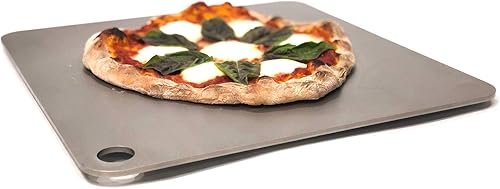
THERMICHEF says its 3/8 in steel conducts heat up to 20 times more efficiently than a ceramic pizza stone. Its 16 x 16 in size can cook pizzas up to 15 in wide, but you should measure your oven's interior depth first.
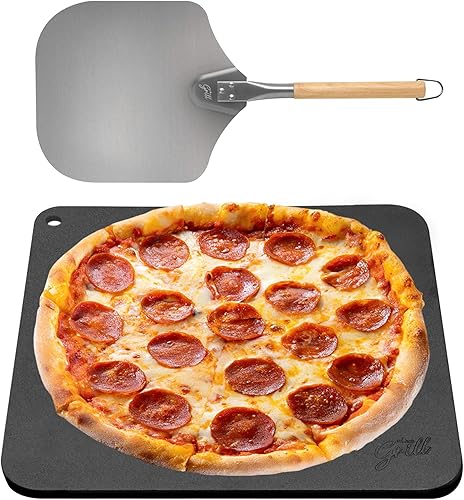
The Hans Grill Pizza Steel PRO is smaller at 13 x 13 in and 1/4 in thick. That size can be easier to fit and handle, while still giving steel's conductive heat.
For stone options, the Hans Grill rectangular models use cordierite and measure about 15 x 12 in. Their porous surfaces absorb heat and are intended for oven and BBQ use.
How do heat transfer and preheating differ?
Steel heats and transfers energy into dough more aggressively, while stone needs a longer warm-up to store usable heat. Give either surface enough time to reach baking temperature before launching pizza.
A thick steel can hold a large amount of heat between pizzas. That is useful for batch cooking, but the same mass makes the surface heavy and can increase the time needed to preheat.
The THERMICHEF 3/8 in steel is designed for heat retention and back-to-back cooking. At 27.5 lb, it is closer to a permanent oven accessory than something you will want to lift after every meal.
The Hans Grill 1/4 in steel is a more manageable middle option at 13.1 lb. It gives you conductive metal in a smaller 13 x 13 in format.
Stone needs heat before it can bake well. A cold stone can slow the first pizza and may produce a pale or soft base, so plan the preheat around the thickness of the stone and your oven's maximum setting.
For appliance-specific setup steps, read how to use a pellet pizza oven.
Which surface is easier to move?
Pizza stone is easier to lift, while pizza steel is more stable but much heavier. Weight matters if you store the surface outside the oven or move it between an oven and grill.
The THERMICHEF steel weighs 27.5 lb and measures 16 x 16 in. Its large square area suits bigger pizzas and batch baking, but you need enough rack space and a safe way to remove it when hot.
The Hans Grill steel weighs 13.1 lb and measures 13 x 13 in. It is still substantial, but the smaller format can be easier to position in a standard oven or BBQ.
The Hans Grill cordierite stone with wooden peel weighs 7.8 lb. Its 15 x 12 in rectangular shape offers useful baking space without the mass of steel.
The Hans Grill Pizza Stone PRO XL is also a rectangular cordierite surface, measuring 14.9 x 11.8 in. Its included perforated aluminum peel adds a separate tool for launching and retrieving pizza.
For a peel material comparison, see wood vs steel pizza peels.
Learn the turning technique in how to use a pizza turning peel.
If you need an oven surface that is easy to handle, review our guide to the best pizza stone for oven. If grill use is the priority, compare the Best Pizza Stone For Grill options.
How do pizza stone and steel maintenance compare?
Steel needs scraping, drying and occasional oiling, while stone needs gentle hand washing and protection from sudden temperature changes. Neither surface belongs in a dishwasher unless its specific instructions allow it.
After cooking on steel, scrape away loose food and wipe the surface. A thin coat of oil helps protect the metal from rust, and regular use can build a seasoned patina.
The THERMICHEF steel ships without pre-seasoning. Its care instructions call for washing, applying a thin coat of oil and baking it at 375°F for 1 hour before first use.
Stone care is simpler but less forgiving. Let the stone cool naturally, remove loose food and hand wash it with water.
Avoid soaking cordierite, soap residue and abrupt temperature changes.
Stains on cordierite are normal. They can darken over time without changing the stone's basic function, so appearance is less important than avoiding cracks.
Read Can You Use a Pizza Stone on a Grill? before moving a stone between indoor and outdoor cooking. For Kamado Joe owners, compare pizza stones for Kamado Joe.
Grill temperature changes can be harder to control than oven heat.
Which product fits your pizza stone vs pizza steel choice?
Choose the THERMICHEF for heavy batch cooking, the Hans Grill steel for a smaller conductive surface, and either Hans Grill stone for lighter cordierite baking. The right pick is the one whose size and care routine match how you cook.
The THERMICHEF 16" x 16" Pizza Steel has the largest surface and thickest steel in this comparison. Its 3/8 in construction is aimed at heat retention, which makes it a strong fit for batch cooking, hosting and repeated pizzas.
The square 16 x 16 in format can handle pizzas up to 15 in, but measure your oven before ordering. It also works in an oven, on a grill, on a stovetop and over a campfire, so it can serve more than one cooking setup.
Its trade-off is handling. At 27.5 lb, this is the least convenient option to move.
It also needs first-use seasoning, hand washing and a thin oil coat to help prevent rust.
The Pizza Steel PRO by Hans Grill is 1/4 in thick and measures 13 x 13 in. That gives you steel's fast heat transfer without the larger footprint of the THERMICHEF model.
Its 13.1 lb weight is still meaningful, but it is easier to position for oven or BBQ cooking. The included beechwood handle peel helps move pizza onto and off the hot surface.
The smooth surface is designed for easy wiping with water. As with other steel cookware, dry it carefully and follow suitable care steps to limit rust.
The Hans Grill Rectangular Pizza Stone with Peel uses porous cordierite and measures about 15 x 12 in. At 7.8 lb, it is much easier to lift than either steel option.
The stone works for pizza, frozen pizza, calzone, pastry and artisan bread in an oven or BBQ. Its included wooden peel gives you a basic launching tool without adding a separate purchase to your setup.
Cordierite can handle heat up to 1112°F, but it remains vulnerable to thermal shock. Let it warm and cool gradually, and expect stains as the surface gets used.
The Hans Grill Pizza Stone PRO XL is a rectangular cordierite stone measuring 14.9 x 11.8 in. Its included perforated aluminum peel lets excess flour fall away before launch and allows steam to escape from the underside after baking.
That peel design suits cooks who care about a drier, crisper underside after the pizza comes out. The stone also works for pizza, pies, pastry, calzone and artisan bread in an oven or grill.
The main trade-off is shared by other cordierite stones. Sudden temperature changes can cause cracking, so cool the stone naturally and hand wash it with care.
Should you choose pizza steel or pizza stone for a grill?
Choose pizza steel for a flat, conductive grill surface, or choose cordierite stone when you want a lighter baking slab. A grill adds airflow, flare, and uneven heat that an oven does not, so fit and stability matter as much as crust.
Check the available grill space and follow the equipment instructions before using either surface over direct heat.
Measure the grate area before you buy. A square steel can cover burners well, but it can also block airflow if it is too large for the grill.
A rectangular stone may leave more room for heat to move around the edges.
Steel can also work as a flat-top surface for foods beyond pizza. The THERMICHEF model is described for grilling, stovetop cooking and campfire use, while the Hans Grill steel is intended for oven and BBQ cooking.
That range makes steel appealing if you want one surface for burgers, vegetables, bread, and pizza.
Stone is useful when you want a dedicated baking surface for pizza, bread and pastry. Both Hans Grill cordierite models are designed for oven and BBQ use, but the stone needs protection from rapid temperature changes.
Let it heat gradually and cool naturally, and avoid sudden exposure to water or cold air.
Handling differs on a grill too. Steel is heavier, so plan how you will lift it with mitts and where you will set it down.
Stone is lighter, but a drop or a sharp temperature swing can crack it.
For a larger outdoor setup, our guide to the best outdoor pizza oven stone can help you compare stone shape and handling.
Pizza stone vs pizza steel: what should you buy?
Pick pizza steel if you want fast heat transfer, deep bottom browning and better heat recovery for several pizzas. Pick pizza stone if you want lighter handling, moisture absorption and a simpler surface for oven or BBQ baking.
Choose the THERMICHEF 16 x 16 in steel for large pizzas and batch cooking if you have room for its 27.5 lb weight. Choose the Hans Grill steel for a smaller 13 x 13 in conductive surface with a peel.
Choose the 15 x 12 in Hans Grill cordierite stone when low weight matters most. Choose the PRO XL when its perforated aluminum peel fits your launch and serving routine.
The pizza steel vs stone decision is not only about crust texture. Measure your oven or grill, plan where the hot surface will live, and choose the care routine you will actually follow.
Frequently asked questions
Is pizza steel better than pizza stone?
Pizza steel is usually better for fast heat transfer and a deeply browned bottom crust. Pizza stone is often better if you want a lighter surface that absorbs moisture and costs less to handle.
Choose based on crust style, oven size, weight and whether you prefer seasoning steel or washing stone.
What is the difference between pizza stone and pizza steel for oven use?
Steel transfers heat more quickly than stone, so it can brown the dough base faster. Stone heats more gently and its porous surface absorbs some moisture.
Steel is heavier and needs rust care, while stone is lighter but can crack after sudden temperature changes.
Does pizza steel make pizza crispier?
Pizza steel can make the bottom crust crispier because metal transfers heat efficiently from the hot surface into the dough. The result still depends on oven temperature, preheating time, dough moisture and placement.
A stone can also produce a crisp crust with the right setup.
Can you use pizza steel on a grill?
Yes, pizza steel can work on a grill when the size and heat are suitable for the equipment. Steel can also serve as a flat cooking surface.
Follow the steel and grill instructions, allow it to heat fully, and use heat-safe tools when moving pizza.
Which is easier to clean, pizza stone or pizza steel?
Pizza steel is easier to scrape and wipe when food residue sticks, but it needs drying and a thin coat of oil to help prevent rust. Pizza stone needs hand washing and should not be soaked.
Stains on cordierite are normal and don't necessarily affect use.