Outdoor Pizza Ovens: The Complete Buying Guide
The best outdoor pizza oven depends on your space, fuel preference and pizza size: gas is simple, wood adds fire flavor, and electric models suit covered home areas. Measure the oven location, then match the stone and peel to your usual pizzas.
On this page (19 sections)
- What is an outdoor pizza oven?
- Which outdoor pizza oven type fits your home?
- How large should an outdoor pizza oven be?
- Which fuel should you choose?
- What should you check before placing an outdoor pizza oven?
- What accessories do you need?
- Which pizza stone material should you choose?
- Do you need a pizza steel?
- Which peel should you buy?
- How do you prepare and bake pizza outdoors?
- How should you clean and care for an outdoor pizza oven?
- Can you buy a budget outdoor pizza oven?
- Should you choose a portable or fixed oven?
- Is an indoor and outdoor pizza oven useful?
- Which brands and features should you compare?
- How to choose an outdoor pizza oven for an outdoor kitchen
- What should you buy first?
- Explore pizza ovens and accessories by topic
- Final outdoor pizza oven buying rule
The best outdoor pizza oven depends on your fuel choice, available space and usual pizza size. Gas is easy to control, wood gives you a live-fire routine, and electric countertop ovens can suit covered home areas with a safe outlet.
A home pizza oven should also fit the way you cook. A compact oven may be easier to store, while a larger oven gives you more room to launch, turn and remove a pizza without crowding the cooking surface.
This guide explains oven types, sizing, fuel, placement, stones, peels and care. We checked the listed features of the products below and used them as examples of pizza ovens, cooking surfaces and care tools.
What is an outdoor pizza oven?
An outdoor pizza oven is a dedicated cooking appliance or chamber designed to bake pizza with concentrated heat. It may use gas, wood, electricity or a grill-based setup, depending on the model.
For a pellet-fueled option, see how to use a pellet pizza oven.
The key parts are the heat source, cooking surface, opening and insulation. Heat must reach the top of the pizza while the cooking surface transfers enough heat into the dough for a browned base.
Outdoor ovens vary widely. Some are small countertop units for one pizza at a time.
Others are built into outdoor kitchens, placed on dedicated stands or designed for larger pizzas and repeated cooking.
The phrase outdoor home pizza ovens can describe any of these formats. Before comparing brands, decide whether you need a portable oven, a fixed cooking station or a surface that works with equipment you already own.
Which outdoor pizza oven type fits your home?
The best outdoor home pizza ovens are the ones that match your fuel access, storage space and cooking routine. Gas works well for simple heat control, wood suits live-fire cooking, and electric models need a suitable protected location.
Gas outdoor pizza ovens
Gas ovens are often the simplest choice for home cooks who want repeatable setup. You connect the approved fuel source, preheat the oven and adjust the heat without adding wood during the bake.
A gas oven still needs safe placement, ventilation and fuel storage. Keep the oven away from combustible walls, railings and overhead materials, and follow the clearance rules for the exact model.
If you are comparing burners, stone size and heat control, our guide to the best outdoor gas pizza oven can help narrow the options.
Gas does not remove the need for practice. You still need to manage dough thickness, toppings and turning, especially when the oven has a hot spot near the burner.
A pizza turning peel can help with small movements.
Wood-fired outdoor pizza ovens
Wood-fired ovens suit cooks who enjoy building and managing a live fire. The fuel adds preparation work, including storing dry wood, controlling the flame and dealing with ash after cooking.
Wood can create a strong cooking atmosphere, but it may be less convenient for a quick weeknight pizza. Heat changes as the fire grows, moves and settles, so you need to watch the oven rather than relying only on a dial.
Compare the chamber opening, fuel area, stone surface and chimney design before choosing. Our guide to the best wood fired pizza oven outdoor options covers this style in more detail.
Electric countertop pizza ovens
Electric ovens suit covered patios, outdoor counters and other locations with a suitable power supply. They can be useful when you want a plug-in setup without propane or firewood.
Check the voltage, outlet location, cord reach and weather protection before placing one outdoors. A fitted outdoor pizza oven cover can help shield it between cooks.
An electric oven should not be treated as weatherproof just because it is used for outdoor cooking.
The Presto 03430 Pizzazz Plus Rotating Oven is a countertop electric example. It has a 12 in size, a 1,235-watt power rating, a rotating tray, independently controlled top and bottom heating elements, and a timer that automatically turns off the heating elements.
Its rotating tray is designed to keep the food moving while the heating elements bake from both sides. The separate controls let you choose the top element, bottom element or both, which can help you adjust the bake for different pizza styles.
The removable nonstick pan supports easier cleanup and storage. The oven is 14.5 in deep, 15.8 in wide and 10.3 in high, so measure the counter and storage shelf before choosing it.
The Presto is a different category from a high-heat outdoor gas or wood oven. It suits buyers who want countertop convenience and controlled heating, not a live-fire cooking station.
Grill attachments and grill-top setups
A grill attachment can be a practical way to make pizza with equipment you already own. These setups often use the grill as the heat source while a stone, steel or enclosure helps cook the dough.
Kamado Joe owners can compare pizza stones for Kamado Joe.
Measure the grill grate, lid height and cooking area before buying an attachment. The pizza surface must fit without blocking the lid or leaving the dough too close to the top.
See our guide to the best outdoor pizza oven for grill options if you want to compare attachments with dedicated ovens.
If you are still learning outdoor cooking basics, our How To Use Outdoor Grill? guide covers heat control, setup and safe operation.
How large should an outdoor pizza oven be?
Choose an outdoor pizza oven by the largest pizza you plan to bake, not only by the outside cabinet size. A 12 in cooking area suits smaller pies, while a 16 in surface gives more room for larger dough and turning.
A larger oven also needs more counter, stand and storage space. Measure the full footprint, including handles, doors, fuel connections and the space needed to work safely around it.
12 in ovens
A 12 in oven can suit one or two people who usually make smaller pizzas. It may also be easier to carry or store, but the smaller opening gives you less room to turn a pizza.
The Presto 03430 Pizzazz Plus is a 12 in countertop example. Its rotating tray reduces the need to move the pizza by hand during baking, although you still need to follow the cooking instructions and watch the toppings.
16 in ovens
A 16 in oven gives more room for a larger pizza and can make turning easier. The extra surface area may also help when you are cooking for more people or prefer a wider crust.
A larger cooking surface does not automatically mean faster cooking. The oven still needs enough heat, a suitable stone and good insulation to bake the top and bottom together.
For a closer size comparison, see the best 16 inch pizza oven guide.
Large built-in ovens
Large outdoor home pizza ovens suit a permanent cooking area with a strong counter or dedicated base. They can work well for regular entertaining, but the installation needs more planning than a portable oven.
Check the counter depth, ventilation, fuel route, clearance and weather protection. Also decide where you will store peels, pans, wood, propane and cleaning supplies.
Our guide to the best large outdoor pizza oven options is useful if you want a bigger cooking chamber.
Which fuel should you choose?
Choose gas for convenience, wood for live-fire cooking, and electricity for countertop control. The right fuel is the one you can store safely and use often.
| Fuel | Main advantage | Main trade-off |
|---|---|---|
| Gas | Fast setup and adjustable heat | Requires safe fuel storage and connection |
| Wood | Live fire and traditional cooking routine | Needs dry fuel, ash cleanup and active heat management |
| Electricity | Plug-in operation and controlled heating | Needs a suitable outlet and protected placement |
| Grill heat | Uses equipment you may already own | Cooking space and lid clearance can be limited |
Gas is usually the easiest starting point for a household that wants pizza without a long preparation routine. Wood may be more rewarding if you enjoy tending a fire and adjusting the bake by sight.
An indoor commercial gas pizza oven is a separate category from a home outdoor model. If you are researching that term, our gas pizza oven commercial guide explains the buying differences.
Never use a fuel-burning outdoor oven in a garage, enclosed porch or other area that can trap combustion gases. Follow the safety instructions for the exact oven and fuel system.
What should you check before placing an outdoor pizza oven?
Check clearance, surface strength, ventilation, weather exposure and access to fuel before installation. The ideal spot is not simply the closest empty counter.
Measure the oven and the available surface. A portable oven may still need space behind it, beside it and above it for heat and safe handling.
Confirm that the counter or stand can support the oven. Include the weight of the oven, stone, fuel connection and any cookware you plan to keep nearby.
Keep the cooking area away from dry plants, curtains, wood fencing and stored materials that can catch fire. A roof can provide shelter, but it must not create a low overhead hazard or restrict ventilation.
Weather protection matters even when the oven is sold for outdoor use. A cover can help reduce exposure, but only cover the oven when it is fully cool and dry.
If you want a built-in design with another outdoor heat source, compare the planning issues in How to Choose an Outdoor Pizza Oven and Fireplace.
What accessories do you need?
The essential outdoor pizza oven accessories are a peel, a way to turn the pizza, heat-safe gloves, a brush and a suitable surface for dough preparation. You do not need every accessory at once.
A launch peel helps move shaped dough onto the cooking surface. A turning peel helps rotate the pizza during the bake, while a larger peel can help remove the finished pizza.
A brush removes loose flour and baked-on crumbs after the oven cools. Use the brush and cleaning method recommended for your oven and stone.
Heat-safe gloves can protect your hands while handling hot equipment, but they do not make every surface safe to touch. Keep tools with long handles where possible.
Our roundup of the best outdoor pizza oven accessories covers the main tools by job.
Which pizza stone material should you choose?
Choose a pizza stone by heat tolerance, size, thickness and care needs. Ceramic and cordierite are common choices, but the stone must fit the oven and be used according to its care instructions.
Ceramic stones can distribute heat and absorb moisture. The Kamado Joe 15-inch Ceramic Pizza Stone is made from ceramic and is designed for brick-oven style pizza with Kamado Joe Classic Joe 18 in charcoal grills and smokers.
The stone must be used with the Kamado Joe Heat Deflector to help avoid burning the pizza. It is round, white and includes 1 ceramic pizza stone, so confirm that your grill setup matches the stated compatibility before buying.
The Hans Grill Rectangular Pizza Stone with Peel is a different option. It is a 15 x 12 in cordierite stone with a wooden peel, designed for oven baking and BBQ grilling.
Cordierite is porous and is intended to distribute heat for pizza, bread, pastry and calzone. The stone is heat resistant up to 1,112°F, and its rectangular shape can use more of a grill or oven shelf than a round stone.
Hand wash it with warm water only. Staining is normal for this type of cooking surface and does not mean the stone has stopped working.
Read our guide to the best pizza stone material before choosing between ceramic, cordierite and other surfaces.
Do you need a pizza steel?
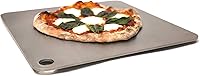
A pizza steel is a flat metal cooking surface that transfers heat quickly into dough. It can suit an oven setup where you want a firm base and a surface that is less fragile than ceramic or stone.
Steel also needs correct preheating and careful handling. It becomes extremely hot, so use suitable gloves and a peel, and allow it to cool before moving or cleaning it.
A steel may be more useful in an indoor oven or grill setup than in a dedicated high-heat pizza oven. Compare the thickness, size, storage space and maximum temperature for the cooking appliance you already own.
See our guide to the best pizza steel for oven options if steel fits your setup better than a stone.
Which peel should you buy?
Choose a peel by the oven opening, pizza size and job you need it to do. A launch peel moves raw dough, while a turning peel helps rotate a pizza during cooking.
The peel should fit through the oven opening without forcing the dough against the sides. A handle that is too short can leave your hands close to the heat, while a very long handle can be awkward in a small space.
A wooden peel can help with launching dough because the surface can feel less sticky when prepared correctly. A metal peel may slide under a cooked crust more easily, depending on the design and dough.
Our best pizza peel for oven guide compares peels by oven access and cooking task.
A turning peel is smaller and easier to use inside a tight chamber. It lets you rotate the pizza so the crust cooks more evenly around the oven’s hot spots.
See the best pizza turning peel guide if you expect to turn pizzas often.
How do you prepare and bake pizza outdoors?
Prepare the dough and toppings before the oven is fully hot. Outdoor pizza cooking moves quickly, so arranging ingredients and tools first helps you avoid leaving the oven unattended.
Use a lightly floured work surface and keep the dough thickness consistent. Excess flour can burn on a hot stone, while wet toppings can make the center soft.
Preheat the oven according to its instructions. The stone needs time to absorb heat, and a hot chamber helps the top cook before the base becomes too dark.
Launch the dough with a smooth forward motion. If it sticks to the peel, the pizza can fold or lose its shape before it reaches the stone.
Watch the crust rather than relying only on a timer. Rotate the pizza when one side colors faster, then remove it with a peel when the base and toppings are cooked to your preference.
If you plan to use an existing gas grill, compare the method in How To Grill Pizza On A Gas Grill?.
How should you clean and care for an outdoor pizza oven?
Clean an outdoor pizza oven only after it has cooled. Remove loose flour, ash and food debris with tools that match the oven and stone, and avoid sudden temperature changes.
Do not soak a pizza stone or apply oil unless its care instructions specifically allow it. Moisture can enter porous materials, and rapid heating or cooling can cause cracking.
Brush the cooking surface after each session when it is cool enough to handle. Wipe the outside with a suitable cloth and keep water away from controls, burners and electrical connections.
For wood stands, shelves or nearby finished wood surfaces, Murphy Oil Soap Wood Cleaner is a separate household cleaning product, not a pizza stone cleaner. It is a 32 fl oz bottle 3 pack with a concentrated formula and citronella oil scent.
The cleaner is intended for finished wood surfaces and has no-rinse directions after cleaning with a wrung-out mop. Dilute it as directed for the surface, and do not use it as a substitute for the oven or stone manufacturer’s care method.
Keep the oven covered only when it is completely cool and dry. Store peels, stones and fuel where they will not absorb moisture or create a trip hazard.
Can you buy a budget outdoor pizza oven?
A budget outdoor pizza oven can work well when it covers your main cooking need without forcing you to pay for features you will not use. Focus on the cooking surface, fuel system, opening size and replacement parts.
A cheaper oven may have a smaller chamber or require more manual turning. That can be fine if you cook small pizzas and do not mind staying near the oven.
Do not judge a low-cost oven only by its outside appearance. Check whether the stone is included, whether the fuel connection suits your setup and whether the oven can reach the heat level needed for your preferred dough.
Our best cheap pizza oven guide can help you compare lower-cost formats.
Should you choose a portable or fixed oven?
Choose a portable outdoor pizza oven if you need flexible storage, seasonal use or cooking away from the main patio. Choose a fixed oven if you have a permanent outdoor kitchen and use pizza often.
Portability is not only about weight. Check handles, fuel storage, stand strength and where the oven will cool after use.
A fixed oven can give you a dedicated cooking station, but it also commits counter space and may require more planning for ventilation, weather protection and cleaning.
For smaller patios, compare the best portable outdoor pizza oven options.
Is an indoor and outdoor pizza oven useful?
An indoor outdoor pizza oven can be useful if you want one appliance for more than one location, but only when the manufacturer permits both uses. Outdoor fuel-burning equipment should never be moved indoors without explicit approval for indoor operation.
Check the fuel source, ventilation needs, electrical requirements and surface clearances. A model that works on a patio may not be safe in a kitchen or enclosed room.
Read How to Choose a Pizza Oven for Indoor and Outdoor Use before treating a dual-location design as flexible.
Which brands and features should you compare?
Compare brands by the features that change your daily cooking routine. Look at the cooking area, fuel type, heat controls, stone material, opening size, portability and care instructions.
Ooni models are common in the home pizza oven category, but the right model still depends on your pizza size and placement. See the best ooni outdoor pizza oven guide for a focused comparison.
VEVOR models may appeal to buyers comparing feature sets and budget options. Our vevor outdoor pizza oven reviews guide can help you compare that range.
Do not choose by brand name alone. A well-matched smaller oven can be more useful than a larger model that does not fit your counter, fuel supply or storage plan.
How to choose an outdoor pizza oven for an outdoor kitchen
Choose an outdoor kitchen oven by measuring the cutout, counter depth, ventilation route and working space before comparing cooking features. Built-in equipment needs a more exact fit than a portable countertop oven.
Confirm whether the oven is designed for built-in use. A portable oven may need open clearance around the sides and back, while a built-in model may have different installation requirements.
Plan the position of the pizza peel, dough board, toppings and serving area. You want to move the pizza from preparation to oven without crossing a crowded walkway.
Our best pizza oven for outdoor kitchen guide covers built-in and outdoor-counter planning points.
What should you buy first?
Start with the oven, the correct cooking surface and 1 suitable peel. Add a turning peel, brush, cover and storage solution after you know how the oven behaves in your space.
If you already own a grill, test whether a grill attachment can meet your needs before buying a separate oven. If you want a dedicated pizza routine, choose the fuel and oven size first.
For a compact countertop setup, the Presto 03430 offers a rotating 12 in tray and separate heating controls. For a Kamado Joe setup, the 15-inch ceramic stone is designed for Classic Joe 18 in charcoal grills and smokers with the required Heat Deflector.
For oven or BBQ use, the Hans Grill cordierite stone gives you a 15 x 12 in surface and a wooden peel.
The Murphy cleaner belongs in a different part of the setup. It can help maintain finished wood around the cooking area, but it is not for pizza stones, oven interiors or food-contact surfaces unless the surface instructions allow it.
Explore pizza ovens and accessories by topic
- How to Choose an Outdoor Pizza Oven Kit
- Best Outdoor Pizza Ovens with Rotating Stones
Final outdoor pizza oven buying rule
Pick gas if you want simple heat control, wood if you enjoy live-fire cooking, and electricity if a countertop setup fits your protected space. Then choose the smallest cooking surface that fits your largest pizza with room to turn it.
Match the stone, peel and fuel system to the oven instead of treating accessories as universal. Measure the location, plan for safe clearances and choose a setup you will use often.
Frequently asked questions
What is the best type of outdoor pizza oven for home use?
The best outdoor pizza oven for home use matches your space and cooking habits. Gas ovens suit quick heat and simple control, wood-fired ovens suit buyers who want live-fire cooking, and electric countertop ovens suit covered areas with a suitable outlet.
Check placement, fuel storage and pizza size before choosing.
Is gas or wood better for an outdoor pizza oven?
Gas is usually easier for repeatable heat and quick setup, while wood gives you a live fire and a different cooking routine. Choose gas if convenience matters most.
Choose wood if you enjoy managing fuel, flame and ash as part of making pizza.
What size outdoor pizza oven should I buy?
Choose an oven that fits your largest pizza with room to turn it. A 12 in cooking surface suits smaller pizzas, while a 16 in oven gives more space for family-size pies and easier rotation.
Measure the oven opening, stone area, stand and storage space before you buy.
Can an outdoor pizza oven stay outside?
An outdoor pizza oven can stay outside only when its materials, cover and placement support that use. Protect it from rain, snow and standing moisture, and follow the manufacturer’s clearance rules.
Keep fuel and accessories dry, and never use a fuel-burning oven in an enclosed area.
Do I need a pizza stone for an outdoor pizza oven?
Most outdoor pizza ovens use a stone or another heat-retaining cooking surface to transfer heat into the dough. The right material depends on the oven temperature and size.
Ceramic and cordierite stones can produce a firm base, but they need careful heating and cooling to reduce cracking risk.