How to Choose an Indoor Commercial Gas Pizza Oven
The right gas pizza oven commercial setup depends on your menu, hourly pizza volume, ventilation system, and available gas service. Compare countertop and deck formats before you choose a model or plan installation.
On this page (6 sections)
- Which gas pizza oven commercial format fits your kitchen?
- How much production capacity do you need?
- What installation requirements matter indoors?
- How should you compare gas heat with electric heat?
- Which products can support a pizza kitchen setup?
- What is the final gas pizza oven commercial decision rule?
The right gas pizza oven commercial setup depends on your menu, hourly pizza volume, ventilation system, and available gas service. Compare countertop and deck formats before you choose a model or plan installation.
Matching the oven to the menu matters more than chasing a headline temperature. A cheese heavy menu with thin crusts places different demands on heat recovery than a menu built around thick crusts, stuffed items, and long finishing times.
A small café with a short menu may need a compact oven that fits an existing line. A busy pizzeria may need a larger deck oven, multiple baking surfaces, or more than one chamber to keep orders moving.
Think about how staff will move around the oven each day. They need space to stretch dough, top pizzas, load the oven, check the bake, and hand finished orders to a pass.
Your goal is not simply to find the hottest oven. You need a format that fits pizza size, production pace, staff workflow, building services, and local installation rules.
Ventilation and gas service should be settled early because they can change your budget and timeline. An oven that looks suitable on a spec sheet may not suit a building without the right hood, ductwork, make-up air, or gas line capacity.
Production pace also shapes the choice in a practical way. A kitchen with steady sales through the day can work with a smaller chamber, while a kitchen with sharp lunch and dinner peaks needs faster recovery and more baking surface.
Countertop formats can suit a café, bar, food truck, or shared kitchen where floor space is tight. Deck formats can suit a pizzeria where staff want direct control over each pie and room to bake custom orders in sequence.
Treat the oven as one part of a system rather than a standalone appliance. Prep space, dough storage, peel and pan storage, heat lamps, and order staging all affect whether it can run at its intended pace.
Planning the full workflow before you order helps you avoid a common mismatch. The oven may have enough power, but the kitchen may lack the staff, space, or services to feed it during a rush.
A careful comparison also makes conversations with suppliers and installers more useful. You can ask specific questions about size, clearances, gas needs, and service access instead of relying on general claims about commercial performance.
Which gas pizza oven commercial format fits your kitchen?
A commercial gas pizza oven usually falls into a countertop, deck, conveyor, or specialty format. Countertop ovens save floor space, while deck ovens offer a more traditional setup for hand-shaped pizzas and batch baking.
Countertop models can work for cafés, food trucks, bars, and kitchens with limited room. Check the oven's external dimensions, required clearances, gas connection, ventilation method, and door or loading height before assuming it will fit.
Deck ovens suit operations that need more baking surface and direct control over each pizza. A single deck may be enough for a small menu, while multiple decks can separate products or increase output without changing the basic workflow.
Conveyor ovens suit menus built around steady, repeatable production. They can reduce handling during busy periods, but they need enough line space and may be less flexible for pizzas that require different bake times or finishing methods.
If your concept depends on wood flavor or live-fire cooking, compare this guide with our commercial wood fired pizza oven guide. For outdoor service, our outdoor pizza oven buying guide covers a different installation setting.
How to compare gas pizza ovens commercial kitchens can run
Compare each oven by usable baking area, pizza diameter, heat recovery, control method, and loading pattern. The advertised number of pizzas matters less if the oven cannot hold your preferred size or recover quickly between loads.
A compact oven may suit 10 or 12 in pizzas, small batches, and a low-volume menu. A larger deck can support bigger pizzas or several pies at once, but it also takes more floor space and may need stronger ventilation and gas service.
Look at how staff will load, turn, check, and remove pizzas. A pizza peel and stone guide covers the tools used to launch and handle each pie.
A deep oven can hold more food, but a crowded chamber can slow retrieval and make it harder to keep orders organized.
How much production capacity do you need?
Choose capacity from your busiest expected 15-minute period, not your average quiet hour. Estimate how many pizzas may be ordered together, then allow room for different toppings, bake times, and staff access.
Average sales can hide the moments that matter most for equipment choice. A quiet Tuesday afternoon will not test an oven in the same way as a Friday evening when several large orders arrive together.
Start with these questions:
- What is the largest pizza diameter on your menu?
- How many pizzas might arrive in one order?
- Will the oven bake pizzas only, or also flatbreads and other foods?
- Can staff prepare and load pizzas quickly enough to keep the oven full?
- Do you need separate temperature zones or decks?
- What happens during a weekend rush?
Pizza diameter affects how many pies can sit side by side and how much room staff have to turn them during the bake.
Order grouping matters because a single large order can tie up the oven while smaller tickets wait. A format that looks efficient on paper may create delays when one table needs several pies at once.
Baking other foods can add flexibility, but it can also add conflict. Flatbreads and reheated items may need different heat and compete for the same surface at peak times.
Staff speed sets a real limit on output. If prep and loading cannot keep pace, a larger oven may sit partly empty while the bottleneck stays at the make table.
Separate decks or zones can help when the menu mixes delicate toppings with thicker crusts. One area can finish cheese and toppings while another drives the base to the desired colour.
Heating power does not automatically equal useful production. Baking surface, chamber layout, door opening, loading speed, and recovery all affect real throughput.
Heat recovery shapes consistency across a rush. After several cold pies enter the chamber, the oven must return to target temperature quickly enough to bake the next set evenly.
Avoid choosing a large oven only for a higher maximum output. An oversized unit can consume floor space and force a small team to work around equipment the menu does not need.
What installation requirements matter indoors?
An indoor gas pizza oven needs approved gas service, ventilation, clearances, electrical access where required, and a safe installation location. These details should be confirmed before the oven is ordered.
Gas service is the first item to verify because it sets the scope of the project. The oven may call for natural gas or propane, and the required pressure and connection size must match what the building can safely supply.
A qualified gas professional should confirm that the existing line and fittings can support the appliance. This check matters even when the kitchen already uses gas for other equipment, since an added oven can change total demand.
Ventilation is a major part of the plan. Combustion exhaust, heat, grease, and cooking emissions may require a commercial hood, ductwork, make-up air, fire suppression, or another approved system.
Do not assume a residential range hood is enough. Ask the manufacturer, local building department, fire authority, and commercial kitchen installer what applies to your site.
Clearances also need early attention because they affect layout and workflow. The oven needs approved space from walls, ceilings, and nearby materials, and staff still need safe room to load, inspect, and remove pizzas.
Electrical access may still matter for controls, ignition systems, lighting, or other oven components. Confirm outlet location and circuit needs with the manufacturer so the installation does not stall at the final stage.
If you're considering any gas appliance indoors, read Can You Use Gas Grill Indoors? for the safety issues that also affect indoor gas equipment. A pizza oven has its own instructions and code requirements, so treat that article as background rather than approval for a specific installation.
Keep the installation conversation focused on your exact site and oven model. General guidance can help you prepare questions, but the manufacturer instructions and local requirements should guide the final decision.
What should you measure before delivery?
Measure the full route from the delivery entrance to the final position. Include doorways, turns, stairs, counters, service corridors, and the space needed to remove packaging.
At the installation point, measure:
- Oven width, depth, and height
- Required side and rear clearances
- Hood or duct position
- Door swing and loading space
- Counter strength or stand dimensions
- Gas connection location
- Electrical outlet access
- Service access for future repairs
Leave enough room for staff to open the door, inspect the bake chamber, and move trays safely. Keep controls and shutoff access reachable instead of placing the oven tightly against another appliance.
The oven's weight also matters. A countertop unit may need a suitable commercial work surface, while a deck oven may require a dedicated stand or reinforced base.
How should you compare gas heat with electric heat?
Gas can suit kitchens that already have commercial gas service and need strong heat recovery. For a different fuel setup, see wood-fired pizza oven guide.
Strong heat recovery helps maintain a steady bake during a rush. After several pizzas enter the chamber, the oven needs to restore temperature quickly so crusts and toppings finish in the expected time.
Electric ovens may suit sites where electrical capacity is easier to add or where a simpler fuel connection is preferred. They can also suit smaller operations that do not need the same level of continuous output.
Compare the complete system rather than the oven label. Gas equipment can require a gas line, hood, ductwork, make-up air, fire protection, and professional installation.
Electric equipment may require dedicated circuits, higher amperage, or electrical upgrades. Those needs can be straightforward in some buildings, but they still belong in the budget and schedule.
Fuel choice also affects layout. Gas appliances often add combustion ventilation concerns, while electric appliances still release heat and cooking emissions that may need ventilation.
Control style differs by fuel type and model, and it affects daily use. Staff may need to adjust top and bottom heat, manage recovery, and learn how the oven responds after a busy run.
Operating routines differ in ways that matter to a small team. Gas equipment may need checks of burners, connections, and ventilation, while electric equipment places more emphasis on circuits, controls, and element care.
For a broader gas appliance comparison, see How To Choose A Gas Grill?. The same basic questions apply to fuel supply, controls, clearances, and safe placement, but commercial pizza ovens have their own requirements.
Do not let fuel preference override the needs of the building. A gas oven may offer the right cooking performance, yet an electric model may fit the site with less construction and fewer approval steps.
Consider total cost of ownership across installation, daily operation, routine care, and future service access. Think about how each option fits your menu at peak service, and consider local rules and your installer experience.
The right comparison weighs cooking performance, building readiness, staff workflow, and long term care. When those factors point in the same direction, the fuel choice is much easier to justify.
Which products can support a pizza kitchen setup?
These products do not replace a commercial gas oven, but each can help with a different part of pizza preparation or cleanup.
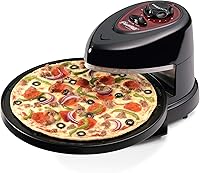
Presto 03430 Pizzazz Plus Rotating Oven
The Presto 03430 Pizzazz Plus Rotating Oven is an electric countertop pizza oven with a 12 in size, 1,235 watts, a rotating tray, separate top and bottom heating elements, and a timer with automatic shutoff. It suits a small operation that needs a compact countertop appliance for frozen, homemade, take-and-bake, or deli pizza rather than a high-volume commercial gas line.
Its rotating tray and separately controlled heating elements offer more control than a basic heated tray. The removable nonstick baking pan can simplify cleanup and storage.
The trade-off is capacity. A 12 in countertop oven is better suited to small batches than to a busy pizzeria that needs continuous commercial production.
Kamado Joe 15-inch Ceramic Pizza Stone for Brick-Oven Style Pizza Compatible with Kamado Joe Classic Joe 18-inch Charcoal Grill and Smokers, Model KJ-PS23
The Kamado Joe 15-inch Ceramic Pizza Stone is a ceramic stone for the Kamado Joe Classic Joe 18-inch charcoal grill and smokers. For another baking-surface comparison, see pizza steel vs cast iron.
It distributes heat and absorbs excess moisture, and the Kamado Joe Heat Deflector must be used with it to help avoid burning the pizza.
This product fits an outdoor charcoal setup, not an indoor gas pizza oven. Use it when your menu or service model includes charcoal cooking, and follow the required heat-deflector setup.
The ceramic surface should not be seasoned with olive oil or other cooking oils. It may darken with use, which is normal for this type of cooking surface.
Murphy Oil Soap Wood Cleaner, Citronella Oil Scent, 32 fl oz Bottle 3 Pack
Murphy Oil Soap Wood Cleaner is a concentrated liquid cleaner in a 32 fl oz bottle 3 pack. It is made for finished wood surfaces such as wood floors, cabinets, tables, chairs, wood paneling, laminate floors, bookcases, and other household surfaces listed for use.
Dilute ¼ cup in 1 gallon of warm water for routine cleaning, or ½ cup per gallon for heavy cleaning. Use a well-wrung mop or cloth and remove excess water, following the product directions.
This cleaner is for suitable finished surfaces, not for the oven chamber, baking deck, burners, gas fittings, or food-contact surfaces unless the surface instructions specifically allow it. Keep kitchen cleaning products separate from ingredients and pizza tools.
What is the final gas pizza oven commercial decision rule?
Choose a gas pizza oven commercial kitchen can support if you already have suitable gas service, approved ventilation, enough floor space, and a menu that benefits from fast heat recovery. Pick a countertop format for limited space and lower production, a deck format for direct batch baking, or a conveyor format for steady repeatable output.
Start the final decision with the menu and the busiest service period. Confirm the largest pizza size, the number of pies that may arrive together, and whether staff can prep and load fast enough to use the oven well.
Then confirm the building side of the plan. Check gas type and pressure, ventilation needs, hood and duct position, clearances, electrical access, delivery route, and room for service and cleaning.
Countertop formats suit kitchens where space is limited and production is modest. Deck formats suit kitchens where staff want direct control over custom pizzas and room to manage batches.
Conveyor formats suit kitchens built around steady, repeatable output.
Keep the trade offs in view as you compare models. A larger oven may add capacity, but it can also demand more floor space, stronger services, and more complex installation work.
Before ordering, confirm pizza size, peak demand, utility requirements, clearances, delivery route, service access, and local approval. If the building cannot support the ventilation or gas work, an electric commercial oven may be the more practical direction.
A sound choice should feel workable on a busy night, not just on a product page. When the oven format, menu size, staff workflow, and building services align, the kitchen can bake with fewer delays and less strain.
Frequently asked questions
What should I check before buying a gas pizza oven commercial kitchen?
Check the oven format, pizza size, hourly production target, gas type, ventilation plan, electrical needs, clearances, and installation approval. Confirm that the building can support the required gas line, hood or ventilation equipment, make-up air, fire protection, and service access before ordering.
Can you use an indoor gas pizza oven without a hood?
Usually, an indoor gas pizza oven needs an approved ventilation solution because combustion creates exhaust and cooking creates heat, smoke, and grease. Requirements vary by oven design and local code, so ask the manufacturer, fire authority, and qualified installer what your location requires.
Are commercial gas pizza ovens better than electric ovens?
Commercial gas pizza ovens can suit kitchens with gas service and a menu that benefits from fast heat recovery, but they also bring ventilation and installation requirements. Electric ovens may simplify utility planning.
Compare the complete installation, operating, and production needs rather than choosing by fuel alone.