How to Use a Pizza Peel and Stone
Preheat the pizza stone fully, dust the peel lightly, and launch the pizza with one quick forward motion. Use the peel to move the dough onto the hot stone, then retrieve the baked pizza after the crust firms.
On this page (10 sections)
- What is a pizza peel for a pizza stone?
- How do you preheat a pizza stone in the oven?
- How do you prepare a pizza peel?
- How do you launch pizza onto a hot stone?
- How do you use a pizza stone in the oven?
- How do you retrieve pizza from a stone?
- How do you stop pizza from sticking?
- How should you clean and cool a pizza stone?
- Can you use a pizza stone on a grill?
- What should you choose for your pizza setup?
To learn how to use a pizza peel and stone, preheat the stone fully, prepare the peel with a light dusting, and launch the topped dough with one quick forward motion. Let the baked crust firm before sliding the peel underneath to retrieve it.
A pizza stone supplies a hot baking surface that helps the dough cook from below. The peel acts like a flat paddle, letting you move soft dough onto the stone without reaching into the hot oven.
What is a pizza peel for a pizza stone?
A pizza peel is used to build, launch, turn, and retrieve pizza around a hot stone. Its flat surface supports the dough while the stone stays in the oven.
You can use a wooden or metal peel, but the important features are a fairly flat surface and an edge that can get under the crust. For a wooden option, see the best wood for a pizza peel.
A shorter handle may suit an indoor oven, while a longer handle gives more distance in a larger cooking area.
The Hans Grill Rectangular Pizza Stone with Peel, 15 x 12 Inch Cordierite Stone includes a peel and a rectangular cordierite stone. Its stated heat resistance is up to 1112°F, and it is intended for oven and BBQ use.
Use a peel for the launch even if you plan to bake on a best pizza stone material. The right material affects heating and care, but a well-prepared peel still controls the transfer.
How do you preheat a pizza stone in the oven?
Put the stone in a cold oven and preheat it for about 45 to 60 minutes at the recipe's cooking temperature. Starting cold reduces the chance of a rapid temperature change, while the longer preheat gives the stone time to heat through.
Place the stone on an oven rack with enough space above it for the pizza and peel. Check your oven's interior before positioning a large stone or steel, and leave room to move the peel without catching the rack.
Don't place a cold stone into an already hot oven unless its instructions allow that method. Likewise, don't move a hot stone onto a cold or wet surface.
The THERMICHEF 16" x 16" Pizza Steel is a steel alternative rather than a ceramic stone. For another surface comparison, read pizza steel vs cast iron.
Its 3/8-inch thickness and 27.5 lb weight mean it stores substantial heat, while its instructions call for preheating at 500°F for 45 to 60 minutes.
Steel and stone behave differently during baking. Read pizza stone vs pizza steel before choosing between a porous stone and a heavy steel surface.
How do you prepare a pizza peel?
Dust the peel lightly, shape the dough, and check that it slides before adding toppings. A thin layer helps reduce sticking without leaving so much loose flour that it burns on the hot stone.
Set the shaped dough on the peel and give it a gentle shake. If the dough stays in place, lift one edge and add a small amount of flour or another suitable dry dust beneath the sticky area.
Work quickly after adding sauce and toppings. Moisture can soak into the dough and make it bond to the peel, especially if the pizza sits there for several minutes.
Don't overload the pizza. Heavy toppings make the dough harder to launch and can pull the center downward as it moves.
For a beginner, prepare one pizza at a time. Keep the next dough ball covered while the first pizza bakes, then clean and dry the peel before starting again.
How do you launch pizza onto a hot stone?
Position the peel close to the back half of the stone, then pull it back with a short, confident motion. The pizza should slide forward onto the heated surface rather than being pushed down with the peel.
Open the oven only as far as needed. Angle the peel slightly downward, let the leading edge of the dough touch the stone, and draw the peel straight back.
If the dough folds during the launch, don't try to drag it across the stone repeatedly. A quick correction with the peel may help while the dough is still soft, but too much movement can tear the crust.
Practice the motion with plain dough or parchment only if your recipe and stone instructions allow it. The goal is a smooth slide, not speed for its own sake.
A pizza stone can be used in a conventional oven, outdoor pizza oven, or suitable grill. For a Kamado Joe, compare compatible Kamado Joe pizza stones.
For a portable live-fire option, see the Gozney Roccbox pizza oven review.
If you are choosing an outdoor setup, see the guide to outdoor pizza ovens before deciding how much cooking space and heat control you need.
How do you use a pizza stone in the oven?
Bake the pizza directly on the fully heated stone until the crust is cooked and the toppings are done. Keep the oven door closed as much as possible so the cooking chamber retains heat.
Follow the recipe's temperature and timing, since dough thickness and topping moisture change the result. A thin pizza may cook quickly, while a thick or heavily topped pizza needs more time.
Watch the crust edge and underside rather than relying only on the timer. If the top is browning too quickly, adjust the oven setting according to the recipe and your oven's instructions.
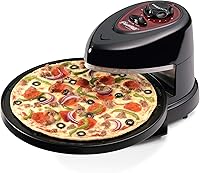
The Presto 03430 Pizzazz Plus Rotating Oven is a different option from a separate stone-and-peel setup. It has a 12-inch rotating tray, top and bottom heating elements that can be controlled separately, and a timer that signals the end of cooking and turns off the heating elements.
Its removable nonstick baking pan is designed for easier cleaning and storage. It suits someone who wants a guided countertop process, while a stone and peel offer more direct control over shaping and launching.
How do you retrieve pizza from a stone?
Wait until the crust has firmed, then slide the peel under the pizza from one side. Lift the edge slightly, move the peel farther underneath, and transfer the pizza to a board or pan.
A baked crust is easier to retrieve than raw dough because it holds its shape. If the center is still soft, give it more baking time before trying to move the whole pizza.
For a large pizza, support the crust with the peel while keeping the board close to the oven. Avoid grabbing the stone or rack with bare hands.
Let the pizza rest briefly before slicing. This gives the melted toppings time to settle and makes the crust easier to cut without dragging the center.
How do you stop pizza from sticking?
Check the dough's movement before topping and launch soon after topping. A peel that is too wet, too warm, or overloaded with flour can still cause problems.
Use a light dusting rather than a thick layer. Excess flour can scorch on the hot surface and leave a bitter taste.
Keep sauce away from the outer edge and avoid wet ingredients that release a lot of liquid. If the dough sticks during the final check, lift it carefully and add dust beneath the stuck section.
A stone's porous surface also needs dry handling. Don't oil a porous stone unless its care instructions specifically allow it, and don't wash it with soap if the instructions call for warm water only.
How should you clean and cool a pizza stone?
Turn off the oven and let the stone cool completely before moving or cleaning it. Rapid temperature changes can damage some ceramic stones.
Scrape away loose baked-on food with a tool suitable for the stone. Wipe the surface with water only when the care instructions allow it, then let the stone dry fully before its next use.
Stains are normal on a porous baking stone. The Hans Grill stone notes that marks do not affect its function, so discoloration alone is not a reason to replace it.
Never soak a hot stone or place it under cold water. Store it where it won't be dropped or struck against another hard object.
A steel needs different care. The HexClad pizza steel review covers another steel option.
The THERMICHEF steel calls for hand washing, scraping away food, and applying a thin layer of oil to help prevent rust.
Can you use a pizza stone on a grill?
Yes, a pizza stone can work on a grill when the stone is rated for that use and heated gradually. Keep the lid closed during preheating and baking so the grill acts more like an oven.
Place the stone over indirect heat when the instructions call for it. Avoid putting a cold stone directly over intense flame, and allow the stone to cool before removing it.
The Hans Grill stone is described for both oven and BBQ use. Its rectangular shape can provide useful room for pizza, bread, pastry, or calzone, but you still need to measure the grill surface and lid clearance.
If grill cooking is your main goal, compare the options in Best Pizza Stone For Grill and read Can You Use a Pizza Stone on a Grill? for setup details.
What should you choose for your pizza setup?
For how to use a pizza peel and stone, start with a stone or steel that fits your oven, a peel that slides under the dough, and enough preheat time. The launch depends more on dough movement and timing than on force.
Choose the Hans Grill set if you want a cordierite stone with a peel included. Choose the THERMICHEF steel if you want a heavy 16 x 16 in cooking surface for high-heat baking and repeated pizzas.
Choose the Presto if you prefer a 12-inch rotating countertop oven with separate top and bottom controls.
Measure your oven before choosing a large surface. The guide to the best pizza stone for oven can help you compare oven fit, while best outdoor pizza oven stone is the better next step for an outdoor setup.
Frequently asked questions
What is a pizza peel for a pizza stone?
A pizza peel is a flat transfer tool for moving shaped dough onto a hot pizza stone and lifting the baked pizza off it. Build the pizza on the peel, slide it onto the stone with a short forward motion, then use the peel again once the crust has firmed enough to lift.
How long should a pizza stone preheat?
Preheat the stone in the oven for about 45 to 60 minutes at the cooking temperature so the center has time to heat. The exact time depends on the stone, oven, and recipe, but a surface that looks hot is not proof that the stone is ready throughout.
Can you use a pizza stone in the oven?
Yes, a pizza stone is made for oven baking when its temperature limit and care instructions suit the job. Put the stone in a cold oven, heat it gradually, and let it cool completely before washing or moving it.
How do you stop pizza sticking to a peel?
Keep the dough moving while you shape it, use a light dusting of flour or another suitable dry dust, and launch soon after topping. Excess sauce, wet toppings, and a long wait can make dough stick even when the peel was prepared.