How to Choose a Commercial Wood-Fired Pizza Oven
A commercial wood fired pizza oven works best when its cooking chamber, fuel needs and installation clearances match your menu and your kitchen. Choose throughput first, then confirm space, ventilation, fuel storage and cleaning before you compare price or finish.
On this page (12 sections)
- How many pizzas per hour should a commercial wood fired pizza oven handle?
- What installation space does a commercial wood fired pizza oven need?
- How should you handle fuel for a commercial wood fired pizza oven?
- What heat pattern matters most in a wood fired pizza oven?
- How do you size the chamber for a commercial wood fired pizza oven?
- What safety and ventilation checks come before you buy a commercial wood fired oven?
- How should you compare gas, wood and pellet pizza setups?
- What prep workflow makes a wood fired pizza oven easier to use?
- How do you clean around a commercial wood fired pizza oven?
- What total cost should you budget for a commercial wood fired pizza oven?
- How do you test a commercial wood fired pizza oven before you commit?
- Which commercial wood fired pizza oven setup should you choose?
A commercial wood fired pizza oven is a choice about heat, space and workflow, not just about flame. You need enough chamber space for your largest pizza, enough fuel handling for your service hours and enough clearance to work safely around the hearth.
This guide uses the keyword wood fired pizza oven commercial as a practical buying shorthand. It covers throughput, installation space and fuel handling for professional cooking, plus the accessories and cleaning basics that keep the setup useful.
Our score weighs specs, features and buyer feedback against what you're shopping for. We compared product data, checked specs and looked at how each item fits a real prep area.
How many pizzas per hour should a commercial wood fired pizza oven handle?
Choose throughput around your peak batch plan, with room for dough prep, toppings and holding. A chamber that looks large enough for one pizza may fail when two or three pizzas need the same landing space.
Start with your menu. A small café may sell mostly 10 to 12 inch pizzas with simple toppings.
A full pizzeria may need larger pies, faster turn times and a clear path for peels, screens and serving boards.
Count the full cycle, not just bake time. Loading, turning, checking the crust, removing the pizza and cleaning the hearth all take time.
If your prep station sits too far from the oven, the bake time matters less than the walk back and forth.
How to map throughput to chamber and hearth space
List your largest pizza, your pan size and your serving board. Then sketch where each item lands before and after the bake.
The oven needs a workable entry, a stable landing surface and a separate exit path when possible.
Think about batch overlap. Two small pizzas may fit in one cycle, but only if the chamber, peel length and landing area allow safe movement.
Do not assume a larger outside cabinet means a larger usable cooking floor.
Ask how the oven will run during a rush. You may need a second peel, extra pans, a dough station close by and a holding shelf that keeps finished pies away from raw dough.
More throughput without more workspace creates a bottleneck at the door.
Rule: Buy for your busiest realistic hour, not for a quiet afternoon.
What installation space does a commercial wood fired pizza oven need?
Reserve space for the full working footprint, including clearance, door swing, flue route and safe movement around the front. The cabinet size is only the middle of the measurement.
Measure width, depth and height in the exact location. Add space for the chimney or flue, fire protection, fuel storage, prep tables and the path you will use to carry wood and remove ash.
Check ceilings, beams, shelves and wall finishes. Heat, smoke and sparks need a clear route upward and outward.
A low shelf above the hearth can become a problem even when the floor footprint fits.
Consider the delivery route too. Doors, hallways, stairs and turns must clear the largest fixed part.
Measure the route before you choose a model that cannot reach the kitchen.
For a broader look at outdoor setups, our outdoor pizza oven guide helps you compare placement, weather exposure and work surface needs before you commit to a commercial unit.
Rule: Tape the full footprint on the floor and walk the service path before you order.
How should you handle fuel for a commercial wood fired pizza oven?
Plan fuel around dry storage, safe carrying and ash removal, not the price of one bundle. Wood must stay dry, close enough to use and far enough from heat to stay safe.
Split wood by purpose. Kindling starts the fire, mid-size pieces build heat and larger logs sustain it during service.
Keep each group marked in a heat-safe area so staff do not sort mixed sizes during a rush.
Store wood off the floor and away from walls that trap moisture. A covered rack, ventilated alcove or purpose-built store works if it stays dry and meets local fire rules.
Plan ash handling from the start. You need a metal container, a safe route to empty it and a routine for cold ash only.
Never put warm ash in plastic, paper or a composter.
If your menu also uses other fuels, compare the workflow in our gas pizza oven commercial guide. A hybrid plan can simplify routine service while you save wood fired batches for signature pies.
Rule: If fuel storage and ash removal feel awkward on paper, the setup will feel awkward during service.
What heat pattern matters most in a wood fired pizza oven?
Look for steady radiant heat and a dry hearth, because those two factors shape crust color and crispness. A strong flame in the wrong spot can char toppings before the base cooks through.
Wood fired heat comes from flame, hot gases and hot surfaces. The floor under the pizza matters just as much as the air above it.
A cold floor gives a pale, soft base even when the top looks done.
Ask where the fire sits relative to the pizza. A side fire can create a gradient from hot to mild across the chamber.
Staff need a simple routine for turning pies, moving them toward or away from the fire and checking the underside.
Watch moisture too. Wet dough, juicy toppings and a damp hearth release steam.
Steam slows crust setting and can keep the center soft. A dry, well heated floor helps the base firm up before toppings release more water.
A ceramic stone is a useful clue to this principle. The Kamado Joe 15-inch Ceramic Pizza Stone distributes heat and absorbs excess moisture for a crispy crust, and Kamado Joe says a heat deflector must be used with it to avoid burning the pizza.
Rule: Choose the oven that gives you repeatable floor heat, not the one with the tallest flame.
How do you size the chamber for a commercial wood fired pizza oven?
Size the chamber around your largest pizza plus safe turning room. Capacity claims mean little if the peel cannot enter, turn and exit without scraping the walls.
Measure the inside length, width and height at the hearth. Then add a test with your actual peel, pan or screen.
The tool needs room to slide under the crust, lift the pie and clear the door frame.
Leave room for toppings. A pizza with a raised rim, loaded vegetables or a large cheese blanket needs more vertical space than a thin crust.
Tall toppings can brown too fast if the chamber roof sits close above them.
Think about the landing surface outside the door. Finished pizzas need a flat, heat-safe spot that is separate from raw dough and cold ingredients.
If the landing area is too small, staff will stack pies and trap steam.
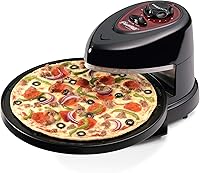
For smaller electric countertop needs, the Presto 03430 Pizzazz Plus Rotating Oven shows a different approach to space. It is a 12-inch countertop unit with a rotating tray, top and bottom heating elements and a removable nonstick pan.
Rule: Fit the chamber to your largest pie, your peel and your landing board as one system.
What safety and ventilation checks come before you buy a commercial wood fired oven?
Confirm ventilation and fire protection before you pay for the oven. A wood fired unit needs a safe flue route, proper clearances and a plan for sparks, smoke and ash.
Check local rules early. Building codes, insurance requirements and fire department guidance can affect placement, chimney design, clearances and fuel storage.
Do not rely on a general guide in place of local approval.
Map the flue path in a straight line when possible. Bends, long horizontal runs and roof penetrations add complexity.
If the route passes near wood framing, insulation or stored goods, that risk needs attention before installation.
Keep the work area clear. Wood, oil, paper towels, dough boxes and cleaning supplies should not sit near the hearth or flue.
A commercial kitchen gets busy, so the safe layout must survive a rush, not just a quiet setup.
Place a suitable fire extinguisher where staff can reach it without crossing the hot zone. Train the team on when to use it and when to call the fire department.
Safety equipment helps only if people know its location and limits.
Rule: If the flue route, clearances and local approval are not clear, pause the purchase.
How should you compare gas, wood and pellet pizza setups?
Compare fuels by flavor, labor and consistency, not by fuel cost alone. Wood adds flavor and high heat, but it asks for more attention than a controlled gas or pellet system.
Wood fired cooking rewards skill. Staff must feed the fire, manage coals, watch floor temperature and adjust for weather.
That labor can suit a signature menu, but it must fit your staffing model.
Gas offers faster startup and steadier control for many commercial kitchens. Our gas pizza oven commercial guide covers that option in more depth, including how to judge capacity and controls.
Pellet setups suit outdoor cooking and smaller batch work, but they do not give the same chamber heat or wood flavor as a dedicated wood fired oven.
For pellet grill pizza, our guide on How To Cook A Pizza On A Wood Pellet Grill? shows how timing and heat zones change when a grill does the work. That approach can test demand before you invest in a built-in commercial oven.
Rule: Pick wood for flavor and craft, gas for control and speed, or a grill setup for lower-commitment testing.
What prep workflow makes a wood fired pizza oven easier to use?
Build the prep area around a short, clear path from dough to fire to service. Every extra step during a rush adds delay and increases the chance of mistakes.
Place dough, sauce, cheese and toppings in a logical order. Staff should move in one direction where possible: stretch, sauce, top, launch, turn, remove, slice and serve.
Backtracking creates traffic near the oven door.
Keep hot and cold zones separate. Cold ingredients need refrigeration or a chilled rail.
Hot tools need a safe rest spot. A finished pizza should not land on the same board used for raw dough.
Plan the peel station with care. You need room to flour or cornmeal the peel, slide the pie on, launch it and recover the peel without hitting the fire.
Long handles require clear floor space behind the cook.
Use small, frequent batches. A large bowl of sauce or a full tray of toppings can overflow the work surface and slow down the cook.
Restock in small containers that fit the station and keep labels visible.
Rule: If the cook has to turn sideways to reach a basic ingredient, move the station.
How do you clean around a commercial wood fired pizza oven?
Clean for ash control, grease control and safe wood care in three separate routines. Each routine protects a different part of the setup.
For the hearth, remove ash and food debris after the oven cools enough to work safely. Use metal tools and a metal ash container.
Do not use a vacuum cleaner unless it is rated for ash and fully cool.
For work surfaces, wipe grease and flour before they build up near heat. Flour dust can be a fire risk when it collects near a flame, so the prep area needs regular wiping and a closed bin for waste.
For finished wood nearby, such as prep tables, cabinets or serving boards, use a wood cleaner made for finished surfaces. Murphy Oil Soap Wood Cleaner is a concentrated wood cleaner for finished wood surfaces such as floors, cabinets, tables and chairs, with a citronella oil scent.
Dilute it as directed, use a wrung out cloth and wipe away excess water. Test a small hidden area first if the finish is old or unknown.
Keep the cleaner away from the firebox, flue and any hot surface.
Rule: Clean ash with metal tools, grease with routine wiping and finished wood with a wood-safe cleaner.
What total cost should you budget for a commercial wood fired pizza oven?
Budget for the oven plus installation, fuel, tools and upkeep, not for the cabinet alone. A lower purchase price can still lead to a higher total cost if the setup needs extra work.
Include delivery, chimney parts, roof work, fire protection, hearth materials and installation labor. If the oven needs a new flue route or reinforced base, those costs belong in the first budget.
Add tools and accessories. You may need peels, a brush, pans, screens, a pizza cutter, ingredient containers and a metal ash container.
The Kamado Joe stone shows why accessories matter: its design depends on a heat deflector to avoid burning the pizza.
Add fuel and storage. Wood costs vary by type, size and dryness.
Racks, tarps, moisture protection and ash removal add small costs that repeat month after month.
Add training time. Staff need practice with fire building, launching, turning and cleaning.
A simpler oven the team can run well may beat a larger oven only one cook can manage.
If you also weigh gas grill options for outdoor events, our How To Choose A Gas Grill? guide helps you compare portable heat with a fixed oven. That comparison can clarify whether you need a full commercial build or a smaller test setup.
Rule: Compare total cost of ownership across the first year, not the sticker price on day one.
How do you test a commercial wood fired pizza oven before you commit?
Run a small trial with your real menu and your real team. A short test reveals space, workflow and heat problems that a spec sheet cannot show.
Use the same dough, toppings and pans you plan to sell. Cook your smallest pie, your largest pie and your most watery pie.
Note which one is hardest to launch, turn and serve.
Time the full cycle. Record prep time, load time, bake time, turn time and service time.
If the total cycle breaks your service goal, you need a different layout, a different oven or a smaller menu.
Watch the landing area during the test. If finished pies pile up, steam builds and crusts soften.
If raw dough waits too long, it can overproof or dry out. The test should expose both sides of the workflow.
Ask staff for plain feedback. Cooks can name the exact step that feels slow, awkward or unsafe.
Fix that step before you sign, because a rush will make a small flaw larger.
Rule: Buy the oven that passes your menu test, not the one that wins a beauty contest.
Which commercial wood fired pizza oven setup should you choose?
Choose a wood fired pizza oven commercial setup by matching throughput, space, fuel handling and safety to your menu. The right oven is the one your team can run well on a busy night.
Pick a larger chamber if your menu needs big pies, multiple pies per cycle or fast turnover. Pick a more compact setup if space is tight, staffing is small and the menu is simple.
Pick gas or pellet support if you need steady control for routine service and save wood fired batches for featured pies.
Use accessories that solve a clear problem. A ceramic stone can help with crust texture on a kamado.
An electric countertop oven can suit small-batch needs. A wood cleaner can protect finished wood in the prep area.
None of those items replaces a dedicated commercial chamber when throughput matters.
Revisit your plan before you order. Measure the footprint, map the flue, list the fuel storage and time a full test cycle.
If one part fails, change the layout or the oven, not the safety margin.
Rule: Choose the setup that fits your busiest hour, your floor plan and your fuel plan as one decision.
Frequently asked questions
What size commercial wood fired pizza oven do I need?
Size the oven around your largest pizza and your planned batches per hour, not around a vague idea of busy service. Measure the chamber, door opening, landing space and full outside footprint; then confirm that peels, pans and tools can move without blocking the fire or the exit route.
Can a pizza stone replace a commercial wood fired oven?
A ceramic pizza stone can improve crust texture on a suitable grill or kamado, but it does not add a wood fired chamber, sustained radiant heat or commercial throughput. Use a stone as an accessory for smaller batches; choose a dedicated oven when you need repeatable heat, larger capacity and professional workflow.
How should I clean wood surfaces around a pizza oven area?
Use a cleaner made for finished wood, diluted as directed, and wipe with a wrung out cloth so excess water does not soak the surface. Test the mix in a hidden spot first; then dry the area and keep cleaners away from the firebox, flue and any hot oven surfaces.