Grill vs Oven: Which Should You Use? (November 2026)
Choose a grill for fast browning and outdoor flavor, and choose an oven for even, hands-off cooking. In this grill vs oven comparison, the food you cook most often matters more than the appliance label.
On this page (11 sections)
- Grill vs Oven: The Quick Verdict
- Grill vs Oven Side by Side
- Browning and Grill Marks: Grill vs Oven
- Smoke Flavor and Outdoor Cooking
- Heat Control and Hot Spots
- Capacity for Family Meals and Sides
- Speed and Preheat Time
- Cleanup and Daily Care
- Space, Fuel and Where It Lives
- Who Should Buy Which
- Final Verdict on Grill vs Oven
Choose a grill for fast browning and outdoor flavor, and choose an oven for even, hands-off cooking. In this grill vs oven comparison, the food you cook most often matters more than the appliance label.
Our score weighs specs, features and buyer feedback against what you're shopping for.
We compared the models below on browning, heat control, capacity and cleanup.
If you cook burgers and chicken most nights, a grill will serve you better.
If you bake, roast and reheat, an oven will save you more time.
 Best for small indoor grilling
George Foreman 4-Serving Indoor Grill with Removable
 Best for flat top batches
Chefman XL Electric Griddle with Removable Temperature
Grill vs Oven: The Quick Verdict
Pick a grill for searing, marks and smoke, and pick an oven for baking, roasting and even heat. The right choice depends on your menu, your space and how much active cooking you want.
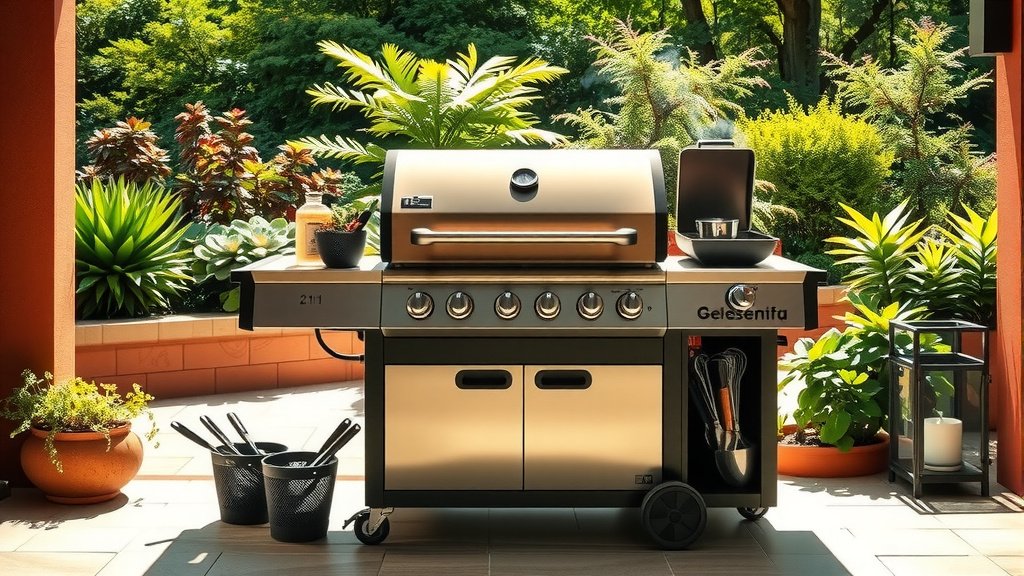
An outdoor grill uses direct heat from gas, charcoal or pellets.
That heat browns food fast and can add smoke flavor.
An oven uses enclosed heat and is better for foods that need time to cook through.
Indoor grills sit between those two ideas.
They give you browning and marks inside, but they cannot match outdoor smoke.
Countertop ovens give you oven heat in a smaller footprint.
The Breville oven and the George Foreman grill both use 1800 watts, while the Chefman griddle uses 1500 watts and the Chefman air fryer oven uses 1700 watts.
Wattage alone does not decide speed, because surface contact and enclosed air change how heat reaches food.
Our How To Use Outdoor Grill? guide helps if you plan to cook outside.
Our How To Use BBQ Grill? guide covers the basics for a backyard setup.
Grill vs Oven Side by Side
The grill wins on browning and flavor, while the oven wins on capacity and even cooking. Use the table below to match each appliance to the foods you cook.
| Feature | Outdoor / Indoor Grill | Oven and Countertop Oven |
|---|---|---|
| Browning | Fast, direct heat and marks | Slower, more even browning |
| Smoke flavor | Strong with charcoal or wood | None in a standard oven |
| Heat control | Hot spots need attention | More uniform heat around food |
| Capacity | Depends on grate size | Racks and trays hold more volume |
| Best foods | Burgers, steaks, chicken, vegetables | Bakes, roasts, casseroles, reheating |
| Cleanup | Grate scraping and drip areas | Racks, trays and interior walls |
A grill gives you control through distance from the heat source.
You can move food to a cooler zone to finish cooking after searing.
An oven gives you control through rack position and temperature setting.
The Breville model uses knob control and an LCD display that shows preheat completion, while the Chefman air fryer oven uses touch control with 17 presets.
Neither choice is better for every meal.
Many cooks use both, with a grill for short hot foods and an oven for long slow foods.
The products below show how those choices work inside a kitchen.
Browning and Grill Marks: Grill vs Oven
A grill gives stronger browning and visible marks in less time. Direct heat and close contact with a hot surface create crust that an oven struggles to match.
The George Foreman 4-Serving Indoor Grill with Removable uses a contact surface and a 60 square inch cooking area.
That design presses food against heat on both sides, so burgers and chicken brown fast for up to four servings.
The sloped grilling surface drains up to 42% of fat into the drip tray, according to the product description.
That drainage helps browning, because fat does not pool under the food during cooking.
A countertop oven browns with hot air.
The Breville BOV900BSS Smart Oven Air Fryer Pro uses 5 independent quartz elements and super convection to move hot air around food.
Its super convection reduces cooking time by up to 30% for suitable foods, and the two speed fan gives more control for air frying and roasting.
That helps with crisp edges, but it will not leave grill marks.
If marks matter to you, choose a grill.
If you want browning without flipping, choose an oven with convection.
Our Can You Use a Meat Thermometer in the Oven and on the Grill? guide helps you check doneness in either setup.
Smoke Flavor and Outdoor Cooking
Only an outdoor grill gives real smoke flavor. Smoke comes from burning fuel, wood or pellets, and an indoor appliance cannot copy that result.
A charcoal or pellet grill can add smoke while it cooks.
A gas grill adds less smoke, but it still gives outdoor flavor from high heat and dripping fat.
An oven adds no smoke at all.
That difference matters for ribs, brisket and chicken skin.
If you love smoke, plan your main dish for the grill and use the oven for sides that need steady heat.
Weather also matters.
An outdoor grill needs dry conditions and safe clearance from walls and siding.
An indoor grill or oven works in any weather and needs no fuel storage.
Start with our outdoor grill guide before your first cook.
It covers placement, safety and basic control so you can learn the grill side of this choice.
Heat Control and Hot Spots
An oven gives more even heat, while a grill gives more direct control and more hot spots. That trade-off decides which appliance feels easier to use.
An oven surrounds food with hot air, so food cooks on all sides at a similar rate.
Rack position still matters, because the top rack can brown faster than the bottom rack.
Convection fans help by moving air and reducing cold spots.
The Breville Element iQ system uses smart algorithms and digital PID temperature control to steer power where it is needed.
That system aims to remove cold spots, which helps with baking and roasting where even heat matters more than a single sear.
A grill heats from below or from both sides in a contact grill.
Food near the center may cook faster than food at the edges.
You manage that by turning food, moving it to a cooler zone and watching flare-ups.
The Chefman XL Electric Griddle with Removable Temperature offers a 200 to 420F range.
That range lets you warm tortillas at a low setting and sear burgers at a high setting on one flat surface.
Capacity for Family Meals and Sides
An oven usually holds more food in layers, while a grill holds more in one flat layer. Choose based on whether you cook in batches or in stacks.
The Breville countertop oven has a 1 cubic foot interior and fits most 9 x 13 inch pans.
It can hold a 14 pound turkey, 9 slices of bread or a 5 quart Dutch oven, according to Breville.
That makes it useful for roasts and large sides.
The CHEFMAN Multifunctional Digital Air Fryer+ Rotisserie has a 10 liter capacity.
It includes three air flow racks and a rotisserie spit, so you can cook family size portions in a smaller footprint than the Breville.
The George Foreman grill fits a main course for four on its 60 square inch surface.
The Chefman griddle offers a 10 x 20 inch flat surface for eggs, pancakes and burgers cooked together.
Flat Surface Versus Layered Space
A flat griddle helps when different foods need the same temperature at the same time.
Eggs, pancakes and bacon can share a 10 x 20 inch surface without stacking or covering each other.
A layered oven helps when foods need different rack positions or when one dish needs height.
The Breville interior is 16 x 13.5 x 7 inches, so a tall roast or a Dutch oven can fit where a flat grill would not work.
Choose flat space for breakfast batches and layered space for roasts, bakes and slow cooking.
Speed and Preheat Time
A grill often cooks a single layer faster, while an oven needs more time for thick or layered foods. Speed depends on food thickness and how hot the appliance is before you start.
George Foreman says its grill preheats 35% faster than the previous heating system.
That helps for burgers and chicken when you want dinner on the table in minutes.
The grill also cooks from both sides, which cuts flipping time.
An oven needs time to reach the set temperature, especially for baking.
The Breville oven shows when preheat is complete and then starts the countdown.
That helps you time a roast without guessing.
The Chefman air fryer oven uses rapid air heating elements and needs no preheat like a traditional oven, according to Chefman.
That design suits faster crispy foods, while thick roasts still need full cooking time.
For outdoor grills, preheat time depends on fuel and size.
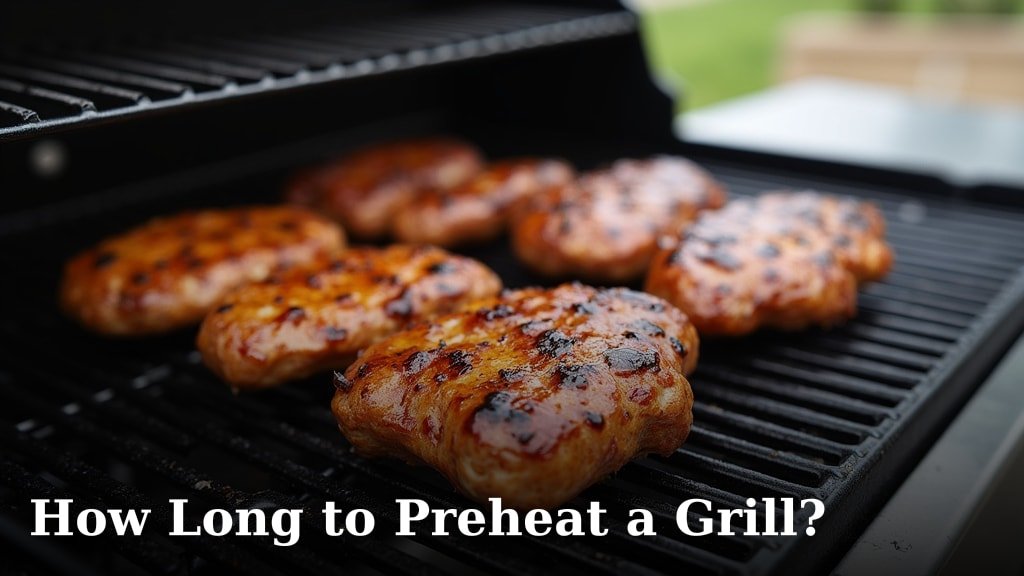
Our How Long to Preheat a Grill? guide explains what to expect.
Our grill preheating open guide covers lid position during that time.
Cleanup and Daily Care
A grill with removable parts is often easier to clean than an oven with baked-on spills. Both need regular attention, but the work feels different.
The George Foreman grill has removable plates that go in the dishwasher.
Its George Tough nonstick coating is 3x more durable, according to the listing, and it removes the need for butter and oil.
The ceramic material and PTFE free material type are listed in its specs, which may matter if you prefer to avoid that coating type.
That setup suits quick weeknight meals.
The Chefman griddle has a slide out drip tray and a cook top that is fully immersible after you remove the temperature control.
That design helps with grease from burgers and bacon.
The griddle uses an aluminum body and lists lead free, PFAS free and PFOA free material types.
An oven needs wiped walls, washed racks and attention to spills that burn during cooking.
Accessories like the Breville pizza pan, racks and enamel roasting pan add parts to wash.
The Chefman air fryer oven includes a removable drip tray and dishwasher safe parts, plus a stainless steel rotisserie spit with retrieval tool.
Warranty length also differs, with 3 years for the George Foreman grill, 2 years for the Breville oven and 1 year for both Chefman models.
Our Can You Use Oven Cleaner On A Gas Grill? guide helps you choose a safe cleaning approach for grill parts.
Space, Fuel and Where It Lives
A grill needs outdoor space or a compact counter spot, while an oven needs a stable kitchen spot with clearance. Measure before you buy, because footprint matters more than capacity numbers.
An outdoor grill needs room for the lid, safe distance from the house and storage for fuel.
It also needs a flat surface and protection from wind.
Those needs make it a poor fit for a small balcony or a windy roof.
An indoor grill is compact at 12 x 12 x 6.5 inches.
It fits on a counter and stores in a cabinet.
It uses 1800 watts, so check that your outlet and circuit can handle it.
The Breville oven measures 17.5 x 21.5 x 12.7 inches and weighs 30.2 pounds.
That is a large countertop appliance, so plan a permanent spot.
The Chefman griddle measures 11.7 x 21.4 x 7.4 inches and weighs 4.4 pounds.
It is wide rather than tall, so it needs clear width on the counter even though it is lighter than the Breville oven.
The CHEFMAN air fryer oven measures 12 x 12 x 15 inches and weighs 14.2 pounds, which is easier to move.
Who Should Buy Which
Buy a grill if you cook short hot foods often, and buy an oven if you bake or roast most days. Your weekly menu is the best guide.
Choose the George Foreman 4-Serving Indoor Grill with Removable if you want indoor grilling for two to four people.
It suits burgers, chicken and panini style sandwiches.
Its removable plates make cleanup simple after a quick meal.
Choose the Chefman XL Electric Griddle with Removable Temperature if you cook breakfast or flat top meals.
Its 10 x 20 inch surface fits eggs, pancakes and burgers at once.
The 200 to 420F range covers warming through searing.
Choose the Breville BOV900BSS Smart Oven Air Fryer Pro if oven tasks dominate your menu.
Its 13 functions include toast, bagel, broil, bake, roast, warm, pizza, proof, air fry, reheat, cookies, slow cook and dehydrate.
That range suits bakers and roast cooks.
It also dehydrates up to 4 trays at once, which suits meal prep beyond simple reheating.
Choose the CHEFMAN Multifunctional Digital Air Fryer+ Rotisserie if you want oven style cooking in a smaller unit.
Its 10 liter capacity and rotisserie spit suit family meals and meal prep.
Its 17 presets help if you want set programs instead of manual settings.
Its large easy view window and interior lights help you check food without opening the door often.
Final Verdict on Grill vs Oven
Pick the grill for browning and flavor, and pick the oven for even cooking and capacity in this grill vs oven choice. You do not need to love one and reject the other.
If your top foods are burgers, steaks, chicken and grilled vegetables, start with a grill.
If your top foods are baked goods, casseroles, roasts and reheated leftovers, start with an oven.
For a kitchen-only setup, the George Foreman grill covers quick grilling, and the Breville oven covers baking and roasting.
For breakfast and batches, the Chefman griddle covers flat top cooking.
For compact family meals, the CHEFMAN air fryer oven covers air frying and rotisserie.
Next, measure your counter or outdoor space and list your five most cooked foods.
That list will point to the right appliance faster than any feature list.
Then check preheat and cleaning needs before you order, so the appliance fits your daily routine.
Frequently asked questions
Is a grill better than an oven for burgers?
A grill is better for browning and outdoor flavor, while an oven gives you more even heat and less flare-up risk. For indoor burgers, a contact grill gives marks and drains fat, and an oven or griddle gives you more space to cook sides at the same time.
Can an oven give you smoke flavor?
A standard oven cannot give true smoke flavor, because smoke flavor comes from combustion and wood or charcoal. An indoor grill also cannot match outdoor smoke.
If smoke is your priority, an outdoor grill is the clear choice, and you can use an oven for the sides.
Which heats faster, a grill or an oven?
An indoor contact grill often heats faster for a single layer of food, and George Foreman says this model preheats 35% faster. A countertop oven may need more time, but it can cook several trays or a whole roast without flipping.
Outdoor grills vary by fuel and size.
Is a countertop oven as good as a full oven?
A countertop oven is good for smaller batches and foods that fit its interior, but a full oven has more rack space for large gatherings. The Breville model fits most 9 x 13 inch pans and a 14 pound turkey, so check your largest pan before you choose it.
Which is easier to clean, a grill or an oven?
Removable plates and a flat griddle are usually easier to wash than an oven interior, because you can soak or dishwash parts. An oven with racks and trays needs wiping and occasional attention to spills.
Always follow the manual for the exact cleaning method for each model.