How to Choose an Outdoor Pizza Oven and Fireplace
An outdoor pizza oven and fireplace works best when the oven opening, chimney draw and firebox are designed as one unit, not as two boxes joined later. Choose the layout that fits your fuel, space and cooking style first, then check clearances and materials before you buy.
On this page (11 sections)
- Which layout fits an outdoor pizza oven fireplace in your yard?
- How does shared chimney draw affect smoke and heat?
- What fuel should you choose for pizza plus fire?
- How big should the oven chamber and firebox be?
- Where should the oven and fireplace sit in the layout?
- What materials and build quality matter outdoors?
- How do you compare an outdoor pizza oven kit with a built-in?
- What clearances and safety checks come before you buy?
- How do you use pizza heat and firebox heat together?
- What care keeps a fireplace oven working year to year?
- Which outdoor pizza oven and fireplace should you pick?
An outdoor pizza oven and fireplace works best when the oven opening, chimney draw and firebox are designed as one unit, not as two boxes joined later. Choose the layout that fits your fuel, space and cooking style first, then check clearances and materials before you buy.
A combined unit saves footprint and gives one focal point for the yard. It also ties your cooking heat to the same chimney that must clear smoke from the fire.
That link is the main decision in this guide.
We compared layouts, fuels and sizes using maker specs and buyer patterns. Start with the sections that match your patio, then use the product boxes as practical examples of cooking and care.
Which layout fits an outdoor pizza oven fireplace in your yard?
Pick the layout that matches your space and how often you will cook and burn fires. A true integrated unit, a fireplace with an oven insert and two separate units are not equal.
An integrated outdoor pizza oven fireplace puts the oven chamber beside or above the firebox. Heat paths, doors and the chimney are planned together.
This gives the cleanest look and the smallest footprint.
A fireplace with a pizza insert keeps the existing fire as the center. For a grill-based option, compare a pizza oven attachment for pellet grills.
You add a stone, steel or box inside the firebox for cooking.
This suits renters or buyers who want to test pizza cooking before a full build.
Two separate units give you the most freedom. Compare portable pizza ovens to find a model for your patio.
The oven can sit on a counter or cart, and the fireplace can move or change later.
The cost is more footprint and more pieces to maintain.
Integrated unit, insert or separate units?
Use an integrated unit when you want one permanent structure and will use both parts in the same season. Use an insert when the fireplace already exists and your first goal is learning pizza cooking.
Use separate units when you may move, rent, or want a portable oven for travel.
Our score weighs specs, features and buyer feedback against what you're shopping for. A score in a product box is not pasted here because this is a guide, not a roundup.
Rule: choose integrated only if the chimney, clearances and hearth will pass local rules as one build.
How does shared chimney draw affect smoke and heat?
A shared chimney must serve both the oven and the open fire without pulling smoke back over seats. Taller stacks, straight runs and correct flue size help more than decorative height alone.
An open fireplace uses a lot of air. That air comes from the patio, which can make the oven chamber draw unevenly if the two share one flue poorly.
Dampers and separate flue paths reduce that problem in well-designed units.
Wind also matters. A fireplace under a roof edge or beside a tall wall can see downdrafts.
Place seating downwind of the opening when possible and check the chimney cap for wind direction.
For general fire setup, our guide on How To Use Outdoor Grill? helps you think about heat zones and fuel placement. The same care with air flow applies before pizza enters a combined oven.
Rule: if the chimney cannot rise clear of the roof line and nearby walls, do not buy a shared-flue design.
What fuel should you choose for pizza plus fire?
Choose fuel by how you want to cook pizza most nights, not by how you want the fire to look on holidays. Wood, gas and dual-fuel setups each change heat control and firebox use.
Wood gives the classic flavor and a visible fire. It needs dry stored wood, ash removal and time to reach pizza heat.
It also means more cleaning around the hearth and chimney.
Gas gives faster starts and easier temperature control. For a fixed-line setup, compare natural gas pizza ovens.
It suits weeknight pizza and smaller patios where smoke is a concern.
A gas firebox can still look like a fire, but it will not behave like a wood firebox.
Dual-fuel designs cost more and add parts to maintain. They make sense only if you will truly use both fuels in the same week.
Many buyers say they use one fuel for pizza and a second only for ambience.
Rule: pick the fuel you will use for pizza twice a month, then let the fireplace style follow that choice.
How big should the oven chamber and firebox be?
Size the oven for the largest pizza you will actually make, with room to turn it safely. A chamber that fits the pizza on paper can still be tight when a peel, gloves and a turning tool come into play.
The firebox needs room for the logs or burner you plan to use. Count log length, stack height and ash space, not just the outside width of the unit.
A wide firebox with a shallow depth can still be awkward to load.
For a permanent outdoor kitchen, start with our best pizza oven for outdoor kitchen guide to compare counter space and work area. The oven is only part of the station.
You also need landing space, tool storage and a safe path for hot pans.
If your household makes large pies often, check the best large outdoor pizza oven guide before you lock the size. Large chambers help with 16 inch pies and sharing, but they need more fuel and longer heat-up time.
Rule: measure the chamber by pizza plus peel clearance, and the firebox by your longest log plus ash room.
Where should the oven and fireplace sit in the layout?
Place the unit where smoke travels away from doors, windows and seating on the most common wind days. A good cooking spot can be a poor sitting spot if smoke drifts across the patio.
Keep the oven opening at a comfortable work height. Many buyers like the oven near counter height so they can slide a peel without bending low or reaching high.
The firebox can sit a little lower if it is mainly for viewing.
Leave a service side for wood, tools and ash. If one side is blocked by a wall or counter, loading and cleaning will get old fast.
Access for a chimney sweep or inspection also matters.
A simple outdoor pizza oven on a cart can beat a fixed unit if your patio is small. You can wheel it to the wind side for cooking and store it when the fireplace is the focus.
Rule: map wind, doors and seating first, then place the unit so smoke never crosses the main sitting area.
What materials and build quality matter outdoors?
Choose materials for rain, heat cycles and cleaning, not just for looks in photos. Refractory brick, concrete board, stainless steel and ceramic each handle outdoor use in different ways.
A refractory interior absorbs and holds heat for pizza. Thin metal walls heat fast but can cool fast and warp with repeated cycles.
Ceramic stones also hold heat and help with crust texture, as seen with a dedicated pizza stone.
The Kamado Joe 15-inch Ceramic Pizza Stone is round, white and made of ceramic. Kamado Joe says the high-impact ceramic distributes heat and absorbs excess moisture.
The maker also says the Kamado Joe Heat Deflector must be used with the stone to avoid burning the pizza.
That last point matters for fireplace setups too. Direct flame under a stone can scorch the base before the top cooks.
A deflector, raised hearth floor or air gap helps you control that heat.
Exterior finishes should shed rain and resist fading. A cleanable outer shell also matters because soot, grease and ash will land on ledges near both openings.
Rule: buy a refractory or ceramic cooking chamber for pizza, and a weatherproof shell you can wipe clean.
How do you compare an outdoor pizza oven kit with a built-in?
A kit suits buyers who want fewer masonry decisions and a faster install than a full custom build. It still needs a base, chimney parts and clearances, so read the full install list before you order.
Kits often include an oven dome, door, flue and trim in one package. That can cut guesswork if the parts are designed to fit together.
Our outdoor pizza oven kit guide breaks down what to check in the box.
A built-in gives you custom size and finish, but it needs more planning for footings, framing and inspection. It also ties the oven to one spot for good.
If you move in a few years, that permanence has a cost.
For a countertop or indoor-outdoor test, a small electric oven can teach you timing and topping habits without a build.
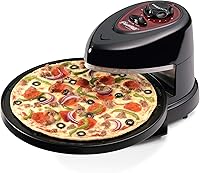
The Presto 03430 Pizzazz Plus Rotating Oven is a 12-inch countertop model that runs on electricity. It has a rotating tray, top and bottom heating elements that can be controlled separately, and a timer that turns off the heating elements when time ends.
The removable nonstick pan wipes clean and stores easily.
Presto says it saves as much as 60% in energy compared to a conventional oven. Use that as a maker claim for energy use, not as a promise for your power bill.
The useful lesson here is control: bottom heat sets the crust, top heat finishes toppings.
Rule: choose a kit if you want a planned fit, and a custom build only if you will stay in the home long term.
What clearances and safety checks come before you buy?
Check clearances before you fall in love with a style. The unit needs the maker's required distance from wood, roofs, counters and seating, plus a hearth that catches stray ash.
Local fire rules control in the end.
Measure from the firebox opening to the floor, and from the chimney to any roof or eave. Under a covered patio, the ceiling material and height matter as much as the side walls.
Some designs need a noncombustible ceiling zone.
Keep wood storage away from the opening. Stacks of logs look nice beside a fireplace, but they are fuel stored inside the safety zone.
A covered wood rack a few feet away is safer and keeps the wood drier.
Think about children and pets too. A low hearth, sharp trim or a hot oven door can be a risk in a family yard.
A door that stays closed, a raised oven and a clear no-touch zone help.
If you are still deciding between grill-based cooking and a fireplace oven, our How To Choose A Gas Grill? guide helps you compare fuel handling and size. That logic also applies to gas burners in a fireplace unit.
Rule: if the maker clearances do not fit your roof, walls and floor, the unit is too big.
How do you use pizza heat and firebox heat together?
Use the oven and firebox on different rhythms, with the oven preheated first and the fire built for the guests you have. Pizza needs steady heat.
A social fire needs comfort and looks.
Preheat the oven chamber until the stone or floor holds heat through a full cook. An open fire beside it can then run lower for ambience.
If both share a chimney, small damper changes can affect draw, so make one change at a time.
For a Kamado, a stone changes the cook in a clear way. The Kamado Joe stone above is made for a Classic Joe 18-inch charcoal grill and smokers.
Kamado Joe says the stone will darken with use, which is normal, and that you should not season it with olive oil or other cooking oils.
For a gas grill you already own, a stone can add a pizza option without a new oven. That path suits buyers who want to test demand before building a fireplace oven.
It also keeps the fireplace for fires only.
Murphy Oil Soap Wood Cleaner comes as three 32 fl oz bottles with a citronella oil scent. Murphy says it safely cleans finished wood to a natural shine and removes dirt, grease and grime.
It is made for finished wood surfaces such as floors, cabinets, tables, chairs and paneling, and the maker lists a concentrated formula with no rinse and no visible residue.
Use a wood cleaner only on finished wood, not on raw outdoor structures or inside a firebox. Soot near a fireplace often lands on nearby cabinets and tables first, so a safe cleaner for those surfaces helps keep the cooking area presentable.
Rule: preheat for pizza first, then adjust the fire for people, and never let the fire dictate oven heat.
What care keeps a fireplace oven working year to year?
Plan care around ash, soot, chimney draw and the oven floor. A unit that is easy to empty and inspect will get used more and will last longer.
Remove ash when it builds up, but follow the maker's cooling and disposal notes for hot coals. Let the unit cool fully before deep cleaning.
Check the chimney and cap for creosote, bird nests and blockages on the schedule the maker sets.
Clean the oven floor as the maker directs. Ceramic stones can darken with use, and Kamado Joe notes that darkening is normal for its stone.
That color change alone does not mean the stone has failed.
Wipe exterior ledges and nearby finished wood with a cleaner made for that surface. Soot and grease settle fast near an oven opening, and a quick wipe after a cook stops stains from setting.
Keep the cleaner off stone, metal and the firebox interior unless the label allows it.
Inspect seals, doors and trim once a season. Cracks in refractory, loose flue joints or a warped door can change heat and smoke paths.
Small fixes early cost less than a damaged chamber later.
Rule: clean ash and soot on a set schedule, and inspect the chimney before the first big cook of each season.
Which outdoor pizza oven and fireplace should you pick?
Pick by your fuel, space and how long you plan to stay in the home. An integrated outdoor pizza oven with fireplace suits a permanent patio with proper chimney height and clearances.
An insert suits an existing fireplace and a first test. Separate units suit renters, small yards and buyers who want room to change.
If you want pizza most nights with less smoke, lean gas or a portable oven. If you want wood flavor and a real fire, lean wood and budget time for storage and cleaning.
If you want both, buy a design built for both fuels rather than an add-on.
Start with the layout section, then check chimney draw, fuel, size and clearances in that order. Those five choices settle most of the rest.
A kit can simplify the build, and a stone or small countertop oven can test your habits before you commit.
Final rule: buy the smallest integrated unit that fits your pizza, your logs and your clearances, with room to service every part.
Frequently asked questions
Can an outdoor pizza oven and fireplace share one chimney?
Yes, some integrated designs share a chimney, but the oven, firebox and flue must be engineered for that use. Separate openings, proper draw and clearances from combustibles matter more than sharing the stack alone.
Is a fireplace with a pizza oven insert the same as a built-in?
No. An insert or stone placed in a firebox adds cooking ability without rebuilding the fireplace.
A built-in oven has its own chamber, door and heat path, which changes setup cost and cleaning needs.
What is the biggest mistake buyers make with fireplace ovens?
The biggest mistake is choosing size before checking chimney height, hearth clearance and ceiling or roof distance. A unit that fits the patio on paper can fail in a covered outdoor kitchen.