
No, it is not safe to grill on a wooden deck without taking serious precautions. Wooden decks are combustible surfaces, and grilling creates extreme heat and open flames. This combination presents a significant fire risk for your home.
You might love grilling outdoors, but safety should always come first. Many home fires start from grilling accidents, especially when grills are too close to structures. We found that proper placement and protective measures are essential for peace of mind.
- Grilling on a wooden deck is dangerous without precautions.
- Fire hazards include stray embers and radiant heat.
- Always use a protective mat under your grill.
- Keep your grill a safe distance from railings and walls.
- Consider alternative grilling spots if possible.
Let’s walk through everything you need to know about grilling safely and protecting your wooden deck.
Understanding the Risks of Grilling on a Wooden Deck
Grilling on a wooden deck can feel convenient, but it introduces several dangers you might not immediately consider. Your deck is typically made of wood, a highly flammable material. When you combine this with the extreme heat, open flames, and hot coals from a grill, you create a recipe for potential disaster.
We found that understanding these risks is the first step toward preventing accidents. It’s not about fear, but about being aware and taking smart precautions. Let’s break down the main hazards.
The Threat of Radiant Heat
Even without direct flames, your grill radiates a lot of heat. This isn’t just the heat you feel when standing near it; it’s a powerful, invisible energy that can dry out and weaken wooden surfaces over time. This process, called pyrolysis, makes wood more prone to ignition. It’s a bit like leaving wood in a slow oven.
The National Fire Protection Association (NFPA) warns that grills should be kept away from combustible surfaces. This is precisely why. The heat can build up, and suddenly, a surface that seemed safe can catch fire with minimal provocation.
Embers, Sparks, and Flare-Ups
Think about what happens inside your grill. Whether it’s charcoal or gas, you have the potential for flying hazards. Charcoal grills produce hot embers that can escape through vents or when you open the lid. A gust of wind can carry these tiny, glowing pieces onto your deck or even into nearby dry vegetation.
Gas grills can also have flare-ups, where grease drips onto the burners and ignites, sending flames higher than expected. Even a small spark or a forgotten hot ash can quickly escalate into a serious fire on a dry wooden deck. We found that this is a very common cause of deck fires.
Grease Fires and Spills
Grilling often involves fatty foods, which means grease buildup is inevitable. A grease fire is incredibly dangerous because water won’t extinguish it; it will only spread the flames. If a grease fire starts on your grill, and hot, burning grease spills onto your wooden deck, you have a major problem.
Beyond actual fires, grease spills can also damage your deck surface. They leave stubborn stains and can make the wood slippery, creating a different kind of hazard. Regular grill cleaning helps reduce these risks, as we found in our research.
Essential Safety Measures for Deck Grilling
So, you really want to grill on your deck? We understand. It’s convenient and part of the outdoor living experience. But you need to take every possible precaution. Think of these steps as your essential safety checklist.
Use a Grill Mat or Deck Protector
This is arguably the most important safety item you can buy. A grill mat creates a protective barrier between your hot grill and the wooden deck. It’s designed to be fire-resistant and can catch stray embers, grease drips, and food particles.
When choosing a mat, look for one specifically labeled for grill use and outdoor conditions. It should be large enough to extend beyond the footprint of your grill, offering a wide safety zone. We found that silicone or PVC mats are popular choices, as they are durable and easy to clean.
Maintain Proper Clearance
Distance is your friend when grilling. Many fire safety guidelines, including those from the U.S. Fire Administration, recommend keeping your grill at least 10 feet away from any structures. This includes your house, deck railings, and overhanging eaves or branches.
If 10 feet isn’t possible on your deck, aim for the absolute maximum distance you can get. Never place your grill directly against a wall or under an awning. The radiant heat alone can ignite siding or wooden structures over time. Ventilation is key, so don’t trap the heat.
Clearance Checklist
- Is the grill at least 10 feet from your home’s siding?
- Is it away from any deck railings, wooden fences, or combustible furniture?
- Is there nothing hanging directly above the grill, like eaves, branches, or umbrellas?
- Is the area around the grill free of dry leaves, rags, or other flammable debris?
- Are there no open windows or doors nearby that smoke or sparks could enter?
Grill Maintenance is Non-Negotiable
A well-maintained grill is a safer grill. Grease and food debris build up over time and become fuel for fires. We found that cleaning your grill regularly reduces the risk of flare-ups and grease fires significantly.
Here’s a quick maintenance routine:
- Clean grates after each use: Brush off food residue.
- Empty grease traps: Do this often, especially before grilling fatty meats.
- Inspect gas lines and connections: Check for leaks before each use (a soapy water solution will bubble if there’s a leak).
- Check for rust and damage: A damaged grill can be a dangerous grill.
When to Absolutely Avoid Deck Grilling
Sometimes, even with all the precautions, grilling on a wooden deck is simply too risky. Recognizing these situations can save your home and potentially lives. It’s better to be safe than sorry, right?
Windy Conditions
A breezy day might feel nice, but it’s terrible for grilling on a deck. Wind can carry hot embers from charcoal grills, spread flames from gas grill flare-ups, and fan small fires into large ones in seconds. If the wind is strong enough to rustle leaves constantly, or if you feel a consistent push, reconsider your grilling location. Wind is an unpredictable element that greatly amplifies fire risk.
Dry Weather or Droughts
Is your region experiencing a dry spell? Are leaves and grass brittle? This means your wooden deck is likely drier, too. Dry wood ignites much more easily and burns faster. During droughts or periods of very low humidity, the risk of a small spark turning into a widespread fire is dramatically higher. Always check local fire danger warnings before grilling.
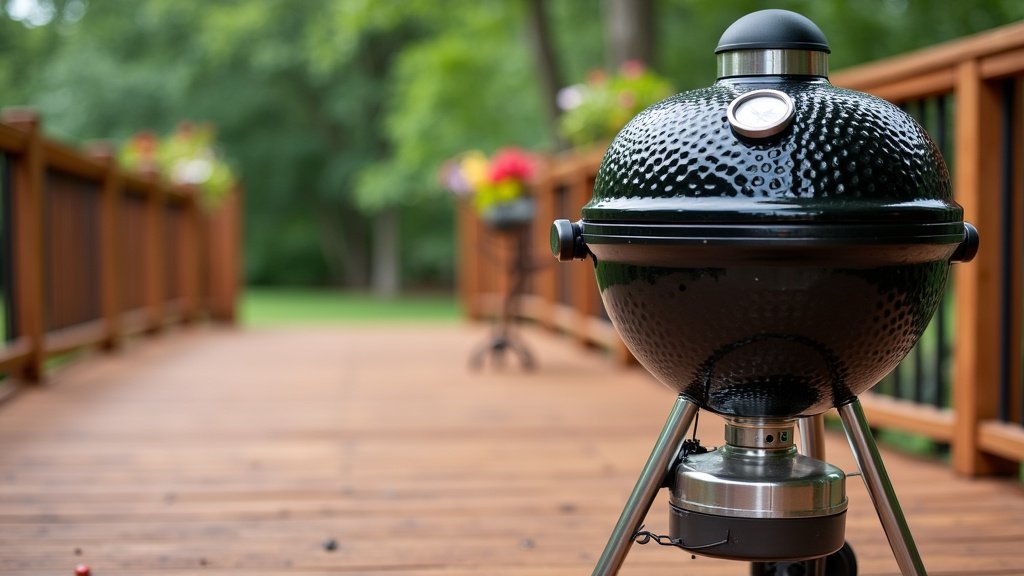
Alternatives to Deck Grilling
If grilling on your wooden deck seems too risky, or if the conditions aren’t ideal, don’t worry! You still have options for enjoying delicious grilled food. We found that many people choose these alternatives for peace of mind.
Patios and Concrete Slabs
The safest place to grill is on a non-combustible surface. A concrete patio, paver patio, or even a gravel area far from your home is ideal. These surfaces don’t catch fire and can withstand the heat and errant sparks from a grill. If you have one, use it! It’s the safest option available.
Designated Grilling Areas
Some homeowners create a dedicated grilling zone in their yard. This might involve a small concrete pad, an area with fire-resistant landscaping, or a spot far from any structures or dry vegetation. A designated area makes safety a priority from the start and offers a worry-free grilling experience.
| Grilling Location | Safety Level | Key Considerations |
|---|---|---|
| Wooden Deck (with precautions) | Moderate Risk | Requires grill mat, 10-ft clearance, constant supervision. |
| Concrete/Paver Patio | Low Risk | Non-combustible surface, less worry about embers/radiant heat. |
| Designated Yard Area | Lowest Risk | Away from all structures and flammable materials. |
Beyond the Grill: Fire Extinguishers and Supervision
No matter where you grill, basic fire safety tools and practices are essential. They are your last line of defense if something goes wrong. We found that these simple additions can make a huge difference.
Keep a Fire Extinguisher Handy
You should always have a Class B fire extinguisher readily accessible when grilling. This type is designed for flammable liquids, like grease fires. Make sure you know how to use it BEFORE you need it. A bucket of sand is another option for grease fires, but water should never be used on them. The U.S. Fire Administration recommends having one nearby.
Never Leave a Hot Grill Unattended
This seems obvious, but it’s easy to get distracted. Walking away from a hot grill, even for “just a minute,” is incredibly risky. A sudden flare-up, a gust of wind, or a curious pet can turn a minor incident into a major one very quickly. Constant supervision is a non-negotiable safety rule.
Properly Dispose of Ashes and Coals
If you’re using a charcoal grill, disposing of ashes and coals correctly is crucial. They can remain hot for hours, even days. Never dump them directly into a trash can. Instead, place them in a metal can with a tight-fitting lid, ideally filled with water. Let them sit for 24-48 hours before disposing of them. This simple step prevents countless fires.
Conclusion
Grilling on your wooden deck can be enjoyable, but it demands your full attention to safety. We’ve seen that understanding the risks—from radiant heat to flying embers—is the first step. By always using a grill mat, maintaining proper clearance, and keeping your grill clean, you significantly reduce the danger.
Remember to consider the weather and always have a fire extinguisher nearby. Your home and family’s safety are too important to risk. Choose the safest grilling spot, supervise your grill, and protect your wooden deck. Happy grilling, safely!
Frequently Asked Questions
Can a grill mat really prevent deck fires?
Yes, a high-quality, fire-resistant grill mat provides a crucial barrier. It protects your wooden deck from stray embers, grease drips, and the intense radiant heat from your grill. It’s a vital safety tool, but not a replacement for overall vigilance.
How close is too close for a grill to a wooden deck railing?
You should aim for at least 10 feet of clearance from all combustible structures, including deck railings. Even if your deck space is limited, position your grill as far away as possible to prevent radiant heat from damaging or igniting the wood.
What kind of fire extinguisher should I keep by my grill?
For grilling, a Class B fire extinguisher is recommended. This type is specifically designed to put out fires involving flammable liquids, like the grease fires that can occur while grilling. Ensure it’s easily accessible and you know how to use it.
Is it safer to grill on a composite deck than a wooden one?
While composite decks are often more fire-resistant than natural wood, they are not fireproof. They can still melt or combust under extreme heat or direct flame exposure. Always use a grill mat and follow all safety precautions, regardless of your deck material.
Can I use water to put out a grill fire?
Only if it’s not a grease fire. If you have a grease fire, using water will only spread the flames and make the situation worse. For grease fires, use a Class B fire extinguisher, baking soda, or a metal lid to smother the flames. For other grill fires, use a fire extinguisher or call emergency services if it’s out of control.
