
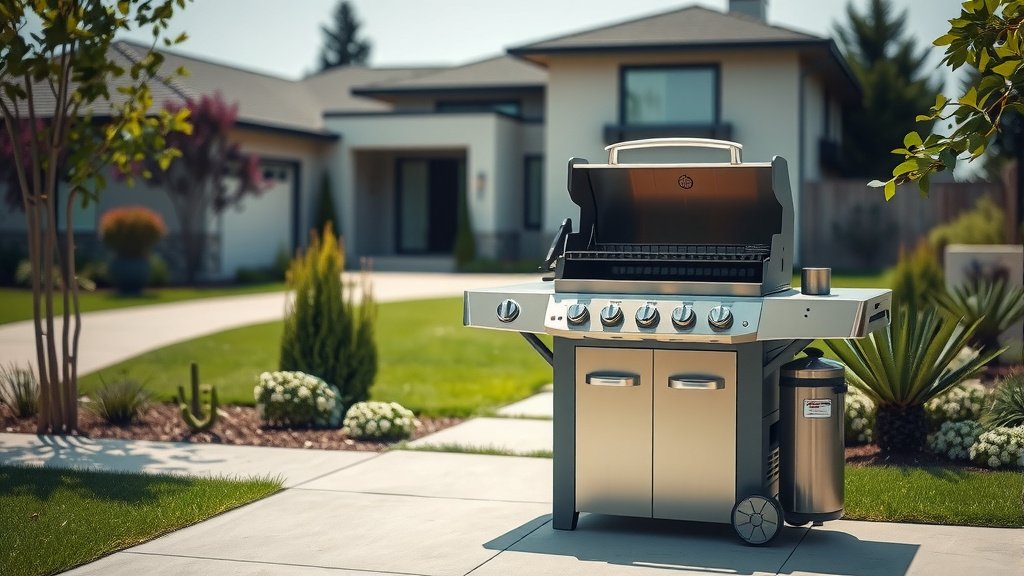
A gas grill should ideally be at least 10 feet away from your house, any combustible materials, and anything that could catch fire.
This general guideline helps prevent heat damage, grease fires, and dangerous flare-ups from reaching your home’s structure or outdoor items.
- For safety, aim for a minimum of 10 feet clearance from your home.
- Keep grills away from siding, fences, trees, and hanging branches.
- Never grill under porch overhangs, carports, or low eaves.
- Always check your grill’s user manual for specific, manufacturer-recommended distances.
- Consider wind direction and potential fire hazards when choosing your spot.
How Far Should A Gas Grill Be From The House?
The safest distance for a gas grill from your house is generally 10 feet. This crucial distance helps protect your home from accidental fires and heat damage.
We found this recommendation from many fire safety organizations and grill manufacturers to be a good starting point for backyard grilling safety.
Why Grill Placement is a Big Deal
Grilling is fun, but safety comes first. Positioning your grill too close to your home creates significant risks. You are dealing with open flames and high heat.
Grease fires, sparks, and radiant heat can quickly damage siding. They can also ignite curtains, dry leaves, or other flammable items nearby.
Understanding the Core Safety Guidelines
Many experts agree that proper grill placement is simple fire prevention. The National Fire Protection Association (NFPA) consistently advises keeping grills away from structures. This includes your house, deck railings, and overhanging branches.
We found that following these guidelines significantly reduces the risk of home fires. Protecting your property and loved ones should always be your top concern.
The 10-Foot Rule: A Solid Starting Point
The 10-foot rule is widely recognized for a good reason. It provides a safe buffer zone for most gas grills. This distance helps ensure that any sudden flare-ups or stray embers won’t immediately threaten your home.
Think of it as your personal safety bubble for grilling. It’s a simple rule that can prevent big problems, keeping your outdoor cooking worry-free.
What If 10 Feet Isn’t Possible?
Sometimes, backyard layouts make a full 10 feet a bit tricky. If you cannot get 10 feet, aim for the absolute maximum distance your space allows. Never go closer than three feet as an absolute minimum, and only if absolutely necessary.
You must increase your vigilance and take extra precautions if you are closer. This might include using a fire extinguisher nearby or having a garden hose ready.
Dealing with Flammable Materials
It’s not just your house you need to worry about. Any items that can burn should be far from your grill. This includes outdoor furniture, dry leaves, firewood, and even gardening tools.
We found that many accidental fires start when grills are too close to easily ignitable materials. Always clear the area around your grill before you light it.
The Danger of Overhangs and Eaves
Never place your gas grill under an overhang, carport, or low-hanging eaves. Heat and smoke need to dissipate freely into the open air. Building up under a structure can cause serious problems.
The concentrated heat can damage materials above, and carbon monoxide can accumulate. We found this is a common mistake that leads to avoidable incidents (NFPA).
Grilling Safely on Decks and Patios
Grilling on a deck or patio is popular. If you do this, make sure your grill is on a stable, non-combustible surface. Deck boards can warp or catch fire from stray embers or dripping grease.
Consider using a grill mat underneath your grill. This added layer of protection can catch drips and spills, safeguarding your deck or patio surface.
Wind Direction and Gusts Matter
Wind is often an overlooked factor in grill safety. Strong winds can spread embers or push flames toward your house. Always position your grill with the wind in mind.
Try to orient your grill so any smoke or potential sparks blow away from your home. This small adjustment can make a big difference in preventing accidents.
Always Check Your Grill’s Manual
Your grill’s manufacturer knows their product best. Before its first use, always read your specific grill’s manual. It will state the exact minimum clearance distances.
We found that these instructions are tailored to your grill’s design and heat output. Following them ensures you are using your appliance as safely as intended.
Setting Up Your Designated Grill Zone
Creating a dedicated grill zone can make safety a habit. This is a clear, open area that is free from obstructions. It provides plenty of space to move around safely while cooking.
Think of it as your outdoor kitchen island. It should be easy to access, well-lit, and away from foot traffic, especially if you have pets or children.
Your Quick Grill Safety Checklist
Here’s a quick list to run through before you start grilling:
- Is the grill at least 10 feet from the house?
- Are there any flammable items nearby, like dry leaves or furniture?
- Is the grill away from any overhead structures or low branches?
- Is the grill on a stable, level surface?
- Have you checked your grill’s manual for specific safety instructions?
- Do you have a fire extinguisher or water source nearby?
Common Grill Clearances at a Glance
This table summarizes common recommendations for grill distances from various items. Always prioritize your grill’s manual first.
| Item | Recommended Minimum Distance | Why This Distance? |
|---|---|---|
| House or Building | 10 feet (3 meters) | Prevents heat damage, grease fires, and ember spread to siding. |
| Deck Railings | 3 feet (1 meter) | Protects wood or vinyl from radiant heat and direct flame. |
| Overhangs / Eaves | Never place underneath | Avoids heat buildup, smoke accumulation, and fire risk to roof. |
| Trees / Shrubs | 10 feet (3 meters) | Prevents ignition of dry foliage and allows for heat dissipation. |
| Combustible Materials | 3-10 feet (1-3 meters) | Includes outdoor furniture, curtains, firewood, and trash cans. |
Conclusion
Choosing the right spot for your gas grill is a key step for safe and enjoyable outdoor cooking. While 10 feet is the ideal distance from your home, always remember to consult your grill’s manual for specific guidance.
Prioritizing safety means being mindful of flammable materials, overhead structures, and even wind direction. A little preparation goes a long way in preventing accidents and keeping your grilling experience fantastic.
Can I grill on a covered patio?
Grilling on a covered patio is generally not recommended. The enclosure can trap heat and carbon monoxide, posing fire and health risks. Always use your grill in a well-ventilated, open outdoor area.
What should I do if my grill catches fire?
If your gas grill catches fire, first turn off the gas supply if it is safe to do so. Close the lid to cut off oxygen. If the fire persists or grows, use a fire extinguisher specifically rated for grease fires (Class B). Call emergency services if the fire is uncontrollable.
Is it safe to grill near a vinyl siding house?
No, grilling near vinyl siding is particularly risky. Vinyl siding can melt and warp from radiant heat, even without direct flame contact. Maintaining the recommended 10-foot distance is especially important for homes with vinyl siding.
Do electric grills need the same distance from the house?
Electric grills generally produce less intense heat and no open flame, so they might have different distance requirements. However, you should still consult your electric grill’s manual. It’s always a good idea to keep a safe distance from combustible materials as a precaution.
What if I only have a small balcony for grilling?
If you have a small balcony, check your apartment or condo regulations, as many forbid grilling on balconies due to fire risk. If allowed, look for compact, electric grills designed for smaller spaces and always ensure plenty of clearance from walls, railings, and overhead structures.
