
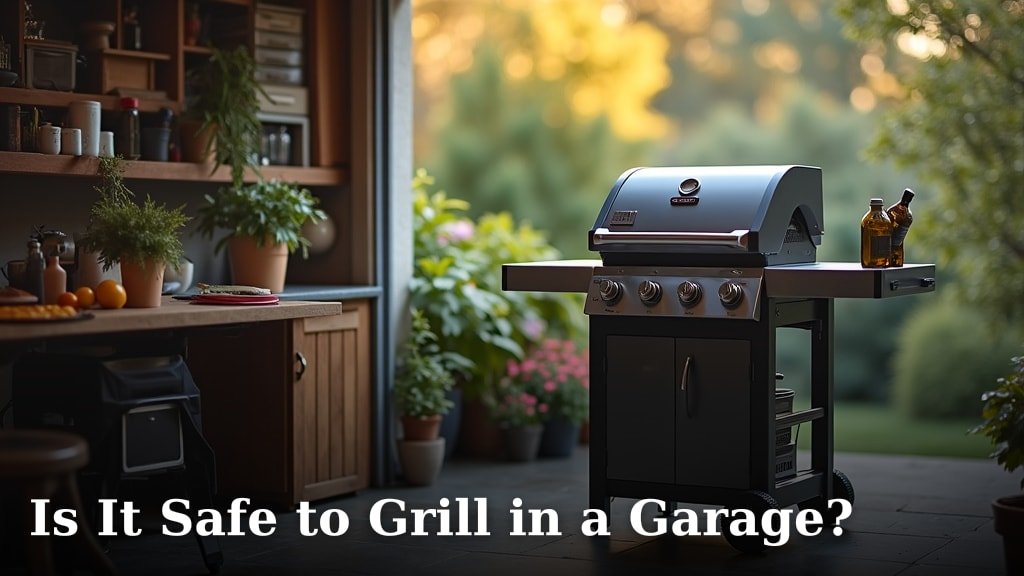
No, it is generally **not safe to grill in a garage**, even with the door open. Grilling indoors creates a serious risk of **carbon monoxide poisoning**. This odorless gas can build up to dangerous levels quickly. Your safety is the top priority, so never cook with charcoal or gas grills inside.
Many people wonder if opening a garage door is enough ventilation. While it helps, it’s often not sufficient to prevent the buildup of deadly gases. Experts strongly advise against using any **combustion-based grill** in an enclosed space. This includes propane, natural gas, and charcoal grills, as they all produce carbon monoxide.
- Grilling in a garage is dangerous.
- It can lead to carbon monoxide poisoning.
- Even an open garage door isn’t safe enough.
- Always grill outdoors in a well-ventilated area.
Let’s walk through why this is so risky and what safe alternatives you have when the weather isn’t cooperating.
Why Grilling Indoors Poses Serious Risks
You might be tempted to fire up the grill in your garage when the weather outside is less than ideal. It seems like a practical solution, right? Unfortunately, research and safety guidelines tell a different story. Grilling indoors, even with the garage door wide open, is **extremely dangerous**. The primary concern is the invisible threat of carbon monoxide.
Carbon monoxide (CO) is a colorless, odorless gas. You can’t see it, smell it, or taste it. This makes it incredibly deceptive. It’s produced whenever fuels like propane, natural gas, or charcoal burn. When you grill, your barbecue is essentially a small engine producing this harmful gas. If it can’t escape freely into the open air, it starts to build up.
Think of your garage as a box. Even if you open the big door, it doesn’t always guarantee enough airflow to completely clear out a dangerous gas. Experts at the Centers for Disease Control and Prevention (CDC) consistently warn against using any fuel-burning appliance, including grills, in enclosed or partially enclosed spaces like garages, basements, or even tents.
Understanding Carbon Monoxide Poisoning
So, what exactly happens when carbon monoxide builds up? Your body absorbs CO more quickly than oxygen. When you breathe in air with CO, it attaches to your red blood cells. This prevents oxygen from getting to your vital organs, like your heart and brain. The longer you’re exposed, the more damage can occur. It’s a **silent killer** because you often don’t realize you’re being poisoned until it’s too late.
Symptoms of CO poisoning can mimic other illnesses. You might feel like you have the flu. Common early signs include **headaches, dizziness, nausea, and fatigue**. As exposure continues, symptoms can worsen rapidly. You might experience confusion, vomiting, loss of consciousness, and in the most severe cases, death. It’s a **deadly risk** that many people underestimate.
The Mayo Clinic emphasizes that symptoms can appear mild at first. This might lead you to dismiss them. However, even at low levels, prolonged exposure can be harmful. At higher concentrations, it can cause **serious health problems** or be fatal within minutes. This is why taking no chances with indoor grilling is so vital for your well-being and that of anyone else in your home.
Why an Open Garage Door Isn’t Enough
It’s natural to think, “If I open the garage door, won’t that let the smoke and fumes out?” While opening the door certainly improves ventilation compared to a completely sealed space, it’s often **insufficient for safe grilling**. Garages can be large, but they are still enclosed structures. Wind patterns, the size of the opening, and the amount of CO produced by your grill all play a role.
We found that even a large garage door might not provide the constant, robust airflow needed to keep CO levels below dangerous thresholds. Imagine trying to empty a swimming pool with a teacup; that’s the struggle your ventilation system faces against a steady output of CO. The gas can linger, swirl, and re-enter your home. The National Fire Protection Association (NFPA) strongly advises against this practice.
Consider the air currents. If the wind isn’t blowing in the right direction, the CO can be pushed back towards your house. Your grill might be at the far end of the garage, and the open door at the other. The fumes have to travel a significant distance, and there’s no guarantee they’ll all make it out before they concentrate. It’s a **gamble with potentially fatal consequences**. You’re better off moving your cooking operation entirely outside.
The Dangers of Different Grill Types Indoors
It’s a common misconception that only certain types of grills are dangerous indoors. The truth is, all grills that rely on combustion are a risk. This includes your beloved charcoal briquettes, propane tanks, and even natural gas hookups. Each one produces carbon monoxide as a byproduct of burning fuel. The source of the fuel doesn’t change the fundamental chemistry of combustion.
Charcoal Grills: A Smoky Hazard
Charcoal grills are a favorite for many due to the distinct flavor they impart. However, they are particularly notorious for producing high levels of carbon monoxide. As the charcoal burns, it releases CO. Even with an open garage door, the amount of CO generated can overwhelm the ventilation. Burning charcoal is an **efficient producer of CO**. You absolutely must avoid using them in any enclosed space.
Many people might think, “It’s just a little smoke.” But CO is invisible. The visible smoke is only part of the exhaust. The dangerous gas is mixed in. Burning charcoal also produces other particulate matter that can be harmful to your respiratory system. For safety, charcoal grills belong strictly outdoors, away from your home’s living areas.
Propane and Natural Gas Grills: Still a Threat
Propane and natural gas grills are often seen as “cleaner” alternatives. While they might produce less soot, they still emit significant amounts of carbon monoxide. The combustion process is the same. The fuel burns, and CO is released. The U.S. Fire Administration highlights that gas grills, like charcoal grills, are designed for outdoor use only.
If your propane tank has a leak, that’s an additional hazard. But even without leaks, the exhaust from normal operation is the main problem. Grilling in a garage, even with the door open, can lead to CO buildup that is **undetectable without a special monitor**. Don’t rely on your senses; they are useless against this invisible danger.
Electric Grills: A Safer, But Not Perfect, Alternative
Electric grills do not involve combustion. They heat up using electricity, so they do not produce carbon monoxide. This makes them a much safer option for indoor cooking if you absolutely cannot grill outside. However, it’s important to note that they often don’t provide the same smoky flavor that many people crave from traditional grilling.
Even with electric grills, you should always ensure adequate ventilation. Cooking, regardless of the method, can still produce fumes and grease vapors that can build up in an enclosed space. But the life-threatening risk of carbon monoxide poisoning is eliminated with electric models. They are a **sensible choice** for indoor cooking needs.
What to Do When the Weather Turns Bad
The desire to grill doesn’t vanish just because it’s raining or snowing. Fortunately, you have several excellent options for enjoying grilled flavors without risking your safety. Think of these as clever ways to get that delicious smoky taste without the danger.
Embrace Your Indoor Cookware
Your kitchen is equipped for exactly this situation. You can achieve many of the same grilled textures and flavors using indoor appliances. Consider these alternatives:
- Cast Iron Skillet: A heavy cast iron skillet can give you a fantastic sear, mimicking the grill marks you love. You can even place some wood chips (carefully contained) inside for a hint of smoky flavor, though this requires caution.
- Indoor Grill Pan: These ridged pans are designed to replicate the grill experience on your stovetop. They create those desirable grill marks and allow fat to drain away.
- Broiler: Your oven’s broiler acts like an upside-down grill. It provides intense top-down heat, perfect for searing meats and vegetables. Keep a close eye on things to prevent burning.
- Air Fryer: While not a direct grill substitute, air fryers can produce wonderfully crispy textures on meats and vegetables that might remind you of grilling.
Using these methods ensures that you are cooking in a well-ventilated part of your home, away from the **invisible dangers** of carbon monoxide. They are practical and safe ways to satisfy your cravings.
Invest in a Smoker (Used Outdoors!)
If you’re serious about flavor, a dedicated smoker might be a great addition to your outdoor cooking arsenal. Smokers are designed for low-and-slow cooking, infusing food with delicious smoke. They are **strictly for outdoor use**, just like your grill. Using one indoors would carry the same carbon monoxide risks.
Many smokers come with different fuel options, including charcoal and wood chips. They are engineered to vent smoke and byproducts safely into the open air. Owning a smoker means you can achieve incredibly tender and flavorful results while still respecting the need for outdoor cooking.
The Simple Solution: Wait for Better Weather
Sometimes, the best advice is also the simplest. If the weather is truly miserable, and you don’t have suitable indoor equipment, it might be worth waiting. A few hours or even a day can make a big difference. You can plan your grilling for a time when you can safely do it outdoors.
Think of it as building anticipation. That burger or steak will taste even better knowing you waited for the perfect, safe conditions. Your safety and the safety of your loved ones are **more important than convenience**. A little patience goes a long way when it comes to avoiding serious health risks.
Safety Checklist for Your Next Cookout
Before you even think about firing up your grill, run through this quick checklist to ensure you’re grilling safely. This is your **personal safety shield**.
- Always grill outdoors in a well-ventilated area, far from windows and doors.
- Never grill in a garage, shed, basement, or any enclosed space.
- Keep grills at least 10 feet away from your home’s siding, railings, and overhangs.
- Ensure CO detectors are working inside your home, even if you only grill outside.
- Have a fire extinguisher nearby, just in case.
- Never leave a lit grill unattended.
Conclusion
We’ve seen that grilling in your garage, even with the door open, isn’t safe. The invisible threat of carbon monoxide can build up quickly. This gas, produced by charcoal and gas grills, can cause serious health problems and is deadly. Your safety always comes first, so always choose a well-ventilated outdoor space for grilling. When the weather doesn’t cooperate, opt for indoor cooking methods like cast iron skillets or your oven’s broiler. Make the safe choice for yourself and your family.
Frequently Asked Questions
Can I grill in my garage if I have a CO detector?
While a carbon monoxide detector is a wise safety device for your home, it’s not a license to grill in your garage. The gas can build up so rapidly that even a detector might not give you enough warning. It’s best to avoid the risk entirely by grilling outdoors.
What if my garage is very large and the door is wide open?
Even a large, open garage might not provide sufficient ventilation. Airflow can be unpredictable, and carbon monoxide is heavier than air, meaning it can linger and pool in lower areas. Experts consistently advise against any fuel-burning appliance use in enclosed spaces.
Is it safe to use an electric grill in the garage?
Yes, electric grills do not produce carbon monoxide because they don’t involve combustion. This makes them a much safer option if you need to cook indoors. However, always ensure some general ventilation when cooking, as other fumes can still be produced.
How far away from the house should I grill outdoors?
For outdoor grilling, aim to keep your grill at least 10 feet away from your home’s siding, railings, and any overhangs. This distance helps prevent heat damage and reduces the risk of fumes entering your home through open windows or doors.
What are the first signs of carbon monoxide poisoning from grilling?
Early symptoms of carbon monoxide poisoning can feel like the flu. You might experience headaches, dizziness, nausea, or fatigue. If you or someone else feels these symptoms while grilling indoors or in a questionable space, move to fresh air immediately and seek medical attention.
