
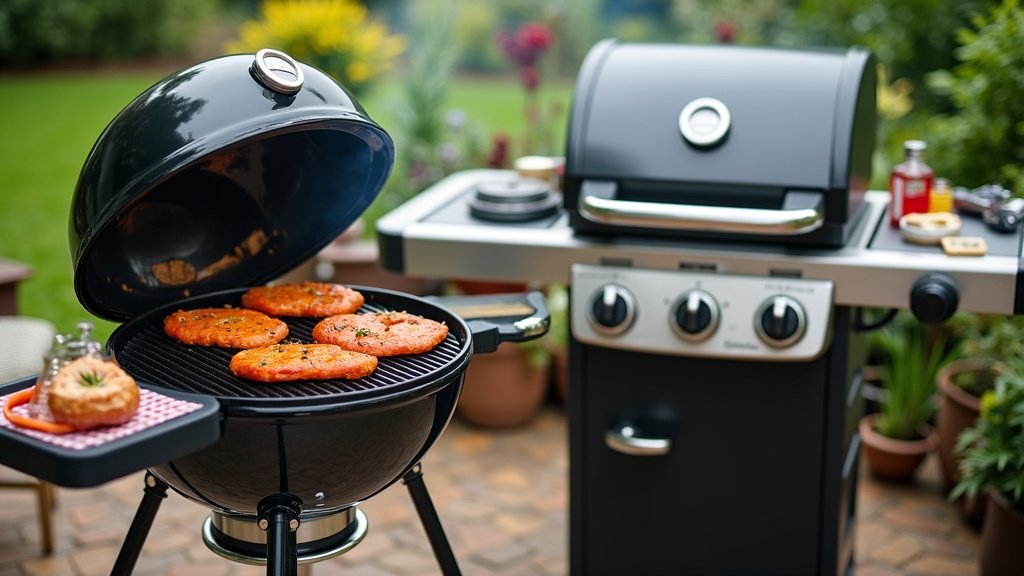
The main difference between a gas grill and a charcoal grill lies in their fuel source and flavor profile. Gas grills use propane or natural gas for quick, convenient cooking, while charcoal grills burn briquettes or lump charcoal for a distinct smoky taste.
You’re looking for different cooking experiences, really. Gas grills offer precise temperature control and easy startup, ideal for everyday grilling. Charcoal grills, however, provide a richer, more authentic barbecue flavor that many backyard chefs crave, though they require more hands-on attention.
- Gas grills: convenience, quick heat, easy cleanup.
- Charcoal grills: smoky flavor, high heat searing, more effort.
- Fuel types: propane/natural gas vs. charcoal briquettes/lump.
- Flavor: subtle vs. bold smoky taste.
- Control: instant adjustments vs. managing coals.
So, which one is right for you? Let’s explore the key aspects of each, helping you decide which grill best suits your outdoor cooking style and needs.
Comparing Gas and Charcoal Grills: What You Need to Know
Choosing between a gas grill and a charcoal grill comes down to understanding their fundamental differences in fuel, cooking style, and the results they deliver. Let’s break down these distinctions so you can pick your perfect grilling partner.
Fueling Your Fire: Propane vs. Briquettes
The type of fuel your grill uses is perhaps the most significant difference, impacting everything from startup time to flavor. Do you prefer instant gratification or a more traditional approach?
Gas Grill Fuel: Convenience at Your Fingertips
Gas grills typically run on propane from a tank or are plumbed into a natural gas line. This means you have an immediate and consistent heat source. Think of it like turning on your stove; it’s that easy.
Propane Tanks: Portable Power
Most portable gas grills use refillable propane tanks. You simply connect the tank, open the valve, and hit the igniter. When the tank runs low, you swap it out at a local hardware store or grocery store. This makes them highly mobile, perfect for tailgating or camping trips (Consumer Reports).
Natural Gas Lines: Endless Supply
Some larger gas grills can be hooked up directly to your home’s natural gas line. This offers uninterrupted grilling sessions without worrying about tank refills. It’s a great option if your grill stays in one place on your patio.
Charcoal Grill Fuel: The Art of the Ember
Charcoal grills use either briquettes or lump charcoal. These require a bit more effort to get started but offer a unique cooking experience and flavor that many chefs swear by.
Charcoal Briquettes: Consistent Heat
Briquettes are engineered pieces of compressed charcoal, often with additives to help them light and burn consistently. They provide a uniform heat over a longer period, making them good for low-and-slow cooking.
Lump Charcoal: Natural and Intense
Lump charcoal is made from pure carbonized wood, often retaining the shape of the wood it came from. It burns hotter and faster than briquettes and imparts a cleaner, woodier smoke flavor. It’s a favorite for searing and quick cooks (Barbecue Industry Association).
The Flavor Factor: Smoky Goodness or Clean Grilling?
This is where personal preference truly comes into play. Are you chasing that classic barbecue smoke or a more straightforward grilled taste?
Gas Grill Flavor: Subtle and Direct
With a gas grill, the flavor comes primarily from the food itself, plus any marinades or seasonings you use. You get a clean, direct heat that cooks your food efficiently. Any “smoky” taste is very minimal.
Many people add wood chips in a smoker box to their gas grill to get some smoky flavor. This is a good compromise if you want some smoke without the full charcoal process.
Charcoal Grill Flavor: The Signature Smoke Ring
Charcoal is legendary for its ability to impart a deep, smoky flavor to food. As fats and juices drip onto the hot coals, they vaporize, creating that unmistakable barbecue aroma and taste. This is often called the “Maillard reaction” by food scientists, and it creates a delicious crust (American Chemical Society).
The type of charcoal and any added wood chunks (like hickory or mesquite) further influence the flavor. If you crave that authentic, backyard BBQ taste, charcoal is your champion.
Heat Control and Cooking Versatility
How much control do you want over your cooking temperature? This aspect can greatly influence your grilling enjoyment and the types of dishes you prepare.
Gas Grill Control: Precision and Speed
Gas grills offer instant and precise temperature control, much like your kitchen stove. You turn a knob, and the flame adjusts. This makes them perfect for cooking delicate items like fish or vegetables where consistent, controllable heat is key.
- Easy to achieve low, medium, or high heat.
- Great for indirect cooking by turning off certain burners.
- Quick heat-up and cool-down times.
Charcoal Grill Control: An Art Form
Controlling heat on a charcoal grill is more of an art. You manage temperature by adjusting air vents and arranging the coals. It takes practice but allows for a wider range of cooking techniques, from searing hot to low-and-slow smoking.
Once you master it, you can achieve incredibly high temperatures for searing steaks or maintain a consistent low temperature for hours for smoked brisket or ribs (AmazingRibs.com).
Startup, Cleanup, and Overall Maintenance
Consider how much time and effort you want to invest before and after each grilling session. Some people love the ritual; others prefer efficiency.
Gas Grills: Quick Start, Easy Finish
Gas grills are built for speed and convenience. Light it up, let it preheat for 10-15 minutes, and you’re ready to cook. Cleanup is usually straightforward: turn up the heat to burn off food residue, then brush the grates.
For maintenance, you occasionally check the fuel lines, clean the burners, and ensure the igniter works. It’s generally a low-fuss grilling option.
Charcoal Grills: The Ritual and the Residue
Getting a charcoal grill ready takes more time. You need to arrange and light the charcoal, then wait for it to ash over, which can take 20-30 minutes. After cooking, you’ll have ashes to dispose of, which requires careful handling once cooled.
Cleaning involves scraping grates and emptying the ash catcher. While it’s more work, many grillers find this process to be a satisfying part of the experience.
Cost and Longevity
Your budget often plays a role, both for the initial purchase and ongoing expenses.
Initial Investment: What to Expect
Generally, you’ll find a wider price range for gas grills, from inexpensive portable models to elaborate outdoor kitchen units. Charcoal grills tend to have a lower entry price point, though high-end ceramic kamado grills can be quite costly.
Ongoing Costs: Fueling Your Fun
Propane or natural gas can be more expensive per cook than charcoal, especially if you grill frequently. However, charcoal briquettes and lump charcoal also add up over time. It’s worth considering your grilling habits when estimating ongoing fuel costs.
Quick Comparison: Gas vs. Charcoal
To summarize, here’s a quick look at the main points:
| Feature | Gas Grill | Charcoal Grill |
|---|---|---|
| Fuel Type | Propane or Natural Gas | Briquettes or Lump Charcoal |
| Startup Time | Fast (10-15 min) | Slower (20-30+ min) |
| Flavor Profile | Subtle, Direct | Bold, Smoky |
| Temperature Control | Precise, Instant | Manual, More Practice Needed |
| Cleanup | Easier, Less Ash | More Involved, Ash Disposal |
| Versatility | Good for direct/indirect cooking | Excellent for searing, smoking, roasting |
Which Grill is Right For You? A Checklist
Still on the fence? Ask yourself these questions to help clarify your priorities:
- Do you prioritize speed and convenience above all else?
- Is getting that deep, smoky barbecue flavor essential for your cooking?
- How much time are you willing to spend on setup and cleanup?
- Do you need precise, instant temperature adjustments for delicate foods?
- Are you looking for a lower initial cost or lower ongoing fuel costs?
- Will you mostly be grilling quick weeknight meals or tackling longer, slow-cooked projects?
Conclusion
Choosing between a gas and charcoal grill really comes down to your priorities. If you value speed, convenience, and precise control for everyday grilling, a gas grill is likely your best bet. If you crave that deep, authentic smoky flavor and enjoy the hands-on ritual of barbecue, then charcoal is your champion.
Consider your lifestyle, how often you’ll grill, and what kind of flavors excite your palate. Whichever you choose, understand its strengths and limitations. This knowledge will help you make a confident decision and enjoy countless delicious meals outdoors.
Frequently Asked Questions
Can I get a smoky flavor on a gas grill?
Yes, you can achieve some smoky flavor on a gas grill. Many grillers use smoker boxes filled with wood chips or pellets. While it won’t be as intense as a charcoal grill, it’s a good way to add a subtle smokiness to your food.
Are charcoal grills difficult to use for beginners?
Charcoal grills have a slightly steeper learning curve than gas grills. They require more practice to master heat control and startup. However, with a little patience and a few successful cooks, beginners can quickly get the hang of it.
Which type of grill is better for searing steaks?
Both grills can sear steaks effectively, but many enthusiasts argue that charcoal grills, especially those using lump charcoal, can achieve significantly higher temperatures. This intense heat creates a fantastic crust and flavor profile, often preferred for searing.
Is one type of grill healthier than the other?
Research suggests that grilling, in general, can produce some unhealthy compounds if fats drip directly onto very hot coals or flames, causing flare-ups. Both gas and charcoal grills have ways to mitigate this, such as using indirect heat or leaner cuts of meat. The health factor often depends more on cooking methods than the fuel source itself.
Can I use both a gas and a charcoal grill?
Absolutely! Many grilling enthusiasts own both types of grills. This allows you to have the convenience of a gas grill for quick weeknight meals and the distinct smoky flavor of a charcoal grill for weekend barbecues and special occasions. It gives you the best of both worlds.
