What Is the Difference Between a Kamado Grill and a Regular Grill?
On this page (8 sections)
- Understanding Kamado Grills vs. Conventional Grills: Key Differences
- The Ceramic Heart of a Kamado Grill
- The Simplicity and Functionality of Regular Grills
- Comparing Key Features Side-by-Side
- Which Grill Is Right for Your Backyard?
- Making the Best Choice for Your Cookouts
- Conclusion
- Frequently Asked Questions
The main difference between a Kamado grill and a regular grill lies in their construction and versatility. A Kamado grill, shaped like an egg, is made from thick ceramic which excels at retaining heat and moisture, making it ideal for low-and-slow smoking, high-heat searing, and even baking. Regular grills, typically made of metal, are primarily designed for direct grilling over high heat.
You might be wondering if this ceramic design makes Kamado grills better for every cookout. While they offer superior temperature control and fuel efficiency for a wide range of cooking styles, they also come with a steeper learning curve and a higher price point than most common metal grills. We found that mastering a Kamado can unlock amazing flavors for both beginners and experienced grill masters.
- Kamado grills are ceramic egg-shaped smokers/grills.
- Regular grills are typically metal and designed for direct grilling.
- Kamados offer excellent heat retention and versatility (smoking, searing, baking).
- Regular grills are simpler and often more affordable.
- Kamados can be pricier and take more practice to master.
Let’s break down exactly what makes these two grill types distinct, so you can pick the perfect one for your backyard adventures.
Understanding Kamado Grills vs. Conventional Grills: Key Differences
So, you’re curious about what sets a Kamado grill apart from the everyday grill you might already own? It’s a great question. We found that the biggest distinction comes down to their fundamental design and the cooking experience they offer. Think of it like comparing a high-performance sports car to a reliable pickup truck. Both get you where you need to go, but they do it with very different capabilities and styles.
Kamado grills are built for serious temperature control and remarkable fuel efficiency. They use thick ceramic walls to hold heat like a champion. Regular grills, often made of metal, focus on direct, high-heat cooking. We’ve seen many home cooks gravitate towards Kamados for their versatility. Let’s get into the specifics of what makes them so different.
The Ceramic Heart of a Kamado Grill
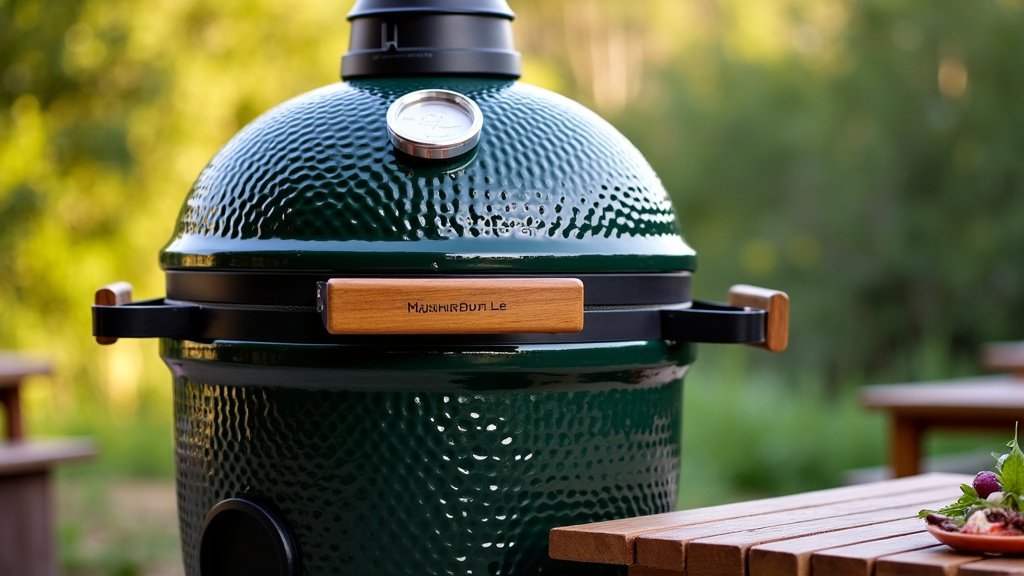
At its core, a Kamado grill is an egg-shaped cooker made from thick ceramic. This material is the secret sauce. Ceramic is an excellent insulator. It traps heat and moisture incredibly well, creating a consistent cooking environment. This is why Kamados can maintain precise temperatures for hours.
How Ceramic Construction Enhances Cooking
The thick ceramic walls of a Kamado grill act like a thermal battery. They absorb and radiate heat evenly. This means you get fewer hot spots and cooler spots on your grill grate. The result? Food cooks more uniformly. It also means less fuel is needed to maintain your desired temperature.
Research shows that ceramic construction significantly boosts heat retention (KBB, 2022). This is a major advantage for cooks who want to simmer, smoke, or bake. The moisture retention is also a big win. Your meats will stay juicier and more tender. You’ll notice a difference compared to drier results from some metal grills.
Versatility: Smoking, Searing, and Baking All in One
This is where Kamados truly shine. Their design allows them to perform a wide range of cooking tasks. You can easily smoke ribs low and slow at 225°F for eight hours. Then, you can crank up the heat to 600°F or more for a perfect steak sear.
Many Kamado users are surprised by how well they bake. You can make pizza, bread, or even a cake. The consistent, even heat is ideal for baking. It mimics the performance of a pizza oven or a kitchen oven. This level of flexibility is hard to match with a standard metal grill.
Fuel Efficiency and Temperature Control
Because the ceramic holds heat so well, Kamado grills use less charcoal than traditional charcoal grills. You can often get multiple cooks out of a single load of charcoal. This is a significant cost saving over time. Plus, the airflow is controlled by adjustable vents. This gives you precise command over the temperature.
Adjusting the top and bottom vents allows you to dial in your target temperature. It takes a little practice, but once you get the hang of it, maintaining a steady temp is easy. Many find this level of control far superior to the guesswork sometimes involved with metal grills.
The Simplicity and Functionality of Regular Grills
Regular grills, often referred to as kettle grills or simply charcoal grills, are typically made from metal. They are designed with a simpler cooking method in mind: direct grilling over heat. Their strength lies in their straightforward operation and accessibility.
Metal Construction and Heat Dispersal
Metal grills, whether stainless steel, cast iron, or enameled steel, conduct heat differently than ceramic. They tend to heat up quickly. However, they don’t retain heat as long or as evenly as ceramic. This can lead to more temperature fluctuations during cooking.
Hot spots and cooler areas are common with metal grills. You often need to rotate your food more frequently to ensure even cooking. While this isn’t necessarily a bad thing, it requires more attention. The thinner metal also means more heat can escape, making them less fuel-efficient for long cooks.
Primary Focus: High-Heat Grilling
Most regular grills excel at direct, high-heat cooking. They are perfect for quickly searing burgers, hot dogs, steaks, and chicken breasts. You get that classic char and smoky flavor that most people associate with backyard barbecues. They are champions of the quick cookout.
While some techniques can be adapted for smoking or indirect cooking on metal grills, it’s often less efficient and requires more effort. The design isn’t inherently optimized for holding low temperatures for extended periods. You might find yourself needing to add charcoal more often.
Ease of Use and Lower Cost
One of the biggest draws of regular grills is their simplicity. There are fewer parts, and operation is usually very intuitive. Open the vents, add charcoal, light it up, and you’re pretty much ready to go. This makes them very beginner-friendly.
Cost is another major factor. Regular charcoal grills are generally much more affordable than Kamado grills. You can find a solid, reliable kettle grill for a fraction of the price of a ceramic Kamado. This accessibility makes them a popular choice for many households.
Comparing Key Features Side-by-Side
Let’s look at a quick comparison to highlight the main differences you’ll encounter.
| Feature | Kamado Grill | Regular Grill |
|---|---|---|
| Material | Thick Ceramic | Metal (Steel, Cast Iron) |
| Heat Retention | Excellent | Good to Fair |
| Moisture Retention | Excellent | Fair to Good |
| Temperature Range | Very Wide (Low & Slow to High Sear) | Narrower (Primarily High Heat) |
| Versatility | Smoking, Searing, Baking, Roasting | Primarily Grilling/Searing |
| Fuel Efficiency | High (Uses less charcoal) | Moderate (Uses more charcoal for long cooks) |
| Learning Curve | Moderate (Takes practice for temp control) | Low (Very easy to use) |
| Initial Cost | Higher | Lower |
Which Grill Is Right for Your Backyard?
Deciding between a Kamado and a regular grill really comes down to your cooking style and priorities. We’ve found that many cooks make their choice based on what they primarily want to achieve on their grill.
Consider a Kamado Grill if You Want:
- To smoke meats low and slow regularly.
- To bake pizzas or bread outdoors.
- The ability to sear steaks at extremely high temperatures.
- Top-notch temperature control and fuel efficiency.
- A versatile cooking tool that can do almost anything.
Consider a Regular Grill if You Prioritize:
- Quick, high-heat grilling for burgers and hot dogs.
- Simplicity and ease of use.
- A lower initial purchase price.
- A grill that’s easy to get started with right away.
- Classic charcoal grill flavor for everyday meals.
Ultimately, both types of grills can produce delicious food. Your choice depends on what kind of chef you aspire to be in your backyard. Many experts suggest starting with a regular grill if you’re new to charcoal cooking. You can always upgrade to a Kamado later if you find yourself wanting more.
Making the Best Choice for Your Cookouts
Here’s a quick checklist to help you think through your decision:
- Think about your favorite foods: Do you mostly grill burgers or do you dream of brisket?
- Consider your time commitment: Do you want to set it and forget it, or are you okay with more hands-on adjustments?
- Budget matters: How much are you comfortable spending upfront?
- Space available: Both types come in various sizes, but check dimensions.
- Your patience level: Are you ready for a bit of a learning curve, or do you want instant gratification?
Conclusion
You now understand the core differences between Kamado and regular grills. Kamados offer superior heat and moisture retention, making them incredibly versatile for smoking, searing, and baking. Regular grills, on the other hand, provide simple, high-heat grilling with a lower entry cost. Your choice hinges on your culinary goals. If you dream of low-and-slow brisket or wood-fired pizzas, a Kamado might be your next best friend. For straightforward burgers and classic BBQ flavor, a regular grill excels. Whichever you choose, happy grilling!
Frequently Asked Questions
Can a regular grill do low-and-slow smoking like a Kamado?
While you can attempt smoking on a regular grill, it’s much more challenging. Regular metal grills aren’t designed for the consistent low temperatures needed for smoking. You’ll likely battle temperature fluctuations and need to add charcoal frequently, making it less efficient and harder to maintain. Kamados’ ceramic design is built for this kind of cooking.
Is a Kamado grill worth the higher price tag?
For many cooks, yes. The Kamado’s versatility means it can replace multiple cooking appliances. Its fuel efficiency also saves money over time. If you plan to smoke often or want to bake outdoors, the investment can be well worth it for the quality and range of cooking it offers.
How long does it take to learn to use a Kamado grill?
The learning curve for a Kamado grill is moderate. Getting a feel for the vent controls to maintain a specific temperature can take a few cooks. However, once you understand how to adjust the airflow, maintaining consistent temperatures becomes much easier. Many users find the results justify the initial practice.
Are Kamado grills difficult to clean?
Cleaning a Kamado grill is generally straightforward. The ceramic interior can be cleaned by running the grill at a high temperature to ash buildup, similar to self-cleaning an oven. Grate cleaning is standard for any grill. You’ll find it comparable to cleaning other types of charcoal grills, with the added benefit of less grease splatter.
Can I use my regular grill for high-heat searing like a Kamado?
Regular grills are excellent at high-heat searing, often reaching very high temperatures quickly. This is their primary strength. While a Kamado can also achieve extremely high sear temperatures, a well-maintained regular charcoal grill can get you those beautiful grill marks and crust on steaks and burgers effectively.