
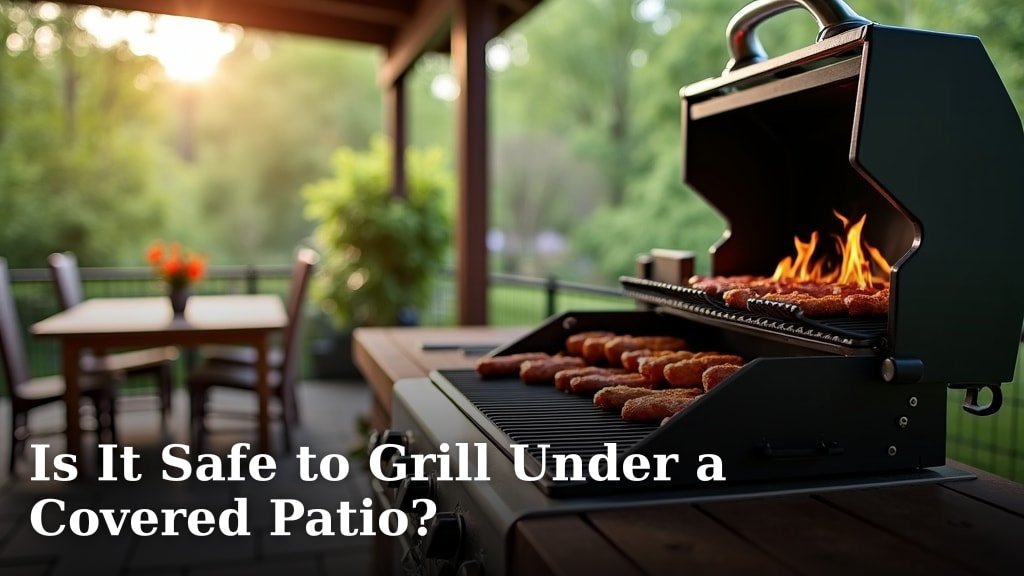
No, it is generally not safe to grill under a covered patio without proper ventilation. Grilling in an enclosed space creates a fire hazard and can lead to dangerous carbon monoxide buildup. Your safety is our top priority.
We understand the appeal of grilling year-round, rain or shine. But using charcoal or gas grills beneath a patio cover can have serious consequences. Even seemingly open patios can trap harmful fumes, putting you and your loved ones at risk. Think about how those invisible gases can quickly fill an area.
- Grilling under a covered patio is dangerous.
- It poses a fire risk.
- Carbon monoxide poisoning is a major concern.
- Adequate ventilation is crucial.
- Always prioritize safety.
Let’s walk through exactly why grilling under a covered patio is so risky and what safer alternatives you have. We’ll help you enjoy your BBQ without the worry.
Why Grilling Under Cover Poses Risks
Grilling under a covered patio might seem like a good idea for convenience, but it introduces serious safety hazards. You’re creating a situation where heat, smoke, and dangerous gases can’t escape properly. This puts everyone nearby at risk, even if you think your patio is “open enough.”
We’ve found that the primary dangers fall into two categories: fire hazards and carbon monoxide poisoning. Both can have devastating consequences, so it’s important to understand each one clearly.
The Hidden Danger of Carbon Monoxide
Carbon monoxide (CO) is a silent killer. It’s an odorless, colorless gas produced when fuels like propane, charcoal, or natural gas burn. When you grill under a covered patio, this toxic gas can build up rapidly to dangerous levels.
Your body absorbs CO much faster than oxygen. This means your vital organs, like your brain and heart, are quickly deprived of the oxygen they need to function. Symptoms can appear quickly and are often mistaken for the flu.
Recognizing Carbon Monoxide Poisoning Symptoms
It’s vital to know the warning signs of CO poisoning. These symptoms can worsen the longer you’re exposed. What should you look for?
- Headache: Often the first sign, can be dull or throbbing.
- Dizziness and Weakness: You might feel lightheaded or lose strength.
- Nausea and Vomiting: Stomach upset is common.
- Confusion: Thinking clearly becomes difficult.
- Chest Pain: Your heart can be affected.
- Loss of Consciousness: In severe cases, you could pass out.
We found that young children, the elderly, and people with heart or respiratory problems are especially vulnerable to CO poisoning (CDC). If you suspect anyone is experiencing these symptoms, move them to fresh air immediately and seek medical help.
Understanding the Fire Risk
Grilling involves open flames and high heat. When you combine this with a confined space, the risk of a fire dramatically increases. We found several reasons why covered patios amplify this danger.
Proximity to Combustibles: A covered patio usually means you’re closer to your house, walls, wooden structures, or furniture. Heat from the grill can cause these items to ignite.
Grease Fires: Grease dripping from food can flare up. Under an open sky, these flare-ups are less contained. Under a cover, flames can quickly reach overhead structures.
Overheating: Trapped heat from the grill can cause the grill itself to overheat, or even compromise nearby gas lines or propane tanks. This significantly raises the potential for a dangerous situation.
The Danger of Improper Grill Placement
Where you place your grill matters a lot. Many experts recommend keeping your grill at least 10 feet away from your house, railings, and any other structures (NFPA). Under a covered patio, achieving this distance is often impossible.
Even if you think your grill is far enough away, radiant heat can still pose a threat. The heat can build up in the confined space, drying out wood and making it more susceptible to ignition.
What About Ventilation? Does it Help?
You might think, “What if I just add a fan?” or “My patio is open on two sides.” While some ventilation is always better than none, it’s generally not enough to make grilling under a covered patio truly safe.
Natural ventilation relies on air movement. Under a patio, even with open sides, air can become stagnant, especially on calm days. This allows carbon monoxide and heat to linger and accumulate.
The Limits of Natural Airflow
Think of it this way: your grill is producing a constant stream of exhaust. To safely disperse that exhaust, you need a strong, continuous flow of fresh air. A covered patio, by its nature, restricts this flow.
Wind direction can also play a role. If the wind pushes the grill exhaust back under the cover, your “ventilated” space quickly becomes a trap for harmful gases. It’s a gamble you shouldn’t take.
Can Exhaust Fans Make a Difference?
Installing an exhaust fan might seem like a clever solution. However, household exhaust fans are typically not designed for the volume and type of fumes produced by a grill. They may not be powerful enough to properly vent carbon monoxide and smoke.
Professional, commercial-grade ventilation systems are a different story. These are built for restaurant kitchens where grills operate indoors. But installing such a system on your patio is a major, expensive undertaking, far beyond what most homeowners would consider practical or affordable for a casual backyard grill.
Safe Alternatives for Grilling Fun
So, if grilling under your covered patio is out, what are your options? Don’t worry, you can still enjoy delicious grilled food without putting anyone at risk. We’ve found several safe alternatives that allow you to BBQ worry-free.
The key is to grill in a truly open, well-ventilated area, away from structures. This allows smoke, heat, and carbon monoxide to dissipate harmlessly into the atmosphere.
Designated Open-Air Grilling Spots
The simplest and safest option is to move your grill to an area with no overhead cover. Think about a corner of your yard or a dedicated grilling pad. Make sure it’s on a stable, non-combustible surface.
This provides the best natural ventilation. It allows heat to rise and dissipate, and any carbon monoxide produced will be diluted by the vast open air. You eliminate the risk of fumes collecting and causing harm.
Portable Grill Canopies or Gazebos
What if it rains? We understand you want to protect your grill and yourself from the elements. A portable grill canopy or a gazebo designed specifically for grilling might be a good solution.
Look for models that have a vented, open-top design. These are made to let smoke and heat escape freely while providing some protection from light rain or sun. They are not fully enclosed like a patio cover.
Always ensure these structures are fire-resistant and placed far enough away from your home or other buildings. Read the manufacturer’s instructions carefully for safe use.
Electric Grills: An Indoor Option
If you absolutely need to grill under a covered area, or even indoors, an electric grill is your safest bet. These grills don’t produce carbon monoxide because they don’t burn fuel.
Electric grills also produce less smoke and radiant heat compared to charcoal or gas. This makes them a much safer choice for more enclosed environments. Just be mindful of grease splatter and ensure good airflow in the area to prevent smoke buildup.
Essential Grilling Safety Checklist
No matter where you choose to grill, following basic safety practices is always important. These tips help keep you, your family, and your property safe during your BBQ sessions.
Always keep a keen eye on your grill and be prepared for any issues. Safety should be your top priority, allowing you to relax and enjoy the food.
- Place grill on a flat, stable surface: Prevents tipping.
- Keep children and pets away from the grill: Accidents happen quickly.
- Have a fire extinguisher or water nearby: For emergencies.
- Never leave a lit grill unattended: Fires can start in seconds.
- Clean your grill regularly: Prevents dangerous grease buildup.
- Check gas lines for leaks: Use soapy water to spot bubbles.
Understanding Propane vs. Charcoal Risks
You might wonder if one type of grill is safer than the other under a cover. The answer is that both propane and charcoal grills present Understanding the differences between a gas grill and a charcoal grill can help you make informed safety decisions.significant dangers when used in unventilated, covered spaces.
While their operational risks differ slightly, both produce carbon monoxide and pose a fire hazard. We recommend avoiding both types of grills under a covered patio.
Propane Grill Considerations
Propane is a clean-burning fuel, but it still produces carbon monoxide. A key danger with propane grills under covers is the propane tank itself.
Propane tanks should always be stored and used in well-ventilated areas. Heat buildup in a confined space can increase the pressure inside the tank, raising the risk of leaks or, in extreme cases, an explosion. We’ve found that proper tank handling is essential (NFPA).
Charcoal Grill Specific Dangers
Charcoal produces even higher levels of carbon monoxide than propane. When charcoal burns, it releases a lot of smoke and CO. This makes it particularly dangerous in any enclosed space.
Additionally, charcoal grills generate intense heat and produce embers that can fly out. Under a covered patio, these embers can easily ignite overhead structures or nearby furniture. Even after grilling, hot coals can remain a fire hazard for hours.
| Risk Factor | Propane Grill | Charcoal Grill |
|---|---|---|
| Carbon Monoxide Production | High | Very High |
| Fire Hazard (Flames) | High | High |
| Fire Hazard (Embers/Sparks) | Low | High |
| Heat Output | High | Very High |
| Fuel Storage Danger | Propane Tank Explosion Risk | Hot Coals After Use |
| Suitability for Covered Patio | Not Safe | Not Safe |
Conclusion
You now understand why grilling under a covered patio is a serious risk. The dangers of carbon monoxide poisoning and fire hazards are simply too great. We want you to enjoy delicious grilled meals safely, without putting anyone in harm’s way.
Remember, proper ventilation is not just a suggestion; it’s a necessity for fuel-burning grills. Choose open-air spots or use electric grills when cooking under cover. Always follow our safety checklist for every BBQ session.
Your safety and the well-being of your loved ones should always come first. Make the smart choice for a safe and enjoyable grilling experience.
Frequently Asked Questions
Can I use a grill with a chimney or vent system under a covered patio?
Even with a chimney, a standard outdoor grill isn’t safe under a covered patio. Residential chimneys aren’t designed to handle the volume of carbon monoxide and heat from a grill in a confined space. It’s still best to grill in an open area.
What if my patio cover is very high? Is it still a risk?
Yes, even with a high patio cover, the risk remains. Carbon monoxide is heavier than air and can accumulate. Heat can still reflect downwards, increasing fire risks to surrounding structures. It’s better to move your grill to a fully open space.
Are there any gas or charcoal grills specifically designed for covered patios?
No, you won’t find gas or charcoal grills specifically designed for safe use under covered patios. Manufacturers universally advise against this due to fire and carbon monoxide dangers. If a product claims otherwise, approach with extreme caution.
Can a ceiling fan help ventilate my covered patio for grilling?
A ceiling fan offers minimal help. It only circulates existing air, it doesn’t effectively remove carbon monoxide or disperse heat from a grill. You need robust, constant airflow, which a ceiling fan cannot provide for grilling safely.
What’s the safest distance to grill from my house?
We recommend keeping your grill at least 10 feet away from your house, railings, and any other structures. This distance helps prevent fire hazards from radiant heat, embers, or flare-ups. Always grill on a stable, non-combustible surface.
