Pellet Grill vs Charcoal Grill: Which Should You Choose? (November 2026)
Choose a pellet grill for automated temperature control and steady wood smoke; choose charcoal for manual heat and fire management. Your cooking routine, flavor preferences and tolerance for tending fuel matter most.
On this page (7 sections)
- Pellet grill vs charcoal grill: which is easier to control?
- How do pellet and charcoal grills differ in flavor?
- Which grill takes more work during cooking?
- How do cleanup and fuel storage compare?
- Which charcoal grill fits your cooking space?
- When should you consider a grill that uses both fuels?
- What should you choose: pellet grill or charcoal grill?
In a pellet grill vs charcoal grill comparison, the better fit depends on how much you want to guide the fire yourself.
Pellet grills use electricity and feed wood pellets to maintain heat. Charcoal grills rely on burning charcoal, with airflow adjusted through vents or dampers.
The difference affects more than flavor. Think about temperature control, cooking pace, cleanup, power access and how involved you want to be while food cooks.

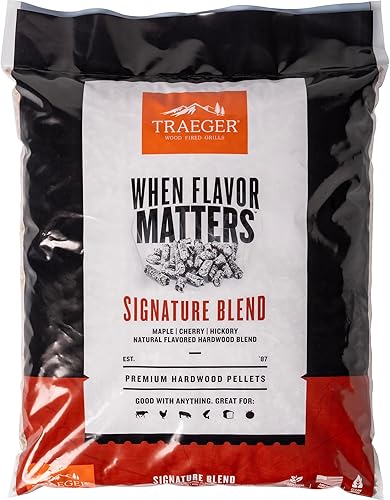 Best for blended wood flavor
Traeger Signature Blend Wood Pellets for Pellet
Pellet grill vs charcoal grill: which is easier to control?
A pellet grill manages heat through a digital controller, while a charcoal grill gives you direct airflow control. Choose based on whether you prefer automation or adjusting the fire by hand.
The Traeger Pro 22 has a Digital Pro Controller and a stated temperature range of 180°F to 450°F. Traeger describes its temperature control as operating within plus or minus 15°F.
A charcoal grill responds to fuel placement and airflow. Adjustable vents or dampers let you influence the fire, but you'll need to make those changes yourself and watch how the grill responds.
It may feel less convenient when you want to hold a low temperature for a long stretch without frequent attention.
Is a pellet grill or charcoal grill better for long cooks?
A pellet grill can suit long smoking sessions when steady heat and less active fire adjustment are priorities. For a low-and-slow pellet-grill recipe, see boneless ribs cooked at 250°F.
The Pro 22's hopper holds 18 lb of pellets, and its built-in probe lets you monitor food temperature without opening the lid.
A charcoal grill can also cook low and slow, but it asks you to manage the fire and airflow. Your results depend on setup, fuel and ongoing adjustments, so plan to stay involved.
For frequent smoking, compare options in our guide to the best pellet grill. It can help narrow the choice if you want pellet cooking beyond a single comparison.
How do pellet and charcoal grills differ in flavor?
Pellet grills add wood-fired flavor from pellets, while charcoal grills give you the flavor of cooking over charcoal. Neither fuel is automatically better; choose the taste and cooking process you prefer.
The Traeger Signature Blend combines hickory, maple and cherry hardwoods. Its maker describes the blend as suitable for meat, fish, vegetables and baked goods.
For a fish recipe, try marinating trout for a pellet grill.
Charcoal has a distinct flavor profile and offers direct control over how you build and manage the fire. The Cuisinart and Weber grills both use charcoal, but their cooking areas and airflow controls differ.
You can also choose wood pellets for specific food pairings. The Signature Blend is an option for a pellet grill if you want a mix of those three hardwood flavors.
Which grill takes more work during cooking?
Charcoal usually takes more active attention because you manage the fuel and airflow yourself. A pellet grill reduces some of that work through its controller, though it still needs pellets, power and routine care.
With charcoal, you'll light the fuel, arrange it for the cook and adjust vents as heat changes. The method gives you direct input, but temperature control is part of the cooking task.
With the Pro 22, the controller manages temperature within its operating range. You still need to load pellets, start the grill as directed and monitor food as it cooks.
The built-in probe is useful when you want to check internal food temperature without lifting the lid. It doesn't remove the need to follow safe food handling and cooking guidance.
If you're new to grilling, see what to look for in a beginner grill. Simpler controls can help, but the right choice also depends on your comfort with fuel and cleanup.
How do cleanup and fuel storage compare?
Charcoal leaves ash to remove, while a pellet grill requires you to manage pellet supply and grill components. Consider where you'll store fuel and how you'll handle cleanup after each cook.
The Cuisinart has an ash base and an enamel-coated firebox, while the Weber includes an aluminum ash catcher. These features help with ash handling, but charcoal still requires cleanup after the fire has cooled.
The Pro 22 has a pellet hopper clean-out door for changing flavors and preparing for storage. Pellet cooking also means keeping suitable pellets dry and available.
Follow each grill's manual for cleaning, fuel handling and storage. Outdoor cooking gear needs a safe setup, with the grill placed and used according to its instructions.
Which charcoal grill fits your cooking space?
Choose the Cuisinart for a smaller tabletop setup, and the Weber for a larger charcoal cooking surface. For another grill size comparison, see Ninja Woodfire Grill vs XL.
Their different sizes make them suited to different needs within the charcoal category.
The Cuisinart offers 196 sq in of cooking space, dual vents and a locking lid. Its compact design is aimed at travel and small outdoor spaces.
For a grill designed around an RV setup, see RV bumper grill options.
If you want a portable setup that's easier to roll, compare portable grills on wheels.
The Weber Jumbo Joe has 363 sq in of cooking surface and adjustable aluminum dampers. The porcelain-enameled lid and bowl retain heat, and its ash catcher helps collect ash.
If you're still deciding between charcoal models, compare the best charcoal grill options. For a way to cook with multiple fuel types in one setup, see our best gas and charcoal grill combo.
When should you consider a grill that uses both fuels?
Consider a combo grill if you want to switch between cooking styles without choosing only pellet or charcoal. It can make sense when your cooking plans regularly call for different fuels.
A combo grill adds choices, but it may also take more space and require you to learn more than one fuel system. Check the layout, fuel requirements and cleaning steps before deciding.
Our guide to how to choose a BBQ grill can help you weigh cooking style, space and upkeep. If a charcoal and gas setup sounds useful, compare the best gas and charcoal grill combo options.
What should you choose: pellet grill or charcoal grill?
Pick a pellet grill if you value controller-managed heat and wood smoke; pick charcoal if you want to adjust the fire and airflow yourself. Match the fuel to your routine before comparing extra features.
The Pro 22 combines a broad temperature range, a built-in probe and an 18 lb hopper for cooks who want pellet grilling and smoking. Its corded electric power source means you'll need an appropriate outlet.
For charcoal, the Cuisinart offers a compact 196 sq in cooking area, while the Weber gives you 363 sq in and adjustable dampers. Choose the size that fits your cooking area and the amount of food you expect to cook.
For a broader brand-specific comparison, see best grill Weber. Choose pellet cooking for a more managed routine, or charcoal when tending the fire is part of the appeal.
Frequently asked questions
Is a pellet grill better than a charcoal grill?
A pellet grill is better if you want a controller to manage temperature and steady wood smoke, while a charcoal grill suits cooks who want direct control over airflow and the fire. Consider how often you want to tend fuel and whether the grill location has power.
Does a charcoal grill have more flavor than a pellet grill?
Charcoal and wood pellets give food different smoke profiles, and preference is personal. Charcoal lets you choose and manage the fire directly, while a pellet grill burns wood pellets for wood-fired flavor.
The fuel, cooking temperature and food all shape the result.
Do pellet grills need electricity?
Yes, pellet grills use electricity to run their controls and feed system, so you need a suitable outlet near the cooking area. A charcoal grill doesn't need that power connection, though you still need a safe place to light and manage its fire.
Which grill is easier for a beginner?
A pellet grill can be easier to manage because its controller handles temperature adjustments, while charcoal requires you to manage airflow and fuel. Beginners should also consider setup, cleanup and the kind of cooking they plan to do.
See our guide to what makes a grill beginner-friendly.
Can you get charcoal flavor from a pellet grill?
A pellet grill produces wood-fired flavor from hardwood pellets, which differs from charcoal flavor. A blend such as hickory, maple and cherry offers its own profile.
If charcoal taste and fire control are your priorities, choose a charcoal grill.