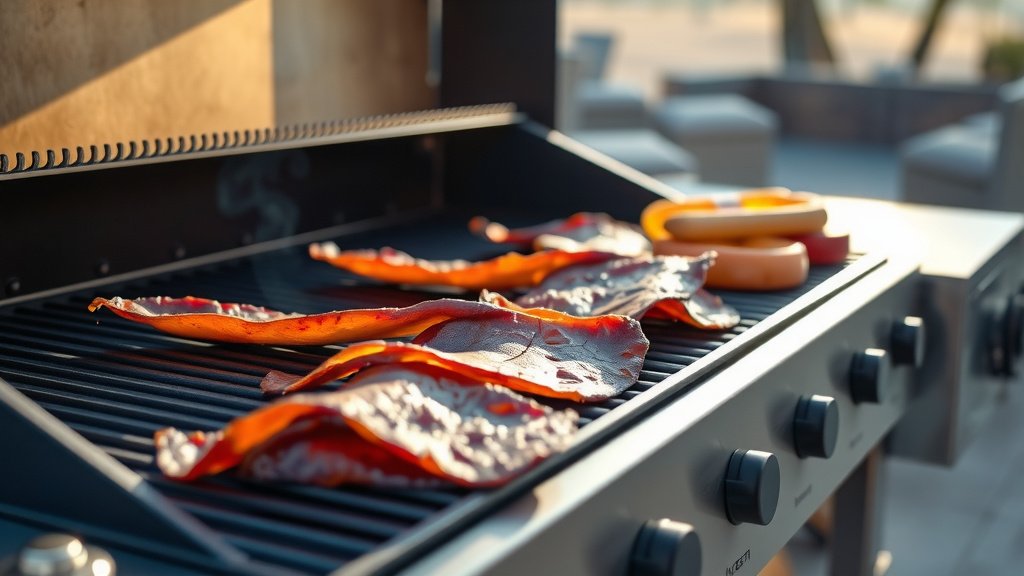
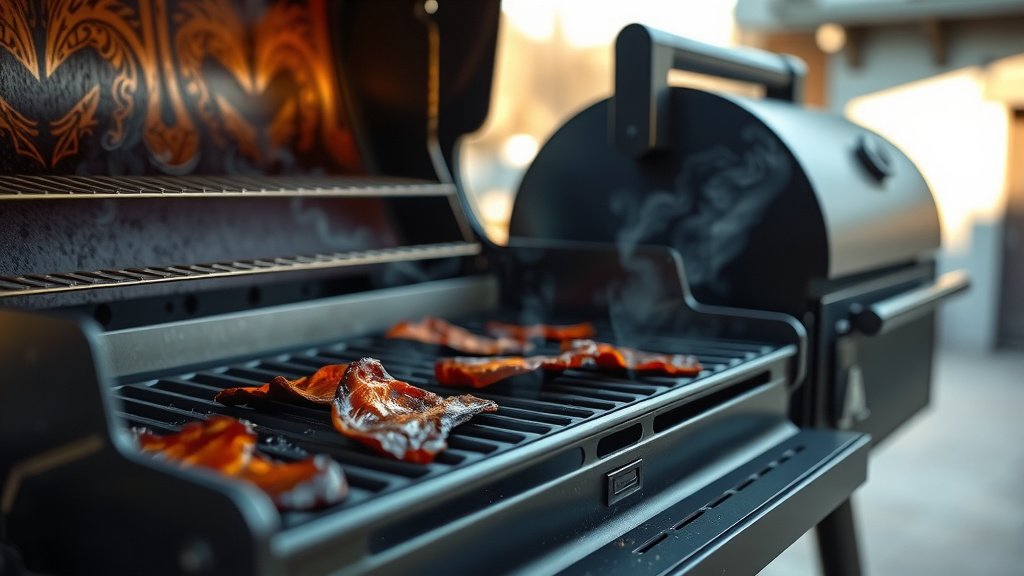
How to Make Moose Jerky on a Pellet Grill
Slice lean moose meat thin, cure or marinate it, then dry it on a pellet grill at 160 to 180°F until flexible but not brittle. Moose is very lean, so low heat, even airflow, and close checks give you tender jerky without drying it out.
On this page (11 sections)
- What cut and thickness of moose works best for jerky?
- Do you need cure for moose jerky on a pellet grill?
- What marinade works with lean moose meat?
- What temperature should you use for moose jerky on a pellet grill?
- How long does moose jerky take on a pellet grill?
- How do you keep moose jerky tender instead of tough?
- What equipment helps if you do not have a pellet grill?
- How do you store moose jerky after pellet grilling?
- What mistakes make moose jerky fail on a pellet grill?
- Can you make moose jerky in a brick or charcoal setup?
- How do you adjust this moose jerky recipe on pellet grill for flavor?
Slice lean moose meat thin, cure or marinate it, then dry it on a pellet grill at 160 to 180°F until flexible but not brittle. Slice across the grain, keep the heat low, and check each strip early.
Moose has very little fat, so it can turn hard if the grill runs hot or strips stay in too long. A thin, even cut at a calm, low temperature matters more than a complex sauce.
What cut and thickness of moose works best for jerky?
Use a firmer roast or round cut, sliced 1/4 inch thick across the grain. That thickness dries in a pellet grill in about 3 to 5 hours and stays tender enough to chew.
Look for meat with no thick silver skin or large fat seams. Trim those parts off before slicing, because they dry at a different rate and can turn rancid faster in storage.
If you have a roast with a clear grain direction, slice across it so each bite breaks apart more easily.
How do you slice moose meat evenly without a slicer?
Chill the meat in the freezer for 1 to 2 hours, then slice with a long, sharp knife. Partial freezing firms the meat and makes even slices much easier to cut by hand.
Place the meat on a stable board and cut against the grain for uniform 1/4 inch strips. Thin edges will finish first, so pull them off and let thicker pieces keep drying.
A slicer helps for regular batches but is not required. Most cooks get even strips with a chilled roast and a sharp 10 to 12 inch knife, then wash the board and knife after use.
Do you need cure for moose jerky on a pellet grill?
Yes, use cure if you want room temperature storage. Curing pink salt, often called Cure #1, helps dried meat stay safe during slow drying and storage when you follow a tested recipe.
Measure cure by weight and follow the ratio for the amount of meat. Too little reduces the safety benefit, and too much can add a bitter or metallic taste.
If you skip cure, treat the jerky as a refrigerated food. Dry it fully, cool it, and store it in an airtight container in the refrigerator for use within a few days.
What marinade works with lean moose meat?
Use a salty, savory marinade with soy sauce, Worcestershire sauce, garlic, pepper, and a little brown sugar. Salt helps flavor reach thin strips, while sugar softens the taste without making it sweet.
Use 1/2 to 3/4 cup of marinade per pound of meat, coat well, and refrigerate for 8 to 24 hours, turning once halfway through. Add cure when called for and dissolve it fully before adding meat, then discard used marinade.
Our guide to How To Make Jerky On A Pellet Grill? also covers rack spacing and smoke choices for moose.
What temperature should you use for moose jerky on a pellet grill?
Set the pellet grill to 160 to 180°F and keep the lid closed. Start at 160°F for thin strips, moving toward 180°F only if drying stalls or weather is cold and windy.
Preheat for 15 to 20 minutes, then lay strips in a single layer with space between them. Crowding traps steam and can leave soft centers.
Use mild oak, hickory, or a mild blend for gentle smoke in the first hour. The temp of smoker for pork jerky guide explains similar low ranges, but lean moose needs the lower end and close texture checks.
How long does moose jerky take on a pellet grill?
Plan for 3 to 5 hours for 1/4 inch strips, and up to 7 hours for thicker pieces. Start checking at 3 hours, then check every 30 minutes.
Bend a strip gently. Finished jerky should flex and show fine cracks along the bend, but it should not snap or crumble.
Rotate trays after about 2 hours to even out hot spots. Pellet grills often run hotter near the firebox, so front to back and top to bottom rotation matters.
Remove finished pieces as they are done. Thin edges and small strips will finish first, and leaving them in will make them brittle.
How do you keep moose jerky tender instead of tough?
Keep slices thin, keep the grill low, and pull strips as soon as they bend without snapping. Those steps do most of the work for tender jerky.
Marinade cannot fix thick, overcooked meat, since a 1/2 inch strip often dries outside long before its center dries. Cool jerky on a rack for 30 minutes, then rest it in a covered container for a few hours so moisture evens out.
Compare timing with How To Make Beef Jerky On A Pellet Grill?, since beef has more marbling and can tolerate a longer dry than lean moose.
What equipment helps if you do not have a pellet grill?
A vertical smoker, a portable gas grill used carefully, or a small charcoal grill can dry jerky in a pinch, but a pellet grill holds low heat more easily. We compared the three products below for readers who want backup or travel options.
The Masterbuilt 30-Inch Dual Fuel Propane & Charcoal Vertical Smoker with 730 Sq. In.
Cooking Space, Push-Button Ignition, Temperature Gauge, 4 Smoking Racks, Black gives you four racks and a water pan for steady low heat. Its vertical design suits multiple trays of jerky at once.
Its 30 inch height and 59 pound weight make it a fixed backyard unit, not a travel grill. The built-in temperature gauge helps you track heat, and the locking door helps hold it steady.
You will still need to check strips often, because no gauge can judge jerky texture for you.
The Camco Kuuma Stow N Go 125 Stainless Steel Gas Grill with Latch, Handle, and Pedestal Mount for Patio, Lawn, and Garden, Silver is a compact 125 sq. in. grill that weighs 14.5 pounds. It suits small batches at a camp or dock, not full jerky loads.
Its 9,000 BTU/HR output and pedestal mount give you a portable setup, but its small cooking surface limits how much jerky you can dry at once. Keep strips in a single layer and expect more frequent checks.
The Cuisinart Charcoal Grill, Portable Tabletop Design, Locking Lid, 14" has a 196 sq. in. chrome-plated grate and dual vents for heat control. It works for a short drying session, but charcoal makes low, steady heat harder to hold for hours.
At 4 pounds in the product data, it is easy to carry and clean. The locking lid helps during transport.
For true jerky, though, a pellet grill or dehydrator will hold 160°F with less babysitting.
How do you store moose jerky after pellet grilling?
Cool jerky fully, then store cured jerky in an airtight container at room temperature for up to 1 to 2 months. Uncured jerky belongs in the refrigerator and should be eaten within a few days.
Label the container with the date and cure status. Place jerky in layers with parchment between layers if it will be stacked.
Check stored jerky before each use. Discard it if you see mold, sliminess, or an off smell, and keep it away from heat and light.
If you want a longer shelf life, freeze cured jerky in a sealed bag for up to 6 months. Thaw a portion in the refrigerator and eat it within a week.
What mistakes make moose jerky fail on a pellet grill?
The top mistakes are slicing too thick, skipping cure for pantry storage, running the grill too hot, and packing warm jerky. Each slows drying or shortens storage life.
Thick slices trap moisture, warm packing creates steam, and high heat hardens the outside before the inside dries. Storing uncured jerky at room temperature also creates a safety risk, so use a thermometer to confirm 160°F and wash hands, boards, and knives after handling raw moose.
The salmon jerky on a pellet grill recipe shows how timing shifts for a fattier protein, at the opposite end from lean moose.
Can you make moose jerky in a brick or charcoal setup?
Yes, but you will work harder to hold 160 to 180°F for hours. Brick or charcoal setups can dry small batches with indirect heat, a water pan, and frequent checks.
Our guide to How To Make Brick BBQ Grill? explains heat zones that keep jerky away from direct coals, with a water pan buffering heat between coals and meat. For charcoal, light a small pile to one side, add a few coals at a time, and adjust vents often.
If you own a pellet grill, use it for jerky and other grills for ribs or burgers. See How To Make Ribs On A Pellet Grill? for that separate cook.
How do you adjust this moose jerky recipe on pellet grill for flavor?
Start with a classic savory batch, then change one thing at a time in later batches. Small changes make it easier to know what you liked.
Try black pepper and garlic first, then add smoked paprika or cayenne, or a little honey or brown sugar for mild sweetness. Slice at 1/5 inch and dry at 170°F for a drier, crisper bite, or stay at 1/4 inch and pull at the first bend test for a softer chew.
Do not soak tough strips in sauce after drying, since added moisture shortens storage life.
About this guide: We searched specs, maker details, and buyer patterns to compare grills and drying methods for this moose jerky recipe on pellet grill. We do not test products hands on.
Use our steps as a starting point and adjust thickness, heat, and time to your grill.
Frequently asked questions
What temperature should a pellet grill be for moose jerky?
Use 160 to 180°F for most moose jerky, starting at 160°F for thinner strips. The meat should reach 160°F internally for safety with beef, pork, and game, then keep drying until it bends without cracking.
Check often after the first hour because lean moose can harden fast.
How long does moose jerky take on a pellet grill?
Thin strips usually take 3 to 5 hours, and thicker strips can take 5 to 7 hours. Time depends on thickness, grill temperature, airflow, and how much moisture the marinade adds.
Start checking at 3 hours by bending a piece.
It should flex but not snap, and show no soft, wet center.
Do you need to cure moose jerky made on a pellet grill?
Curing is strongly recommended if you plan to store jerky at room temperature. We checked curing guides from state extension sources, and they note that uncured dried meat needs refrigeration and a shorter storage life.
A cure also helps color, flavor, and safety during long drying.
Follow a tested cure recipe and measure cure by weight.
Why is moose jerky tough when dried on a pellet grill?
Moose is lean, so high heat, long drying, or thick slices make it tough. Slice across the grain about 1/4 inch thick, keep the grill at 160 to 180°F, and remove pieces as they finish.
Rotate racks halfway through.
If the strips snap instead of bending, the batch dried past the best point for tenderness.