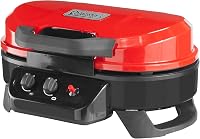
How to Choose an RV Bumper Grill
The right RV bumper grill must match your bumper mount, available clearance, fuel setup and cooking needs. Check the mounting system first, then compare size, heat control, weight and cleanup.
On this page (8 sections)
- What should an RV bumper grill fit?
- How much clearance does an RV bumper grill need?
- Which fuel works best for RV bumper cooking?
- How much cooking space do you need?
- What weight should an RV bumper grill have?
- How do burner controls affect RV meals?
- How should you set up and care for the grill?
- Is a bumper grill better than a tabletop grill?
The right RV bumper grill must match your bumper mount, available clearance, fuel setup and cooking needs. Check the mounting system first, then compare size, heat control, weight and cleanup.
This order matters because a grill that cooks well on a table may still fail on the rear of an RV. The mount decides where the grill sits, how it moves and whether it clears the body when the lid opens.
Clearance is not a small detail on a bumper setup. Heat and smoke rise near siding, trim and windows, so the cooking position needs the same care as the storage position.
Fuel also needs a clear plan before you buy. Gas brings different storage and connection needs than charcoal, and each choice affects how quickly you can cook and how much cleanup you face later.
A bumper-mounted setup can save table space, but it places the grill close to the RV and other gear. That trade-off suits some buyers and not others, depending on how the campsite is arranged.
Measure the bumper area before you compare cooking surfaces. Think through how the lid opens, where the handle sits and where a person would stand with tongs or a tray.
Weight should enter the decision early. The grill weight is only part of the load, since the carrier, mount, fuel and food add to what the bumper system must carry.
Heat control matters when one meal includes foods that finish at different times. Separate controls can make that easier, while a simpler setup can suit smaller meals.
Cleanup deserves the same attention as cooking power. A grill that is hard to clean after travel may stay unused, even if its specs look strong on paper.
Storage space inside the RV can limit the choice as much as the bumper area. Outer dimensions and the way the lid locks affect where the grill will live between uses.
If you are still comparing general portable options, start with our Best Portable Grill guide. It gives you a wider view before you narrow the choice to an RV bumper setup.
What should an RV bumper grill fit?
An RV bumper grill should fit the mounting hardware and leave enough room for safe cooking. The bumper, carrier and grill must work together as one setup, so do not choose by grill size alone.
Check these measurements before you order:
- The bumper's width, height and shape
- The carrier or mount's inside dimensions
- The grill's outside dimensions
- The total weight of the grill and mount
- The distance from the RV wall, doors and windows
- The space needed to open the lid
- The position of propane connections, controls and handles
A grill that sits securely on a tabletop may not attach directly to an RV bumper. Some models use a rail, rod or pedestal system, while others need a separate carrier designed for the RV.
The Camco Kuuma Stow N Go 125 has mounting options for a Kuuma rail, rod or pedestal. That does not confirm fit on your specific RV bumper, so compare your hardware with the required setup before choosing it.
How much clearance does an RV bumper grill need?
An RV bumper grill needs enough clearance for heat, flames, smoke, lid movement and food handling. Measure the space around the grill in its open position, not just the space it occupies while closed.
Open position is the key detail many buyers miss. A grill can look compact when shut, then need a wide arc when the lid rises and a person leans in to turn food.
Heat moves upward and outward in ways that are easy to underestimate. The safe zone should account for the grill surface, the lid, the person cooking and the items placed nearby for serving.
Look for nearby parts that can create a problem:
- RV siding and trim
- Windows and entry doors
- Awnings and fabric shades
- Storage doors and vents
- Electrical connections
- Propane storage areas
- Chairs, coolers and other camping gear
Siding and trim deserve close care because they sit directly behind many bumper positions. Even a short cooking session can expose nearby materials to heat when wind shifts.
Windows and entry doors matter for both safety and comfort. Smoke can drift into the RV, and a hatch or door that needs to open during cooking can force a change in the plan.
Awnings and fabric shades add a different risk above the grill. Rising heat can still reach canvas or trim if the grill is set too close, even when the lid opens below them.
Storage doors and vents can be easy to overlook. A compartment that opens outward may limit where the cook can stand or where a tray can rest.
Electrical connections and propane storage areas should stay clear of heat and flame. Routing a hose or cord through a tight space can also create wear.
Chairs, coolers and other camping gear shape the real clearance. A setup that seems open on an empty pad can become crowded once seating and food items are placed around it.
Mark the grill footprint with tape, then add the space needed to open the lid and move food. Test the full routine in that marked area, including reaching across the surface and setting down a tray.
Consider the direction of wind as well. A position that works on a calm day may send smoke toward a window or awning when conditions change.
Never assume that a small grill can be used close to the RV without checking the manufacturer's safety instructions. Compact size does not remove the need for proper distance from the vehicle.
Your campground may also have rules about open flames, propane and charcoal. Check them before you settle on a location, and recheck clearance whenever the layout changes.
Which fuel works best for RV bumper cooking?
Gas works best for quick, controlled RV meals, while charcoal suits buyers who want charcoal heat and flavor. Your fuel choice affects setup time, storage, cleanup and where you can cook.
Gas grills are usually easier when you move often. You can plan meals around a propane supply, and separate burner controls can help you create different heat zones.
The Cuisinart Outdoor Gas Grill has 2 burners, 20,000 BTU of total heating power and 275 square inches of cooking surface. Its 22 lb weight, folding legs, locking lid and carry handle may suit buyers who need a larger portable cooking surface, but you still need a compatible bumper carrier.
Charcoal grills need charcoal storage and a safe way to manage ash. They also need more time for the coals to heat and cool before the grill is packed away.
The Cuisinart Charcoal Grill has a 14 in tabletop design, a 196 square inch chrome-plated grate and dual vents. Its locking lid can help with transport after the grill has cooled completely, but the charcoal setup still requires careful ash handling.
For another fuel comparison, see our Best Electric Grill For RV Travel guide. Electric cooking may fit some campsites, but it depends on a suitable power source and campground rules.
How much cooking space do you need?
Choose cooking space according to the number of portions and food types you prepare together. A larger grate gives you more room to separate foods, but it also adds size and weight to the RV setup.
Use these products as practical reference points:
| Grill | Cooking space | Fuel | Main setup consideration |
|---|---|---|---|
| Camco Kuuma Stow N Go 125 Stainless | 125 sq in | Gas | Compact mounting-focused design |
| Cuisinart Charcoal Grill | 196 sq in | Charcoal | More grate room with charcoal cleanup |
| Cuisinart Outdoor Gas Grill | 275 sq in | Gas | Largest surface and 2-burner control |
A 125 square inch surface can suit smaller meals or a couple who prefers compact storage. A 196 square inch grate gives you more room for separate portions, while 275 square inches may help when several foods need to cook at once.
Cooking space should match the meals you actually make. A grill that is too small can force batch cooking, while a larger surface can keep different foods apart so they finish together.
Small surfaces tend to suit simple menus with one main item and a side that can share the same heat. That pattern works well when storage and mounting space are tight.
A mid-size grate offers more flexibility for everyday RV meals. It can hold separate portions without crowding, which helps when you want burgers, vegetables or other items to cook at the same time.
The largest surface in this group gives the most room to separate foods. That extra space can matter for family meals, side dishes and foods that need a cooler zone away from direct heat.
Do not measure only the grate. The outer dimensions determine whether the grill fits the carrier, storage compartment and travel position.
The lid, handle, controls and folding parts all add to the footprint that must clear the mount and the RV. A grill may have enough grate space yet fail in the carrier if its full width, depth and height are not checked in both open and closed positions.
Storage matters just as much as mounting. A grill that fits the bumper may still be hard to stow inside a compartment or by the door when travel day arrives.
Fuel type can change how much of that space feels usable. Gas often makes it easier to hold separate zones, while charcoal relies on coal placement and vent control.
Weight rises with size in many designs, so cooking space should be balanced against lifting and carrier limits. A larger grate is useful only if the complete setup stays manageable.
If you want a broader comparison of compact cookers, read Best Portable Grill For RV Travel. For buyers who need a raised setup away from a table, see Best Portable Grills with Legs.
The right surface is the one that fits your meals and your space. Extra room helps when you use it, and compact size helps when storage is the limit.
What weight should an RV bumper grill have?
Choose the lightest grill that still gives you the cooking space and heat control you need. Every pound affects lifting, mounting and the load carried by the bumper system.
Light weight is easiest to appreciate during real travel. The grill may need to move from storage to the mount, then back again, often with fuel and food close at hand.
The Camco weighs 14.5 lb, the Cuisinart Outdoor Gas Grill weighs 22 lb, and the Cuisinart Charcoal Grill is listed at 2 lb. These weights describe the grills themselves, not necessarily the carrier, fuel or food.
That difference between models is large enough to affect daily handling. A lighter grill can be easier to lift into place, while a heavier one may need more care and a stronger support.
A lighter grill may be easier to move between the bumper and a table. That flexibility can help when the rear position is tight or when you want to cook away from the RV for a meal.
A larger grill may reduce the need to cook in batches, but it can demand a stronger carrier and more storage room. The gain in cooking space should be weighed against those added needs.
Check the carrier weight limit separately. The grill spec alone does not tell you what the complete mounting system can carry safely over travel.
Include the grill, mount, fuel cylinder and food when you think about the complete travel load. Each item adds to the total, and the food load can vary from meal to meal.
Handling also includes grip and balance, not only total weight. A folding design, a carry handle or a locking lid can change how easy the grill feels to move and secure.
Set-up care matters too, since a heavier grill may be harder to steady on a mount. A stable position is part of safe cooking, especially when the lid is open and food is being turned.
For accessibility-focused ideas, our Best Portable Grill For Seniors guide covers weight, handling and setup factors that can also matter in an RV.
Use weight as a practical filter rather than a headline number. The best choice is the one your carrier can support and your routine can handle with ease.
How do burner controls affect RV meals?
Burner controls matter when you cook foods that need different heat levels at the same time. Two independently controlled burners give you more control than a single-burner design.
Control shapes the whole meal, not just the heat setting. It can decide whether delicate food stays gentle while thicker pieces finish, or whether everything must share one temperature.
The Cuisinart Outdoor Gas Grill has 2 stainless steel burners, independent control knobs, electronic ignition and an integrated thermometer. Its 20,000 BTU total output is divided across the 2 burners, which can help you set separate cooking zones.
Separate zones are useful in daily use. One side can run hotter for searing, while the other side holds food at a lower heat until it is ready to serve.
Electronic ignition adds convenience at the start of the meal. Reliable starting matters when you are cooking outdoors, managing food and watching the weather at the same time.
The integrated thermometer gives a quick read on the grill temperature. That feedback can help you adjust the knobs before food overcooks or undercooks.
The Camco has a single burner and 9,000 BTU of heat output. That simpler layout may suit compact meals where one cooking temperature is enough.
The trade-off is flexibility. With one burner, you have less room to keep different foods at different temperatures on the same grate.
A charcoal grill uses airflow instead of burner knobs. The Cuisinart Charcoal Grill has dual vents, which give you a way to adjust the fire while cooking.
Vent control takes a different kind of attention.
That approach can suit buyers who prefer charcoal cooking. It also asks for more patience, since the fire takes time to reach the right stage and to cool down after the meal.
For RV meals, the best control system is the one you will use often. Match the layout to the foods you cook, the time you have and the space on the mount.
How should you set up and care for the grill?
Set up the grill on a stable, approved mount or surface with the fuel connection secure and the cooking area clear. Inspect the mount, lid, handles, fuel connection and grate before each trip.
Keep these habits part of your RV routine:
- Confirm the grill is cool before moving or storing it.
- Check that the mount is fully secured before adding food.
- Keep propane connections away from sharp edges and heat.
- Remove grease and food residue after the grill cools.
- Empty charcoal ash only when it is completely cold.
- Store fuel according to the grill and campground instructions.
- Recheck clearance whenever the RV or campsite layout changes.
Stainless steel construction can simplify outdoor care, but it does not remove the need to clean the cooking surface. For marine use, compare stainless steel grills for boats.
The Camco uses 304 stainless steel, while the Cuisinart Outdoor Gas Grill uses stainless steel grates and a stainless steel frame.
Is a bumper grill better than a tabletop grill?
A bumper grill is better when you have a compatible carrier and want to preserve table space. A tabletop grill is simpler when you do not want to add mounting hardware or carry the grill on the rear of the RV.
Bumper mounting can make the grill easy to transport, but it adds another fit and clearance decision. Tabletop cooking gives you more freedom to choose the cooking location, provided the surface is stable and safe.
The Cuisinart Outdoor Gas Grill has folding legs and a carry handle, and the Cuisinart Charcoal Grill has a tabletop design. Those features may help buyers who want a grill that can move between different cooking spots.
Choose the Camco when its mounting system matches your equipment and its 125 square inch surface fits your meals. Choose the Cuisinart Outdoor Gas Grill when you need more cooking area and 2-burner control.
Choose the Cuisinart Charcoal Grill when charcoal cooking, dual vents and a compact design matter most.
For a wider decision framework, read How To Choose A BBQ Grill?. The best RV bumper grill is the one that fits your mount, clears the RV safely, carries within the approved load and gives you enough cooking space for your usual meals.
Frequently asked questions
Can any grill mount to an RV bumper?
No. An RV bumper grill needs a mounting system that matches your bumper carrier, rail, rod or pedestal setup.
Check the grill and mount dimensions, weight limits, attachment method and required clearance before buying.
A tabletop grill may need a separate approved carrier rather than attaching directly to the bumper.
What size grill is best for an RV?
Choose cooking space based on the number of people and foods you prepare at once. A 125 square inch grill suits smaller meals, while a 196 or 275 square inch surface gives you more room for several foods.
Measure the storage and mounting area before choosing the larger option.
Is gas or charcoal better for an RV bumper grill?
Gas is usually easier for quick campsite cooking because you can start and control heat without carrying charcoal. Charcoal can suit buyers who prefer charcoal cooking and adjustable vents, but it needs fuel storage, ash cleanup and careful cooling before travel.
Follow campground and RV safety rules for either fuel.
How much clearance does an RV bumper grill need?
Use the grill's required clearance and your RV's layout as the starting point. Keep heat, flames and smoke away from siding, awnings, doors, windows, storage compartments and other flammable materials.
The bumper location must also leave room to open the lid and handle food safely.