
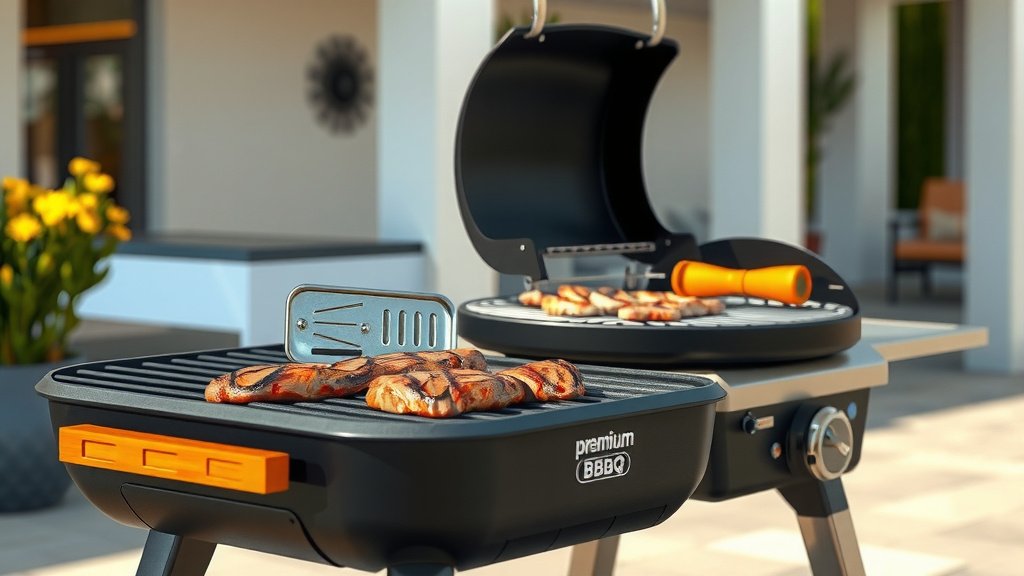
Choosing a BBQ grill means finding the perfect match for your cooking habits, available space, and budget. Think about how often you grill and what flavors you love most.
The right BBQ grill blends convenience with the desired cooking experience, whether you’re searing steaks or slow-smoking ribs.
Here’s a quick overview of what to consider when picking your next grill:
- Fuel Type: Gas for speed, charcoal for flavor, pellets for smoking, or electric for small spaces.
- Grill Size: Match cooking area to guests and outdoor space.
- Key Features: Look for useful additions like side burners or temperature gauges.
- Material: Opt for durable stainless steel or cast iron grates.
- Budget: Set a realistic spending limit for your purchase.
How To Choose A BBQ Grill?
To choose a BBQ grill, weigh your preferred fuel source, needed cooking space, and essential features for your grilling style.
Consider your outdoor area, grilling frequency, and typical foods to find your ideal match.
Consider Your Grilling Style
What kind of griller are you? Do you flip quick weeknight burgers, or love slow-smoking ribs all Sunday? Your style shapes your grill choice. We found that casual grillers prefer convenience. Dedicated pitmasters seek flavor control. Do you enjoy char and smoke, or precise temperature cooking?
What Fuel Type Works Best For You?
The fuel source is the biggest decision. Each type offers a unique experience. Think about ease, flavor, and effort. Many culinary experts agree this choice impacts your cooking most.
Gas Grills: Convenience at Your Fingertips
Gas grills use propane or natural gas. They offer instant heat-up and easy temperature control. Just turn a knob, and you’re ready. Cleaning is often simpler too. Perfect for quick, consistent results. Some feel they lack deep smoky flavor.
Charcoal Grills: The Flavor Champion
If flavor is king, charcoal might be for you. Charcoal gives that classic smoky taste and great sear marks. It takes more time to light and manage heat. Many enthusiasts find the effort worthwhile for rich flavors. This suits those who enjoy the grilling ritual.
Pellet Grills: Set It and Forget It Smoker
Pellet grills combine smoking and grilling. They burn wood pellets for fantastic smoky flavor. Precise temperature control is like an oven. Load pellets, set temperature, the grill does the rest. Great for slow-smoking meats with less active management.
Electric Grills: Simple and Compact
Electric grills suit apartment dwellers or small spaces. They need no propane or charcoal. Sometimes usable indoors (check regulations). Easy to use, clean, and offer consistent heat. No smoky flavor, but provide a convenient option where others aren’t allowed. Many home appliance guides cite their simplicity and portability.
How Much Space Do You Have?
Look at your outdoor area before picking a massive grill. Do you have a patio, balcony, or backyard corner? A large grill might overwhelm a tight space. Measure your available footprint. This practical step often guides your decision.
What Size Grill Do You Need?
How many people do you usually feed? Grills are measured by primary cooking area in square inches. A small grill (200-300 sq. inches) is fine for 2-4 people. Medium (300-500 sq. inches) suits 4-6. For larger parties, go over 500 square inches. Consider also warming rack size for holding food.
Material Matters: Durability and Performance
Materials impact grill longevity and cooking. Stainless steel is popular for rust resistance and sleek look. Cast iron grates hold heat well for sear marks. Porcelain-enameled grates are easy to clean. Research links higher quality materials to better heat retention (consumer reports). Thicker steel means more durability.
Key Features to Look For
Modern grills offer many features. Some are essential, others are bonuses. Which will truly improve your grilling?
Side Burners and Rotisseries
A side burner is useful for sauces, sides, or keeping food warm. It’s like an extra stovetop. Rotisseries are perfect for roasting whole chickens or large meats, ensuring even cooking and juicy results. Many grillers appreciate these for expanded options.
Smart Features and Accessories
Some grills have smart tech, letting you monitor temps or control burners via phone. This adds convenience for some. Tool hooks, built-in thermometers, and storage cabinets also help. Think about what makes your outdoor cooking smoother.
Setting Your Budget
Grills range from under $100 to thousands. Set a budget first. Higher price often means better materials, more features, and durability. Consider long-term value and lifespan. A mid-range grill balances quality and affordability for most families, many experts suggest.
Maintenance and Care
Proper maintenance extends grill life. Are you willing to clean grates, empty drip pans, and cover it? Some grills are easier to clean. Stainless steel wipes easily. Cast iron grates might need seasoning. Think about your time commitment.
Portability or Permanent Fixture?
Do you need to move your grill, take it camping, or leave it in one spot? Portable grills are lighter and fold. Larger cart-style or built-in grills stay put. This choice quickly narrows options. Consider wheels, handle design, and weight.
Making Your Final Decision
Bringing factors together helps narrow choices. We recommend a personal checklist of priorities. This organized approach ensures you don’t miss key points. What’s essential, and what’s a bonus?
- Choose your preferred fuel type.
- Measure your outdoor space for fit.
- Estimate your true cooking area needs.
- Prioritize material quality for durability.
- List your must-have features.
- Set a firm budget.
| Grill Type | Pros | Cons |
|---|---|---|
| Gas Grill | Quick heat, easy control, simple cleanup. | Less smoky flavor, needs fuel tank/line. |
| Charcoal Grill | Authentic smoky flavor, great searing. | Longer heat-up, more cleanup, less control. |
| Pellet Grill | Excellent smoky flavor, precise temp control. | Higher cost, needs electricity, more maintenance. |
| Electric Grill | Very compact, safe for small spaces, easy. | No smoky flavor, relies on electricity. |
Conclusion
Choosing the right BBQ grill needn’t be overwhelming. Consider your grilling style, fuel type, space, and budget. You’ll confidently select a grill for years of outdoor cooking enjoyment. Find the tool that fits your life and love for delicious food. Happy grilling!
How often should I clean my BBQ grill?
Clean your grill grates after every use to prevent sticking. A deeper clean of the entire grill is best every 3-4 months. More frequent cleaning is needed if you grill often. Regular cleaning prevents grease fires and extends lifespan.
Can I convert a propane grill to natural gas?
Many propane grills convert to natural gas with a certified kit for your model. This involves replacing orifices, regulator, and hose. A professional installation of the gas line and conversion is often recommended for safety (utility company guidelines).
What’s the difference between direct and indirect grilling?
Direct grilling cooks food directly over heat, for searing steaks or burgers. Indirect grilling uses circulating heat, cooking slowly and evenly. Ideal for large meats, poultry, or delicate fish. You create an indirect zone by moving coals or turning off gas burners.
Are infrared burners worth the extra cost?
Infrared burners are worthwhile for high-heat searing and even cooking. They produce intense, radiant heat that locks in juices and creates a great crust. While adding to cost, many chefs find them excellent for restaurant-quality sears efficiently.
How do I protect my grill from rust and weather?
Protect your grill with a high-quality, weatherproof cover when not in use. Store it in a covered area, if possible, during harsh weather. Regularly clean and dry the grill, especially metal parts. Applying thin cooking oil to cast iron grates helps prevent rust. Proper maintenance and storage are key.
