
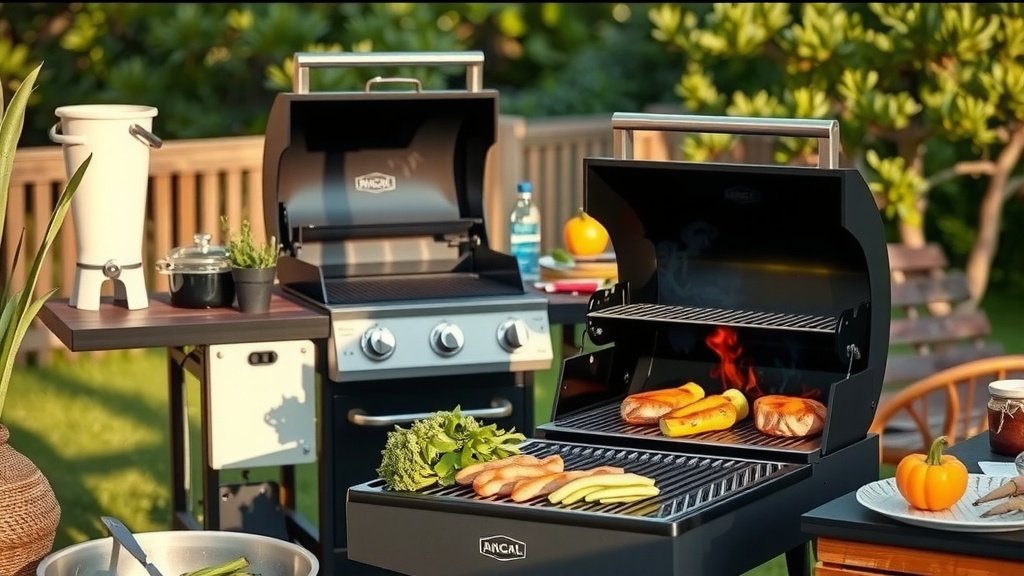
Buying a BBQ grill involves understanding your cooking needs and available space. You need to consider fuel type, size, features, and budget to find the perfect match for your outdoor cooking adventures.
The best way to buy a BBQ grill is to prioritize what matters most to you: gas for convenience, charcoal for flavor, or electric for simplicity and portability, then compare models based on these preferences.
Here’s a TL;DR on buying your perfect BBQ grill:
- Choose your fuel: Gas for speed, charcoal for flavor, electric for ease.
- Match grill size to your household and entertaining habits.
- Set a budget, remembering accessories add to the total cost.
- Look for durable materials like stainless steel or cast iron grates.
- Consider extra features like side burners or rotisseries if you’ll use them.
How To Buy A BBQ Grill?
To buy a BBQ grill, you first need to decide on the fuel type that best fits your lifestyle and cooking style. Your choice between gas, charcoal, or electric will heavily influence your overall grilling experience.
Gas Grills: Convenience at Your Fingertips
Many homeowners prefer gas grills for their quick heating and easy temperature control. You can start cooking almost instantly, making them ideal for weeknight meals. We found that gas grills offer consistent heat, which is great for even cooking.
Propane vs. Natural Gas
Gas grills typically use either propane tanks or a natural gas line connection. Propane offers portability, allowing you to move your grill around your patio or even take it camping. Natural gas provides an endless fuel supply if you have a gas hookup, so you never run out mid-cook (Consumer Reports).
Charcoal Grills: The Flavor Champion
If you crave that smoky, authentic BBQ flavor, a charcoal grill is your go-to option. While they take a bit longer to heat up, the flavor payoff is usually worth the wait. You have excellent control over heat zones, which is perfect for searing and slow cooking.
Types of Charcoal Grills
From classic kettle grills to ceramic kamado styles, charcoal options are diverse. Kettle grills are versatile and affordable, while kamado grills offer superior heat retention and moisture control. Many experts suggest kamado grills for serious smoking and baking (Barbecue Industry Association).
Electric Grills: Simple and Space-Saving
Electric grills are fantastic for apartments, balconies, or places with strict open-flame rules. They are easy to use, heat up quickly, and require minimal cleanup. You won’t get the smoky flavor of charcoal, but they offer convenience and consistent cooking. We found that electric grills are a solid choice for those with limited space or time.
Considering Grill Size and Cooking Area
The size of your grill should match how many people you typically cook for. Are you grilling for just your family, or do you host large backyard parties? A smaller grill might be perfect for two, while a larger model can handle a crowd.
Primary Cooking Space
Look at the primary cooking area, measured in square inches. We found that about 400-500 square inches is often enough for a family of four. If you host larger gatherings, consider 600 square inches or more. Don’t forget the warming rack, which adds usable space for keeping food warm.
What’s Your Budget?
Grills range widely in price, from a few hundred dollars to several thousand. Decide how much you are comfortable spending before you start looking. Remember that accessories, covers, and fuel will add to the overall cost. Investing a bit more often means better durability and features.
Material Matters: Durability and Maintenance
The materials a grill is made from greatly affect its lifespan and how easy it is to maintain. You want a grill that can withstand the elements and frequent use. We found that stainless steel is a popular choice for its rust resistance and sleek look.
| Material | Pros | Cons |
|---|---|---|
| Stainless Steel | Durable, rust-resistant, easy to clean | Higher cost, can show fingerprints |
| Cast Iron Grates | Excellent heat retention, great searing | Requires seasoning, can rust if not maintained |
| Porcelain-Enamel | Rust-resistant, easy to clean | Can chip if struck hard |
| Aluminum | Lightweight, rust-proof | Less durable than steel, poor heat retention |
Essential Features to Look For
Grills come with a wide array of features. Some are really helpful, while others might be more of a novelty for your specific needs. Think about what will genuinely enhance your grilling experience. Do you need a side burner for sauces? What about a rotisserie kit for whole chickens?
- Ignition System: Reliable push-button or electronic ignition is a must for gas grills. You don’t want to struggle getting it started.
- Heat Distribution: Even heat across the grates prevents hot spots and cold spots, ensuring food cooks uniformly.
- Thermometer: A built-in lid thermometer is very helpful for monitoring internal temperatures.
- Grease Management: A good system prevents flare-ups and makes cleanup easier.
- Storage & Shelving: Side shelves provide space for platters and tools. Enclosed cabinets hide propane tanks and accessories.
Safety First: What to Check
Always prioritize safety when buying and using a grill. Ensure the grill is stable and built with quality components. Check for certifications like UL or CSA, which indicate it meets safety standards. Many experts emphasize the importance of reading your grill’s manual thoroughly (National Fire Protection Association).
Maintenance and Cleaning Considerations
A grill is an investment, and proper care will extend its life. Consider how easy it will be to clean. Removable grease trays and easy-to-access components make a big difference. We found that rust-resistant materials reduce long-term maintenance needs. You’ll thank yourself later for choosing a grill that’s easy to keep sparkling.
Pre-Purchase Checklist for Your BBQ Grill
Before you commit, run through this quick checklist to ensure you’re making a wise decision:
- Have you chosen the right fuel type for your needs?
- Does the grill size match your typical cooking volume?
- Is the grill within your budget, including accessories?
- Are the materials durable and easy to maintain?
- Does it have essential features you’ll actually use?
- Does it feel sturdy and well-built in person?
Conclusion
Choosing the right BBQ grill is about finding a balance between your cooking style, budget, and desired features. Whether you lean towards the convenience of gas, the smoky flavor of charcoal, or the simplicity of electric, there’s a perfect grill waiting for you. By considering these factors, you’ll be well on your way to enjoying delicious outdoor meals and creating lasting memories.
How much should I spend on a decent grill?
For a decent grill that offers good performance and durability, you can expect to spend anywhere from $300 to $700. Higher-end models with premium features and materials can go well over $1,000.
Is it better to get a gas or charcoal grill for beginners?
A gas grill is generally better for beginners due to its ease of use, quick startup, and precise temperature control. Charcoal grills require a bit more practice to master heat management.
What kind of grates are best for grilling?
Cast iron grates are often considered the best for grilling because they retain heat exceptionally well and create excellent sear marks. Porcelain-enameled cast iron is also popular as it offers similar benefits with easier cleaning.
How important is the BTU rating on a gas grill?
While BTU (British Thermal Unit) rating indicates the grill’s heat output, it’s not the only factor. Higher BTUs can mean faster heating, but good design and even heat distribution across the grates are often more important for effective cooking.
Should I buy a grill with a side burner?
A side burner can be very useful if you plan to cook side dishes, sauces, or keep food warm while grilling your main course. If you rarely cook anything beyond the main grill surface, you might not need one.
