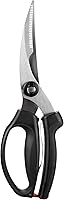
Poultry Shears vs Kitchen Shears: Which Should You Choose? (November 2026)
Pick poultry shears for bones and spatchcocking, and kitchen shears for everyday cuts. In this poultry shears vs kitchen shears comparison, blade curve, leverage and a bone notch matter more than a general-purpose label.
On this page (11 sections)
- Poultry shears vs kitchen shears: the quick verdict
- Side by side: what separates the 2 types?
- Blade shape: curved for birds, straight for herbs
- Cutting strength: bones, joints and skin
- Handles and leverage: spring, soft grip or heavy build
- Extra tools: nutcracker, bottle opener and herb stripper
- Cleaning and storage: pivots, sheaths and locks
- Size and storage: length, weight and drawer space
- Who should buy which type?
- Care tips for either pair
- Final verdict on poultry shears vs kitchen shears
Poultry shears win for bones, while kitchen shears win for everyday cutting. In poultry shears vs kitchen shears shopping, the right pick depends on whether you mostly break down a bird or snip herbs, trim meat and open packages.
The KitchenAid All Purpose Kitchen Shears score 9.7 for daily kitchen work. The OXO Good Grips Spring-Loaded Poultry Shears score 9.6 for whole-bird prep, and the gap comes from shape and leverage rather than sharpness alone.
We compared specs, blade designs and handle types across these 4 models. Our score weighs specs, features and buyer feedback against what you are shopping for in this comparison.
 Best for everyday kitchen cuts
KitchenAid All Purpose Kitchen Shears with Protective
 Best for spatchcocking chicken
OXO Good Grips Spring-Loaded Poultry Shears
Poultry shears vs kitchen shears: the quick verdict
Buy dedicated poultry shears if you cut bones, and buy kitchen shears if you cut mostly soft foods. The OXO and MAD SHARK models focus on poultry force and reach.
The KitchenAid models focus on broad daily use.
Poultry shears work best for spatchcocking chicken, removing a turkey backbone and cutting through joints. Kitchen shears work best for herbs, scallions, bacon, pizza, packaging and trimming fat.
Many households end up with one pair of each. That setup gives you a light tool for daily cuts and a stronger tool for weekend poultry prep.
If you can buy only one pair, think about your most frequent task. Daily herb and vegetable cutting favors kitchen shears, while frequent whole-bird prep favors poultry shears.
Our best kitchen poultry shears guide covers models that blur this line. Use it when you want one pair that handles both poultry and basic kitchen jobs without a big trade-off.
Side by side: what separates the 2 types?
Poultry shears have curved blades and more leverage, while kitchen shears have straighter blades for general use. That shape difference shows up in every cut you make, from backbone removal to snipping chives.
| Feature | Typical kitchen shears | Dedicated poultry shears |
|---|---|---|
| Blade shape | Straight or lightly curved | Curved and tapered |
| Bone notch | Often missing | Common for holding bones |
| Handle force | Moderate | Spring-loaded or heavy-duty |
| Best cuts | Herbs, vegetables, packaging | Joints, skin, small bones |
| Cleaning | Simple pivot | Some blades separate |
The KitchenAid All Purpose model has 4.7 inch stainless steel blades with micro serrated edges. That design grips herbs and vegetables well, and the 8.72 inch length keeps it easy to store.
The OXO model has 4.75 inch curved blades with a notch for bones. Its 9.6 inch length gives more reach, and the spring-loaded handles add force during long cuts.
A table like this helps you shop by task instead of by label. Poultry shears and kitchen shears can look alike in a drawer, but their blade geometry tells you what each pair was shaped to do.
Blade shape: curved for birds, straight for herbs
Curved blades follow a bird's body, while straight blades give you a clearer view for herbs and vegetables. This is the biggest design split in poultry shears vs kitchen shears.
The OXO Good Grips use a curved, tapered design to reach hard-to-reach spots. That shape helps you cut along a chicken backbone without forcing the blades into an awkward angle.
Straight kitchen shears, like the KitchenAid All Purpose pair, suit cutting herbs, trimming fat and snipping packaging. You can see the cut line more easily and control small pieces with more precision.
Micro-serrated edges appear on both types in this group. The KitchenAid blades use micro serrated edges to grip food and reduce slips, and the OXO blades use micro-serrated stainless steel for the same reason.
For turkey work, blade reach matters even more. Our best poultry shears for turkey guide explains why longer, curved blades help with a larger bird and thicker joints.
Choose curved blades when you spatchcock or break down birds often. Choose straight blades when most cuts are herbs, vegetables and light meat trimming.
Cutting strength: bones, joints and skin
Poultry shears cut bone more easily because they pair thicker blades with stronger handles. Kitchen shears can cut skin and soft tissue well, but bone is where the designs separate.
The MAD SHARK Heavy Duty Poultry Shears use 3.5mm molybdenum-vanadium steel blades. MAD SHARK says those thick blades cut through poultry bones, and the aluminum handles add strength for repeated force.
The OXO model adds leverage through spring-loaded handles. That spring opens the blades for you, so you need less squeeze for each cut through skin and small bones.
The KitchenAid All Purpose shears use extra thick stainless steel blades for frequent use. Those blades suit everyday foods, but the design does not include a bone notch or spring leverage for heavy poultry work.
The KitchenAid 2-Piece set includes a poultry bone notch on its multipurpose shears. That notch helps hold bones in place, even though the set is aimed at broader use than a dedicated poultry pair.
If your poultry is usually chicken, a spring-loaded poultry pair may be enough. If you handle turkey or thick joints often, look at our best heavy duty poultry shears picks for more force.
Handles and leverage: spring, soft grip or heavy build
Spring-loaded handles help with force, while soft grips help with comfort over time. Both matter, but they solve different problems during poultry prep.
The OXO spring-loaded handles offer extra leverage while reducing hand strain. That helps when you cut along a backbone, trim fat or work through several joints in one session.
The KitchenAid All Purpose pair uses a soft, comfort grip handle with a non-slip coating. KitchenAid says that design reduces hand fatigue during extended use, which suits cooks who use shears many times a day for light tasks.
The MAD SHARK pair uses aluminum handles with an ergonomic non-slip grip and thumb rest. MAD SHARK says the spring-loaded design also allows one-handed use, which can help when you hold the bird steady with the other hand.
Handle shape also affects control with greasy hands. Non-slip coatings and looped shapes help, but a locking handle matters when you store the shears between tasks.
Ambidextrous designs appear across this group, including the KitchenAid All Purpose and MAD SHARK models. If you cook with either hand, check that the handle shape feels balanced before you buy.
Extra tools: nutcracker, bottle opener and herb stripper
Extra tools help only if you will use them often. Kitchen shears often add small features, while poultry shears focus on cutting force and reach.
The KitchenAid 2-Piece set adds a nutcracker, bottle opener, poultry bone notch and herb stripper. That makes the set useful beyond poultry, especially for households that want one kit to cover several small jobs.
The KitchenAid All Purpose pair keeps the focus on cutting. It includes a protective sheath, which helps protect blades and makes drawer storage safer.
The MAD SHARK pair includes a fish scaler edge and a built-in nutcracker feature. MAD SHARK lists those abilities for users who want one heavy-duty tool for more than poultry.
The OXO pair stays focused on poultry cutting and cleaning. Its blades separate for easy cleaning, and its handle lock keeps the shears closed for storage.
Extra features can add value, but they can also add bulk. A 2-piece set or a tool-rich pair makes sense when those features match your routine, not just when the list looks long.
Cleaning and storage: pivots, sheaths and locks
Easy cleaning matters because raw poultry leaves residue around the pivot and blade edges. Check whether the blades separate, whether a sheath or lock is included and how you will store the pair.
The OXO blades separate for easy cleaning by hand or in the dishwasher. That design helps you wash the pivot area more thoroughly after poultry prep.
The KitchenAid All Purpose pair is dishwasher safe, though hand washing is recommended to maintain blade quality. It also includes a sturdy plastic sheath to protect the blades.
The KitchenAid 2-Piece set includes protective blade covers and is dishwasher safe on the top rack. Hand washing is also recommended there, with immediate drying to extend blade life.
The MAD SHARK pair is dishwasher safe, and MAD SHARK advises keeping the scissors as dry as possible after washing. Drying helps limit stains and keeps the edge in better shape.
Locks help with storage safety. The OXO has a handle lock, and the MAD SHARK has a thumb-activated safety lock.
A sheath, like the one with the KitchenAid All Purpose pair, serves the same purpose in a different way.
For long-term meat storage after prep, a vacuum sealer can help you portion and freeze chicken or turkey. Shears handle the cutting, and sealed storage handles the keeping.
Size and storage: length, weight and drawer space
Longer shears give more reach, but they also need more drawer space. Match the length to the bird size you handle most often.
The KitchenAid All Purpose pair measures 8.72 inches long and 3.2 ounces. That compact size suits daily kitchen use and small drawers.
The OXO pair measures 9.6 inches long and 3.84 ounces. The extra length supports deeper cuts on whole chicken and turkey.
The KitchenAid 2-Piece set has an overall length of 12.63 inches listed for the set. Treat that as a reminder to measure drawer space before you buy a set.
The MAD SHARK pair focuses on heavy-duty force rather than compact storage. Its aluminum handles and thick blades make it a dedicated prep tool rather than a light everyday pair.
Weight affects control during long cuts. A heavier pair can feel stable, but it can also tire your hand if you use it for many small tasks.
Measure your drawer or knife block space before ordering. A pair that does not fit well will end up in a hard-to-reach spot, and you will use it less often.
Who should buy which type?
Buy kitchen shears for daily light work and poultry shears for whole birds and bones. The best choice follows your most common cut, not the longest feature list.
Choose the KitchenAid All Purpose Kitchen Shears if you mostly cut herbs, vegetables, meat and packaging. The soft grip, sheath and dishwasher-safe design suit a busy kitchen where poultry bones are rare.
Choose the OXO Good Grips Spring-Loaded Poultry Shears if you spatchcock chicken or prep turkey often. The curved blades, bone notch and spring leverage match whole-bird work.
Choose the MAD SHARK Heavy Duty Poultry Shears if you cut thick joints and want maximum force. The 3.5mm blades and aluminum handles suit demanding prep more than light snipping.
Choose the KitchenAid 2-Piece set if you want two pairs for different jobs. One pair can stay in the kitchen, and the other can handle household tasks, while the bone notch covers poultry needs.
If you are also choosing a grill for the birds you prep, our How To Choose A Gas Grill? guide helps you match cooking gear to your prep habits. A similar approach in our How To Choose A BBQ Grill? guide can help you plan the whole cooking setup.
Care tips for either pair
Clean, dry and store shears after every raw poultry session. Good care keeps the edge sharp and the pivot smooth, regardless of which type you buy.
Wash shears in warm soapy water or follow the dishwasher guidance for your pair. Dry them right away, especially around the pivot screw and blade edges.
Do not use shears to pry, hammer or cut wire unless the design supports that work. Kitchen shears are cutting tools, and misuse can loosen the pivot or chip the edge.
Store blades closed, locked or sheathed. The KitchenAid sheath, OXO handle lock and MAD SHARK safety lock all help you keep sharp edges away from fingers and other tools.
Check the pivot over time. A loose pivot can waste force and make cuts uneven, while a tight pivot can make the handles hard to squeeze.
Use shears only on food and kitchen materials. Cutting cardboard, wire or hard non-food items can dull micro-serrated edges faster than normal food work.
Final verdict on poultry shears vs kitchen shears
Pick poultry shears for bones and kitchen shears for everyday cuts, and consider owning both. In poultry shears vs kitchen shears shopping, your most frequent task should make the final call.
For whole chicken and turkey, the OXO Good Grips offer the best balance of curved reach, spring leverage and easy cleaning. For thick joints and heavy force, the MAD SHARK pair is the stronger dedicated option.
For herbs, vegetables and daily kitchen cutting, the KitchenAid All Purpose pair is the simpler choice. For a household that wants two pairs plus small tools, the KitchenAid 2-Piece set covers more ground.
Start with the task you do most often. If that task is whole-bird prep, buy poultry shears first.
If that task is daily light cutting, buy kitchen shears first and add a poultry pair when bone work becomes routine.
Frequently asked questions
Can kitchen shears replace poultry shears?
Kitchen shears can handle herbs, vegetables and soft meat, but they may struggle with poultry bones and deep cuts. Poultry shears add curved blades, a bone notch and stronger leverage.
If you spatchcock chicken or break down turkey often, the dedicated shape saves effort.
Are poultry shears better than kitchen shears for chicken?
Poultry shears are usually better for whole chicken because curved blades reach the backbone and a notch holds bones steady. Kitchen shears work well for skin, fat and smaller cuts.
Choose based on whether your usual task is bone-in prep or light everyday cutting.
What blade shape should I look for?
Look for curved, tapered blades for poultry work because they follow the bird's shape and reach tight areas. Straight blades suit herbs and vegetables where a clear view matters.
Micro-serrated edges help grip slippery food, while a bone notch keeps small bones from slipping during cuts.
Are spring-loaded shears easier to use?
Spring-loaded handles open the blades for you and add leverage, which helps during long poultry prep. They can reduce hand strain when cutting through skin and small bones.
Some cooks prefer non-spring shears for precise herb snips, so match the handle to your most common task.
How should I clean and store shears?
Wash shears after raw poultry use, dry them well and store them closed or in a sheath. Blades that separate are easier to clean around the pivot.
Hand washing helps edge life, though dishwasher-safe models offer convenience when you dry them right after the cycle.