Is a Cast Iron Skillet Nonstick?
A cast iron skillet is not nonstick like a coated pan, but good seasoning and technique can give it a natural easy-release finish. Food releases best when the pan is hot, dry, and oiled, and the food is left alone until a crust forms.
On this page (9 sections)
- How does seasoning make cast iron release food?
- Is a cast iron skillet non stick enough for eggs and fish?
- Why does food stick to cast iron when the pan looks seasoned?
- How does heat help food release from iron?
- How should you clean a skillet to keep it slick?
- What oil should you use for seasoning and cooking?
- How is an enamel Dutch oven different from a skillet?
- Which Lodge pan should you pick for easy release?
- How can you build a better nonstick finish over time?
A cast iron skillet is not nonstick in the same way as a pan with a synthetic coating, but seasoning and cooking technique can make food release smoothly.
If you ask is a cast iron skillet non stick, the short answer is that it becomes naturally slick with use. It will not feel like a brand new coated pan on day one.
After a few rounds of cooking, cleaning, and oiling, the surface gets more even and simple foods let go with less effort.
How does seasoning make cast iron release food?
Seasoning is a thin layer of oil that gets heated until it bonds to the iron. That layer fills tiny rough spots and creates a smoother cooking surface.
You can learn more about what is seasoning a cast iron skillet if you want the basic steps before you cook.
Lodge says its pre-seasoned pans use 100% natural vegetable oil for a naturally nonstick finish. That means you can start cooking right away, but the finish still improves with each meal.
Add a thin coat of oil after washing, and heat the pan before food goes in.
The 12 inch Lodge Pre-Seasoned Cast Iron Skillet with Silicone Handle Holder weighs 7.5 pounds and holds 1.89 liters. Lodge says it arrives pre-seasoned and PFAS-free, with a natural vegetable oil seasoning.
Those facts make it a solid pick if you want a larger everyday pan.
Is a cast iron skillet non stick enough for eggs and fish?
Eggs and fish are the foods people test first, and both can work well once the pan is hot and oiled. For eggs, preheat the skillet over medium heat, add oil or butter, and wait until it moves easily in the pan.
Then add the eggs and leave them alone until the edges set.
Fish needs the same patience. Pat it dry, season it, and let it sit in the hot pan until a browned crust forms.
If you try to flip too early, it will tear. Once the crust is ready, it should turn with a gentle push from a thin spatula.
A coated nonstick pan will still feel slicker for very delicate foods. Cast iron wins when you want browning, crisp skin, and steady heat.
Think of it as a browning tool that releases food well, not a pan that makes every food slide with no effort.
Why does food stick to cast iron when the pan looks seasoned?
Food sticks most often because of heat, moisture, or timing, not because the seasoning failed. A cold pan makes proteins grab the surface.
Wet food drops the pan temperature and steams instead of browning. Moving food too soon breaks the crust before it can form.
Start with a dry pan on medium heat for a few minutes. Add oil after the pan warms, and let it thin out and shimmer.
Dry the food with paper towels, salt it close to cooking time, and spread pieces out so steam can escape.
If you use grill tools for turning food on a grate, use the same idea on a skillet. Let the food cook until it releases on its own.
Forcing it early is the fastest way to make a seasoned pan seem nonseasoned.
How does heat help food release from iron?
Cast iron holds heat longer than thin pans, and that steady heat is a big part of food release. A hot surface sears the outside fast, so a crust forms.
Once that crust is firm, the food stops bonding to the pan and turns or lifts cleanly.
Heat the empty pan first, then add oil. For the 10.25 inch Lodge skillet, Lodge lists a maximum temperature of 550 °F in its specs.
You do not need that level for most meals. Medium heat is safer for oil and gives you more control.
The Lodge Pre-Seasoned Cast Iron Skillet with Hot Handle Holder weighs 5.4 pounds and holds 190 ml by capacity. Lodge says it is oil-seasoned for a natural easy-release finish that improves with use.
It suits people who want a smaller pan that still sears hard.
How should you clean a skillet to keep it slick?
Cleaning matters because burned bits and soap residue can make the surface rough. Let the pan cool, rinse it with warm water, and scrub with a stiff brush.
Lodge says to hand wash, dry, and rub with cooking oil for its seasoned skillets.
Dry the pan right away on the stove over low heat. While it is warm, rub in a very thin layer of oil with a paper towel.
If you can see pools of oil, wipe them off. A thin film is what you want, not a greasy coat.
Do not soak the pan for long periods, and do not leave it wet. Water can cause rust, and rust makes food stick.
Once it is dry and lightly oiled, store it in a dry spot. A best cast iron skillet handle cover can also keep the handle safe when you move the pan.
What oil should you use for seasoning and cooking?
The oil you use affects how smooth the layer feels after heating. Lodge uses vegetable oil for its factory seasoning.
For home care, pick a cooking oil you already use, and apply it thinly so it can bond instead of pooling.
Our guide to best cast iron skillet seasoning oil breaks down common choices by smoke point and ease of use. For daily cooking, use an oil that suits the heat level of the dish.
For re-seasoning, use a thin layer and heat the pan until the oil just starts to smoke.
After cooking, that same thin oil coat helps protect the surface. It also keeps the pan ready for the next meal.
The goal is a dry, slick-feeling surface, not a sticky one. If it feels tacky, wipe off more oil and heat it a bit longer.
How is an enamel Dutch oven different from a skillet?
An enamel Dutch oven gives you cast iron heat retention without the same seasoning care. The enamel coat resists rust and stands up to acidic foods, so it fits soups, braises, and slow cooking.
It is not a nonstick skillet, and it releases food in a different way.
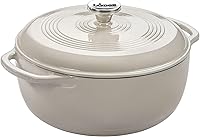
The Lodge Essential Enamel Cast Iron Dutch Oven holds 6 quarts and weighs 14.9 pounds. It has a round shape, dual handles, and a cast iron lid.
Lodge says it is oven safe up to 500 degrees Fahrenheit and works for marinating, baking, simmering, and refrigerating.
Its enamel surface is stain-resistant and non-toxic, and it will not react with food in the way bare iron can. That makes it handy for tomato sauces and other acidic dishes.
Keep it for those jobs, and use a bare skillet for dry-heat searing where crust matters most.
If you plan to season other iron pieces, you may also want to see How to Season a Cast Iron Griddle? and How To Season A Cast Iron BBQ Grill? for the same oil and heat ideas in other forms.
Which Lodge pan should you pick for easy release?
Pick the 12 inch skillet if you cook for a family or want room for steaks, cornbread, and roasted vegetables. Its larger surface heats more food at once, and the silicone handle holder helps you move it after cooking.
Lodge says it works on gas, electric, induction, and grills.
Pick the 10.25 inch skillet if you want a lighter pan for eggs, fish, and two portions. It still sears well, but it takes less space and is easier to lift.
The red silicone hot handle holder is included, which helps when you carry it from stove to table.
You can also compare best lodge cast iron skillet accessories if you want a handle cover, pan scraper, or other tools to go with either skillet. A good scraper and a clean, dry pan do more for food release than extra gadgets.
If your main goal is simple food release for eggs and fish, choose the skillet you will use most often. A pan that stays on the stove gets seasoned faster than a larger pan that lives in a cabinet.
Size, weight, and storage matter as much as the coating question.
How can you build a better nonstick finish over time?
Each meal adds a little to the seasoning if you cook with oil and clean the pan well. Searing meat, frying vegetables, and baking cornbread all leave behind a thin layer that helps the next meal.
Over weeks, the surface becomes more even and foods release with less effort.
Avoid cooking very acidic foods in a new bare skillet for long periods. Tomato sauces can wear down a young seasoning layer.
Save those dishes for the enamel Dutch oven, and use the skillet for foods that build up the finish.
Lodge says the more you use its seasoned iron, the better the seasoning gets. That matches how most owners describe the pan.
The first few meals may need extra oil and patience. Later meals often need less, because the surface is smoother and the heat is more even.
Check the exact size and weight before you order, since cast iron is heavy. The 12 inch pan at 7.5 pounds and the 10.25 inch pan at 5.4 pounds are both easy to lift with two hands, but the smaller one is easier for daily use.
So, is a cast iron skillet non stick? It is not coated nonstick, but with seasoning, heat, and patience, it releases food well enough for most home cooking.
Pick the size you will use often, keep the pan dry and lightly oiled, and let crusts form before you move food.
Frequently asked questions
Is a cast iron skillet non stick straight out of the box?
Not fully. A factory seasoning gives you a starting layer, but food release improves after you cook with it a few times.
Wash it, dry it well, add a thin oil layer, and heat it before adding food for the best early results.
Can cast iron ever match a nonstick coating for eggs?
It can handle eggs well once the seasoning is built up and the pan is preheated. A coated pan still gives a slicker surface for delicate foods, while cast iron gives better browning and holds heat longer for many other dishes.
Why does food stick to cast iron even when it looks seasoned?
Food often sticks when a cold or damp pan meets wet food, or when you move it too soon. Preheat the dry pan, add oil, wait for the oil to shimmer, then let a crust form before you turn or lift the food.
Should I use an enamel Dutch oven for nonstick needs?
An enamel pot resists rust and handles acidic foods in a way bare iron does not. It is not a replacement for a skillet, so pick it for braising and simmering, and pick a pre-seasoned skillet for searing and frying.