Cast Iron vs Enameled Cast Iron: Which Is Best? (November 2026)
Pick plain cast iron for searing, grilling and a surface you season over time, and pick enameled cast iron for acidic foods, easier cleanup and no seasoning. In this cast iron skillet vs enameled cast iron comparison, the finish matters more than the iron underneath it.
On this page (12 sections)
- Quick verdict: cast iron skillet vs enameled cast iron
- The two finishes side by side
- Seasoning needs: the biggest daily difference
- Cooking surface and food release
- Heat retention and searing power
- Best uses on the grill
- Best uses for sauces, stews and baking
- Care requirements after cooking
- Size, weight and daily handling
- Who should buy plain cast iron?
- Who should buy enameled cast iron?
- Verdict: cast iron skillet vs enameled cast iron
Pick plain cast iron for searing, grill work and a surface that improves with use. Pick enameled cast iron for tomato sauces, stews, bread and cleanup without seasoning.
The cast iron skillet vs enameled cast iron choice comes down to the cooking surface. Plain iron is seasoned with oil.
Enameled iron is coated with a smooth enamel glaze.
Our score weighs specs, features and buyer feedback against what you are shopping for. The plain Lodge skillets score 9.6 and 9.5.
The enameled Dutch ovens score 9.3 and 9.2.
 Best for everyday searing
Lodge Pre-Seasoned Cast Iron Skillet with Silicone
 Best for smaller batches
Lodge Pre-Seasoned Cast Iron Skillet with Hot
Quick verdict: cast iron skillet vs enameled cast iron
Plain cast iron wins for steaks, grilling and high-heat searing; enameled cast iron wins for acidic and slow-cooked foods. Neither finish is better for every meal.
The Lodge 12-inch skillet is pre-seasoned with natural vegetable oil. Lodge says it is PFAS-free and made without PFOA or PTFE.
That surface suits searing, sautéing, baking, frying and campfire meals.
The Amazon Basics Dutch oven is enameled cast iron with a 6-quart capacity. It is oven safe to 500 degrees Fahrenheit.
The Umite Chef pot is 5 quarts and also oven safe to 500 degrees Fahrenheit.
If you cook steak, eggs, cornbread or vegetables on a grill, plain iron fits the job. If you simmer tomato sauce or braise for hours, enamel fits the job.
You can also own both. Many cooks keep plain iron for searing and an enameled pot for sauces.
That split avoids forcing one surface to do every task.
The two finishes side by side
Plain cast iron uses an oil seasoning; enameled cast iron uses a glass-like enamel coating. That one difference drives seasoning, cleaning and food choice.
Plain iron has a dark, natural finish. The Lodge 12-inch skillet uses natural vegetable oil seasoning.
The Lodge 10.25-inch skillet uses 100% vegetable oil with no synthetic coatings.
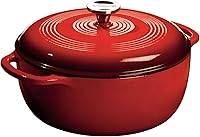
Enameled iron has a colored, glossy surface. The Amazon Basics pot is blue and round.
The Umite Chef pot is cream white and round.
| Feature | Plain cast iron | Enameled cast iron |
|---|---|---|
| Surface | Oil-seasoned iron | Smooth enamel glaze |
| Seasoning | Arrives pre-seasoned, improves with use | None needed |
| Best heat | Grill, campfire, broiler and searing | Oven, stove and covered simmering |
| Acidic foods | Use with care | Suited to tomato and citrus dishes |
| Cleaning | Hand wash, dry, rub with oil | Hand wash with warm soapy water |
| Utensils | Metal tools are common with iron | Avoid metal utensils to protect enamel |
Our comparison of grill tools helps you place each finish in a full outdoor setup. Plain iron belongs with direct heat.
Enamel belongs with covered, slower cooking.
Seasoning needs: the biggest daily difference
Plain cast iron needs seasoning care; enameled cast iron does not. This is the first question to answer before you buy.
The Lodge skillets arrive pre-seasoned. Lodge seasons them with 100% vegetable oil.
The maker says the more you use the iron, the better the seasoning gets.
That means your early meals help build the surface. Frying, searing and baking add to the finish over time.
You do not need a separate seasoning step before the first use here.
Enameled pieces arrive ready to cook. The Amazon Basics pot has a smooth enamel finish for lasting strength.
The Umite Chef pot has a smooth enamel glaze that resists stains and food residue.
If you learn how to season a cast iron griddle, you learn the habit plain iron rewards. Enamel skips that habit entirely.
Choose plain iron if you will cook often and want a surface that builds character. Choose enamel if you want to cook right away and keep the routine short.
Cooking surface and food release
Plain iron gives a natural easy-release surface that improves with heat and use; enamel gives a smooth, non-stick style surface from day one. Both can work, but they feel different under food.
The Lodge 12-inch skillet has a natural vegetable oil coating. Lodge describes it as naturally nonstick.
The 10.25-inch skillet has an oil-seasoned, natural easy-release finish.
That release depends on preheating and fat. A hot pan and a little oil help eggs, fish and cornbread move with less sticking.
Cold food on a cold pan sticks more easily.
The Umite Chef pot describes its enamel glaze as naturally non-stick. A quick wipe with a soft sponge restores its shine.
The Amazon Basics pot also uses a smooth enamel finish.
Our guide to the best cast iron skillet shows how size and surface work together. A 12-inch pan gives more room for a release surface to matter.
Heat retention and searing power
Both finishes sit on cast iron, so both hold heat well; plain iron tolerates direct grill heat with fewer worries. The iron core does the heavy work.
The Lodge skillets provide superior heat retention and even cooking. Lodge says they are at home in the oven, on the stove, on the grill or over the campfire.
That heat makes plain iron strong for steaks. A hot 12-inch surface can sear a crust before the center overcooks.
The smaller 10.25-inch pan suits a single steak or a smaller batch.
The enameled Dutch ovens also retain heat. The Amazon Basics pot distributes heat evenly for roasting, baking and sautéing.
The Umite Chef pot uses thickened walls for slow braising, searing and baking.
The Umite Chef maker advises preheating 2 to 3 minutes on medium-low. It also advises allowing 5 to 7 minutes for even heat distribution.
That slower start protects the enamel.
Best uses on the grill
Plain cast iron is the clear pick for grill use; enamel needs more caution around direct flame. If you grill often, weight this point heavily.
The Lodge 12-inch skillet is compatible with gas, electric, induction and grills. Lodge also describes it as a camping cooking pan for outdoor adventures.
The Lodge 10.25-inch skillet lists gas and smooth surface induction as compatible devices. Its highlight also names oven, stove, grill and campfire use.
Enamel can stain from soot and can chip if it takes a hard knock. The Amazon Basics pot is oven safe to 500 degrees Fahrenheit, but that limit does not make it a grill pan.
Our best cast iron skillet for grill guide helps you match pan size to burner layout. Plain iron also avoids worry about exposing a colored coating to flame.
Best uses for sauces, stews and baking
Enameled cast iron is the clear pick for acidic sauces, stews and covered baking; plain iron can do the work, but enamel keeps care simpler. Shape also matters here.
The Amazon Basics Dutch oven holds 6 quarts. That size suits serving 4 to 6 people.
It works for small casserole dishes, stews or roasts.
The Umite Chef Dutch oven holds 5 quarts. It is described as family size for 4 to 6 servings.
It suits soups, stews and whole chickens.
A lid changes the job. The Amazon Basics pot includes a lid.
The Umite Chef pot includes a lid plus thick cotton potholders.
Our cast iron skillet vs dutch oven comparison explains why a lidded pot suits slow food. A skillet is open and fast.
A Dutch oven traps moisture for braising.
Care requirements after cooking
Plain iron needs washing, drying and oil; enamel needs gentle washing and protection from thermal shock. Both call for hand washing in these picks.
The Lodge 12-inch skillet lists hand wash only and oven safe care. The Lodge 10.25-inch skillet also lists hand wash only and oven safe care.
For the smaller Lodge skillet, Lodge gives a simple care line: hand wash, dry, rub with cooking oil. That light oil layer helps protect the seasoning between uses.
The Amazon Basics pot lists hand wash only. Its care advice says to use warm, soapy water.
It also says to avoid citrus-based cleaners and metal utensils.
The Umite Chef pot lists hand wash only. Its maker warns against hot-to-cold contact because thermal shock can crack enamel.
It advises cooling naturally for 45 minutes or more before cleaning.
If you want the same habit on a grill surface, see how to season a cast iron bbq grill. Plain iron rewards that routine.
Enamel rewards gentle handling.
Size, weight and daily handling
Size decides whether a pan feels handy or heavy; plain skillets here are lighter than the enameled pots. Weight matters when you lift a full pot off a burner.
The Lodge 12-inch skillet weighs 7.5 pounds. It has a teardrop handle and a silicone handle holder.
The holder helps you transport the pan after cooking.
The Lodge 10.25-inch skillet weighs 5.4 pounds. It adds an assist handle.
That second handle helps when the pan is full or hot.
The Amazon Basics Dutch oven weighs 13.1 pounds. Its round shape has dual handles.
Dual handles help you lift a 6-quart pot of stew with two hands.
The Umite Chef pot lists extra-wide stainless steel handles. It also includes cotton potholders.
Those details help with a heavy, lidded pot.
Our best japanese cast iron skillet guide is a useful size check if you prefer a lighter pan. Heavier is not always better for daily use.
Who should buy plain cast iron?
Buy plain cast iron if you sear, grill, fry and want a pan that can take direct heat. The Lodge picks fit that buyer best.
The 12-inch Lodge skillet suits family meals and campfire cooking. It can sear, sauté, bake, fry, braise, broil and grill.
That range makes it a true everyday pan.
The 10.25-inch Lodge skillet suits smaller batches. It fits a single steak, eggs for one or two people, or vegetables for a side dish.
Its assist handle makes lifting easier.
Plain iron also suits buyers who want PFAS-free cooking. Both Lodge picks are made without PFOA or PTFE.
Lodge seasons them with vegetable oil.
Our best cast iron skillet for steaks guide helps you judge diameter before you buy. A steak needs room to sear without crowding.
Who should buy enameled cast iron?
Buy enameled cast iron if you make sauces, stews, braises and bread and want no seasoning routine. The Dutch oven picks fit that buyer best.
The 6-quart Amazon Basics pot suits larger stews and roasts. The 5-quart Umite Chef pot suits bread baking, braising and family meals.
Enamel also suits buyers who cook tomato sauce often. Acidic foods can wear down a plain seasoning layer over time.
Enamel keeps that surface intact.
Enamel suits buyers who want a pot that looks good at the table. The blue and cream white finishes serve that goal.
Both pots are round, which helps with even heat.
Choose the 6-quart pot for larger batches. Choose the 5-quart pot if you want included potholders and a tighter lid design for moisture.
Verdict: cast iron skillet vs enameled cast iron
Pick plain cast iron for grilling and searing, and pick enameled cast iron for acidic, slow-cooked and covered meals. That rule settles most of this choice.
For steak night, the Lodge 12-inch skillet is the stronger pick. It gives you a wide pre-seasoned surface, silicone handle holder and grill-ready iron.
For a tomato stew or braised chicken, the enameled Dutch ovens are the stronger pick. The Amazon Basics 6-quart pot gives more room.
The Umite Chef 5-quart pot adds potholders.
If you can buy only one, ask what you cook most. Grill and sear most nights?
Go plain. Simmer and bake most nights?
Go enameled.
Start with the Lodge 12-inch skillet if your kitchen needs one versatile pan. Add an enameled Dutch oven later for sauces and slow meals.
Frequently asked questions
Is enameled cast iron better than plain cast iron?
Enameled cast iron is better for acidic foods and easy cleanup, while plain cast iron is better for high-heat searing and grilling. The enamel surface does not need seasoning, so it suits tomato sauces and stews.
Plain iron rewards seasoning and handles direct grill heat well.
Can enameled cast iron go on a grill?
Some enameled pieces are oven safe to 500 degrees Fahrenheit, but grill use can stain or chip enamel. Plain cast iron handles grill and campfire heat without that risk.
Check the exact model limit before placing enamel over direct flame.
Does enameled cast iron need seasoning?
No. Enameled cast iron has a smooth enamel glaze that does not need seasoning.
You clean it with warm soapy water and a soft sponge.
Plain cast iron arrives pre-seasoned in these picks, but its finish improves as you cook and oil it.
Which is easier to clean?
Enameled cast iron is usually easier to clean because food does not bond to the glossy surface. Plain cast iron needs hand washing, drying and a light rub of oil.
Both picks here call for hand washing rather than a dishwasher.