Cast Iron Skillet vs Dutch Oven: Which Should You Choose? (November 2026)
Choose a cast iron skillet for searing, frying and fast cooking, and a Dutch oven for simmering, braising and baking with a lid. In this cast iron skillet vs dutch oven comparison, depth and a cover matter more than the shared cast iron body.
On this page (11 sections)
- Cast iron skillet vs dutch oven: the quick verdict
- The two shapes side by side
- Searing and frying: where the skillet wins
- Simmering and braising: where the Dutch oven wins
- Lids, steam and covered baking
- Size, weight and lifting
- Finish, seasoning and care
- Stovetop, oven and grill use
- Color, looks and serving
- Who should buy which
- Final verdict for cast iron skillet vs dutch oven
Choose a skillet for searing and a Dutch oven for covered slow cooking. This cast iron skillet vs dutch oven guide compares Lodge models by depth, lid, size, weight, care and grill use, so you can match the shape to the meals you cook most often.
We compared the specs for 2 skillets and 2 Dutch ovens. Our score weighs specs, features and buyer feedback against what you are shopping for.
 Best for everyday searing
Lodge Pre-Seasoned Cast Iron Skillet with Silicone
Cast iron skillet vs dutch oven: the quick verdict
The skillet wins for surface cooking, and the Dutch oven wins for liquid and covered cooking. A skillet spreads food in a shallow pan, while a Dutch oven holds food in a deep pot with a lid.
The Lodge 12 inch skillet gives you a wide surface for steaks, eggs and vegetables. The Lodge 6 quart Dutch oven gives you depth for soup, chili, braised meat and bread.
Neither shape replaces the other for every task. Pick based on the cooking method you use most in a normal week.
Think about a typical week rather than a single recipe. If you fry eggs, sear chicken and roast vegetables most days, the skillet will see more use.
If you make soup, beans, stew or braised meat once or twice a week, the Dutch oven will earn its space.
Our grill tools guide helps you place either piece in a broader cooking setup. It covers how pans fit with tongs, turners and heat tools.
The two shapes side by side
Depth is the main difference, and weight follows that difference. The Dutch ovens hold 6 quarts and weigh 13.5 to 14.9 pounds, while the skillets weigh 5.4 to 7.5 pounds.
The 12 inch skillet has a 1.89 liter capacity in its specs and a 12 inch diameter. The 10.25 inch skillet is smaller and lighter for tighter spaces.
The Dutch ovens have a round shape, a cast iron lid and dual handles. The skillets have a single handle, and the 10.25 inch model also has an assist handle.
Both Dutch ovens measure about 13.25 inches wide by 6 inches high. That footprint is wider than the skillet diameter because the handles extend to both sides.
The Island Spice Red model lists 10.75 inches in diameter, while the Oyster White model lists 10.9 inches.
The skillet models list 1.89 liters for the 12 inch version and 190 ml in the specs for the 10.25 inch version. Those numbers reflect shallow depth rather than true pot volume.
| Feature | Dutch oven | Skillet |
|---|---|---|
| Shape | Deep round pot | Shallow round pan |
| Capacity | 6 quarts | 1.89 liters or smaller |
| Lid | Yes, cast iron | No lid included |
| Sizes here | 6 quart | 10.25 inch and 12 inch |
| Weight range | 13.5 to 14.9 pounds | 5.4 to 7.5 pounds |
| Finish | Enameled | Pre-seasoned oil finish |
Searing and frying: where the skillet wins
A skillet gives you direct access to every piece of food. That access matters when you need to turn, flip or check browning often.
The 12 inch model suits a full batch of chicken, a large steak or vegetables spread in one layer. Lodge says the heavy cast iron cooks evenly and holds heat for consistent results.
The 10.25 inch model suits 2 servings, eggs, or a smaller steak. Its lighter 5.4 pound weight makes lifting and pouring easier.
A Dutch oven can sear meat before braising, but its deep walls make turning food harder. You also have to reach past the rim to check each piece.
The skillet also suits campfire and grill meals where you need to move food fast. Lodge describes the 12 inch skillet as a camping cooking pan for outdoor adventures.
Frying in a skillet keeps food exposed to heat from below, which helps crust form without steaming. For more on cast iron’s nonstick surface, see how seasoning and preheating affect food release.
If searing is your main goal, start with our best cast iron skillet picks. They focus on diameter, seasoning and handle comfort for daily use.
Simmering and braising: where the Dutch oven wins
A Dutch oven holds liquid without spilling, and its lid keeps moisture in. That makes it the stronger pick for soup, stew, chili and braised meat.
The 6 quart capacity holds a family batch plus extra liquid for vegetables. The moisture-sealing lid and dual handles help you move it from stovetop to oven.
Lodge says the enamel surface stands up to acidic ingredients and will not react with food. That helps when you marinate, simmer tomato sauce or cook with wine.
A skillet can simmer a sauce in small amounts, but it lacks the depth for a full pot of soup. Splashing and evaporation also rise faster in a shallow pan.
Depth also helps when ingredients need to cook together for a long time. Beans, tough cuts of meat and root vegetables can stay submerged in liquid while heat moves evenly through the pot.
The Dutch oven can also hold food in the refrigerator after cooking.
For enamel versus bare iron, see our cast iron skillet vs enameled cast iron comparison. It explains finish choices in plain terms.
Lids, steam and covered baking
Only the Dutch oven in this group has a lid. A lid changes cooking by trapping steam and slowing evaporation.
Covered cooking helps braised meat stay tender and soups keep their liquid level. It also helps bread and baked dishes hold moisture during oven time.
Lodge describes the Dutch oven lid as cast iron and moisture sealing. The pot is oven safe to 500 degrees Fahrenheit for covered baking and roasting.
A skillet without a lid is better for crisping, browning and frying. You can bake in it, but you cannot trap steam in the same way.
The lid also matters for bread baking, which Lodge lists as a core use for the Dutch oven. Trapped steam helps set the crust while the interior stays soft.
Without a lid, bread and braises lose moisture to the oven air over a long bake.
If you mostly bake covered dishes, the Dutch oven is the clear choice. If you mostly finish food uncovered, a skillet may serve you more often.
Size, weight and lifting
The skillet is easier to lift, and the Dutch oven needs 2 hands and planning. Check storage and counter space before you choose the larger pot.
The 12 inch skillet weighs 7.5 pounds before food goes in. The 10.25 inch skillet weighs 5.4 pounds and has an assist handle.
The Island Spice Red Dutch oven weighs 13.5 pounds, and the Oyster White model weighs 14.9 pounds. Both have dual handles for a 2 hand lift.
A filled Dutch oven will be heavier than its empty weight, so practice the lift with water first. Keep the path from stove to table clear.
Store a Dutch oven where you can lift it without reaching high.
Planning the lift and the storage spot
The skillet handle gives you one point of control, and the silicone holder helps after cooking. The Dutch oven handles split the load, but only if you grip both sides and lift with bent knees.
A 6 quart pot filled with soup can add more than 10 pounds to the empty weight. That total load is why Lodge emphasizes dual handles for moving from stovetop to oven or table.
Check burner size before you buy either shape. A 12 inch skillet needs a burner that covers most of its base, while a 10.75 inch Dutch oven needs a stable ring of heat.
Finish, seasoning and care
The Dutch ovens use enamel, and the skillets use oil seasoning. Each finish asks for different care habits.
Lodge says the enameled Dutch oven gives cast iron benefits without fear of rust. It is also PFAS free, and hand washing with warm soapy water and a nylon brush is recommended.
The skillets are pre-seasoned with 100 percent natural vegetable oil. Lodge says the finish improves with use and gives a natural easy release surface.
For the Dutch oven, avoid harsh scraping that could damage enamel. Use wooden or nylon tools and let the pot cool before washing.
The enamel finish also means you do not need to season it after each wash.
For the skillets, hand wash, dry and rub with cooking oil after use. That simple step helps protect the seasoning layer over time.
Lodge notes that the more you use the iron, the better the seasoning will get.
Learn the basics in How to Season a Cast Iron Griddle? if you want more detail on oil and heat. You can also check How To Season A Cast Iron BBQ Grill? for outdoor grill care.
Stovetop, oven and grill use
Both shapes work beyond the stovetop, but each has its own limits. Check diameter, heat and handle safety for your setup.
The Dutch oven is stovetop compatible and oven safe to 500 degrees Fahrenheit. Lodge says it works on gas, electric, ceramic and induction cooktops.
The 12 inch skillet is safe for oven and stovetop use, with a maximum temperature of 260 degrees C in its specs. It also includes a silicone heat resistant handle holder.
The 10.25 inch skillet has a maximum temperature of 550 degrees F and works on gas and smooth surface induction. Lodge says it is at home in the oven, on the stove, on the grill or over a campfire.
The Dutch oven dimensions and dual handles make it stable on a flat stovetop burner. Its round shape spreads contact across the base, which helps even heating on induction and electric surfaces.
The skillet teardrop handle and silicone holder help on a grill grate, where space is tight.
For electric stoves, read our cast iron skillet use on electric stove guide before first use. It covers burner size and heating habits.
If you cook most meals outdoors, see our best cast iron skillet for grill picks.
Color, looks and serving
The Dutch oven doubles as a serving pot, and the skillet stays a cooking pan. Color matters only if you serve at the table or store cookware in view.
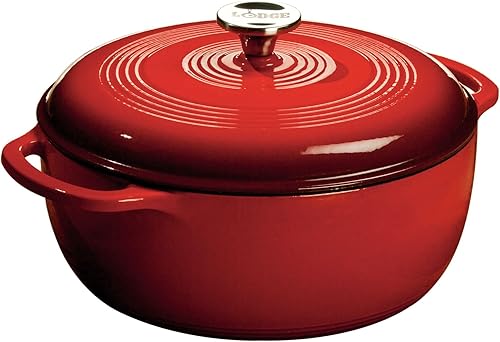
The Island Spice Red Dutch oven adds a strong color pop to a kitchen. The Oyster White model blends with light kitchens and pale dishware.
Lodge calls the Dutch oven a cook and serve design for moving from preparation to presentation. That helps with soup, stew and braised dishes that go straight to the table.
A skillet can go to the table too, but its long handle and shallow shape make it less suited for serving liquid dishes. Hot oil and sauce can splash during the move.
Color does not change heat retention or capacity in these models. Both Dutch ovens hold 6 quarts, and both skillets use cast iron for even cooking.
A light enamel may show tomato stains more than a dark red finish.
Choose color based on your kitchen and serving habits, not on cooking performance. The 2 Dutch ovens share the same 6 quart size and core tasks.
Who should buy which
Buy the skillet if you sear most days, and buy the Dutch oven if you simmer most days. Your weekly meals give the best clue.
Pick the 12 inch skillet if you cook for 3 or more people or want room for a large steak. Pick the 10.25 inch skillet if you cook for 1 or 2 people and want easier lifting.
Pick the Island Spice Red Dutch oven if you want color and a slightly lighter empty weight. Pick the Oyster White model if you prefer a light finish and accept the heavier load.
Skip a Dutch oven if you rarely cook liquid dishes and have limited cabinet space. Skip a large skillet if your burner is small and you mostly cook single servings.
Consider who will lift the pot most often. If lifting 13.5 to 14.9 pounds feels hard, a lighter skillet may be safer for daily use.
Consider storage height too, since a Dutch oven needs a shelf that can hold its width of about 13.25 inches.
Many cooks end up with both shapes over time. Start with the shape for your most common meal, then add the other when a recipe needs it.
Final verdict for cast iron skillet vs dutch oven
For most kitchens, the skillet is the first buy, and the Dutch oven is the best second buy. That order covers daily searing first, then covered slow cooking.
Choose the 12 inch skillet for wide everyday use, or the 10.25 inch skillet for compact space. Choose a 6 quart Dutch oven when soups, braises and covered baking join your routine.
The specs support that order for busy kitchens. The skillets weigh 5.4 to 7.5 pounds and fit daily frying, while the Dutch ovens add 6 quarts of covered capacity at 13.5 to 14.9 pounds.
In this cast iron skillet vs dutch oven choice, depth and a lid decide the winner. Match the shape to the cooking method, then check size, weight and burner fit.
Our score weighs specs, features and buyer feedback against what you are shopping for. Use that score as a guide, then confirm the diameter and weight fit your kitchen.
Frequently asked questions
Is a Dutch oven better than a skillet?
A Dutch oven is better for soups, braises and covered baking because its deep walls and lid hold liquid and moisture. A skillet is better for searing, frying and sauteing because its shallow shape gives fast access for turning food.
Can a cast iron skillet replace a Dutch oven?
A skillet can handle searing, frying and shallow baking, but it cannot hold large volumes of liquid or cover food for long simmering. A Dutch oven adds depth, a lid and 6 quart capacity, so the two shapes serve different cooking tasks.
Which is easier to clean?
The enameled Dutch oven can be washed with warm soapy water and a nylon brush, and Lodge says it is dishwasher safe while hand washing is recommended. The pre-seasoned skillets should be hand washed, dried and rubbed with cooking oil.