Can You Use a Charcoal Grill on an Apartment Balcony?
On this page (7 sections)
Yes, you can often use a charcoal grill on an apartment balcony, but it comes with important rules and safety considerations. Many apartment buildings have specific regulations that may prohibit charcoal grills due to fire risk. Always check your lease agreement and building management’s policies first.
Balcony grilling requires careful attention to placement and ventilation. For more on portable grills on apartment balconies, see our guide to portable balcony grills. You need to ensure there’s adequate space away from flammable materials. Many places recommend using a smaller, portable charcoal grill designed for such environments. Safety is the top priority to avoid any issues with your landlord or neighbors.
- Always check your lease and building rules first.
- Charcoal grills are often allowed with restrictions.
- Prioritize fire safety and good ventilation.
- Consider smaller, portable charcoal grill options. Consider smaller, portable charcoal grill options if your building allows them.
- Never leave a lit grill unattended.
Ready to get grilling? Let’s walk through the most important things to know about using your charcoal grill safely on your apartment balcony.
Grilling on Your Apartment Balcony: What You Need to Know
So, you’re dreaming of smoky ribs and perfectly charred veggies, right on your apartment balcony. It sounds fantastic! But before you fire up that grill, we need to make sure it’s a safe and legal dream. Many people think charcoal grilling is a no-go in apartments, but that’s not always the case. It really depends on where you live and the specific rules in place.
Understanding Your Apartment Building’s Rules
This is your absolute first step. Think of it as the secret ingredient to happy balcony grilling. Your lease agreement is a legal document. It often contains specific clauses about what you can and cannot do on your balcony, especially concerning open flames.
Where to Find the Rules
You’ll want to look for sections on “use of premises,” “balcony usage,” or “prohibited items.” If it’s not clear, don’t guess! Your property manager or landlord is the ultimate authority. They can clarify any ambiguities and inform you about any specific fire codes or building policies that apply to your situation.
Common Restrictions for Balcony Grilling
Many apartment complexes have strict prohibitions against charcoal grills. This is mainly due to the fire hazard they present. Sparks can fly, and the charcoal itself gets extremely hot. The risk of igniting nearby materials or even spreading to another unit is a serious concern for building owners and fire departments alike.
Some buildings might allow propane grills with specific safety features, but charcoal is often on the “don’t” list. If your lease says “no open flames,” that definitely includes charcoal. Always get written permission if there’s any doubt.
Safety First: Your Charcoal Grill’s Best Friend
Assuming you’ve checked the rules and charcoal grilling is permitted, let’s talk safety. This isn’t just about avoiding a fine; it’s about protecting yourself, your neighbors, and your home. Safety is truly non-negotiable.
Choosing the Right Grill for Your Space
Not all charcoal grills are created equal when it comes to apartment living. For more on choosing a charcoal grill for a balcony, see our guide to charcoal grills for balconies. You’ll want to opt for a smaller, portable model. These are typically designed with balconies in mind. They’re easier to manage and take up less space. Look for grills with sturdy legs and a lid that fits securely.
A grill with a built-in thermometer can also be helpful. It lets you keep an eye on the temperature without having to lift the lid constantly, which can lead to heat loss and potential flare-ups. A good quality ash catcher is also a must-have.
Proper Placement is Key
Where you put your grill on the balcony matters a lot. Never place it directly against a wall or near railings that could catch fire. You need a clearance of at least 10 feet from any flammable materials. This includes your apartment door, windows, furniture, plants, and anything made of wood or fabric.
We found that many experts suggest placing the grill in the center of the balcony, away from the building’s exterior. Ensure there’s ample open space around it. Check for overhead obstructions too, like awnings or low-hanging lights. These can also be fire risks.
Ventilation: Letting Your Grill Breathe
Charcoal grills produce smoke and carbon monoxide (CO). You need good ventilation to keep these gases from building up. Your balcony should not be enclosed on all sides. If it has open sides or is not directly beneath an overhang, that’s ideal.
If your balcony is somewhat enclosed, be extra cautious. Never use a grill if the air is very still or if you notice smoke lingering. Opening doors or windows into your apartment while grilling can help, but it’s not a substitute for proper balcony airflow. Carbon monoxide is a silent killer, and you can’t see or smell it (CDC). A CO detector inside your apartment is a smart safety measure.
Fire Safety Essentials You Need
Having the right tools on hand can prevent a small mishap from becoming a big problem. Always keep a fire extinguisher rated for Class A, B, and C fires within easy reach. A bucket of water or sand can also work in a pinch, but a proper extinguisher is best.
We also recommend having a spray bottle of water handy. This can help control small flare-ups from dripping grease. Keep a metal shovel or tongs nearby to move hot coals safely if needed.
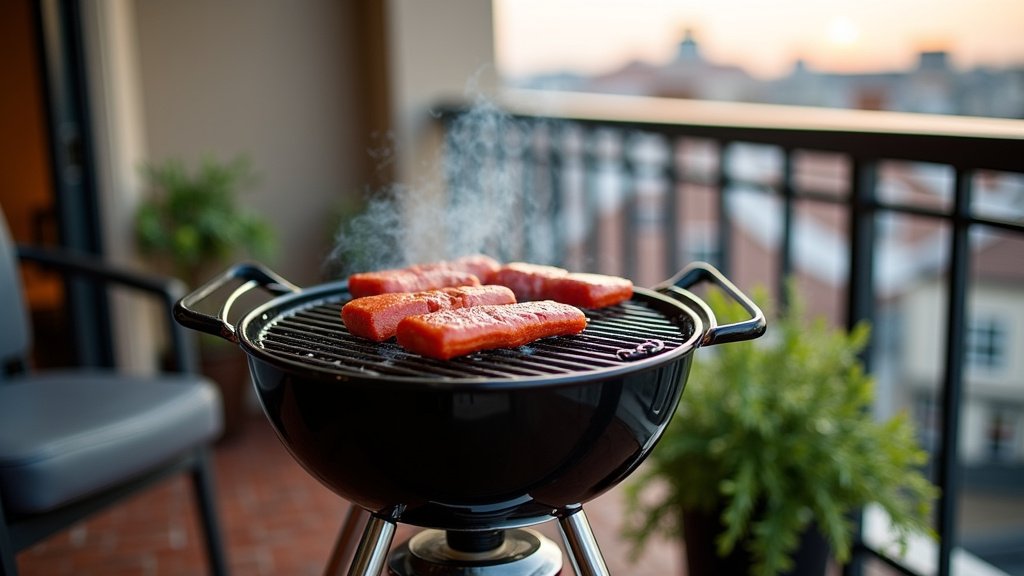
The Grilling Process: Step-by-Step Safety
Now for the fun part, but let’s keep it safe! Lighting and managing a charcoal grill requires attention.
Lighting Your Charcoal Safely
Avoid using lighter fluid if possible. Many people find it leaves a chemical taste on food and can be unpredictable. The most recommended method is a chimney starter. You fill it with charcoal, light some newspaper underneath, and the coals ignite evenly.
Once the coals are covered in gray ash, carefully pour them into the grill. Use heat-resistant gloves and long-handled tools. Never leave the lighting process unattended. Make sure the lid is off the grill while you’re getting the coals started.
During the Cook: Watchful Eyes Only
This is where most accidents happen. Never, ever leave a lit grill unattended. Not even for a minute. A gust of wind can send sparks flying, or a flare-up can get out of control quickly. Designate a “grill watcher” if you need to step away.
Keep children and pets a safe distance from the grill. They might not understand the danger of hot surfaces or flying embers. Be aware of your surroundings. Are there strong winds? Is the smoke bothering a neighbor?
Cooling Down and Cleaning Up
Don’t assume the grill is safe just because the flames are gone. Charcoal can remain hot for hours after cooking. Leave the lid off and let the coals cool completely. This helps them burn out fully and reduces the risk of reignition.
Once cooled, carefully dispose of the ashes. Place them in a metal container with a tight-fitting lid. Never put hot ashes in a regular trash can or down a drain. Wait until they are completely cold before discarding them outdoors in a safe location, far from any combustible materials. Many experts advise waiting at least 24 hours before disposal (US Fire Administration).
A Quick Checklist for Balcony Grilling Success
Before you light that first charcoal briquette, run through this quick list:
- Check your lease and building rules. Get written permission if needed.
- Choose a small, portable grill. Ensure it’s in good condition.
- Find a safe location. Maintain 10+ feet clearance from flammables.
- Have safety gear ready. Fire extinguisher, water spray, tongs.
- Never leave the grill unattended. Always watch it when lit.
- Cool coals completely before disposal. Use a metal container.
Conclusion
So, you’ve learned that using a charcoal grill on your apartment balcony is possible, but it demands respect for the rules and a commitment to safety. The key takeaways are clear: always check your lease first, prioritize fire prevention with proper placement and ventilation, and choose the right equipment. Remember that charcoal grills produce heat and smoke, so vigilance is your best tool. By following these guidelines, you can enjoy delicious grilled meals responsibly and without incident. Your next step is to review your lease and building policies carefully before you even think about buying charcoal.
Frequently Asked Questions
What’s the biggest risk of using a charcoal grill on a balcony?
The biggest risk is a fire hazard. Sparks from the charcoal can ignite nearby materials, or the grill itself could overheat. This poses a danger to your apartment, your neighbors’ units, and the building structure.
Can I use any type of charcoal grill on my balcony?
It’s best to use a small, portable charcoal grill designed for compact spaces. Larger, heavier grills may be too difficult to manage and could pose a greater risk. Always ensure your grill is in good working condition.
How close can I place my charcoal grill to my apartment building?
You should maintain at least 10 feet of clearance from any flammable materials, including your apartment walls, windows, doors, and any stored items. Placing the grill in the center of the balcony, away from the building’s exterior, is often recommended.
What should I do if my charcoal grill catches fire on the balcony?
If a small fire occurs, try to extinguish it with a fire extinguisher rated for grease fires or a bucket of sand. If the fire is large or spreading, evacuate immediately and call 911. Never try to move a burning grill.
How long do I need to wait before disposing of charcoal ashes after grilling?
Charcoal can remain hot for many hours, sometimes up to 24 hours. You must wait until the ashes are completely cool to the touch before disposing of them in a metal container. Never put hot ashes in a regular trash can.