
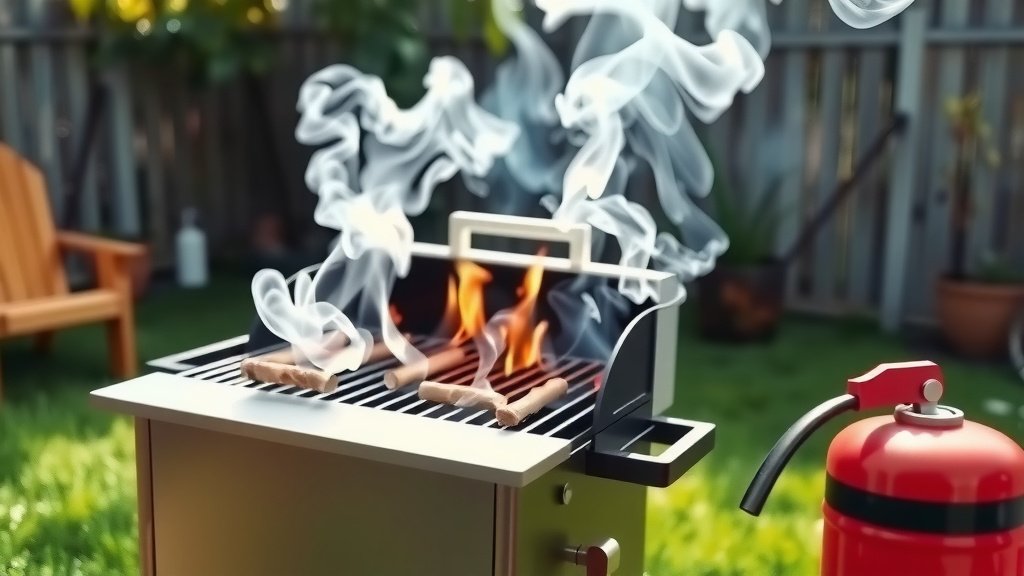
To put out a BBQ grill fire, **immediately close the lid** and turn off all gas burners or air vents. This cuts off oxygen, which is essential for the fire to burn.
For persistent fires, use baking soda on grease fires, or a **Class B or K fire extinguisher** for larger or fuel-fed BBQ grill fires.
Here’s a quick guide to managing grill fires:
- Always **stay calm** and act quickly.
- **Close the grill lid** and shut off gas or air vents to starve the fire.
- Use baking soda for small grease fires; a **fire extinguisher** for larger ones.
- Never use water on grease or electrical fires.
- Prioritize safety: **know when to evacuate** and call emergency services.
How To Put Out A BBQ Grill Fire?
Putting out a BBQ grill fire involves quickly cutting off its oxygen source and, if needed, using the right extinguishing agent. Your **first step is always safety** and preparedness.
Understanding Why Grill Fires Start
Grill fires often start from simple mishaps. **Excess grease buildup** is a common culprit. Drippings ignite, causing unexpected flare-ups. This is something every griller experiences at some point.
We found that leaving your grill unattended, especially with **high heat settings**, also plays a role. A bit like leaving a stove on, isn’t it? Awareness can prevent many incidents.
Flare-ups Versus Full-Blown Fires
A flare-up is a sudden burst of flames, usually from grease hitting hot coals or burners. These are often brief. A full-blown fire is sustained and **spreads beyond the cooking grates**. Knowing the difference helps you react correctly.
Preparing for the Unexpected
Before you even light the grill, think about fire safety. This preparation makes a big difference. Many experts suggest a **clear action plan** (National Fire Protection Association).
Essential Safety Gear for Your Grill Area
What should you have nearby? A **quality fire extinguisher** rated for grease fires (Class B or K) is a must. Keep a bucket of sand or baking soda close by too. Never use water on a grease fire; it can make things worse.
Your Grill Fire Safety Checklist
Being ready for a grill fire means having certain things in place. A quick check helps ease your mind. This checklist prepares you for most situations:
- Is your grill **clean and free of grease** buildup?
- Do you have a **working fire extinguisher** nearby?
- Is there a bucket of sand or baking soda accessible?
- Are **flammable items** kept away from the grill?
- Is your grill on a stable, non-combustible surface?
Handling a Sudden Flare-Up
Don’t panic! Most flare-ups are quick to manage. Your instinct might be to spray water, but that’s rarely the right move here. Remember, **oxygen feeds fire**.
The best action is to **close the grill lid** immediately. If you have gas burners, turn them off. For charcoal grills, close any air vents. This smothers the flames naturally.
Dealing with a Grease Fire
Grease fires are perhaps the most common type. They happen when fats and oils ignite. Using water on these fires is very dangerous; it can **spread the flames rapidly**.
Instead, if the lid doesn’t put it out, reach for baking soda or a Class K or B fire extinguisher. Pour a generous amount of baking soda directly onto the flames. It works to **suffocate the fire** effectively.
Propane Grill Fires: What to Do
Propane fires require specific attention due to the fuel source. Your first priority is to **turn off the gas supply** at the tank, if it’s safe to reach. Closing the lid is also vital.
If the fire originates from the tank or gas lines and you cannot safely turn off the gas, evacuate the area. Call emergency services right away. Your **personal safety is paramount**.
Charcoal Grill Fires: Different Approaches
Charcoal fires typically stem from excessive heat or improper ash disposal. Again, **closing the lid and air vents** is your initial response. This cuts off oxygen to the coals.
If the fire persists, use sand or a Class B fire extinguisher. Never use water directly on hot coals or a charcoal fire if it’s a grease fire component, as this can **cause steam burns** or spread flaming embers.
When to Call for Help
Sometimes, a grill fire grows beyond your control. When should you involve the pros? If the fire spreads beyond the grill, if you cannot safely turn off the fuel source, or if you feel any doubt about your ability to put it out, **call emergency services immediately**.
It’s better to be safe than sorry. Fire departments are equipped to handle these situations. We found that **early reporting saves lives and property** (U.S. Fire Administration).
Post-Fire Clean-Up and Inspection
After the fire is out and everything has cooled, it’s important to inspect your grill. Check for any damage to hoses, connections, or burner components. A thorough cleaning is also a must. Remove all charred residue and grease. This ensures your **next grilling session is safe**.
Preventing Future Grill Fires
The best way to put out a grill fire is to prevent it from starting! Regular cleaning is your number one defense against grease fires. Always inspect your grill and hoses before each use. Make sure you **clean your grill after every use** to avoid buildup.
Many guidelines point to keeping your grill a safe distance from your home and other structures (Mayo Clinic). Always stay near your grill when it is lit. Think of it as **active supervision**, like watching a pot boil.
| Fire Extinguisher Type | Effective For | Avoid For | Notes |
|---|---|---|---|
| Class B | Flammable liquids (grease, gas) | Electrical fires | Commonly found, good for general kitchen/grill fires. |
| Class K | Cooking oils and fats (grease) | General combustibles, electrical | Specifically designed for commercial cooking, highly effective for grease. |
| ABC Dry Chemical | General combustibles, liquids, electrical | None listed | Versatile, leaves messy residue, good for most home scenarios. |
| Water | General combustibles (wood, paper) | Grease, electrical, propane | **Never** use on grease or electrical fires – extremely dangerous. |
Conclusion
Dealing with a BBQ grill fire can be unnerving, but with the right knowledge and tools, you can manage it safely. Remember the core principles: **starve the fire of oxygen** and use the correct extinguishing agent. Always prioritize your safety and know when to seek professional help.
Being prepared, staying vigilant, and maintaining your grill properly are your best defenses. Now you have the know-how to handle most situations, ensuring your backyard cooking stays a **fun and safe activity**.
What is the most common cause of BBQ grill fires?
The most common cause of BBQ grill fires is **grease buildup**. Accumulated fat and oil drippings can ignite when exposed to high heat, leading to sudden flare-ups or sustained fires.
Can I use water to put out a grill fire?
No, you should **never use water** to put out a grease fire on a grill. Water can cause grease to splash and spread the flames, making the situation much worse and potentially causing steam burns.
How far should my grill be from my house?
Many experts and safety guidelines suggest keeping your grill at least **10 feet (about 3 meters)** away from your house, railings, or any combustible structures. This creates a safe zone in case of a fire or sparks.
What kind of fire extinguisher is best for a grill fire?
A **Class B or Class K fire extinguisher** is ideal for grill fires, as these are designed for flammable liquids like grease. A multi-purpose ABC dry chemical extinguisher is also a good option for home use.
When should I replace my propane tank hose and regulator?
It’s generally recommended to inspect your propane tank hose and regulator annually for cracks or damage. Many manufacturers suggest replacing them **every 5 to 10 years**, or sooner if any signs of wear are visible, to prevent leaks.
