
If your propane grill catches fire, first turn off the gas supply at the tank immediately, if safe to do so.
Then, close the grill lid to smother the flames and starve the fire of oxygen, effectively addressing how to put out a propane grill fire.
- Shut off the propane tank valve at once to stop fuel flow.
- Close the grill lid promptly to cut off the fire’s oxygen supply.
- Use baking soda or a Class B fire extinguisher for grease fires.
- Always keep safety first; call emergency services if the fire grows.
- Prevent future flare-ups with regular grill cleaning and inspection.
How To Put Out A Propane Grill Fire?
Turning off the gas and closing the lid are your immediate best steps to put out a propane grill fire.
Understanding Different Grill Fire Types
Not all grill fires are the same. Knowing the type helps you react correctly and safely. Most grill fires happen because of grease build-up.
Sometimes, however, you might experience a propane leak that ignites. These scenarios need a slightly different approach.
Grease Fires
Grease fires are common and often start when food drippings accumulate. They burn hot and can be startling. You will often see flames shooting up from the grill grates. These types of fires are usually contained within the grill itself, but you still need to act fast.
Gas Leaks Igniting
A more serious issue is when propane gas leaks and then ignites. This can happen from a faulty hose or a loose connection. The flames might appear around the gas hose or connection point, not just under the food. These require extreme caution and immediate attention.
Your Immediate Action Plan
When a grill fire happens, stay calm and act quickly. Your safety is always the top priority. Do not panic; clear steps can help.
Step 1: Shut Off the Gas
This is your very first move. If it is safe, reach for the propane tank valve. Turn the valve clockwise until it is fully closed. This stops the fuel supply to the fire. Stopping the gas helps prevent the fire from growing bigger.
Step 2: Close the Lid
Once the gas is off, quickly close the grill lid. This action smothers the fire by cutting off its oxygen supply. Think of it like putting a lid on a pot to stop boiling. The fire cannot burn without oxygen, so it will die down.
Step 3: Remove Food (If Safe)
If the flames are small and you can do so without risk, carefully remove any food from the grill grates. This helps remove additional fuel. However, if there is any doubt about your safety, leave the food and focus on extinguishing the fire.
When Water Is NOT Your Friend
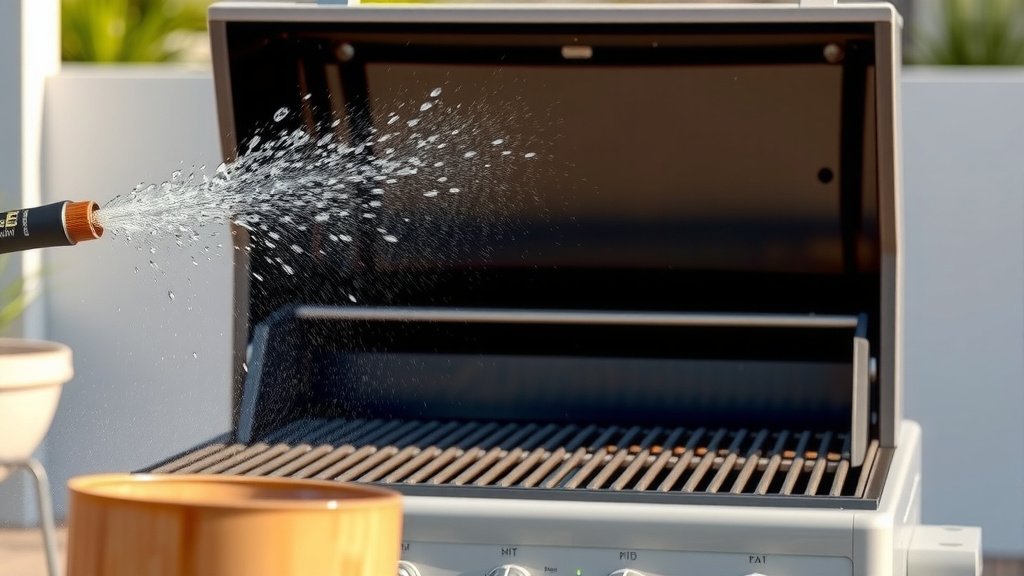
You might think water puts out all fires. However, for a grease fire or a propane fire, water makes things worse. We found that water can spread burning grease, making the fire larger (Mayo Clinic). It can also react violently with hot propane flames. Keep water away from your grill fire.
Tools to Keep Handy for Grill Fires
Having the right tools nearby is a smart part of grill safety. Be prepared before you even light the first flame. A few simple items can make a big difference.
Baking Soda: Your Kitchen Hero
For small grease fires, a box of baking soda can be a lifesaver. Baking soda releases carbon dioxide when heated. This helps to smother the flames. Sprinkle a generous amount directly onto the fire. Keep a large box near your grill, just in case.
Fire Extinguishers: Know Your ABCs
A fire extinguisher is a strong tool for bigger fires. You need one rated for Class B or ABC fires. Class B extinguishers are designed for flammable liquids like propane and grease. Many experts say a Class ABC extinguisher is best for homes, covering multiple fire types.
What If the Fire Doesn’t Stop?
Sometimes, despite your best efforts, a grill fire just won’t go out. It might even get bigger or seem out of control. You need to know when to seek professional help. Your personal safety and the safety of your home are the most important things.
When to Call for Help
If the fire grows, if you cannot reach the propane tank valve safely, or if the flames spread beyond the grill, call emergency services immediately. Dial 911 or your local emergency number. Get yourself and others to a safe distance. Do not try to be a hero when facing a dangerous fire.
Prevention is Key: Avoiding Future Flare-Ups
The best way to handle a grill fire is to prevent it from happening at all. Regular maintenance and careful grilling habits go a long way. Think about these steps as your long-term grill safety plan.
- Clean Your Grill Regularly: Scrape grates and clean the drip tray after every use.
- Inspect Gas Lines: Check hoses for cracks or leaks before each season.
- Check for Blockages: Ensure burner ports are clear of food debris.
- Keep Grill Area Clear: Remove flammable items from near the grill.
- Do Not Overfill Drip Pan: Empty it often to avoid grease overflow.
- Position Grill Safely: Place it away from walls, railings, and overhangs.
Here’s a quick guide to common fire extinguisher types and their uses near grills:
| Extinguisher Type | What It’s Good For | Is It Right for Grill Fires? |
|---|---|---|
| Class A (Water) | Wood, paper, cloth | No, can spread grease fires |
| Class B (Chemical Foam/CO2) | Flammable liquids, gas (grease, propane) | Yes, ideal for grease and gas |
| Class C (CO2/Dry Chemical) | Electrical fires | Can work, but not primary for grease/gas |
| Class ABC (Multi-Purpose Dry Chemical) | Wood, liquids, electrical | Yes, a great all-around choice |
Conclusion
Knowing how to put out a propane grill fire is a vital skill for any griller. Your quickest actions involve turning off the gas and closing the lid. Remember that water is not the answer for these types of fires. Always have baking soda or a suitable fire extinguisher close by. Most importantly, prioritize your safety and never hesitate to call for professional help if a fire becomes too large or risky. Following preventative steps will help you enjoy many fire-free grilling seasons.
FAQs About Propane Grill Fires
How often should I clean my grill to prevent fires?
You should perform a light cleaning after every use, scraping grates and emptying drip pans. A more thorough cleaning, including burners and firebox, is recommended at least twice a grilling season, or more often if you grill frequently.
Can a gust of wind cause a grill fire?
While wind itself doesn’t cause a fire, strong gusts can spread flames quickly, especially if a grease fire has already started. High winds can also blow embers or dislodge parts, potentially leading to issues. Always grill in a sheltered spot.
Is it safe to grill if I smell propane but don’t see a fire?
No, if you smell propane, that indicates a leak. Turn off the gas at the tank immediately. Check all connections for tightness. Apply a soapy water solution to hoses and connections; bubbles indicate a leak. Never light the grill if you smell propane.
What kind of fire extinguisher is best for a home grill?
A Class ABC dry chemical fire extinguisher is generally recommended for home use. It handles common fires including wood/paper (Class A), flammable liquids/gases like propane and grease (Class B), and electrical fires (Class C), making it versatile for grill-related emergencies.
What should I do with a propane tank after a small fire?
Even after a small fire, inspect the tank and its connections carefully once it has cooled. Look for any signs of damage, melting, or leaks. If you suspect any damage, do not use the tank again. Take it to a qualified propane dealer for inspection or safe disposal.
