

The best temperature to grill on a Kamado grill really depends on what you’re cooking! For low and slow barbecue like ribs or pulled pork, aim for 225°F to 275°F. For searing steaks or grilling burgers, you’ll want a hotter, around 450°F to 600°F.
Your trusty Kamado grill is a master of temperature control. It excels at both those low-and-slow cooks and high-heat searing. Understanding these temperature zones will help you get perfect results every single time you fire it up.
- Low and slow (225-275°F) is ideal for ribs, brisket, and pork shoulder.
- Medium heat (350-400°F) works well for chicken pieces and larger cuts.
- High heat (450-600°F) is perfect for searing steaks, burgers, and pizza.
- Know your Kamado’s hot spots for even cooking.
Let’s walk through exactly how to achieve these temperatures and what they mean for your cooking. We’ll cover everything you need to know to master your Kamado grill.
“`htmlMastering Your Kamado Grill: Finding the Perfect Heat Zones
Your Kamado grill is a marvel of engineering. It can cook anything from delicate fish to giant briskets. The secret to success lies in understanding its temperature zones. You’ll want different temperatures for different foods. Let’s break down how to control your Kamado’s heat for amazing results. Our guide on how to set up a Kamado grill will help you get started.
The Science of Kamado Temperature Control
Kamado grills use a ceramic body to insulate heat. This means they hold temperatures very steadily. This is different from a thin metal grill. Controlling the heat involves adjusting two main vents: the bottom vent and the top vent. The bottom vent controls the amount of oxygen feeding the coals. More oxygen means hotter fire. The top vent controls how much heat escapes. More escape means cooler temps.
Understanding Your Kamado’s Airflow
Think of your Kamado like a fireplace. You need to feed it air to keep it burning. The bottom vent is your main air intake. It’s usually a sliding vent at the base of the grill. Opening it wider lets in more air. This makes your coals burn hotter and faster. Closing it down restricts airflow. This calms the fire and lowers the temperature. It’s your primary tool for dialing in the heat.
The Role of the Top Vent
The top vent, often a ceramic cap with adjustable holes, is your exhaust. It lets the heat and smoke out. By adjusting it, you fine-tune the temperature. If your grill is getting too hot, you’ll often close the top vent a bit. This traps more heat inside. If it’s too cool, you might open it wider to encourage airflow and a hotter burn. Mastering the interplay between these two vents is key.
Achieving Low and Slow Perfection (225°F – 275°F)
This temperature range is the heart of barbecue. It’s where tough cuts of meat become tender and juicy. Think ribs, brisket, and pork shoulder. Low and slow cooking allows connective tissues in the meat to break down. This process takes time. It also infuses the meat with smoky flavor.
To hit this range, you’ll start by getting your coals lit. Once they are mostly gray and ashen, you’ll carefully close the bottom vent to a small opening. We’re talking about an opening of maybe ½ inch to 1 inch, depending on your grill. Then, adjust the top vent. You’ll likely keep the top vent mostly open, perhaps with just a few small holes showing. This allows enough air to maintain the low temperature without letting it get away from you.
We found that it takes some practice to find the sweet spot for your specific Kamado. Every grill is a little different. You’ll learn to recognize the subtle changes in airflow. Your goal is a gentle, steady heat. This consistency is what makes low-and-slow cooking so rewarding. It’s a patient game, but the payoff is huge.
Medium Heat for Versatility (350°F – 400°F)
This is your go-to zone for a lot of everyday grilling. It’s perfect for cooking chicken pieces, pork chops, sausages, and even larger cuts like a whole chicken or a pork loin. At these temperatures, food cooks through relatively quickly. You get a nice exterior char without burning the inside.
To reach medium heat, you’ll open up your bottom vent a bit more than for low and slow. Aim for an opening of about 1.5 to 2 inches. Then, you’ll adjust the top vent to maintain your target temperature. You might find yourself closing the top vent more than you did for low-and-slow. This is to help retain that slightly higher heat. This range offers a great balance between cooking speed and tender results.
We found that this medium heat range is very forgiving. It’s a good place to be if you’re new to Kamado grilling. It allows you to get comfortable with temperature adjustments. You can experiment with different foods. For example, chicken thighs cook beautifully in this zone. They get crispy skin and stay moist. Many experts say this is the most versatile temperature range for home cooks (Cleveland Clinic).
High Heat for Searing and Quick Grilling (450°F – 600°F)
This is where your Kamado grill truly shines for searing. If you want that perfect steakhouse crust on your burgers or steaks, this is the temperature you aim for. High heat creates a beautiful Maillard reaction on the surface of your food. This is what gives grilled items that delicious, browned flavor and texture. It’s also the perfect zone for grilling pizzas or flatbreads.
Achieving these high temperatures requires significant airflow. You’ll want to open the bottom vent quite wide. Think 3 inches or more, depending on your grill model. The top vent will likely be open quite a bit as well. You might even leave it almost fully open. Be prepared for your grill to heat up quickly in this range. You’ll also need to monitor it closely. High heat can go from perfect to burnt very fast.
We found that using a heat deflector (also called a ceramic pizza stone or plate setter) is crucial for indirect cooking at high temperatures. For direct searing, you’ll remove any deflectors. Make sure your grill grates are clean and hot. A good sear happens when the meat hits a hot surface. This intense heat is perfect for quick-cooking items. Think thin steaks or fish fillets. They cook through rapidly while developing a fantastic crust. Research from the USDA suggests that high heat helps kill bacteria quickly on food surfaces.
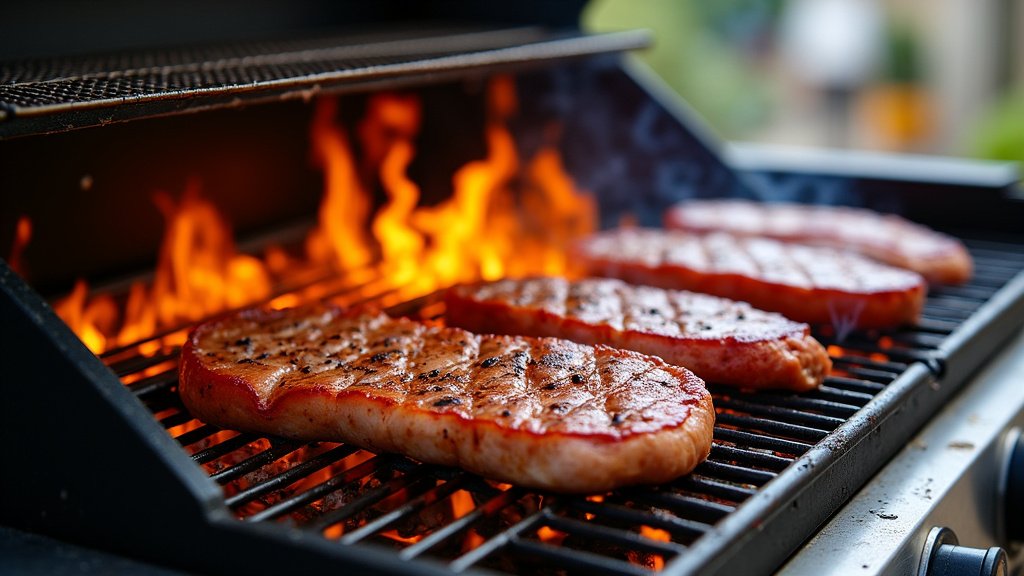
Temperature Zones at a Glance
Here’s a quick reference to help you remember the ideal temperatures for different cooking styles. It’s helpful to keep these in mind as you plan your cook.
| Cooking Style | Temperature Range | Best For | Kamado Vent Settings (General) |
|---|---|---|---|
| Low and Slow BBQ | 225°F – 275°F | Ribs, Brisket, Pulled Pork, Pork Shoulder | Bottom Vent: Small (½” – 1″); Top Vent: Mostly Open |
| Medium Heat Grilling | 350°F – 400°F | Chicken Pieces, Pork Chops, Sausages, Whole Chicken | Bottom Vent: Medium (1.5″ – 2″); Top Vent: Medium Open |
| High Heat Searing | 450°F – 600°F | Steaks, Burgers, Pizza, Fish Fillets | Bottom Vent: Wide Open (3″+); Top Vent: Wide Open |
Reading Your Kamado’s Thermometer
Most Kamado grills come with a built-in dome thermometer. These are generally reliable for giving you an approximation of the internal temperature. However, we found that they can sometimes be slightly off. Factors like ambient temperature and direct sun can affect their accuracy. For critical cooks, especially low and slow, consider using an accurate probe thermometer inserted into the food.
You can also use an infrared thermometer to check the grate temperature. This is especially useful when aiming for high-heat searing. A reliable thermometer is your best friend for consistent results. It helps you make educated adjustments to your vents. Many grilling enthusiasts recommend calibrating your dome thermometer against a known accurate thermometer.
Fine-Tuning and Maintaining Temperature
Once you’ve set your vents, your Kamado will work to maintain that temperature. However, things can change. Opening the lid lets heat escape. If you need to add more fuel, do it quickly. Then, allow the grill to stabilize again. Be patient. It might take 10-15 minutes to get back on track.
We found that wind can also affect your grill’s temperature. If it’s very windy, you might need to adjust your vents more often. You might also consider using a windscreen around your grill. Keeping a log of your vent settings for different temperatures can be very helpful. It’s like having a cheat sheet for your specific grill. This helps you achieve your desired temperature faster each time.
Tips for Consistent Kamado Cooking
Here are a few tips to help you nail your Kamado temperatures every time:
- Always start with a clean grill.
- Use good quality charcoal. Lump charcoal typically burns hotter and cleaner.
- Allow your coals to ash over completely before closing vents.
- Don’t peek too often! Every time you open the lid, you lose heat.
- Invest in a reliable digital probe thermometer for food.
- Know your grill’s hot and cool spots.
Conclusion
Mastering your Kamado grill’s temperature zones is key to grilling success. You’ve learned how adjusting the bottom and top vents controls airflow and heat. Whether you’re going low and slow for tender barbecue at 225°F to 275°F, cooking chicken and pork at a medium 350°F to 400°F, or searing steaks at a blazing 450°F to 600°F, your Kamado can handle it. Practice is your best teacher. Now, fire up your grill and put your new knowledge to the test!
Frequently Asked Questions
How often should I adjust my Kamado grill’s vents?
You’ll likely make initial adjustments when you first set your target temperature. Once stable, you may only need minor tweaks. We found that significant changes, like opening the lid, might require re-adjusting vents. Monitoring your grill’s thermometer is your best guide.
Can I use a different type of charcoal in my Kamado grill?
Yes, lump charcoal is generally recommended for Kamado grills. It burns hotter and cleaner than briquettes. We found that using good quality lump charcoal helps achieve and maintain your desired temperatures more easily. Avoid self-lighting coals, as they can affect flavor.
What’s the best way to monitor temperature without a built-in thermometer?
If your grill lacks a reliable thermometer, a good quality wireless probe thermometer is essential. You can insert a probe into the food to monitor its internal temperature. An infrared thermometer can also quickly check your grate temperature for searing. We found these tools provide more accurate readings than dome thermometers alone.
How do I prevent flare-ups when grilling at high temperatures?
Flare-ups happen when fat drips onto hot coals. For high-heat searing, try to trim excess fat from your meats. Ensure your grill grates are clean before cooking. If flare-ups occur, move the food to an indirect heat zone temporarily. We found that managing airflow helps control the intensity of the fire.
Is it possible to maintain a consistent temperature on a windy day?
Wind can definitely make temperature control more challenging. You might need to adjust your vents more frequently to compensate. We found that using a windscreen around your Kamado grill can significantly help maintain stable temperatures on windy days. Closing the bottom vent slightly can also reduce the amount of air fueling the fire.
