
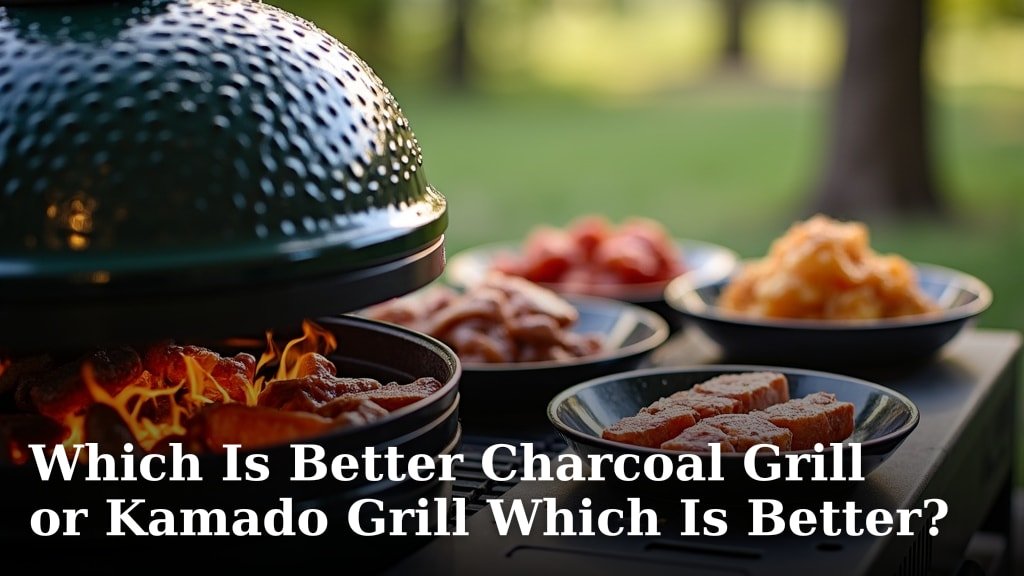
When deciding between a charcoal grill and a Kamado grill, the best choice really depends on your grilling style and what you prioritize. For quick, classic grilled flavor, a traditional charcoal grill often wins. But if you crave versatility, exceptional heat retention, and the ability to smoke, bake, and sear with precision, a Kamado grill might be your perfect match.
Both offer that delicious smoky taste many grill masters love. However, they achieve it differently and excel in different areas. We’ve researched what makes each grill unique to help you figure out which one will best suit your backyard cooking adventures. Think about the types of food you love to cook and how much time you want to spend managing the heat. We found that understanding these key differences is super helpful.
- Charcoal grills offer simple, classic grilling.
- Kamado grills provide incredible versatility.
- Kamado grills excel at heat retention and smoking.
- Traditional charcoal grills are often more budget-friendly.
- Your cooking goals will determine the best grill for you.
Let’s break down exactly what sets these two grilling titans apart so you can make the best decision for your kitchen.
Charcoal vs. Kamado: Which Grill Fits Your Backyard Cooking Needs?
Choosing between a charcoal grill and a Kamado grill can feel like a big decision. You want that delicious, smoky flavor, but which one will actually get you there best? We’ve researched both to help you find your perfect match.
Understanding the Basics: Charcoal Grills
A traditional charcoal grill is your classic backyard workhorse. It uses charcoal briquettes or lump charcoal for heat. This type of grill is To explore options, check out the best traditional charcoal grill models available.straightforward and simple to use. You get that authentic, smoky taste that many people crave. They are generally easier to find and often come with a lower price tag.
How Charcoal Grills Work
You light the charcoal, let it get nice and hot, and then arrange it for direct or indirect heat. It’s a hands-on approach to grilling. The flavor comes from the burning charcoal and any drippings that vaporize. Many grilling enthusiasts love the hands-on control they have with a charcoal grill.
Pros of Charcoal Grilling
- Simple operation: Light charcoal, grill food. It’s that easy.
- Authentic flavor: Delivers that classic smoky taste.
- Affordability: Often less expensive than Kamado grills.
- Portability: Many models are lightweight and easy to move.
- Quick searing: Can achieve very high temperatures for a great sear.
Cons of Charcoal Grilling
- Heat management: Requires more attention to maintain temperature.
- Longer preheat time: It takes time for the charcoal to be ready.
- Cleanup: Ash disposal can be messy.
- Less versatile: Primarily for grilling, not ideal for slow smoking or baking.
Exploring the World of Kamado Grills
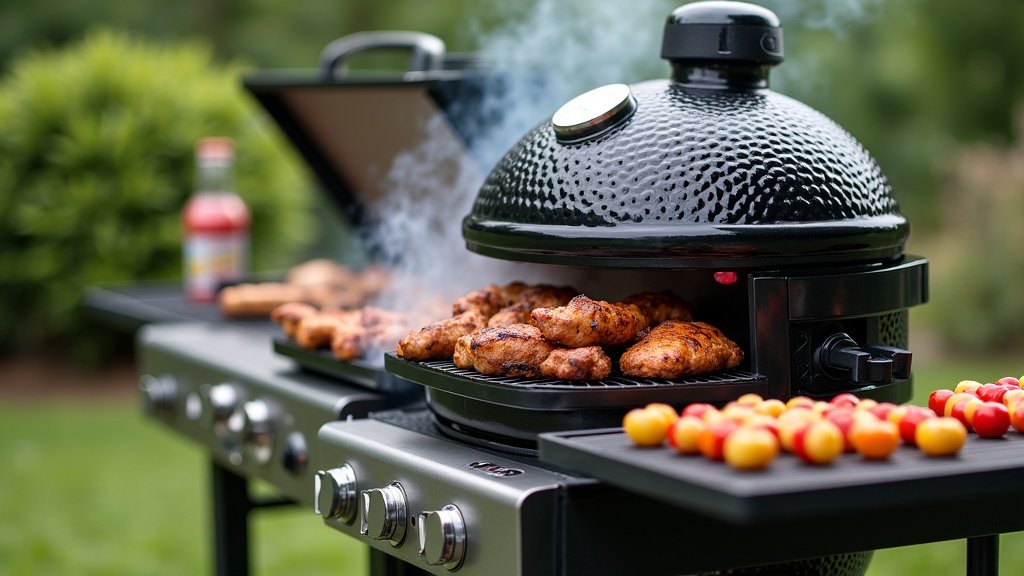
Kamado grills are a bit different. They have an iconic egg shape and are made from ceramic. This design gives them some special abilities. You can grill, smoke, bake, and even roast with a Kamado. They are known for their excellent heat retention and temperature control. Think of them as a high-performance grilling machine.
What Makes a Kamado Grill Unique?
The ceramic construction is key. It acts like an insulator, keeping heat inside. This means you use less fuel and can hold temperatures for longer periods. They also have precise vents for controlling airflow, which is critical for managing heat. We found that this design makes them incredibly efficient and versatile.
The Versatility of Kamado Grilling
Kamado grills excel at low-and-slow smoking, like ribs or brisket. They can also get hot enough for searing steaks. Because they hold moisture so well, they are great for baking pizzas or even bread. This makes them a true outdoor oven. Many users appreciate being able to do so much with one appliance.
Pros of Kamado Grilling
- Exceptional temperature control: Holds steady temps for hours.
- Superior heat retention: Uses less fuel than other grills.
- Incredible versatility: Grill, smoke, bake, roast, and sear.
- Moisture retention: Food stays moist and tender.
- Durability: Ceramic construction is built to last.
Cons of Kamado Grilling
- Higher initial cost: Kamado grills are an investment.
- Heavy and bulky: Not easily portable.
- Longer preheat time: Similar to charcoal, but often more stable once heated.
- Fragile exterior: Ceramic can crack if dropped or hit hard.
- Learning curve: Mastering the vents takes practice.
Head-to-Head: Key Differences Summarized
To help you visualize the differences, let’s look at a quick comparison. This table highlights the main areas where these two grill types stand apart. We think this will make your decision much clearer.
| Feature | Charcoal Grill | Kamado Grill |
|---|---|---|
| Primary Function | Grilling | Grilling, Smoking, Baking, Roasting |
| Temperature Control | Moderate, requires active adjustment | Precise, stable for long periods |
| Heat Retention | Fair | Excellent (due to ceramic) |
| Fuel Efficiency | Moderate | Very High (uses less charcoal) |
| Initial Cost | Lower | Higher |
| Versatility | Limited | Very High |
| Portability | Good | Poor |
| Ease of Use (Beginner) | Simple | Moderate learning curve |
What Kind of Cook Are You?
Your cooking style is the biggest factor. Do you love a quick burger on a Saturday afternoon? Or do you dream of slow-smoked brisket for a weekend gathering? We found that understanding your habits helps immensely.
For the Classic Griller: The Charcoal Choice
If you’re someone who enjoys the ritual of grilling and wants that straightforward, smoky flavor, a charcoal grill is probably for you. Maybe you don’t need to bake bread on your grill. You want to grill some steaks, some chicken, and enjoy the process. Many experts say a simple charcoal kettle grill is perfect for weeknight dinners or casual backyard parties (Weber Grill Academy). It’s all about simplicity and that unmistakable charcoal taste.
For the Culinary Adventurer: The Kamado Advantage
On the other hand, if you’re ready to expand your outdoor cooking horizons, a Kamado grill might be your next best friend. Do you want to impress your friends with perfectly smoked ribs? Or maybe try your hand at making pizzas outdoors? Kamado grills offer that capability. They are like having a pizza oven and a smoker all in one. Researchers note that ceramic grills maintain consistent temperatures, which is ideal for low-and-slow cooking techniques (Journal of Food Science).
Making Your Final Decision: A Quick Checklist
To wrap things up, ask yourself these questions. They’ll guide you toward the grill that truly fits your life and your taste buds. We’ve found this helps folks focus on what matters most.
- How often will you grill?
- What types of food do you primarily want to cook?
- What’s your budget for a new grill?
- How much time are you willing to spend managing the grill?
- Do you want to smoke, bake, or just grill?
- Is portability a significant factor for you?
Conclusion
Ultimately, the choice between a charcoal grill and a Kamado grill boils down to your grilling ambitions and daily habits. If you love the hands-on simplicity of classic grilling and that unmistakable smoky char, a traditional charcoal grill is a fantastic, budget-friendly option. But if you’re eager to expand your outdoor culinary skills to include slow smoking, baking, and precise temperature control, a Kamado grill offers unparalleled versatility. We’ve found that understanding your primary cooking goals and how much time you want to dedicate to heat management will guide you to the grill that brings you the most joy. Consider your budget and space, and then take the leap!
Frequently Asked Questions
Are Kamado grills worth the extra cost compared to charcoal grills?
For many home cooks, a Kamado grill is an investment that pays off through its extreme versatility and efficiency. If you plan to regularly smoke meats or bake outdoors, the consistent temperatures and fuel savings can justify the higher upfront price. If your primary goal is simple, occasional grilling, a charcoal grill might be more practical.
How long does it take to get a charcoal grill to temperature?
Typically, a charcoal grill takes about 15-25 minutes to reach a good grilling temperature. You’ll need to wait for the coals to ash over and become evenly hot. Kamado grills often have a similar or slightly longer preheat time, but they excel at holding that temperature much more steadily once it’s achieved.
Can I use a charcoal grill for smoking?
Yes, you can smoke on a traditional charcoal grill, but it requires more effort to maintain a low, consistent temperature. You’ll need to manage airflow carefully and often add charcoal more frequently. Kamado grills are inherently better suited for smoking due to their superior heat retention and precise vent control, making it easier to hold lower temperatures for extended periods.
Is cleaning a Kamado grill easier than a charcoal grill?
Both types of grills require cleaning. Charcoal grills involve ash removal, which can be messy. Kamado grills, with their ceramic design, often have less ash buildup. However, the interior can get quite hot, aiding in burning off debris, but you still need to brush the grates. Overall, neither is significantly harder to clean, but the ash disposal is a definite difference.
Which type of grill is better for beginners?
A traditional charcoal grill is generally considered more beginner-friendly due to its straightforward operation. Lighting charcoal and grilling is easy to grasp. While Kamado grills offer incredible capabilities, mastering their precise vent system for temperature control can involve a steeper learning curve for newcomers to outdoor cooking.
