
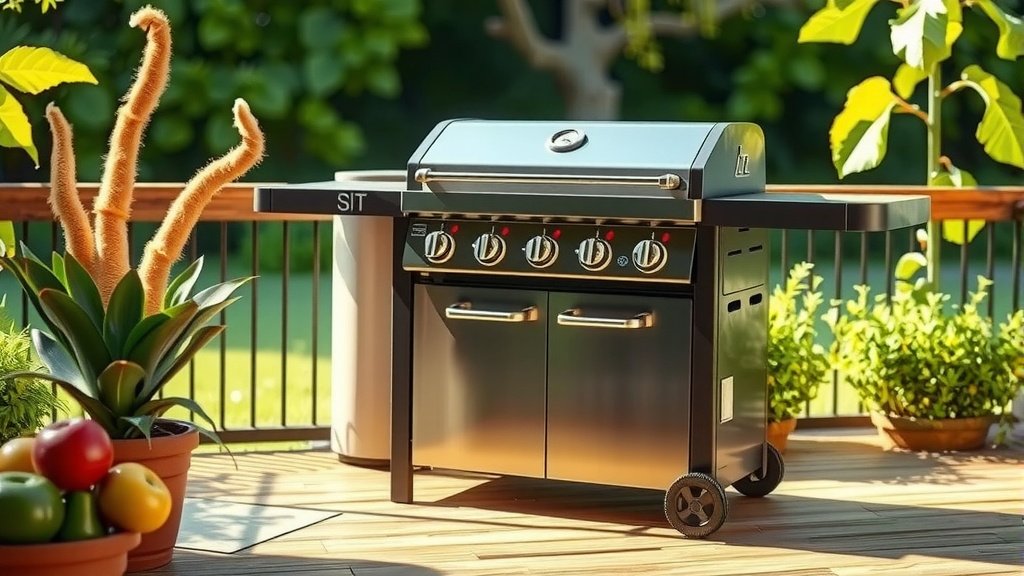
A liquid propane grill is an outdoor cooking appliance that uses propane gas as its fuel source, delivering instant heat for grilling a wide variety of foods.
These grills offer convenience and precise temperature control, making them a very popular choice for many home chefs and outdoor entertainers.
TL;DR: Quick Facts About Liquid Propane Grills
- Liquid propane grills use propane gas for quick, convenient outdoor cooking.
- They offer excellent temperature control, making cooking easier and more consistent.
- Propane tanks are simple to connect and swap, providing a clean-burning fuel source.
- These grills generally heat up very fast, saving you time before meals.
- They are a versatile option for beginners and seasoned grillers seeking efficiency.
What Is Liquid Propane Grill?
A liquid propane grill, often called a gas grill, is a common outdoor cooking device. It uses propane stored in a tank to create heat through burners located under the cooking grates.
This design allows you to cook food quickly and efficiently, similar to how your kitchen range works, but in an outdoor setting. It’s about bringing the kitchen outdoors.
Why Choose Propane for Grilling?
You might wonder why so many people prefer propane for their grilling adventures. It boils down to a few key advantages that make outdoor cooking more enjoyable and less stressful.
Many experts say propane offers unparalleled convenience for the average griller (Barbecue Industry Association).
Quick Start
Imagine this: you’re hungry, and guests are arriving soon. A propane grill lights up with the push of a button or a quick turn of a knob. There is no waiting for charcoal to ash over.
This rapid ignition means you can start cooking within minutes, which is a big win when time is short. It truly lets you jump right into grilling.
Easy Temperature Control
One of the biggest perks of a liquid propane grill is the ability to control heat precisely. Each burner often has its own knob, letting you adjust the flame high or low.
This precise control is very helpful for cooking different foods at once or for using specific cooking zones. It helps you prevent burnt edges or undercooked centers.
Clean Burn
Propane burns cleanly, producing very little smoke or ash compared to charcoal. This means less cleanup after your meal and a cleaner grilling area overall.
You won’t have to deal with messy ash disposal, which can be a real chore with other types of grills. We found that a clean burn saves time and effort.
How a Liquid Propane Grill Works
Understanding the basics of your grill’s operation can help you use it more effectively and safely. It’s simpler than you might think.
The system is designed for ease of use, ensuring you can focus on cooking delicious food instead of complex mechanics.
Gas Flow and Igniters
Propane gas flows from the tank, through a regulator, and into the grill’s manifold. From there, it goes to individual burner tubes.
When you turn a knob, a small spark from the igniter system lights the gas. This creates the flame you see. This simple process provides instant, controllable heat for cooking.
Burner Mechanics
The burners distribute the flame evenly across the cooking area. Many grills feature multiple burners, allowing for direct and indirect cooking zones.
Flame tamers or heat deflectors sit above the burners. They protect the burners from dripping food and help distribute heat. This setup ensures consistent heat for even cooking.
Understanding BTUs
You’ve likely seen BTUs mentioned when looking at grills. But what do they actually mean for your grilling experience?
It’s an important factor to consider when matching a grill to your cooking needs.
What are BTUs?
BTU stands for British Thermal Unit. It measures the heat output of your grill’s burners. A higher BTU rating generally means the grill can get hotter faster or maintain higher temperatures.
However, more BTUs don’t always mean a better grill. The grill’s design, grate material, and heat retention matter too. Focus on BTUs per square inch of cooking area.
Finding the Right BTU Level
For most backyard grillers, a grill with 30,000 to 50,000 BTUs is usually sufficient. Smaller grills need fewer BTUs, while larger ones need more.
We found that a well-designed grill with moderate BTUs can often outperform a poorly designed, high-BTU unit. Consider overall build quality over just raw BTU numbers.
Propane Grill Benefits
Thinking about investing in a propane grill? Here’s a quick look at some key benefits you’ll enjoy:
- Instant Heat: No long waits; light it up and start cooking quickly.
- Precise Control: Adjust temperatures easily for perfect results every time.
- Clean Operation: Less smoke and ash means easier cleanup after grilling.
- Versatility: Great for searing, roasting, and low-and-slow cooking.
- Safety Features: Modern grills include safety measures like automatic shut-offs.
- Fuel Availability: Propane tanks are widely available for purchase or exchange.
Flavor Profile: Propane vs. Charcoal
Many grillers debate the flavor difference between propane and charcoal. Some say charcoal offers a superior smoky taste. Others find propane just as delicious with proper technique.
It’s a matter of personal preference, but you can achieve fantastic flavors on either type of grill.
The “Smoky” Debate
Charcoal imparts a distinctive smoky flavor because of the burning wood. Propane, burning cleanly, doesn’t add this natural smoke.
Some people love that clean taste, letting the food’s natural flavors shine. Others miss the smoky notes. It’s a key distinction to consider for your palate.
Achieving Flavor with Propane
You can add smoky flavors to your propane-grilled food. Wood chip boxes or foil packets filled with soaked wood chips placed over a burner will produce smoke.
This allows you to customize the smoke level and type of wood flavor. Many culinary professionals agree that flavor is often about technique, not just fuel (Food Network Kitchen).
Keeping Your Propane Grill Safe
Safety is always paramount when working with gas appliances. Knowing a few key tips can prevent problems and keep your grilling experience enjoyable.
We found that proper handling and regular checks are simple steps for peace of mind.
Leak Detection Basics
Before each grilling season or if you suspect a leak, perform a simple soap and water test. Mix dish soap with water and apply it to hose connections.
Bubbles forming indicate a gas leak. Always correct any leaks before using your grill. This is a very quick and effective safety check (Consumer Product Safety Commission).
Proper Tank Storage
Store propane tanks upright, outdoors, and away from direct sunlight or heat sources. Never store a propane tank indoors or in a closed garage.
Ensure the tank valve is fully closed when not in use. This simple habit keeps your home and yard safe. Always store tanks in well-ventilated areas.
Grill Maintenance Tips
Regular maintenance extends the life of your grill and ensures safe operation. It doesn’t take much time, but it makes a big difference.
Think of it as routine care, like changing the oil in your car. A little effort goes a long way.
Cleaning Grates
After each use, scrape your grates with a wire brush while the grill is still warm. This removes stuck-on food and prevents buildup.
A clean grate also prevents flare-ups and helps achieve those perfect grill marks. A clean grill is a happy and efficient grill.
Checking Hoses
Periodically inspect the gas hose for cracks, kinks, or wear. A damaged hose can be a serious safety hazard and lead to gas leaks.
Replace any worn hoses immediately. You can often find replacement parts at hardware stores. Regular hose checks are essential for safety.
What to Look for When Buying
Choosing a new liquid propane grill can feel overwhelming with all the options available. Focusing on a few key areas can simplify your decision.
Consider what truly matters for your grilling habits and budget.
| Feature | Why It Matters to You | Good Choice For… |
|---|---|---|
| BTU Output | Affects heating speed and maximum temperature. | Quick searing, high-heat cooking. |
| Number of Burners | More burners allow for distinct cooking zones. | Indirect cooking, different foods at once. |
| Cooking Grate Material | Impacts heat retention and food release. | Cast iron for searing; stainless steel for easy cleaning. |
| Build Quality | Durability, rust resistance, and longevity. | Long-term investment, frequent use. |
| Side Burner / Storage | Adds versatility for sauces, or extra prep space. | Boiling sides, warming food, tools storage. |
Smart Shopping Checklist
To help you narrow down your choices, here’s a quick checklist to consider when you’re looking for your next propane grill:
- Is the grill size right for your space and family?
- Does it have enough BTUs for your cooking style?
- Are the cooking grates durable and easy to clean?
- Does it offer a sturdy construction and quality materials?
- Are there any extra features you genuinely need, like a side burner?
- Does it fit within your budget without sacrificing safety?
Conclusion
A liquid propane grill offers a fantastic blend of convenience, control, and versatility for anyone who enjoys cooking outdoors. From quick weeknight meals to larger weekend gatherings, it provides consistent performance.
By understanding how they work, prioritizing safety, and choosing wisely, you’ll be well-equipped to enjoy many delicious grilling sessions for years to come. It’s truly about making your outdoor cooking experience a breeze.
What is the typical lifespan of a liquid propane grill?
The lifespan of a liquid propane grill can vary widely, but most quality grills last between 5 to 15 years. This depends heavily on the materials used, how often it’s used, and how well it’s maintained. Regular cleaning and covering your grill can extend its life significantly.
Can I convert a liquid propane grill to natural gas?
Yes, many liquid propane grills can be converted to natural gas, but it requires a specific conversion kit and often professional installation. Natural gas uses a different pressure and burner orifice size. You should always use a manufacturer-approved kit and follow instructions carefully, or hire a certified technician.
How often should I clean my propane grill?
You should do a light cleaning of the grates after every use while the grill is still warm. A deeper clean, involving the burner covers, drip tray, and firebox, should be done every 3-4 months, or more frequently if you grill often. This keeps your grill running efficiently and safely.
What size propane tank do most grills use?
Most standard liquid propane grills use a 20-pound (5-gallon) propane tank. This size is widely available for exchange or refilling at many stores. Larger grills or built-in outdoor kitchens might use larger tanks or be connected to a home’s natural gas line.
Is it better to exchange or refill a propane tank?
Both options have pros and cons. Exchanging a tank is quicker and more convenient, but you might not get a full 20 pounds of propane, and you don’t get your original tank back. Refilling generally costs less per gallon, ensures you get a full tank, and you keep your tank, but it requires finding a refilling station and more time.
