
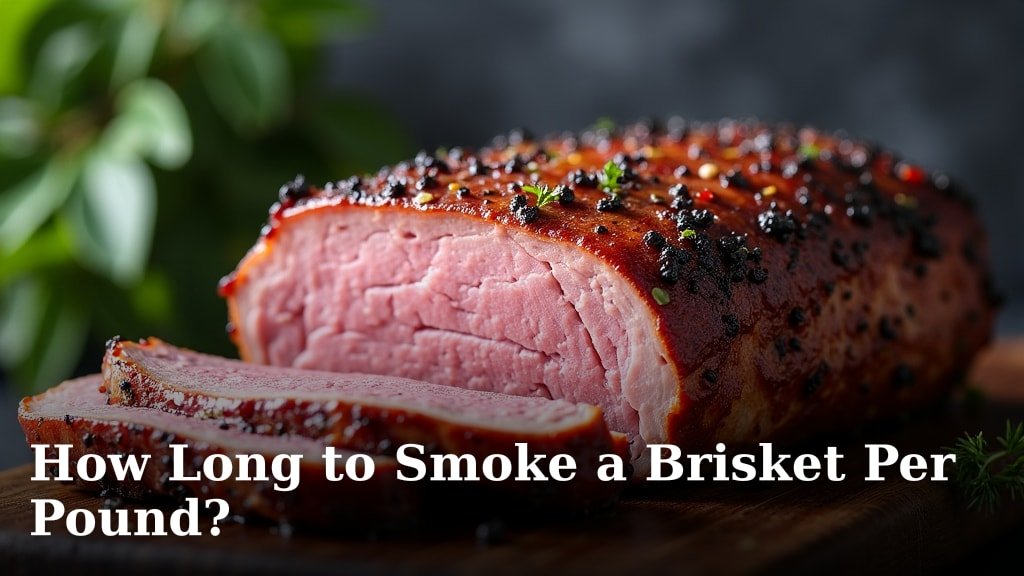
So, you’re wondering: how long to smoke a brisket per pound? Generally, plan for about 1 to 1.5 hours per pound at a temperature between 225°F and 275°F. This is a great starting point for achieving that perfect, tender brisket you’ve been dreaming of. Remember, this is just an estimate, and actual cooking time can vary quite a bit.
Factors like the thickness of your brisket and your smoker’s temperature consistency play a huge role. We found that patience is key when smoking brisket; it’s a marathon, not a sprint. Don’t rush the process, as brisket often needs time to break down its connective tissues properly for that melt-in-your-mouth texture.
- Brisket needs 1-1.5 hours per pound to cook.
- Target smoker temperature is 225°F-275°F.
- Thickness and smoker stability impact cooking time.
- Brisket often needs resting time after smoking.
Let’s break down all the details to help you nail your next brisket smoke and serve up something truly delicious.
Understanding Brisket Smoke Time Per Pound
When you’re aiming for that perfect smoked brisket, understanding the timeline is essential. A good rule of thumb is to budget 1 to 1.5 hours of smoking time for every pound of brisket If you’re interested in alternative smoking methods, our guide to how to smoke a brisket on a pellet grill offers valuable insights.. This gives you a solid starting point for planning your cook.
However, this is just an estimate, and many things can affect how long your brisket actually takes. Think of it as a guideline, not a hard and fast rule. You’ll often find brisket cooking times can fluctuate based on several key factors.
The Key Factors Influencing Brisket Cook Time
Several elements will play a big role in determining the total smoking duration. It’s not just about the weight of the meat. You need to consider the conditions of your cook and the brisket itself.
Brisket Thickness and Shape Matter
Thicker parts of the brisket will naturally take longer to cook than thinner sections. Briskets aren’t always uniformly thick. This means some parts might reach their target temperature sooner than others.
The overall shape of your brisket can also impact heat penetration. A flatter, wider brisket might cook a bit faster than a more rounded, thicker cut. You’re essentially looking for the entire piece of meat to reach its desired tenderness.
Smoker Temperature Consistency
Your smoker’s ability to maintain a stable temperature is critical. Fluctuations can really throw off your cooking schedule. If your smoker’s temperature drops, your brisket will cook slower. If it spikes, it might cook faster but risk drying out.
We found that many home smokers can have temperature swings. Keeping your smoker’s temperature within the target range of 225°F to 275°F is important. For consistency, many pitmasters use a water pan or pellet tube. This can help stabilize the heat and add a bit of moisture to your cooking environment.
The Stall: A Brisket’s Natural Pause
Get ready for “the stall.” This is a common phenomenon in brisket smoking. Around the 150°F to 165°F internal temperature mark, the brisket’s cooking can slow down dramatically or even stop for hours. It’s like the meat is taking a break.
What causes the stall? As the internal temperature rises, moisture evaporates from the surface of the brisket. This evaporation has a cooling effect, counteracting the heat from the smoker. It’s a natural cooling mechanism for the meat.
Pushing Through the Stall
Don’t panic when you hit the stall. Resist the urge to increase your smoker’s temperature significantly. This can dry out your brisket. Instead, many pitmasters use the “Texas Crutch” – wrapping the brisket.
Wrapping the brisket in butcher paper or foil can help push through the stall. This traps moisture and heat. It speeds up the cooking process once the stall has begun. You’ll want to do this when the brisket has developed a nice bark. That’s typically around the 160°F internal temperature mark.
The Importance of Brisket’s Internal Temperature
Ultimately, the internal temperature is a much more reliable indicator of doneness than time alone. You’re not just looking for a specific time; you’re looking for a specific level of tenderness.
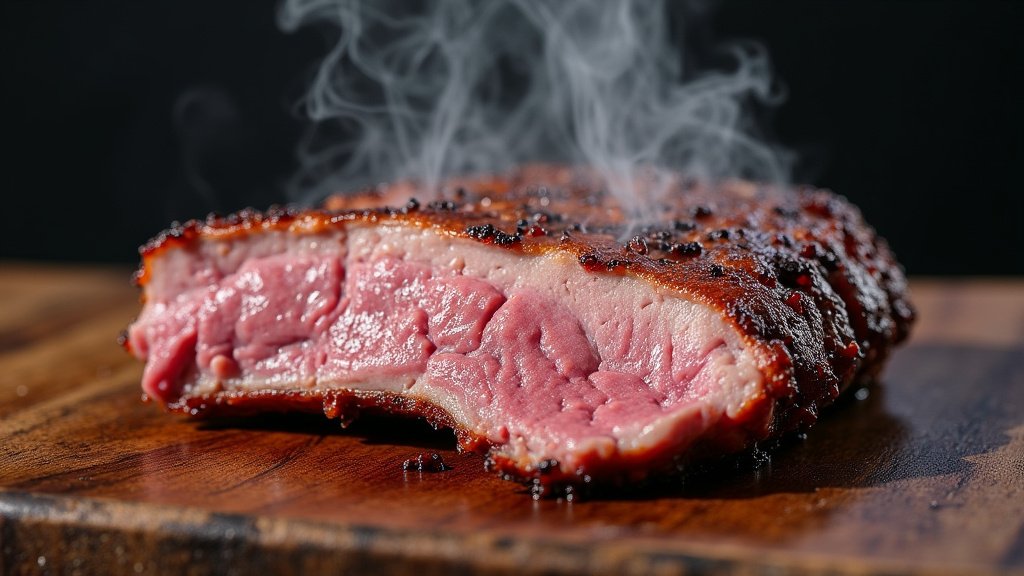
Most pitmasters aim for an internal temperature between 195°F and 205°F. However, even within this range, the brisket can feel different. The goal is for the meat to be probe-tender. This means a thermometer probe should slide into the thickest part of the brisket with very little resistance, like pushing it into soft butter.
| Brisket Weight | Estimated Smoke Time (at 250°F) | Target Internal Temp |
|---|---|---|
| 5 lbs | 5 – 7.5 hours | 195°F – 205°F |
| 10 lbs | 10 – 15 hours | 195°F – 205°F |
| 15 lbs | 15 – 22.5 hours | 195°F – 205°F |
| 20 lbs | 20 – 30 hours | 195°F – 205°F |
Remember, this table is a guide. Your actual cooking time can be longer or shorter. It depends on all the factors we’ve discussed. Always cook to temperature and tenderness, not just the clock.
Beyond the Smoke: The Crucial Resting Period
Once your brisket hits that perfect internal temperature and feels probe-tender, your job isn’t quite done. Brisket needs time to rest after smoking. This is a non-negotiable step for tender, juicy results.
During the long cooking process, the muscle fibers in the brisket tighten up. Resting allows these fibers to relax. It also gives the juices, which have been pushed to the center during cooking, time to redistribute throughout the meat. Without resting, you’ll lose a lot of that precious moisture when you slice it.
How to Rest Your Brisket
The best way to rest a brisket is to keep it warm. You can do this by leaving it wrapped in its butcher paper or foil. Then, place the wrapped brisket into an empty cooler. You can also use an oven set to its lowest temperature (around 150°F to 170°F) with the door slightly ajar.
A good rest can last anywhere from 1 to 4 hours, or even longer for larger briskets. Some pitmasters will rest a brisket overnight in a warming oven. We found that a minimum rest of 1 hour is essential. Longer rests (2-4 hours) often yield even better results for tenderness and moisture.
Putting It All Together: Your Brisket Timeline Checklist
Planning your brisket smoke can feel overwhelming, but breaking it down makes it manageable. Here’s a quick checklist to help you prepare for your cook:
- Choose Your Brisket: Select a well-marbled, USDA Prime or Choice grade brisket.
- Trim and Season: Trim excess hard fat and apply your chosen rub generously.
- Prepare Your Smoker: Get your smoker to your target temperature (225°F-275°F).
- Start Smoking: Place the brisket in the smoker and begin your time estimate.
- Monitor Temperature: Use a reliable meat thermometer; cook to internal temp (195°F-205°F) and tenderness.
- Wrap if Needed: Wrap in butcher paper or foil during “the stall” for faster cooking.
- Rest is Best: Allow the brisket to rest for at least 1-4 hours before slicing.
Conclusion
Smoking a brisket is a labor of love, and knowing the expected cook time per pound is your starting point. Remember that the 1 to 1.5 hours per pound is a guideline. Factors like brisket thickness, smoker temperature stability, and the infamous stall will influence the actual time. Always rely on your meat thermometer to hit that perfect 195°F-205°F internal temperature and ensure probe tenderness. Don’t forget the essential rest period to let those juices redistribute. Now you’re ready to plan your next brisket smoke with confidence!
Frequently Asked Questions
How do I know when my brisket is truly done, besides internal temperature?
You’re looking for probe tenderness. This means a thermometer probe should slide into the thickest part of the brisket with almost no resistance, feeling like it’s going into soft butter. This tenderness is the ultimate sign your brisket is ready to rest.
What’s the best way to handle the “stall” when smoking a brisket?
The stall is a natural part of the process where the brisket’s temperature plateaus. The most common and effective method is to wrap the brisket in butcher paper or foil, often called the “Texas Crutch.” This helps push through the stall by trapping moisture and heat.
Can I smoke a brisket faster by increasing the smoker temperature?
While you might be tempted, significantly increasing your smoker temperature can actually dry out your brisket. It can lead to a tough texture and a less desirable bark. It’s best to maintain your target temperature and let the brisket cook slowly.
How long should I rest my brisket after smoking?
A minimum rest of 1 to 4 hours is highly recommended for larger cuts. This allows the juices to redistribute throughout the meat, ensuring maximum moisture and tenderness. For very large briskets, a longer rest can be even more beneficial.
Is a 5-pound brisket faster to smoke than a 15-pound brisket?
Generally, yes. A 5-pound brisket will take less total time to cook than a 15-pound brisket, based on the 1 to 1.5 hours per pound estimate. However, factors like thickness and smoker stability can still cause variations, so always cook to temperature and tenderness, not just the clock.
