
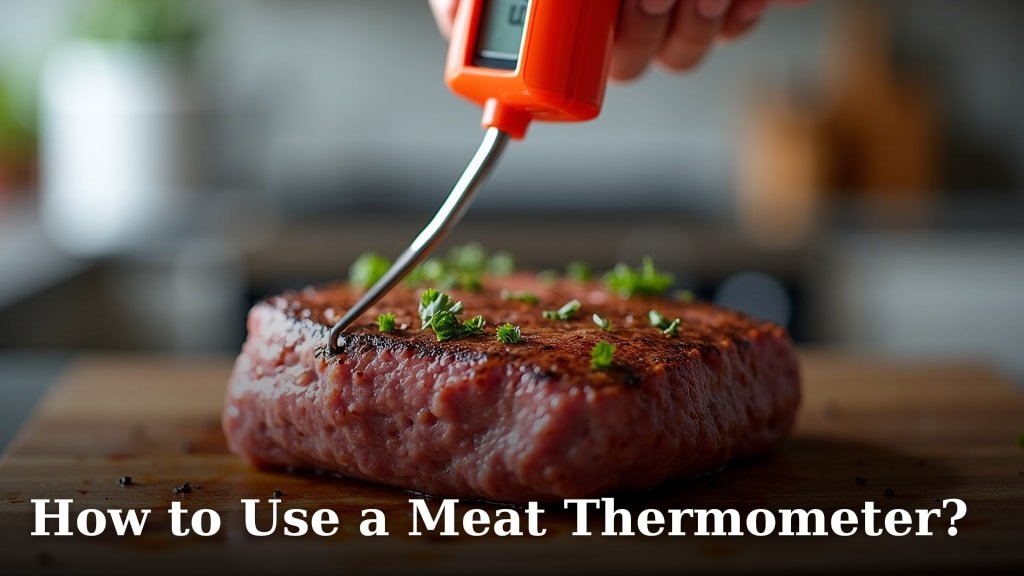
Using a meat thermometer correctly ensures your food reaches a safe internal temperature and tastes amazing. You simply insert the probe into the thickest part of the meat, avoiding bones, to get an accurate reading.
You want to check your meat’s temperature regularly, especially towards the end of cooking. This prevents overcooking and keeps your food juicy and delicious. A good thermometer is a real kitchen helper for many dishes.
- Discover why a meat thermometer is so important for cooking.
- Learn how to pick the right temperature for different meats.
- Find out where to place the thermometer for the best accuracy.
- Understand common mistakes people make and how to avoid them.
- Get tips on caring for your meat thermometer.
Ready to master your kitchen? Let’s walk through exactly how to use a meat thermometer like a pro.
Mastering Your Meat Thermometer for Perfect Meals
Using a meat thermometer is a simple step that makes a huge difference in your cooking. It helps you avoid overcooked, dry food and ensures everything is safe to eat.
Why a Meat Thermometer is Your Kitchen MVP
Think of your meat thermometer as your culinary co-pilot. It gives you precise control over your cooking. Guessing internal temperatures can lead to disappointment, but a thermometer takes out the guesswork.
Food safety is the number one reason to use one. Harmful bacteria can lurk in undercooked meat. Reaching the right internal temperature kills these pathogens, keeping you and your family safe (USDA).
Beyond safety, it’s all about quality and taste. Nobody wants a tough, dry chicken breast or an overcooked steak. A thermometer helps you hit that sweet spot of doneness, resulting in juicy, tender, flavorful meals every time.
Choosing the Right Meat Thermometer
Just like there are different tools for different jobs, there are various types of meat thermometers. Understanding them helps you pick the best one for your cooking style.
Instant-Read Thermometers
These are perhaps the most popular and versatile. An instant-read thermometer gives you a temperature reading quickly, usually within 2-5 seconds. You stick it in, get your number, and pull it out.
- Pros: Fast, accurate, great for checking multiple spots or smaller pieces of meat.
- Cons: Not oven-safe; you can’t leave it in while cooking.
- Best for: Grilling, pan-frying, testing roasts occasionally, checking doneness of leftovers.
Leave-In Probe Thermometers
These thermometers have a probe that stays in the meat during cooking. A wire connects the probe to an external monitor, which often sits outside your oven or grill. You can monitor the temperature continuously.
- Pros: Monitors temperature without opening the oven/grill, many have alarms for target temperatures.
- Cons: Wires can sometimes get in the way, slower response time than instant-read.
- Best for: Roasts, whole chickens, briskets, smoking, long cooking times.
Digital vs. Dial Thermometers
Digital thermometers provide an easy-to-read numeric display. They are often more accurate and faster than their analog counterparts. Many also have extra features like backlights or pre-set temperatures.
Dial (or analog) thermometers use a needle to show the temperature. They are typically less expensive but can be harder to read precisely and might react slower. We found that most home cooks prefer digital for ease of use.
Understanding Safe Internal Temperatures
Knowing the correct target temperature for different meats is key. Cooking past this point makes your food dry, while not reaching it can be unsafe. Here’s a quick guide:
| Meat Type | Minimum Safe Internal Temperature | Notes |
|---|---|---|
| Beef, Pork, Lamb (steaks, chops, roasts) | 145°F (63°C) | Allow 3 minutes rest time. For ground, cook to 160°F. |
| Ground Beef, Pork, Lamb | 160°F (71°C) | No rest time needed. |
| Poultry (Chicken, Turkey, Duck – whole, parts, ground) | 165°F (74°C) | Cook all poultry to this temperature. |
| Fish | 145°F (63°C) | Or cook until flesh is opaque and flakes easily. |
| Leftovers & Casseroles | 165°F (74°C) | Reheat thoroughly. |
Remember, these are minimum safe temperatures. For preference, like a medium-rare steak, you’ll aim for a lower temperature (e.g., 130-135°F for rare beef) and understand the risks, which is why ground meat is always 160°F (USDA).
Where to Place the Thermometer for Accuracy
Insertion point is crucial! Incorrect placement can give you a false reading, leading you to believe your food is done when it’s not, or cooking it longer than necessary.
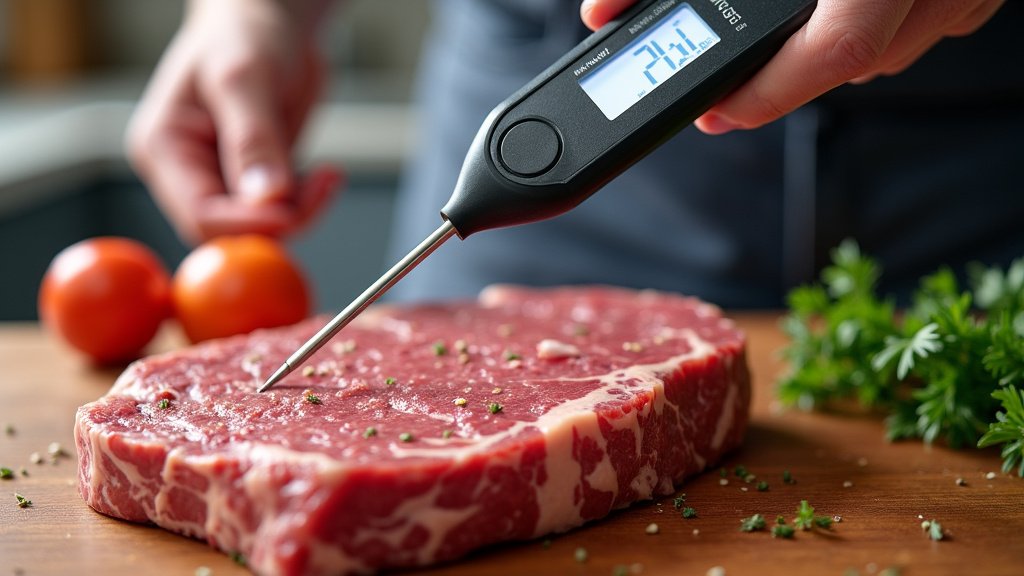
- Always aim for the thickest part of the meat. This is usually the last part to reach the target temperature.
- Ensure the probe doesn’t touch bone, gristle, or fat pockets. Bones conduct heat differently, and fat doesn’t hold temperature the same way muscle does. This can give you an artificially high reading.
- For whole poultry, insert into the innermost part of the thigh, near the bone but not touching it, or the thickest part of the breast. Check in several places.
- For roasts, insert into the center of the thickest portion, again, avoiding bone.
- For burgers or ground meat patties, insert the probe horizontally into the side of the patty, reaching the center.
Step-by-Step: Using Your Meat Thermometer
Ready to put theory into practice? Here’s how to get an accurate reading every time:
- Locate the thickest part: Visually identify the thickest section of your meat.
- Insert the probe: Gently push the probe at least half an inch to an inch into the meat. For thinner cuts, push it until the tip is at the very center.
- Avoid bone and fat: If you hit bone, pull it out slightly and reinsert in a different spot.
- Wait for a stable reading: For instant-read, hold until the number stops changing (often 2-5 seconds). For leave-in, simply monitor the display.
- Check multiple spots: For larger cuts or whole birds, check two or three different spots to ensure even cooking.
- Clean after each use: Wipe the probe clean with warm, soapy water after each reading to prevent cross-contamination.
Many professional chefs will tell you to check more often than you think you need to, especially as you get close to your target temperature. This helps you catch it just right.
Common Mistakes and How to Avoid Them
Even with good intentions, it’s easy to make small errors. Don’t worry, we’re here to help you sidestep them!
- Not calibrating: Some thermometers, especially analog ones, need occasional calibration. Check your thermometer’s instructions for how to do this. A simple ice bath test (32°F/0°C) or boiling water test (212°F/100°C) can verify accuracy.
- Checking too early: Resist the urge to check the temperature too often at the beginning of cooking. Every time you open your oven or grill, you lose heat, which extends cooking time.
- Not letting meat rest: After cooking, especially large cuts, meat continues to cook for a few minutes (carryover cooking) even after being removed from the heat. The internal temperature can rise by 5-10°F. Account for this by pulling the meat just shy of your target temperature.
- Using it on frozen food: A meat thermometer is designed for partially or fully thawed food. It won’t give an accurate reading in frozen meat.
- Ignoring instructions: Some thermometers are not oven-safe or dishwasher safe. Always read the individual product’s care instructions.
Caring for Your Meat Thermometer
A well-maintained thermometer will serve you for years. Proper care ensures its longevity and accuracy.
- Clean the probe thoroughly: After each use, wash the probe with hot, soapy water. Avoid submerging the entire unit unless it’s specifically listed as waterproof. Wipe down the handle as well.
- Store properly: Keep it in its protective sleeve or in a drawer where it won’t get bent or damaged. Avoid leaving it exposed to extreme temperatures.
- Check the battery: For digital thermometers, keep an eye on the battery level. A weak battery can sometimes affect accuracy or cause the display to fail.
- Calibrate regularly: If your thermometer is calibratable, do it every few months, or if you suspect it’s giving inaccurate readings.
- Don’t drop it: Treat your thermometer gently. Impact can damage the internal components and affect accuracy.
By following these steps, you’re not just using a tool; you’re becoming a more confident and skilled cook. You’ll impress your friends and family with perfectly cooked, safe, and delicious meals every single time.
Conclusion
You now have the knowledge to confidently use a meat thermometer and take your cooking to the next level. No more guessing if your food is done, or worse, serving something unsafe. By choosing the right thermometer, knowing your target temperatures, and understanding proper placement, you’re set for success.
Remember to check frequently, avoid common mistakes, and keep your tool clean and calibrated. This simple step transforms your kitchen experience, giving you perfectly cooked, safe, and delicious meals every single time. Go ahead, make your next meal a masterpiece!
Frequently Asked Questions
Can I use a meat thermometer for liquids or other foods?
Yes, you can absolutely use a meat thermometer for other items! It’s great for checking the temperature of hot liquids like oil for deep frying, candy making, or even heating baby formula. Just ensure the probe is clean before and after use.
How do I know if my meat thermometer is accurate?
The easiest way to check is with an ice bath. Fill a glass with crushed ice and add a little water. Insert your thermometer and stir. It should read 32°F (0°C). If not, some thermometers can be recalibrated; otherwise, it might be time for a new one.
My meat thermometer has different settings for meat types. Should I use them?
Many digital thermometers come with pre-set temperatures for different meats. While convenient, always double-check these against reliable sources like the USDA guidelines. Your personal preference may also lead you to adjust slightly for doneness like medium-rare versus well-done.
How deep should I insert the thermometer probe?
You should insert the probe deep enough so the tip reaches the very center of the thickest part of the meat. For most instant-read thermometers, this means an inch or two into the flesh. Avoid pushing it all the way through the other side.
What if I hit a bone when inserting the thermometer?
If your probe touches bone, pull it out slightly and reinsert it into an adjacent spot. Bone conducts heat differently than meat and can give you an artificially high reading, making you think your meat is done when it isn’t. Always aim for pure muscle.
