
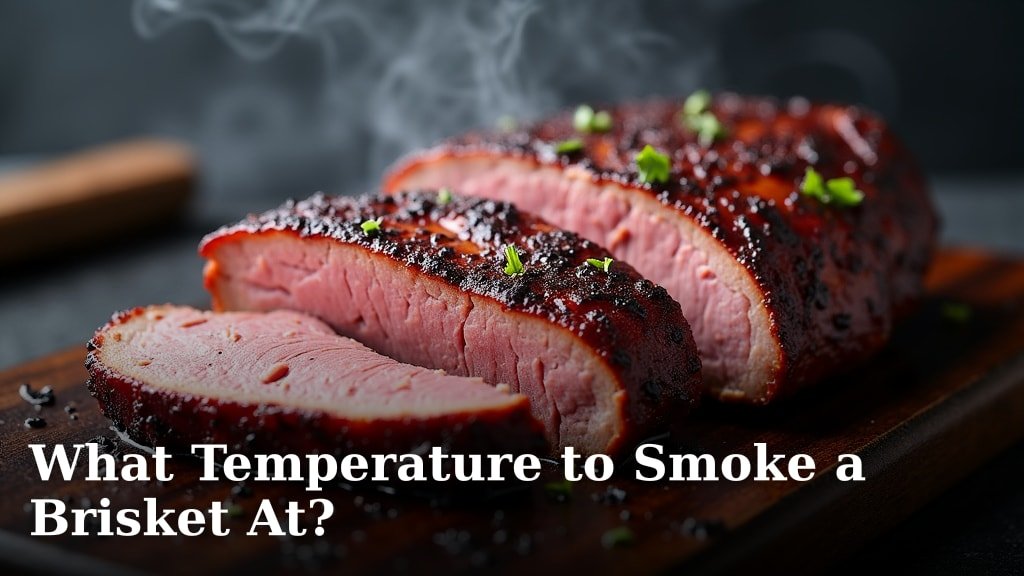
You should smoke a brisket at a consistent low temperature, typically between 225°F and 275°F, for the best results. This range allows the connective tissues to break down slowly, making your brisket incredibly tender.
Finding the right temperature to smoke a brisket at is key to juicy, flavorful meat. Too hot, and it dries out; too cold, and it can take forever and might not get tender. We found that maintaining a steady temperature is more important than hitting an exact number.
- Smoke your brisket between 225°F and 275°F.
- Lower temperatures lead to more tender results.
- Consistency is more important than a precise number.
- Consider your smoker type and desired cooking time.
Let’s dive into why this temperature range works so well and how you can achieve that perfect brisket every time.
Optimal Temperature Range for Smoking Brisket
Smoking brisket requires a specific temperature range. We found that 225°F to 275°F is the sweet spot. This range allows for slow cooking. It helps break down the tough connective tissues in the meat. This process makes your brisket incredibly tender and juicy.
Why this specific range? Going too low might extend the cooking time excessively. It could also lead to dry meat. Going too high can cook the outside too fast. This leaves the inside tough. It’s a delicate balance, and consistency is your best friend here.
The Science Behind Low and Slow
Brisket is a tough cut of meat. It’s full of collagen and connective tissue. These need time and low heat to transform. Think of it like a slow dance. The collagen slowly melts into gelatin. This is what gives brisket its succulent, melt-in-your-mouth texture. This process happens best at lower temperatures (USDA).
If you rush it, the collagen won’t fully break down. You’ll end up with chewy, unappetizing meat. That’s why we emphasize the “low and slow” method. It’s not just a catchphrase; it’s a scientific principle at work.
Connective Tissue Breakdown
Collagen starts to break down around 160°F. But it needs sustained heat for this transformation. A temperature range of 225°F to 275°F provides that. It allows enough time for all the collagen to convert. This ensures a consistently tender brisket throughout.
Impact of Temperature Consistency
Achieving a consistent temperature is more important than hitting one exact number. Your smoker’s temperature will naturally fluctuate a bit. This is normal. What you want to avoid are big swings. Wild temperature changes can make your brisket cook unevenly. This can lead to dry spots or undercooked areas.
Imagine driving a car. You want to maintain a steady speed, not constantly speed up and slow down. The same goes for your smoker. Steady heat distribution leads to better results. It ensures every part of the brisket cooks at a similar rate.
Maintaining Stable Temperatures
How do you keep your smoker’s temperature steady? Several factors play a role. The type of smoker you use is one. The quality of your fuel is another. Even the weather outside can affect it. We found that practice helps you learn your specific smoker’s quirks.
- Use reliable thermometers: Don’t just rely on your smoker’s built-in gauge.
- Control your fuel: Add wood or charcoal slowly and consistently.
- Avoid frequent opening: Every time you open the lid, heat escapes.
- Shield from wind: Wind can cause temperature drops.
The Role of Smoker Type
Different smokers manage heat differently. Offset smokers, for example, need more attention. They require frequent fuel additions. Electric smokers are often more stable. Pellet smokers use an auger to feed pellets. This helps maintain a very consistent temperature. Know your smoker. It will help you achieve better temperature control.
Temperature Options: 225°F, 250°F, or 275°F?
While the range is 225°F-275°F, you might wonder which specific temperature to aim for. Each has its advantages. Your choice can affect cooking time and the final texture. Let’s look at the differences.
| Smoking Temperature | Advantages | Considerations |
|---|---|---|
| 225°F | Maximizes tenderness; more smoke flavor; ideal for beginners. | Longest cooking time; requires more patience. |
| 250°F | Good balance of tenderness and cooking time; very popular. | Still requires good temperature management. |
| 275°F | Faster cooking time; can still yield tender results with skill. | Higher risk of drying out; less smoke flavor penetration. |
When to Choose 225°F
If you’re new to smoking brisket, 225°F is a great starting point. It’s more forgiving. The longer cooking time allows more room for error. It also gives the brisket maximum exposure to smoke. This results in a deeper, richer smoke flavor. Many pitmasters swear by this lower temperature for ultimate tenderness.
Why 250°F is a Popular Choice
Many experienced smokers settle on 250°F. It offers a good compromise. You still get excellent tenderness and smoke flavor. But the cooking time is a bit shorter. This is often the “goldilocks” temperature for many people. It balances quality with a more manageable cooking duration.
Using 275°F for a Faster Cook
If you’re in a bit of a hurry, 275°F can work. You need to be more careful, though. The higher heat can dry out your brisket faster. Wrapping your brisket (the “Texas Crutch”) becomes even more important here. This helps retain moisture. You might sacrifice some smoke penetration, but you’ll still get tender meat if done right.
Factors Influencing Your Temperature Choice
The “right” temperature isn’t just one number. It depends on several things. Your personal preference plays a huge role. What kind of texture do you like? How much smoke flavor do you want? Your available time is another big factor. Do you have all day, or are you on a tighter schedule?
Consider these points before you even light your smoker. They will help you make an informed decision. Your goal is to cook the best brisket for you and your guests.
Your Smoker Setup
Is your smoker good at holding low temperatures? Some smokers struggle below 250°F. If yours tends to run hot, aiming for 275°F might be easier. Understanding your equipment’s limitations is key. Don’t fight your smoker; work with it.
Desired Bark and Smoke Ring
A beautiful bark and a vibrant smoke ring are hallmarks of good brisket. Lower temperatures tend to produce a more pronounced smoke ring. They also allow more time for the bark to develop. If these are priorities, lean towards the lower end of the range.
Brisket Size and Type
A larger brisket will naturally take longer to cook. A smaller one will cook faster. This doesn’t change your target temperature range. But it affects how long you’ll maintain that temperature. Remember, we’re cooking to a target internal temperature, not just for a set time.
Pre-Smoke Preparation Checklist
Before you even think about setting your smoker temperature, some preparation is vital. This ensures a smoother cooking process. It also helps you achieve better results.
- Trim your brisket: Remove excess fat, leaving about 1/4 inch on the fat cap.
- Apply your rub: Do this at least 12 hours before smoking, preferably 24.
- Bring to room temperature: Let the brisket sit out for 1-2 hours before smoking.
- Prepare your smoker: Ensure it’s clean and ready for a long cook.
- Soak wood chips (if using): For better, longer-lasting smoke.
- Have reliable thermometers ready: One for the smoker, one for the meat.
Monitoring and Adjusting Temperature During the Smoke
Once your brisket is on, your job isn’t over. You need to actively monitor your smoker’s temperature. It’s a bit like being a chef and an engineer at the same time. Making small, timely adjustments will keep you in the optimal range. This proactive approach prevents major temperature swings.
We found that many common mistakes happen during this phase. People either don’t monitor enough. Or they over-adjust. Aim for a gentle hand. Think of it as steering a boat, not wrestling a bear.
Using a Dual-Probe Thermometer
This is arguably your most important tool. A good dual-probe thermometer will show you two things. First, the temperature inside your smoker. Second, the internal temperature of your brisket. You want probes that can withstand high heat for many hours. We recommend placing the smoker probe near the meat, not necessarily in the lid vent, for a more accurate reading where the action is happening.
Making Small Adjustments
If your temperature starts to drop, add a small amount of fuel. Don’t add a lot all at once. This can cause a sudden spike. If it gets too hot, close your vents slightly. Or, if using an electric or pellet smoker, adjust the digital setting down a few degrees. Always wait a bit after an adjustment to see its effect before making another change.
Patience is key. Small changes have ripple effects. You’re trying to keep things calm and steady for hours. It’s an art that you’ll get better at with every brisket you smoke.
Conclusion
You’ve seen that smoking a brisket isn’t about hitting one magic number. It’s about a consistent range, typically between 225°F and 275°F. We found that steady heat is your greatest ally. It transforms tough connective tissues into melt-in-your-mouth tenderness. Trust your thermometer, understand your smoker, and make small adjustments. Your chosen temperature within this range depends on your time and desired results. So, pick your path. Then, confidently light that fire for your next delicious brisket.
Frequently Asked Questions
Can I smoke a brisket at 300°F?
Smoking a brisket at 300°F is possible, but it comes with challenges. You risk drying out the meat or not allowing enough time for collagen breakdown. If you choose this temperature, wrapping the brisket early and monitoring moisture levels becomes even more critical for a tender result.
What’s the ideal internal temperature for a finished brisket?
Your brisket is typically done when it reaches an internal temperature between 200°F and 205°F. However, the best indicator is probe tenderness. The probe should slide into the meat with very little resistance, like it’s going into warm butter.
Does brisket temperature affect the smoke ring?
Yes, temperature does affect the smoke ring. Lower smoking temperatures (like 225°F) generally lead to a more pronounced and vibrant smoke ring. This is because the chemical reactions that create the ring have more time to occur during the longer, slower cook.
How do I recover if my smoker temperature drops too low?
If your smoker temperature drops, resist the urge to overcompensate. Gradually add a small amount of fuel or increase your smoker’s setting. Give it time to recover before making more adjustments. Wild temperature swings are worse than a slightly longer cook time.
Should I adjust the temperature after wrapping the brisket?
Many pitmasters do not significantly adjust the smoker temperature after wrapping the brisket. The wrap helps the meat power through the stall. It also holds in moisture. Maintain your target temperature range to finish the cook, usually around 225°F-275°F, until it’s probe tender.
