
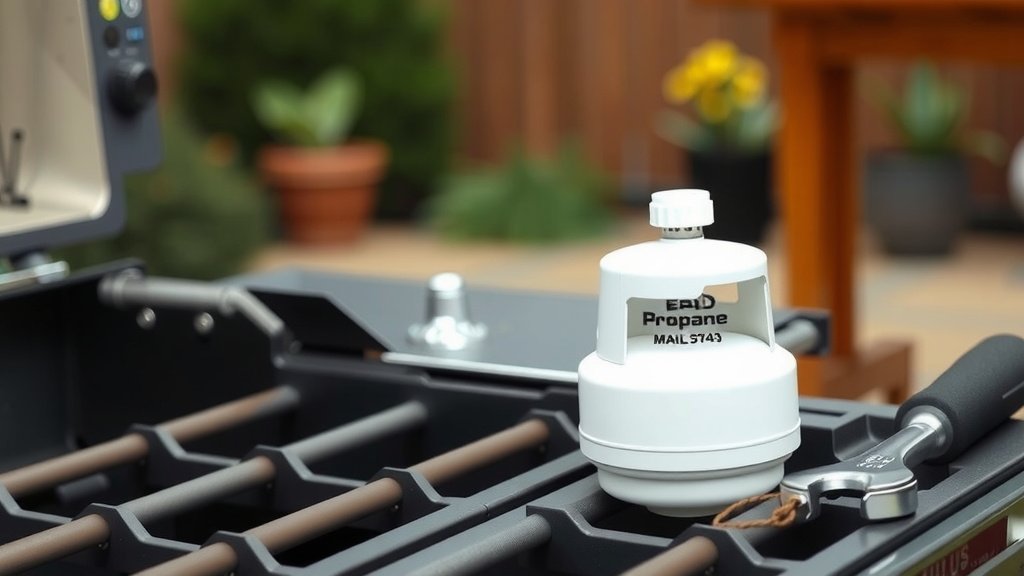
Converting a natural gas grill to propane typically involves replacing the gas orifices, regulator, and hose with a compatible liquid propane (LP) conversion kit. This process ensures the grill functions safely and efficiently with the different fuel type.
You need to replace tiny metal pieces called orifices, which control gas flow, and switch the low-pressure natural gas regulator for a high-pressure propane one. Always confirm your grill model is convertible before starting any work.
- First, confirm your grill is truly convertible by checking its manual or the manufacturer’s website.
- Purchase an official, certified liquid propane (LP) conversion kit made specifically for your grill model.
- Carefully replace the smaller natural gas orifices in your burners with the larger propane orifices from the kit.
- Swap out the natural gas regulator and hose for the higher-pressure propane regulator and hose assembly.
- Always perform a leak test with soapy water on all new connections before lighting the grill.
Thinking about changing your grill’s fuel source? Perhaps you moved to a new home without a natural gas hookup, or you just prefer the flexibility of a portable propane tank. Converting a natural gas (NG) grill to use propane (LP) is certainly possible, but it is not a project to take lightly. It requires precision, the right parts, and a healthy respect for gas safety. We are here to walk you through what you need to know.
How Do You Convert A Natural Gas Grill To Propane?
You can convert a natural gas (NG) grill to use propane (LP) by swapping out specific parts like orifices and the gas regulator. This change adjusts the gas flow for the higher pressure of propane fuel.
Understanding the Fuel Differences
Natural gas and propane are both excellent fuels for grilling, but they are not the same. Propane is stored under higher pressure than natural gas. Also, propane burns hotter and more efficiently than natural gas. Because of these differences, your grill needs different components to handle each type of fuel safely.
Trying to run propane through natural gas components can be dangerous. The natural gas orifices are smaller, designed for lower pressure. Propane needs larger orifices to allow enough fuel flow. We found that using the wrong parts could lead to a small flame or, worse, a fire hazard (NFPA guidelines).
Is Your Grill Convertible?
Before you even think about tools, you must confirm your grill is designed for conversion. Not all grills are. Many manufacturers offer specific conversion kits for their models, but others do not support it at all. Check your grill’s owner’s manual carefully. This manual is your best friend here. It will tell you if a conversion is possible and what kit you need.
Many experts say that if your manual does not mention conversion or if no official kit exists, do not attempt it. It is simply not worth the risk.
What You’ll Need: The Conversion Kit and Tools
If your grill is convertible, you will need a specific liquid propane (LP) conversion kit. This kit typically includes:
- New burner orifices (for propane)
- A new LP gas regulator and hose assembly
- Possibly new valve stems or a conversion plate
Additionally, gather these tools: a screwdriver set, a wrench set, needle-nose pliers, pipe thread sealant (rated for gas), and a leak detection solution (soapy water in a spray bottle). These items will help you with the conversion process.
The Core of the Conversion: Replacing Orifices
The most important step is replacing the natural gas orifices with the propane ones. Orifices are tiny brass fittings located at the end of the gas lines, right where the gas enters the burner tubes. They control the amount of fuel delivered. Propane orifices have a slightly larger opening to accommodate the higher pressure and different burning characteristics.
Accessing the Burners
You will need to remove the cooking grates, flame tamers, and possibly the burners themselves to get to the orifices. Each burner usually has its own orifice. Be gentle when removing parts. You want to avoid damaging anything.
Swapping the Orifices
Use a wrench or screwdriver to carefully unscrew the old natural gas orifices. Then, screw in the new propane orifices from your conversion kit. Ensure they are snug but do not overtighten them. Overtightening can strip the threads. This step needs patience and a steady hand.
Replacing the Regulator and Hose
The regulator is another critical component. Natural gas regulators deliver gas at a much lower pressure than propane regulators. You must replace the existing natural gas regulator and hose with the propane regulator and hose assembly from your kit. This assembly connects to your propane tank. Always apply pipe thread sealant to the threaded connections before tightening them. This helps prevent leaks.
Step-by-Step Conversion Overview
Here’s a quick glance at the main steps involved in a typical conversion:
| Step | Description |
|---|---|
| 1. Safety First | Turn off the gas supply and disconnect the grill. |
| 2. Disassemble | Remove grates, flame tamers, and burners to access orifices. |
| 3. Replace Orifices | Swap natural gas orifices for propane orifices. |
| 4. Replace Regulator | Install the new propane regulator and hose assembly. |
| 5. Reassemble | Put all the grill components back together. |
| 6. Leak Test | Apply soapy water to all new connections and check for bubbles. |
| 7. Test Fire | Carefully light the grill, checking for proper flame. |
The All-Important Leak Test
After all connections are tightened and parts replaced, you absolutely must perform a leak test. Mix soapy water (about half soap, half water) in a spray bottle. Connect your propane tank, open the gas valve, and spray the solution generously over all new gas connections. If you see any bubbles forming, you have a leak. Tighten the connection, reapply sealant if necessary, and test again. Do not proceed until you have zero bubbles. Many safety organizations, like the NFPA, advise against skipping this step.
Important Considerations Before You Start
Converting a grill is not for everyone. If you are not comfortable working with gas lines or disassembling your grill, hiring a qualified professional is always a smart move. They have the experience and proper tools to ensure a safe conversion. Also, be aware that converting your grill might void its warranty. We found that most manufacturers specify this in their terms. Always weigh the potential savings against these factors.
Conversion Checklist for Your Grill
- Have you confirmed your grill model is convertible?
- Do you have the correct, manufacturer-approved conversion kit?
- Are all necessary tools on hand?
- Have you read and understood your grill’s manual for conversion?
- Is there adequate ventilation for working with gas components?
- Do you have leak detection solution ready?
Conclusion
Converting a natural gas grill to propane is a practical project for many grill owners, but it demands careful attention to detail and safety. By replacing the specific orifices and the regulator with a compatible LP kit, you can successfully switch your grill’s fuel source. Remember to prioritize safety, always perform a leak test, and do not hesitate to seek professional help if you are unsure. Enjoy your newly converted grill and many delicious meals to come!
Can I convert any natural gas grill to propane?
No, not every natural gas grill can be converted to propane. It largely depends on the specific grill model and whether the manufacturer offers an approved conversion kit. Always check your owner’s manual first.
What happens if I try to use propane without converting the grill?
Attempting to use propane on a grill designed for natural gas without conversion can be extremely dangerous. The smaller natural gas orifices will restrict propane flow, leading to a very small, inefficient flame or, worse, a fire hazard due to improper pressure and combustion.
Will converting my grill void its warranty?
In most cases, yes, converting your grill from natural gas to propane will likely void its manufacturer’s warranty. Many grill companies specify that any unauthorized modifications, including fuel conversions, will nullify the warranty. Always review your warranty terms before proceeding.
Do I need special tools for the conversion?
You will need some basic tools such as a screwdriver set, a wrench set, and needle-nose pliers. Additionally, you will need pipe thread sealant (gas-rated) and a leak detection solution (soapy water) for safety testing.
Is it better to buy a new propane grill than to convert an old one?
Whether it is better to buy a new grill or convert an old one depends on several factors: the age and condition of your current grill, the cost of a conversion kit, and your comfort level with DIY projects. If your grill is old or damaged, a new propane-specific model might be a safer and more reliable choice in the long run.
