
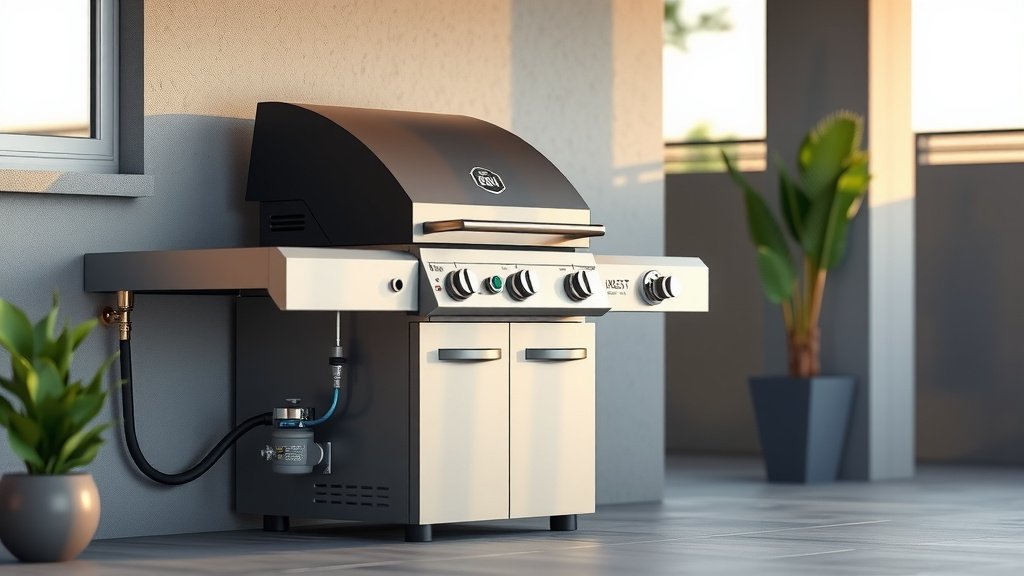
To connect a grill to a natural gas line, you typically need a natural gas conversion kit if your grill is currently propane, a natural gas hose, quick-connect fitting, pipe thread sealant, and basic tools. Always turn off the main gas supply first, ensure your grill is compatible, and then carefully follow the manufacturer’s instructions for a secure connection.
You’ll connect your grill by first shutting off the gas, installing a quick-connect fitting to your home’s natural gas stub-out, and then attaching a natural gas hose from the quick-connect to your grill’s natural gas inlet, making sure to test for any leaks with a soapy water solution.
- Connecting your grill to a natural gas line offers constant fuel, eliminating propane tank refills.
- Prioritize safety by turning off gas, using the correct parts, and checking for leaks multiple times.
- Many grills require a natural gas conversion kit if they started as propane models.
- You’ll need specific tools like wrenches, pipe thread sealant, and a soapy water solution for leak detection.
- Consider local codes and professional help, especially if you’re not comfortable with gas line work.
How To Connect A Grill To Natural Gas Line?
Connecting a grill to a natural gas line involves careful steps to ensure safety and proper function. The primary process involves securing the right fittings, attaching a natural gas hose, and diligently checking for leaks.
Understanding the Appeal of Natural Gas Grilling
Why do so many grill masters prefer natural gas? We found that the biggest draw is the uninterrupted fuel supply. No more last-minute runs for propane tanks mid-cookout. Imagine never running out of fuel during a big party!
No More Tank Runs!
Think about it: natural gas means you have an endless supply right from your home. This convenience alone makes the connection worthwhile for many. It’s like having an invisible, always-full fuel tank for your grill.
Is Your Grill Ready for Natural Gas?
Before you even think about tools, you need to know if your current grill can run on natural gas. Not all grills are created equal! Many are designed for liquid propane (LP) initially.
LP to NG Conversion Basics
If your grill started as an LP model, it likely needs a natural gas conversion kit. These kits adjust the grill’s orifices and regulators for the lower pressure of natural gas. Many experts say attempting this without the proper kit is unsafe and won’t work correctly.
Checking Your Grill’s Compatibility
Always check your grill’s manual or manufacturer’s website. Some grills are “natural gas ready” or come with a conversion option. Others are strictly LP and cannot be safely converted. Knowing your grill’s type is step one.
Essential Safety Measures First
Working with gas lines demands extreme caution. Your safety, and the safety of your home, is paramount. Never skip these critical steps.
Turning Off the Gas Supply
Before touching any part of your gas line, locate your home’s main gas shut-off valve and turn it OFF. We found this is the most critical safety step. Verify it’s off before proceeding.
Gathering Your Supplies
Having the right tools and parts makes the job smoother and safer. Don’t start without everything you need laid out and ready to go.
- Adjustable wrenches or pipe wrenches
- Pipe thread sealant (rated for gas)
- Natural gas grill hose (typically 10-20 feet)
- Quick-connect fitting (match your hose size)
- Soapy water solution (for leak detection)
- Safety goggles and gloves
- Your grill’s natural gas conversion kit (if needed)
Step-by-Step Connection Guide
Here’s a practical sequence to connect your grill. Take your time, and don’t rush any part of the process.
Preparing the Gas Line Stub-Out
Your home should have a dedicated natural gas stub-out line for outdoor appliances. This often has a shut-off valve already. Apply pipe thread sealant to the threads of this stub-out before adding fittings.
Attaching the Quick-Connect Fitting
Screw the quick-connect fitting onto the prepared gas stub-out. Tighten it securely with your wrench, but avoid over-tightening. This fitting allows for easy connection and disconnection of your grill.
Connecting the Grill’s Hose
Now, attach the natural gas hose to the quick-connect fitting. Many hoses simply push and click into place. Then, connect the other end of the hose to your grill’s natural gas inlet. Again, use thread sealant if your grill’s inlet requires it.
Table: Natural Gas vs. Propane Grills
Understanding the differences helps appreciate your natural gas setup.
| Feature | Natural Gas Grill | Propane Grill |
|---|---|---|
| Fuel Source | Direct home line | Portable tanks |
| Convenience | Unlimited supply, no refills | Tank refills, can run out |
| Mobility | Limited by hose length | Highly portable |
| Initial Cost | Often higher (installation) | Lower (no line work) |
| Fuel Cost | Generally lower per BTU | Varies by tank price |
Testing for Leaks (Again!)
This step is non-negotiable and you can’t be too careful. After all connections are made and tightened, slowly turn your home’s main gas supply back ON. Then, open the shut-off valve at the stub-out.
Using Soapy Water for Leak Detection
Spray or brush your soapy water solution onto all connections. Look for bubbles forming. Bubbles mean a leak! If you see bubbles, immediately turn off the gas, tighten the connection, and re-test. No bubbles means no leaks, which is exactly what you want.
When to Call a Pro
While connecting a grill can be a DIY project for many, sometimes it’s smarter and safer to call a licensed professional. Many experts say that if you have any doubts, don’t hesitate to seek help.
Recognizing When Professional Help is Best
If you don’t have an existing gas stub-out, or if you’re not comfortable working with gas lines, a pro can install everything safely. They understand local codes and possess the right tools for complex jobs. Your peace of mind is worth it.
Understanding Local Regulations
Building codes vary by location. Some areas might require specific permits or professional installation for gas line work. Research often shows checking with your local building department can prevent future issues (e.g., local city guidelines).
Maintenance Tips for Your Natural Gas Grill
Once connected, a little regular care keeps your natural gas grill running beautifully and safely for years.
Keeping Your Connection Secure
Periodically check the hose and quick-connect for any signs of wear or damage. Make sure the connections remain tight. A quick check before each grilling season is a great habit.
Regular Inspections
We found that inspecting your gas line and connections for leaks a couple of times a year is a smart practice. It’s a small effort that helps ensure continued safety and efficient operation of your grill.
Conclusion
Connecting your grill to a natural gas line can truly transform your outdoor cooking experience, offering unmatched convenience and a constant fuel supply. By taking the right safety precautions, gathering the proper tools, and following each step carefully, you can enjoy endless grilling. Always remember to prioritize safety, test for leaks thoroughly, and know when to enlist the help of a professional. Happy grilling!
How far can my natural gas grill be from the house?
The distance often depends on the length of your natural gas hose. Standard hoses range from 10 to 20 feet. Always ensure the hose is long enough to safely position your grill away from combustible surfaces and never fully extended, to avoid strain on the connections.
Do I need a special grill for natural gas?
Yes, you need a grill specifically designed for natural gas, or a liquid propane grill that has been properly converted using a manufacturer-approved natural gas conversion kit. LP grills and NG grills operate at different pressures, so conversion is crucial for safety and performance.
What kind of sealant should I use for gas connections?
You must use a pipe thread sealant specifically rated for natural gas applications. Look for sealants clearly marked for “gas,” “natural gas,” or “LP gas” use. Do not use standard plumber’s tape or sealants not designed for gas, as they may not provide a safe seal.
Can I use my propane hose with a natural gas line?
No, you should never use a propane hose with a natural gas line. Propane and natural gas systems operate at different pressures and require different hose and fitting specifications. Using an incorrect hose can be extremely dangerous and lead to leaks or other hazards.
How often should I check for gas leaks?
You should check for gas leaks immediately after making any new connections and before the first use. After that, it’s a good practice to perform a leak check at the beginning of each grilling season or if you ever disconnect and reconnect your grill. Regular visual inspections of the hose and connections are also recommended.
