
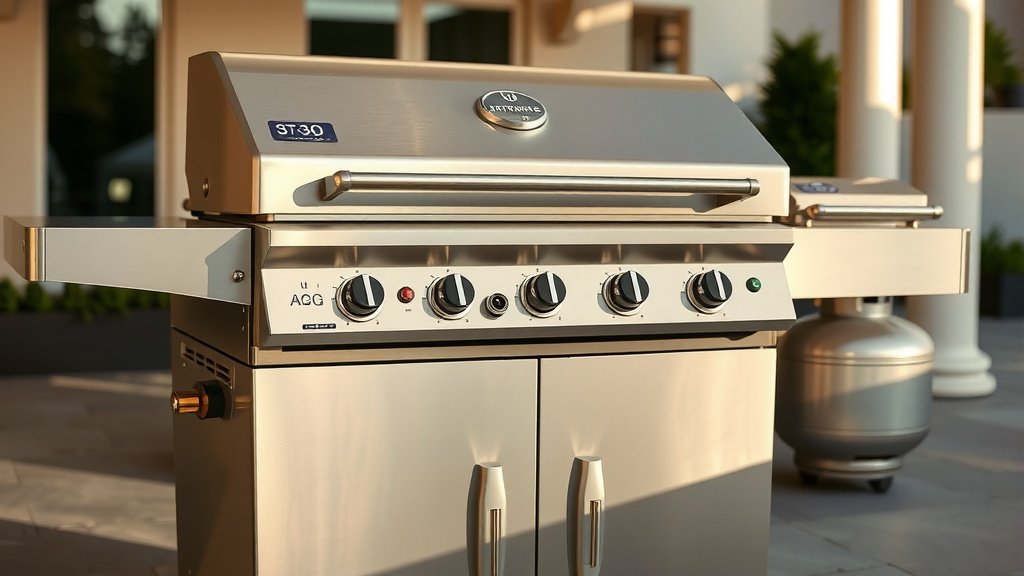
You can convert a natural gas grill to propane, but it often requires specific parts and professional expertise for safety and proper function.
To safely convert a natural gas grill to propane, you usually need to replace the gas regulator and burner orifices, which are calibrated for different gas pressures.
- Converting your natural gas grill to propane is possible, but it is not a simple DIY task for every grill.
- You’ll likely need a conversion kit specific to your grill model, including new orifices and a propane regulator.
- Safety is paramount, as incorrect conversion can cause gas leaks or improper flame operation.
- Many experts recommend hiring a certified technician for the conversion to ensure everything is installed correctly.
- Always check your grill’s manual first; some manufacturers prohibit or advise against conversion.
How To Convert Natural Gas Grill To Propane?
Converting your natural gas grill to propane involves replacing several key components to match the different gas pressures and ensure safe operation. You will primarily need to swap out the gas orifices and the regulator calibrated for propane.
Why Consider Converting Your Grill?
Perhaps you’re moving to a new home without a natural gas hookup, or maybe you just want more flexibility. We found that the desire for mobility is a common reason grill owners consider this change. Your grilling habits often shape these decisions.
The Mobility Factor
Imagine being able to move your grill to any spot in your backyard, or even take it camping. Propane offers that freedom. Natural gas grills are fixed to their gas lines, limiting where you can cook.
Natural Gas Line Limitations
If your natural gas line isn’t conveniently located, cooking becomes a chore. Converting to propane means you’re no longer tied to a specific spot. This can really open up your outdoor living space.
Is Every Grill Convertible?
This is a big question, and the answer isn’t a simple yes. We found that not all natural gas grills can be safely converted to propane. Many manufacturers make specific models for each fuel type.
Check Your Grill’s Manual First
Before you even think about buying parts, grab your grill’s user manual. It’s your best friend here. The manual will tell you if a conversion is even possible for your specific model and what parts you need (Many manufacturers, like Weber, offer specific guidance).
Safety First, Always
Messing with gas lines carries risks. An improper conversion can lead to leaks, fires, or even explosions. Your safety and the safety of your loved ones are non-negotiable. Always prioritize safety over a quick fix.
Understanding the Key Differences: NG vs. LP
Natural gas (NG) and liquid propane (LP) are both great fuels, but they are not the same. They have different energy contents and require different pressures. This is the core reason why conversions aren’t simple.
Pressure and Orifice Size
Natural gas operates at much lower pressure than propane. Because of this, natural gas grills use larger orifices to allow enough gas flow. Propane, being higher pressure, needs smaller orifices for controlled burning (National Fire Protection Association).
Essential Components for Conversion
If your grill is convertible, you will need a few specific parts. These are usually found in a manufacturer-approved conversion kit for your specific grill model.
- Propane Regulator: This crucial part reduces the high pressure from the propane tank to the safe operating pressure for your grill.
- Propane Orifices: These small brass fittings regulate the amount of gas entering each burner, matched to propane’s higher pressure.
- Propane Hose Assembly: This connects your propane tank to the grill’s gas manifold.
- Gas Valve Adjustments: Some grills might also require adjustments to the control valves.
The Conversion Process: A Step-by-Step Overview
Alright, if you’ve confirmed your grill is convertible and have your kit, here’s a general idea of the steps. Remember, this is a simplified guide and not a substitute for your manual or professional advice.
Gather Your Tools and Kit
You’ll typically need wrenches, screwdrivers, and a gas leak detection solution. Make sure your conversion kit is complete and correct for your grill model. Do you have everything laid out?
Disconnect the Gas Supply
Before touching anything, turn off the natural gas supply to your grill. This is the most important safety step. Double-check that the line is completely shut off.
Replace the Orifices
Access your grill’s burners. Carefully remove the natural gas orifices, usually located at the end of the burner tubes where they connect to the manifold. Then, install the smaller propane orifices from your kit. Be gentle, as these are delicate parts.
Install the New Regulator and Hose
Remove the natural gas regulator and hose. Attach the new propane regulator and hose assembly to the grill’s manifold. Ensure all connections are tight and secure. You don’t want any wobbles here.
Check for Leaks Thoroughly
This step is absolutely critical. Connect your propane tank (if not already), open the gas valve, and apply a soapy water solution to all new connections. If you see bubbles, you have a leak. Tighten connections until no bubbles appear. Don’t skip this!
When to Call a Professional
If you’re unsure at any point, or if your grill manufacturer recommends it, please call a professional. Many experts say that for gas appliances, a certified technician provides peace of mind.
Complex Grill Models
Some grills have very complex gas systems that are not designed for DIY conversion. If your manual advises against it or seems too technical, a pro is a wise choice. They deal with these systems daily.
Peace of Mind and Safety
Knowing your grill has been converted safely and correctly by an expert is truly comforting. They have the right tools, knowledge, and experience to ensure your grill operates flawlessly and safely. Isn’t that worth it?
Conversion Kit vs. DIY Parts
You might think about sourcing individual parts, but a manufacturer-specific kit is usually the best way to go. We found that kits ensure all components are designed to work together safely and efficiently.
| Feature | Conversion Kit | DIY Sourced Parts |
|---|---|---|
| Compatibility | Guaranteed for specific grill model | Requires careful matching, risks error |
| Safety | Engineered for safe conversion | Potentially higher risk if parts are mismatched |
| Completeness | Includes all necessary components | Might miss crucial small parts |
| Manufacturer Support | Retains warranty, access to instructions | May void warranty, less support |
Important Safety Checklist Before Lighting Up
Once you’ve finished the conversion, take a moment to run through this checklist. It helps ensure everything is ready for your first propane grilling experience. Are you ready for some delicious food?
- Confirm all natural gas lines are completely shut off.
- Double-check all new propane connections are tight.
- Perform a thorough leak test on all connections.
- Ensure the correct propane regulator is installed.
- Verify all original natural gas orifices have been replaced.
- Read your grill’s manual one last time for any specific instructions.
Conclusion
Converting a natural gas grill to propane can give you greater flexibility and freedom, but it’s a project that demands careful attention to detail and unwavering commitment to safety. Always start by consulting your grill’s manual to ensure conversion is even an option for your model. While a DIY approach might seem appealing, remember that incorrect gas work carries significant risks. When in doubt, or if you feel any hesitation, reaching out to a certified professional for help is a very smart decision. Your grilling adventures should always be safe and enjoyable.
How do I know if my grill is natural gas or propane?
You can usually tell by checking the grill’s label or the gas hose. Natural gas grills typically have a long, flexible hose that connects directly to a home’s gas line. Propane grills connect to a refillable tank, usually located inside the grill cabinet.
Will converting my grill void its warranty?
Often, yes. Many grill manufacturers state that any modifications, including fuel type conversions, can void your product warranty. Always check your grill’s specific warranty information before proceeding with any conversion.
Can I use natural gas orifices with a propane tank?
Absolutely not. Natural gas orifices are much larger than propane orifices because natural gas operates at a lower pressure. Using natural gas orifices with a propane tank would release too much gas, leading to dangerously high flames and potential safety hazards.
Where can I buy a conversion kit for my grill?
Conversion kits should ideally be purchased directly from your grill’s manufacturer or an authorized dealer. This ensures you receive the correct, compatible parts designed specifically for your grill model, which is essential for safety and proper function.
What is the approximate cost of converting a grill?
The cost varies greatly depending on your grill model and whether you do it yourself or hire a professional. A manufacturer’s conversion kit might cost anywhere from $50 to $200. Hiring a certified technician can add another $100 to $300 or more for labor.
