
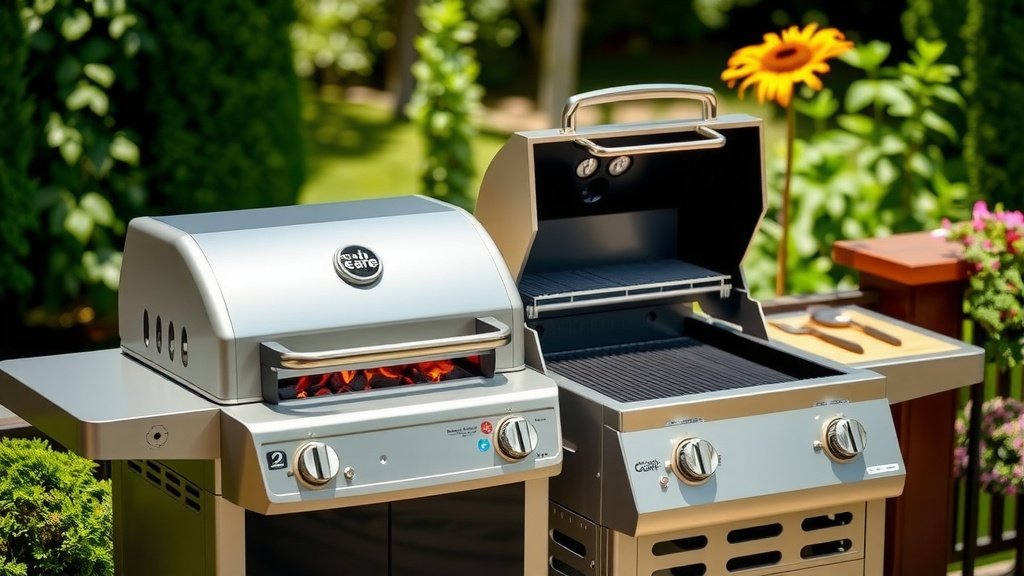
You absolutely should not put charcoal directly into a typical gas grill, as it is not designed to safely handle charcoal combustion and can cause serious damage and safety risks.
Using charcoal in a gas grill can lead to uncontrolled fires, damaged components, and potentially hazardous situations with gas lines.
- Never place charcoal into a standard gas grill.
- Gas grills lack the proper ventilation and charcoal grates for safe use.
- Mixing gas and charcoal creates dangerous flare-ups and can damage your grill’s interior.
- If you desire that charcoal flavor, consider a separate charcoal grill or a hybrid model.
- Safety is always first; stick to the fuel your grill was designed for.
Do You Put Charcoal In A Gas Grill?
The straightforward answer is a firm no. Adding charcoal to a gas grill creates an unsafe environment and can cause irreparable harm to your appliance.
Gas grills operate differently and are built for a clean-burning fuel source.
Why It’s a Bad Idea: The Core Risks
Imagine trying to fuel a car with aviation fuel when it’s designed for regular unleaded. It just won’t work, and you’ll likely cause serious problems. The same principle applies here.
Your gas grill is precision-engineered for propane or natural gas.
Fire Hazard and Flare-Ups
One of the biggest concerns is the immediate fire risk. Charcoal burns much hotter and produces ash.
When combined with the gas burners, you create an unpredictable and dangerously hot environment, leading to massive flare-ups.
We found that many fire safety experts highlight the risk of uncontrolled flames (National Fire Protection Association).
Damage to Your Grill Components
Gas grills feature delicate components like flavorizer bars, heat tents, and burners made for indirect heat protection. Charcoal, however, directly exposes these parts to extreme, concentrated heat.
This intense heat will warp your grates, crack ceramic, and even melt internal components, shortening your grill’s life significantly.
Replacing these parts can be expensive, if even possible after charcoal damage.
Poor Airflow and Ash Management
Charcoal needs proper airflow to burn efficiently and a system to collect ash. Gas grills simply don’t have this.
The lack of proper ventilation means charcoal won’t burn cleanly, producing excessive smoke and carbon monoxide.
Without an ash tray, ash will build up, clogging burners and creating a fire hazard at the bottom of your grill.
Understanding How Gas Grills Work
To truly understand why charcoal is a bad fit, let’s briefly look under the hood of your gas grill. It’s a marvel of engineering for convenience.
They are designed for quick heat-up and precise temperature control.
Designed for Gas, Not Coals
Gas grills have gas lines, valves, and igniters. These parts are not sealed to prevent charcoal dust or grease from entering, which can cause blockages or even explosions.
The construction prioritizes gas flow and even heat distribution across the grates.
The Role of Flavorizer Bars
Those metal plates sitting above your burners? They’re called flavorizer bars or heat tents. Their job is to protect the burners from dripping food and vaporize juices for flavor.
Charcoal will quickly destroy these bars, turning them into a warped, unusable mess.
This also exposes the burners directly to intense, uneven heat from the coals.
The Real Draw: What Charcoal Offers
It’s completely understandable why you might consider charcoal. There’s a certain allure to that smoky, char-grilled taste.
Many grill masters praise charcoal for its distinct qualities.
The Unique Smoky Flavor
Charcoal, especially when combined with wood chunks, imparts an unmistakable smoky flavor that many foodies adore. It’s a taste that brings back memories of backyard barbecues.
This specific flavor profile is tough to replicate with gas alone.
Achieving High Heat
Charcoal can reach extremely high temperatures, perfect for searing steaks and creating that beautiful crust. This intense, direct heat is a hallmark of charcoal cooking.
It’s a different kind of heat than the convection found in most gas grills.
Can You Get Charcoal Flavor on a Gas Grill?
So, if you can’t put charcoal in, are you doomed to miss out on that smoky essence? Absolutely not! There are smart ways to infuse that flavor.
You can achieve fantastic results with a little know-how.
Smoke Boxes and Wood Chips
This is your best bet for adding authentic smoke flavor. A stainless steel smoke box filled with wood chips (hickory, apple, mesquite) can be placed directly on your gas grill grates.
The wood chips smolder, producing lovely smoke that flavors your food.
Remember to soak your wood chips first for a longer, more consistent smoke (Grilling Enthusiasts’ Forums).
Using a Smoker Tube
Similar to a smoke box, a smoker tube is a perforated cylinder often filled with wood pellets. You light the pellets, and they slowly smolder for hours.
This method provides a consistent, low-and-slow smoke perfect for larger cuts of meat.
Hybrid Grills: The Best of Both Worlds?
For those who truly want the flexibility, a hybrid grill might be your answer. These grills are purpose-built to use both gas and charcoal.
They usually have separate compartments or adaptable burner designs.
Many experts say hybrid models offer convenience without compromising safety (Outdoor Cooking Magazine).
What About Infrared Grills and Charcoal?
Infrared grills use radiant heat for intense searing. While they can get very hot, they are still gas grills at their core.
You should not put charcoal into an infrared gas grill either. The same safety and damage risks apply.
Safety First: Always Read Your Manual
Your grill’s manufacturer created specific guidelines for safe operation. Always consult your owner’s manual before trying unconventional methods.
These manuals are a treasure trove of vital safety information (Grill Manufacturer’s Safety Guidelines).
Checklist: Getting Smoke Flavor Safely
- Use a dedicated smoke box or smoker tube.
- Opt for wood chips or pellets, not charcoal.
- Place your smoke box/tube directly on the grates or under them if designed for it.
- Ensure adequate ventilation in your grill.
- Always keep a fire extinguisher nearby, just in case.
- Never leave a lit grill unattended.
Comparison: Adding Smoke to Gas Grills
| Method | Pros | Cons | Best For |
|---|---|---|---|
| Smoke Box (Wood Chips) | Easy to use, authentic flavor, affordable. | Requires soaking chips, needs refilling for long cooks. | Shorter cooks, smaller cuts, adding flavor boost. |
| Smoker Tube (Wood Pellets) | Longer smoke time, consistent, good for low & slow. | Can be trickier to light, takes up grate space. | Longer smoking sessions, larger briskets, pork shoulders. |
| Smoker Pouch (Foil) | DIY, inexpensive, quick setup. | Can burn quickly, less consistent smoke, messy. | Beginners, very short cooks, quick flavor bursts. |
Conclusion
While the allure of combining charcoal flavor with gas grill convenience is strong, it’s a practice you must avoid. The safety hazards and potential for severe grill damage are simply too high.
Your gas grill is designed for one fuel type, and sticking to that design ensures a safe and enjoyable grilling experience.
Luckily, with accessories like smoke boxes and smoker tubes, you can easily infuse that beloved smoky taste into your gas-grilled masterpieces. Grill safely and deliciously!
FAQ: Can I use lava rocks instead of charcoal in a gas grill?
Yes, lava rocks were commonly used in older gas grills to help distribute heat and vaporize drippings. However, most modern gas grills use flavorizer bars or ceramic briquettes for this purpose. If your grill is designed for lava rocks, it’s generally safe, but never as a charcoal substitute.
FAQ: What happens if I accidentally drop a charcoal briquette into my gas grill?
If a single briquette falls in, and your gas burners are off, it’s likely not an immediate catastrophe. However, if the briquette ignites or is exposed to active burners, it could lead to intense flare-ups and potential damage. Always turn off the gas, allow the grill to cool, and carefully remove the charcoal.
FAQ: How can I add smoky flavor to food cooked on a gas grill without charcoal?
The best way is to use a smoke box or smoker tube filled with wood chips or pellets. Place these directly on your grill grates, above an active burner, to produce smoke that will infuse your food with delicious, natural flavor.
FAQ: Are there any gas grills specifically designed to use charcoal?
Yes, these are commonly known as “hybrid grills.” They are specifically engineered to safely accommodate both gas burners and a dedicated area for charcoal. These models offer the flexibility to switch between or combine fuel sources.
FAQ: Is it safe to use charcoal lighter fluid in a gas grill?
Absolutely not. Never use charcoal lighter fluid in or near a gas grill. Lighter fluid is highly flammable and its fumes can ignite violently when exposed to open flames or ignition sources in a gas grill, leading to severe burns and explosions.
