
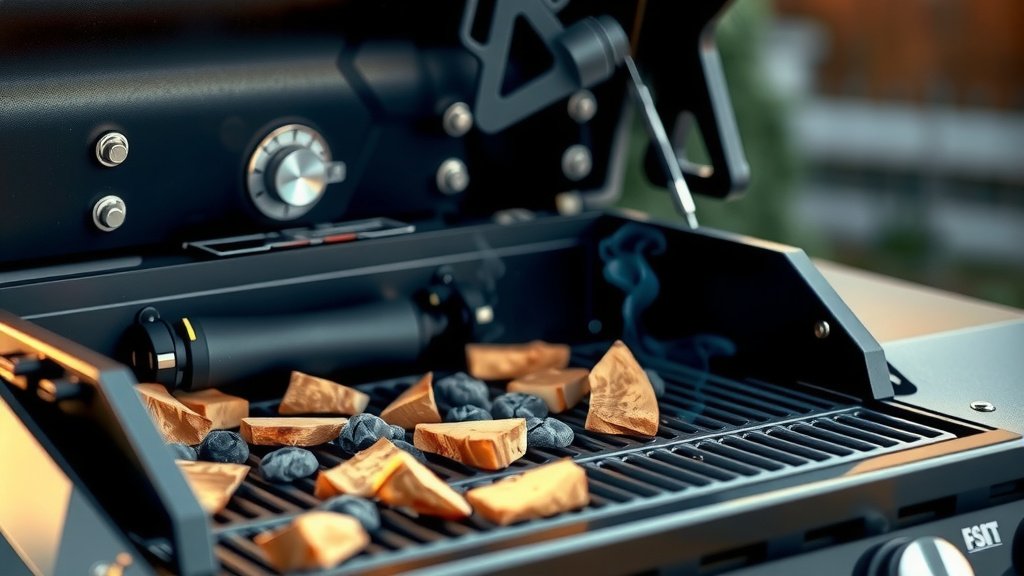
You can certainly infuse a delicious smoky, almost charcoal-like essence into your food on a gas grill by using wood chips or chunks. The trick involves creating smoke in a controlled way, allowing those flavorful compounds to permeate your ingredients.
Transforming your gas grill into a flavor powerhouse is simpler than you might imagine, often relying on specific techniques and readily available smoking accessories.
TL;DR: Want that authentic charcoal taste from your gas grill? Here’s a quick guide:
- Infuse wood smoke by soaking wood chips and using a smoker box.
- Consider adding a small cast iron pan with wood chips directly.
- Create flavorful drippings to enhance savory aromas.
- Opt for specific types of wood to match your food.
- Proper grill setup and temperature control are key for success.
How To Get Charcoal Flavor From Gas Grill?
Achieving a rich, smoky taste on your gas grill means introducing smoke. This method recreates some of the magic of a traditional charcoal fire. You are basically adding flavorful smoke to your cooking process.
The Power of Wood Chips and Chunks
The easiest way to get that deep, smoky flavor is through wood. Wood chips are small pieces, while chunks are larger. Both release aromatic smoke when heated, which then cooks into your food. This is like adding a flavor layer to your meal.
Choosing Your Wood Type
Different woods provide distinct flavors, much like various spices. For instance, hickory offers a strong, bacon-like taste, while applewood is sweeter and milder (Purdue Extension). Cherry wood brings a fruity, subtle note. You want to match the wood to your food for the best results. We often find that light woods pair well with chicken, and heavier woods are great for beef.
| Wood Type | Flavor Profile | Best Paired With |
|---|---|---|
| Hickory | Strong, savory, bacon-like | Beef, pork, game meats |
| Apple | Sweet, mild, fruity | Pork, chicken, fish |
| Cherry | Mild, sweet, slightly tart | Poultry, pork, vegetables |
| Oak | Medium, earthy, versatile | Beef, lamb, fish |
| Mesquite | Very strong, pungent | Beef, ribs, briskets (use sparingly) |
Using a Smoker Box for Gas Grills
A smoker box is a small, usually metal, container designed for your gas grill. You fill it with wood chips, then place it directly on the grates or under them. It protects the chips from direct flame, allowing them to smolder and produce smoke. Many experts say this is a **game-changer for gas grilling**.
Setting Up Your Smoker Box
First, soak your wood chips in water for about 30 minutes. This helps them smolder rather than burn quickly. Then, load them into your smoker box. Place the box on the grill grates directly over one of your lit burners. Keep that burner on medium to high heat. You should see smoke in about 10-15 minutes. Once it starts smoking, you can adjust the heat. Remember, a steady stream of thin, blue smoke is what you’re after, not thick white smoke.
Creating Flavor with Foil Packets
No smoker box? No problem! You can easily create a foil packet. Just grab some heavy-duty aluminum foil. Place soaked wood chips in the center. Fold the foil into a tight packet and poke a few holes in the top. This allows the smoke to escape. Position it over a lit burner, just like a smoker box. It is a **cost-effective solution** we often suggest.
Direct Wood Placement (Carefully!)
For a more intense flavor, some grillers place wood chunks directly on the grates. This is best done with larger, unsoaked chunks. They will burn and smoke more directly. Always be mindful of flare-ups with this method. Research shows that direct placement gives a **stronger initial smoke hit** (Cook’s Illustrated).
Leveraging Cast Iron for Smoke
A cast iron pan or skillet can double as a smoker box. Fill it with wood chips, soaked or dry. Place it on your grill grates over a burner. The cast iron retains heat very well, creating consistent smoke. It is a **robust alternative** if you don’t have a dedicated smoker box.
The Magic of Drippings and Marinades
Flavor isn’t just about smoke. Think about what’s dripping off your food. Marinades can add layers of taste. When fat and juices drip onto hot grates, they vaporize. This vapor rises back, coating your food with deliciousness. This process is called **”flavor circulation”** by some chefs.
Enhancing Natural Juices
Many experts suggest using marinades with sugars or robust spices. These can caramelize and vaporize more intensely. Consider adding a small drip pan with liquids like beer or apple juice under your grates. The evaporating liquid adds moisture and flavor to the cooking environment. This also helps **keep your food moist**.
Controlling Your Grill Temperature
Temperature control is absolutely vital. You want your wood to smolder, not ignite into flame. Keep the burner directly under your smoke source at a medium setting. The other burners can be adjusted for your desired cooking temperature. Lower temperatures usually allow for more smoke absorption. We found that cooking “low and slow” really lets that smoke sink in.
Optimizing Airflow and Lid Use
For proper smoke circulation, keep your grill lid closed. This traps the smoke, allowing it to infuse into your food. However, you don’t want to completely cut off airflow. Just like a charcoal grill, a little oxygen helps the wood smolder. Opening the lid occasionally to check food is fine, but avoid leaving it open too long. Think of it as **preserving the flavor cloud** around your meal.
A Quick Checklist for Flavor Success:
- Choose the right wood chips for your meal.
- Soak wood chips for 30 minutes before use.
- Use a smoker box or foil packet effectively.
- Place your smoke source directly over a lit burner.
- Keep your grill lid closed as much as possible.
- Monitor temperature for consistent smoke, not flame.
Don’t Forget About Searing!
Charcoal grilling often creates beautiful sear marks and crust. You can replicate this on a gas grill. After you’ve imparted smoke flavor, crank up a burner for high-heat searing. This creates the Maillard reaction, developing a flavorful crust. It adds another layer to that **”charcoal-grilled” illusion**.
Conclusion
Getting that sought-after charcoal flavor from your gas grill is totally achievable. It’s all about creatively introducing smoke and managing your grill’s environment. By using wood chips, smoker boxes, and smart temperature control, you can elevate your gas grilling to new, smoky heights. Experiment with different wood types, and you’ll soon find your own signature smoky style. Happy grilling!
Are wood chips or wood chunks better for gas grills?
Wood chips generally start smoking faster due to their smaller size, making them ideal for shorter cooks or quick bursts of flavor. Wood chunks burn slower and produce smoke for a longer duration, which is better for extended grilling sessions, such as smoking larger cuts of meat.
Do I need to soak wood chips before putting them in a smoker box?
Soaking wood chips in water for about 30 minutes helps them smolder rather than burst into flame, producing a more consistent smoke. While not strictly mandatory, many grill masters find soaking them yields better, longer-lasting smoke production and less risk of flare-ups.
Can I use charcoal briquettes in my gas grill for flavor?
No, you should not use charcoal briquettes inside a gas grill. Gas grills are not designed to safely contain and vent charcoal smoke and ash. Doing so can be dangerous, potentially damaging your grill or creating a fire hazard. Stick to wood chips or chunks for smoke flavor.
How long does it take for wood chips to start smoking on a gas grill?
Typically, wood chips placed in a smoker box or foil packet over a lit burner will begin to smolder and produce visible smoke within 10 to 15 minutes. Ensure the burner beneath is set to medium to high heat to get the process started effectively.
Will adding a cast iron pan affect my grill’s performance?
Using a cast iron pan with wood chips will not negatively affect your grill’s performance. In fact, cast iron retains heat exceptionally well, which can help create a more stable and consistent smoke production. Just be sure to place it over a burner and monitor the temperature.
