How to Choose a Charcoal Grill with a Rotisserie
A charcoal grill with a rotisserie needs enough room for the food to turn, a motor rated for its load, and charcoal arranged for steady indirect heat. Check those details against the largest roast you plan to cook.
On this page (12 sections)
- What should you check on a charcoal grill with a rotisserie?
- How much spit clearance does a rotisserie roast need?
- How do you choose the rotisserie motor capacity?
- How should charcoal be arranged for rotisserie cooking?
- Which charcoal grill features help with a rotisserie setup?
- How do you check whether a rotisserie kit fits your grill?
- What charcoal grill style suits your cooking plans?
- How do you plan a rotisserie cook before lighting the grill?
- What mistakes should you avoid with a charcoal grill rotisserie?
- How do you choose the right charcoal grill with a rotisserie?
- Is a rotisserie kit universal?
- Can you use a rotisserie on a kettle grill?
A charcoal grill with a rotisserie needs room for the roast to complete a full turn, a motor rated for the load, and a charcoal layout that provides indirect heat. Check those three points against the largest food you expect to cook.
A rotisserie kit does not make every grill suitable. The spit must fit the grill, the food must clear the lid and fire, and the motor must turn the combined weight smoothly.
This guide explains what to measure and which setup details matter. For a broader look at charcoal grill sizes and styles, start with our Best Charcoal Grill guide.
What should you check on a charcoal grill with a rotisserie?
Check turning clearance, kit compatibility, motor capacity and charcoal placement before buying. Those details determine whether the roast can rotate safely and cook over steady indirect heat.
| Check | What to confirm |
|---|---|
| Turning clearance | The largest roast clears the lid, grate, fire and other parts during a full turn |
| Spit fit | The rotisserie kit fits the grill’s shape and mounting points |
| Motor capacity | The motor can turn the combined spit and food load |
| Charcoal layout | Coals can sit away from the food for indirect cooking |
| Drip management | There is room for a drip pan if the instructions call for one |
Measure the roast at its widest point, including any parts that stick out, such as wings or legs. Also check how far the spit sits above the grate, since the food’s position changes its clearance from the lid.
A grill’s cooking area does not tell you the usable rotisserie space. A broad grate can still have a low lid or a shape that interferes with the turning food.
How much spit clearance does a rotisserie roast need?
A roast needs enough clearance to make a complete rotation without touching the grill. Measure the food you plan to cook, then check the grill and kit instructions for the usable space around the spit.
The relevant measurement is the food’s full turning path, not just its height while stationary. A tall piece of meat may clear the lid at one angle but bump it as it turns.
Before buying, compare:
- The distance from the spit to the inside of the lid
- The gap between the food and the cooking grate
- The space between the food and the charcoal
- The length of the spit and the grill’s mounting points
- The room needed to attach the handle and motor
Include the spit forks and any protruding bones or appendages in your estimate. A roast that fits between the grill walls may still strike the lid or fire as it rotates.
If you already own a grill, verify the kit’s fit with that exact model. A universal label alone does not confirm that the brackets sit securely or that the spit lines up with the motor.
How do you choose the rotisserie motor capacity?
Choose a motor that supports the combined weight of the spit and the food, with capacity that covers your heaviest planned cook. Follow the motor maker’s instructions for loading, balancing and mounting the roast.
An under-capacity motor may struggle to turn an uneven load. Balance the food on the spit, secure it with the forks and keep the motor within its stated limit.
The total weight is more than the roast alone. Include the spit and any attachments that the motor turns, then compare that total with the motor’s capacity.
Also look at how the motor attaches to the grill. The bracket and motor position need to line up with the spit, and the cord should stay clear of heat and moving parts as directed by the instructions.
How should charcoal be arranged for rotisserie cooking?
Arrange charcoal to create indirect heat around the turning food, following the grill and rotisserie instructions. The roast should not sit directly over a concentrated bed of coals if the setup calls for side-fired heat.
For many kettle-style setups, coals can be divided between the sides while the food turns above the open center. A drip pan may fit below the roast to catch drippings, but use one only if the grill instructions allow it and the pan does not block needed airflow.
The correct layout depends on the grill’s shape, vents and cooking instructions. Keep the airflow path open, and avoid piling charcoal where it can touch the food or interfere with the spit.
Rotisserie cooking also needs room to tend the coals during a longer cook. Check whether the grill lets you add charcoal without removing the spit or disturbing the roast.
Which charcoal grill features help with a rotisserie setup?
A rotisserie setup benefits from a compatible lid and spit arrangement, adjustable airflow, and practical access to charcoal and ash. The grill still needs a kit designed to fit it.
A kettle’s rounded lid can provide room for some rotisserie arrangements, but the grill’s actual inside clearance and kit fit still matter. Air dampers help you manage airflow, while a hinged grate or accessible fuel area can make charcoal adjustments easier during cooking.
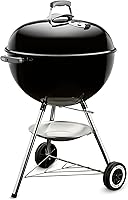
The Weber® Original Kettle Charcoal Grill has adjustable dampers, a porcelain-enameled lid and bowl, and a cooking grate sized for up to 13 burgers made with a Weber burger press. Compare Weber Kettle vs Master-Touch to weigh the two kettle options.
Confirm that a compatible rotisserie kit fits it and that your roast clears the lid before choosing it.
The Cuisinart Charcoal Grill has adjustable vents and a 196 sq in cooking surface in a portable tabletop design. Its compact size may limit roast and spit clearance, so check the full turning path and kit fit carefully.
The Weber® Original Kettle Premium Charcoal Grill includes a hinged cooking grate for adding charcoal while grilling, plus adjustable dampers and a built-in lid thermometer. Check the kit’s fit and the roast’s clearance before settling on this grill for rotisserie cooking.
A stainless steel build may be a priority if material is part of your buying decision. Compare options in our best stainless steel charcoal grill guide.
How do you check whether a rotisserie kit fits your grill?
Check the kit’s model compatibility, bracket placement, spit length and motor alignment. Confirm each point in the kit and grill instructions before assembling the setup.
A kit may use brackets that sit on the grill rim, attach to specific holes or require a dedicated frame. Those designs are not interchangeable with every grill, even when the spit appears long enough.
Use this checklist:
- Find your grill’s exact model name or number.
- Confirm that the rotisserie kit lists that model as compatible.
- Compare the spit length with the grill’s width and bracket position.
- Check the motor’s mounting direction and support.
- Confirm the lid can close, if the instructions require it to close during cooking.
- Review the kit’s maximum load and assembly directions.
If the kit does not identify your grill, ask the manufacturer to confirm compatibility. Do not assume that drilling or improvised supports will make a mismatched kit safe.
What charcoal grill style suits your cooking plans?
Choose a grill style based on how you cook most often and how much room the rotisserie needs. A dedicated rotisserie setup can influence the grill size and shape you should shop for.
A kettle can suit cooks who want a familiar charcoal layout and a lid over the food. A larger grill may offer more room for a long spit or larger roast, but verify the actual clearances rather than relying on the cooking surface figure.
If you want a second cooking surface for other meals, compare a charcoal grill and griddle combo. For the broader choice between fuels, our guide to whether charcoal or gas grill is better can help you weigh flavor, setup and heat control.
Some owners consider adding charcoal to a gas grill, but that depends on the grill’s design and instructions. Read can you use a gas grill with charcoal and can you use charcoal in a gas grill before trying to change a grill’s fuel.
How do you plan a rotisserie cook before lighting the grill?
Plan the roast, heat layout and access before lighting charcoal. This gives you a chance to check the balance, turning path and fuel access while the grill is cool.
First, assemble the spit and forks according to the kit instructions. Mount the food, balance it, and rotate it by hand through a full turn to check for contact with the lid, grate, fire area or other parts.
Then check where the charcoal and drip pan will go. Make sure the charcoal arrangement leaves room for the turning food and that you can add fuel as directed without reaching across hot surfaces.
Follow the grill and motor instructions for operation, including any guidance on outdoor placement and keeping cords away from heat. Keep the lid, vents and handles clear so you can make adjustments without interfering with the rotating spit.
What mistakes should you avoid with a charcoal grill rotisserie?
Avoid guessing about fit, motor load or clearance. Small mismatches can stop the roast from turning freely or make the cook harder to manage.
- Choosing by grate size alone: Check inside height and the full turning path.
- Ignoring the spit and attachments: Count their weight when checking motor capacity.
- Using an unverified kit: Confirm model compatibility and secure mounting.
- Placing coals under the roast by default: Follow the grill’s instructions for indirect heat.
- Overloading the spit: Keep the load within the motor’s stated capacity.
- Skipping a cool-fit check: Turn the loaded spit by hand before lighting the grill.
- Blocking airflow: Arrange charcoal and pans so the vents can work as intended.
If your plans involve both rotisserie meals and regular grilling, choose a grill that can handle each setup with the right accessories. A grill that suits one cooking style may not have the clearance or fuel access your other style needs.
How do you choose the right charcoal grill with a rotisserie?
Choose a charcoal grill with a rotisserie by matching its clearance, kit fit and motor capacity to your largest planned roast. Then confirm that you can arrange charcoal for indirect heat and reach it as needed during the cook.
Pick a compact grill only if its turning space and kit compatibility meet your needs. For a larger roast or a more flexible charcoal layout, compare grills by their internal shape and access to fuel, then verify the rotisserie kit with the grill maker.
Is a rotisserie kit universal?
A rotisserie kit is not guaranteed to fit every charcoal grill. Check the kit’s compatible models, bracket design, spit length and motor alignment against your grill before buying or assembling it.
Can you use a rotisserie on a kettle grill?
You can use a rotisserie on a kettle grill when a compatible kit fits and the roast clears the lid, grate and charcoal through a full turn. Confirm those measurements for the exact grill and kit, and follow their instructions for charcoal placement and operation.
For more charcoal grill options, compare charcoal grills with adjustable grate height.
Frequently asked questions
What should I check before buying a charcoal grill with a rotisserie?
Check that the spit and food can turn without touching the lid, grate or fire, and that the motor supports the combined weight of the spit and food. Confirm how the charcoal can sit around the food for indirect heat, and make sure the rotisserie kit fits that grill model.
How much clearance does a rotisserie need?
The food needs enough space to rotate through a full turn without hitting the lid, cooking grate, fire or other parts. Measure the widest roast you expect to cook and check the grill and kit instructions for usable clearance, since outside grill dimensions do not show the turning space.
Where should charcoal go when using a rotisserie?
For indirect rotisserie cooking, arrange the charcoal to the sides of the food or in the positions specified by the grill and rotisserie instructions. Keep the food out of direct contact with the coals, and use a drip pan if the setup calls for one.
Can I add a rotisserie to any charcoal grill?
No. The grill needs compatible mounting points or a rotisserie frame that fits its shape, plus enough room for the spit and food to turn.
Check the kit's model compatibility, motor capacity and instructions before buying; a lid that closes over the spit does not guarantee the roast has turning clearance.
Does a charcoal grill rotisserie need a special motor?
The motor must be rated for the total load it turns, including the spit and food, and must fit the kit's mounting setup. Compare that capacity with your heaviest planned roast, then follow the grill and motor instructions for assembly, balance and use.