
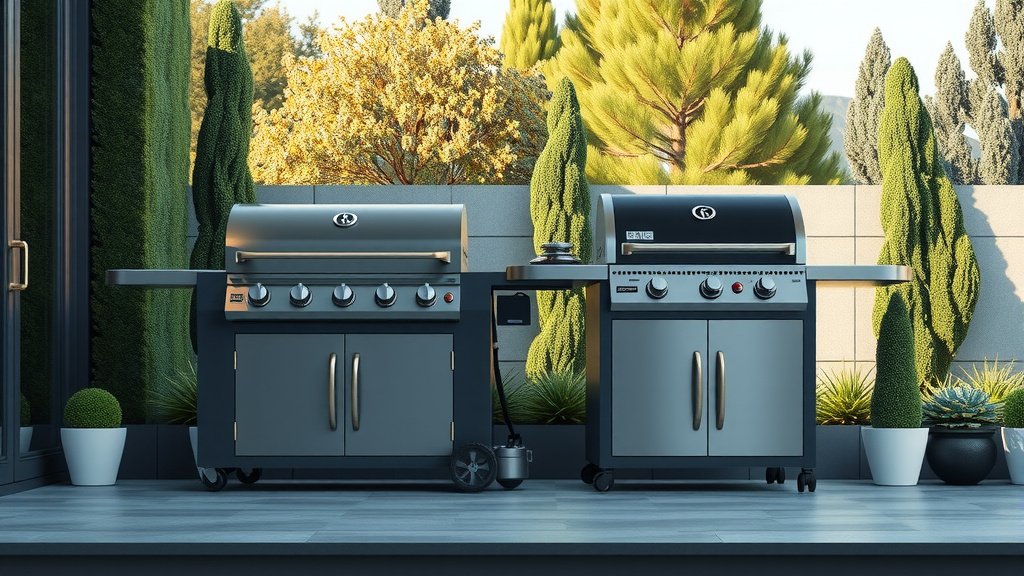
Neither charcoal nor gas grills are universally “better”; your ideal choice depends entirely on your cooking style, desired flavor, and convenience needs.
Charcoal grills offer a smoky flavor and high heat, while gas grills provide unmatched convenience and precise temperature control for most grillers.
TL;DR:
- Choose charcoal for authentic smoky flavor and a classic experience.
- Go with a gas grill for speed, convenience, and easy temperature management.
- Both have pros and cons regarding cost, cleanup, and versatility.
- Your best grill depends on your priorities and how you love to cook.
Is Charcoal Or Gas Grill Better?
Deciding between a charcoal or gas grill truly comes down to your personal grilling priorities. There isn’t one “better” option; it’s what fits your lifestyle and taste buds best.
The Allure of Charcoal Grills: Flavor and Experience
Many grill enthusiasts swear by charcoal. Why? It’s about that distinct, smoky flavor gas grills can’t quite replicate (Food Network Kitchen research found this to be a common sentiment).
Lighting a charcoal grill is a ritual. You add briquettes, light them, and wait for them to turn ash-gray. This preparation time is part of the experience for many.
Charcoal can reach incredibly high temperatures. This is fantastic for searing steaks and getting a beautiful crust. You can also create different heat zones for cooking various foods.
Charcoal Grill Pros: The Good Stuff
The primary advantage is the unmatched smoky flavor. You just can’t beat that classic BBQ taste. Charcoal also reaches very high searing temperatures, perfect for a crusty steak.
Often, the initial purchase price is lower, making many models budget-friendly. Plus, there’s the classic, hands-on grilling experience many people cherish.
Charcoal Grill Cons: What to Consider
Drawbacks include longer heat-up time; it’s not a quick start. Cleanup is more involved due to ash disposal, which can be messy.
Temperature control requires practice and isn’t as precise as gas. You’ll often need to make manual adjustments.
The Convenience of Gas Grills: Speed and Control
Gas grills are champions of convenience. You simply turn a knob, press a button, and you’re ready to cook in minutes. This makes them ideal for weeknight meals or spontaneous cookouts.
With gas, you get precise temperature control. Burners let you dial in specific heat levels. You can easily create multiple cooking zones, much like your kitchen stove.
Cleanup is a breeze. There’s no ash. Just brush off the grates, and you’re mostly done. This saves valuable time after your meal.
Gas Grill Pros: The Speedy Benefits
Gas grills offer quick ignition and heat-up time, getting you cooking in minutes. They provide excellent temperature control with burner knobs, allowing precise zones.
Cleanup is very easy, as there’s no ash to deal with. Many models also feature side burners and other conveniences, creating versatile outdoor kitchens.
Gas Grill Cons: The Downsides
The main critique is the less pronounced smoky flavor compared to charcoal, though you can add wood chips. Gas grills often have a higher initial cost.
They require ongoing propane tank refills or a natural gas line setup. Some purists feel they offer a less “authentic” grilling experience, more like an outdoor stove.
Charcoal vs. Gas Grill: A Quick Comparison
To help you weigh your options, we’ve put together a straightforward comparison:
| Feature | Charcoal Grill | Gas Grill |
|---|---|---|
| Flavor Profile | Deep, smoky, authentic BBQ taste. | Clean, direct heat; less smoky unless wood chips are added. |
| Heat Up Time | 20-30 minutes. | 10-15 minutes. |
| Temperature Control | Manual adjustments; requires practice. | Precise with burner knobs. |
| Cleanup | More involved (ash disposal). | Very easy (no ash). |
| Cost (Initial) | Generally lower. | Generally higher. |
| Fuel Cost | Charcoal briquettes/lump; moderate. | Propane tanks/natural gas; variable. |
| Portability | Many models are portable. | Less portable, especially larger models. |
How Do You Choose Your Perfect Grill?
Think about your grilling habits. Do you grill every weekend, or only for special occasions? Your frequency of use guides your decision.
Consider your living situation. Do you have a large backyard or a small patio? Some apartments restrict charcoal grills due to fire safety (local fire department guidelines often specify this).
What’s your budget? Not just for the grill, but for ongoing fuel costs. Charcoal bags and propane tanks both add up over time.
Consider a Hybrid: Best of Both Worlds?
If you’re truly torn, you might consider a hybrid grill. These models offer both charcoal and gas cooking options in one unit. We found these can be a great compromise (consumer reviews often highlight this flexibility).
A hybrid lets you enjoy quick gas convenience. Then, when you crave deep smoky flavor, you switch to charcoal for special meals.
Keep in mind that hybrids often come with a higher price tag. They might also be larger and require more maintenance than a single-fuel grill.
Your Grilling Personality Checklist
Let’s find your grilling match. Check which statements resonate most with you:
- I love the taste of smoke on my food.
- I prefer quick and easy setup.
- I don’t mind waiting for the perfect coals.
- Precise temperature control is very important to me.
- I want minimal cleanup after cooking.
- I enjoy the entire grilling process, from start to finish.
Conclusion
Ultimately, the “better” grill is the one that brings you the most joy and serves your cooking needs. There’s no right or wrong answer when choosing between charcoal versus gas grills.
If you prioritize authentic smoky flavor and enjoy the hands-on process, a charcoal grill is probably for you. You’ll savor the ritual and distinct taste it provides.
If convenience, speed, and precise control are top priorities, then a gas grill will be your best friend. It makes grilling an effortless part of your routine.
Think about your habits, budget, and what kind of griller you aspire to be. Either way, you’re set for delicious meals and great memories outdoors!
What type of food cooks best on a charcoal grill?
Charcoal grills excel at cooking foods that benefit from high heat and smoky flavor, like steaks, burgers, and slow-cooked ribs. The intense heat creates a fantastic sear.
Can you add a smoky flavor to food on a gas grill?
Yes, you can. Use a smoker box filled with wood chips (like hickory) directly on the grates or tucked under them. This will infuse your food with a lovely smoky aroma.
Is charcoal grilling healthier than gas grilling?
Many experts say there isn’t a definitive answer, as both methods have potential considerations. Focusing on lean meats and avoiding charring is generally recommended for healthier grilling, regardless of fuel type (American Institute for Cancer Research).
How much does it cost to fuel a charcoal grill versus a gas grill?
Fuel costs vary by region and usage. Charcoal is generally less expensive per bag than a propane tank refill. Propane often lasts longer per tank, making the overall cost comparable for average use.
What should I look for in a good beginner grill?
For beginners, we found that ease of use is key. Look for a gas grill with multiple burners for temperature zones, or a charcoal grill with a simple ash collection system. Durability and a reasonable price point are also great starting considerations.
