
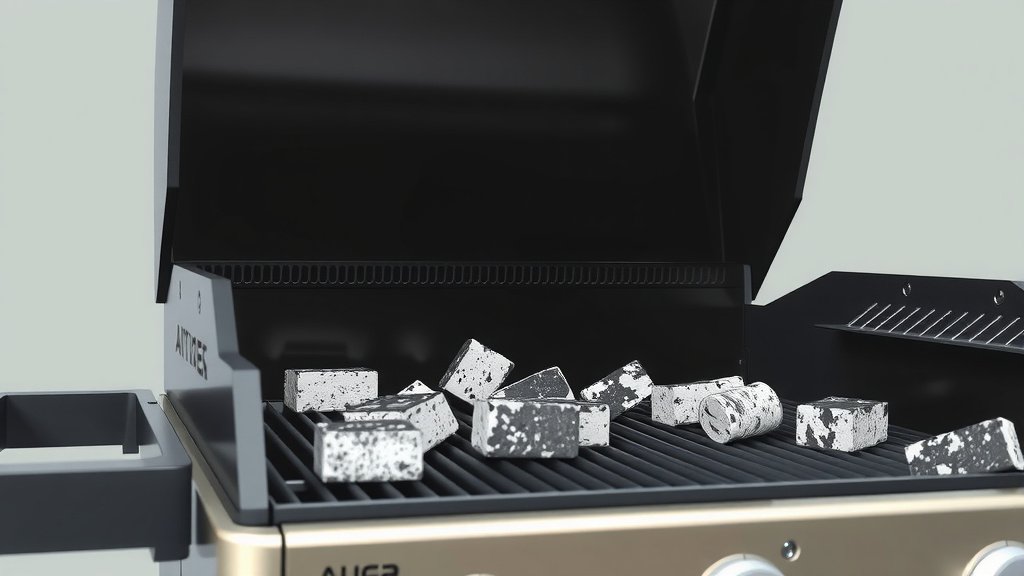
No, you absolutely should not put charcoal in a gas grill. Doing so creates serious safety hazards and can severely damage your equipment.
Gas grills are not designed to handle the intense, uncontrolled heat and ash produced by burning charcoal, making it a very risky practice.
Here’s the short version for quick answers:
- Safety First: Never put charcoal in a gas grill; it’s a major fire and carbon monoxide risk.
- Grill Damage: Charcoal will likely damage your gas grill’s components and void its warranty.
- Different Designs: Gas grills lack the ventilation and ash management needed for charcoal.
- Better Flavor Options: Use smoke boxes or wood chips designed for gas grills for smoky tastes.
- Consider Two Grills: For the authentic charcoal experience, a dedicated charcoal grill is safest.
Can You Put Charcoal In A Gas Grill?
No, it is not safe or advisable to put charcoal in a gas grill. These grills are built for distinct fuel types.
Mixing fuels poses significant risks and can cause serious harm to you and your equipment.
Why Do People Even Ask This?
Many grill enthusiasts love the deep, smoky flavor charcoal brings. They might hope to combine the convenience of gas with charcoal’s taste.
It sounds like a clever shortcut, right? Unfortunately, it’s a shortcut to trouble, not tasty food.
The Core Difference: Design and Fuel
Gas grills operate by burning propane or natural gas through burners, creating consistent, adjustable heat. Charcoal grills, conversely, burn solid charcoal briquettes or lump wood.
These two heating methods require entirely different internal structures and ventilation systems.
Serious Safety Concerns of Mixing Fuels
Putting charcoal in your gas grill creates a cascade of safety problems. You are essentially turning your appliance into something it was never designed to be.
This decision puts your safety and property at considerable risk.
Risk of Fire and Explosions
Charcoal needs oxygen to burn. A gas grill’s enclosed design can restrict airflow, leading to an uncontrolled build-up of heat. This can cause a flash fire or even an explosion when gas lines are present (National Fire Protection Association).
The intense, unregulated heat can easily ignite residual grease or gas vapors, creating a very dangerous situation.
Carbon Monoxide Poisoning
Burning charcoal produces carbon monoxide (CO), a colorless, odorless gas. Gas grills do not have the proper ventilation to expel large amounts of CO safely.
Building up CO near your grilling area can be extremely hazardous, potentially causing sickness or even death (CDC).
Damage to Your Gas Grill
Beyond safety, charcoal will ruin your gas grill. Gas grill components are made for specific temperature ranges and types of heat.
The radiant heat and ash from charcoal can cause irreparable harm to burners, igniters, and grates.
- Burner Damage: Charcoal produces a much higher, less controlled heat that can warp and melt gas burners.
- Igniter Issues: Ash and extreme heat will clog and break electronic igniters, making them unusable.
- Grill Grate Warping: Standard gas grill grates might warp or crack under charcoal’s intense heat.
- Grease Tray Overload: The ash from charcoal will overwhelm the grease tray, creating a cleaning nightmare and fire hazard.
- Voiding Your Warranty: Grill manufacturers specifically warn against using alternate fuel sources. Using charcoal will instantly void any warranty.
Understanding Hybrid Grills: The Right Way to Mix
Perhaps you’ve heard of hybrid grills and thought this meant mixing fuels. Hybrid grills are entirely different machines.
They are specially designed with separate compartments or conversion kits to safely use both gas and charcoal.
How Hybrid Grills Work
A true hybrid grill usually has a dedicated section for charcoal with appropriate ventilation and ash collection. It allows you to switch between fuel types without danger.
This design ensures proper airflow for charcoal combustion and keeps gas components separate and protected from intense heat.
Achieving Smoky Flavor Safely on a Gas Grill
You can still get that fantastic smoky taste without risking your grill or safety! There are several simple and effective methods.
Many experts recommend these techniques for adding delicious smoky notes to your food.
Using a Smoker Box
A smoker box is a metal container designed to hold wood chips. You fill it with presoaked wood chips, place it over a burner, and let it heat up.
The box slowly smolders the wood, releasing smoke that infuses your food with rich flavor.
Wood Chips and Chunks
You can purchase various types of wood chips (hickory, apple, mesquite) or chunks specifically for grilling. Soak them for about 30 minutes before use.
Place them in a smoker box or directly on the lava rocks/flame tamers for a burst of smoky goodness.
Comparing Fuel Types for Best Results
Each fuel type offers unique advantages. Knowing when to use which helps you get the most from your grilling sessions.
Think about the desired outcome and the type of food you are cooking.
| Feature | Gas Grill | Charcoal Grill |
|---|---|---|
| Heat Control | Excellent, precise dials | Variable, harder to adjust |
| Warm-up Time | Fast (5-10 minutes) | Slower (20-30 minutes) |
| Flavor Profile | Clean, can add smoke | Rich, smoky, traditional |
| Cleanup | Easier, less ash | More involved, ash disposal |
| Versatility | Good for quick cooking | Great for low-and-slow, searing |
Safe Grilling Practices Checklist
Good grilling habits keep everyone safe and your equipment working properly. Always follow manufacturer guidelines and use common sense.
A few simple steps can prevent accidents and grill damage.
- Read your grill’s owner’s manual before use.
- Always keep your grill clean, especially the grease tray.
- Check gas lines and connections for leaks regularly.
- Never use gasoline or lighter fluid in a gas grill.
- Keep a fire extinguisher or water spray bottle nearby.
- Supervise your grill at all times when in use.
Conclusion
While the thought of combining charcoal’s smoky flavor with a gas grill’s convenience might seem appealing, it’s a practice fraught with danger and potential damage. Gas grills and charcoal grills are built differently for specific purposes.
Prioritize safety and equipment longevity. Instead of risky experiments, embrace the many safe and effective ways to add fantastic smoky flavor to your gas-grilled foods. Or, for the full charcoal experience, we often find that a dedicated charcoal grill is the safest and most satisfying choice (Mayo Clinic).
Can I use charcoal to start a fire in my gas grill and then turn on the gas?
No, this is still a very dangerous idea. Introducing charcoal into a gas grill, even for starting a fire, can lead to uncontrolled flames, damage to gas components, and a serious risk of fire or explosion. The gas lines and burners are not designed to withstand charcoal’s intense, direct heat.
What happens if I accidentally put a few pieces of charcoal in my gas grill?
Even a few pieces of charcoal can pose a risk. They can clog burners, ignite grease, or cause excessive heat that warps components. It’s best to remove any charcoal immediately and inspect your grill for damage before using it again. Always be sure to clean the grill thoroughly.
Are there any gas grills that are designed to also burn charcoal safely?
Yes, these are called hybrid grills. They are specifically engineered with separate zones or convertible features that allow for the safe use of both gas and charcoal. These are different from standard gas grills and have features like adjustable charcoal grates and enhanced ventilation systems.
Can I put wood chunks or chips directly into my gas grill without a smoker box?
You can sometimes place presoaked wood chips or small chunks directly on the lava rocks or flame tamers of your gas grill. However, it’s generally safer and more efficient to use a smoker box. A smoker box helps the wood smolder slowly, producing consistent smoke without exposing your grill’s components to direct flame from the wood, which can cause excessive heat or ash build-up.
What’s the best way to get a good char or sear on my gas grill without charcoal?
To achieve a good char or sear on a gas grill, preheat your grill to its highest setting for 10-15 minutes before placing food on the grates. Ensure the grates are clean and hot. Some gas grills also come with a dedicated “searing burner” that reaches extremely high temperatures for perfect crusts on meats. Using cast iron grates can also improve searing capabilities.
