
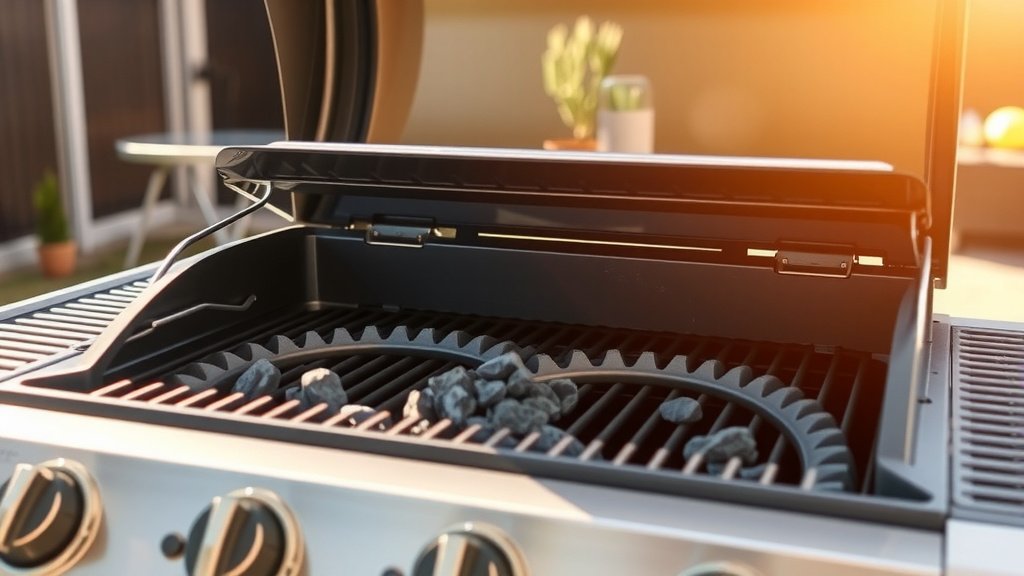
No, you absolutely cannot put charcoal or briquettes directly into a gas grill. Doing so is incredibly dangerous and can cause severe damage to your grill, potentially leading to fires or explosions.
Gas grills are engineered for gas fuel only, and introducing solid fuels like charcoal creates hazards their design cannot safely manage.
- You should never put charcoal in a gas grill.
- Gas grills are designed for specific gas fuels only (propane or natural gas).
- Mixing solid fuels like charcoal with gas components can cause fires and explosions.
- It will damage your grill’s internal parts, rendering it unusable or unsafe.
- Always follow your grill manufacturer’s instructions for safe operation.
Can You Put Coal In A Gas Grill?
You should never put coal in a gas grill. This simple answer saves you from a dangerous situation.
It sounds like a tempting idea, doesn’t it? Perhaps you love the smoky flavor of charcoal but enjoy the convenience of your gas grill. But this combination is a serious no-go.
Why Mixing Fuels Is a Big Risk
Think of it this way: you wouldn’t put diesel in a gasoline car, right? It’s similar with grills. Each type of grill is built for a specific fuel source.
Gas grills run on propane or natural gas. They have burners, igniters, and gas lines designed for this. Charcoal grills are open systems meant for burning solid fuel. You’re mixing two very different worlds here.
The Danger of Overheating
Charcoal burns at a much higher and more intense temperature than gas burners. When you add charcoal to a gas grill, you create excessive heat.
This extreme heat can warp or melt your grill’s sensitive gas components. We found that gas lines, burners, and even the firebox itself are vulnerable.
Risk of Fire and Explosion
This is where things get truly scary. Gas grills have grease trays and drip pans to catch drippings.
When charcoal is burning, it creates sparks and embers. These can easily ignite accumulated grease, leading to a sudden and very dangerous grease fire (NFPA guidance on grill safety).
Additionally, charcoal needs oxygen to burn. Closing the gas grill lid creates a contained environment. This can restrict airflow, potentially causing carbon monoxide buildup or even a flashover when the lid is opened.
Damage to Your Gas Grill’s Components
Putting charcoal in your gas grill will almost certainly cause significant damage. It’s not just a minor issue.
The intense heat from charcoal can melt or deform your grill’s burner tubes. It can also damage the gas regulators and hoses.
This type of damage makes your grill unsafe for future use. Many experts agree that repair costs often exceed the value of the grill itself (Consumer Reports).
Understanding Gas Grill Design
Your gas grill is a precisely engineered cooking tool. It has venturi tubes that mix gas and air perfectly. The igniter sparks at just the right moment.
The grates and heat deflectors distribute heat evenly from the gas burners. Charcoal, on the other hand, burns unevenly and creates ash.
The Problem with Ash Buildup
Charcoal leaves behind a lot of ash. Gas grills are not designed to handle this.
Ash can clog important ventilation openings and gas ports. This affects the grill’s performance and can create maintenance nightmares.
What About Hybrid Grills?
Now, some grills are designed for both! These are called hybrid grills or combination grills.
They have separate sections or specific trays for charcoal. You don’t just dump charcoal into the gas burner area.
If you have a hybrid grill, follow its instructions precisely. It’s built to handle both fuel types safely.
Signs Your Grill Is a Hybrid
How do you know if you have a hybrid grill? Check your owner’s manual. It will clearly state if it’s safe to use charcoal.
Look for dedicated charcoal trays or a separate compartment. Don’t assume you can convert a regular gas grill.
Getting That Smoky Flavor Safely
You want that delicious smoky flavor, right? There are safe ways to achieve it with your gas grill.
You don’t need charcoal to get a smoky taste. Here are some smart options.
- Use a Smoker Box: These small metal boxes hold wood chips. Place them directly on your gas grill grates.
- Aluminum Foil Pouch: Make a pouch from heavy-duty foil. Fill it with wood chips and poke holes.
- Infrared Burners: Some gas grills have infrared burners. These can create a sear similar to charcoal.
Wood Chips vs. Charcoal
Let’s clarify the difference. Wood chips are small pieces of wood. They smolder and produce smoke for flavor.
Charcoal is carbonized wood or other organic matter. It’s designed to burn hot and provide direct heat for cooking.
For smoky flavor, wood chips are your safe and effective choice on a gas grill.
Choosing the Right Wood Chips
Different wood types give different smoke flavors. Applewood is great for poultry and pork. Hickory adds a stronger, bacon-like flavor.
Mesquite is robust, perfect for beef. Cherry wood offers a mild, fruity smoke. Experiment to find your favorite!
Safety Checklist for Gas Grilling
Always prioritize safety when grilling. It prevents accidents and keeps everyone happy.
- Check gas lines and connections for leaks regularly.
- Clean your grill grates and grease tray often.
- Keep a fire extinguisher nearby.
- Never grill indoors or in enclosed spaces.
- Always keep children and pets away from the grill.
- Read your grill’s owner’s manual thoroughly.
Comparing Grill Types and Fuels
To really drive the point home, let’s look at the distinct differences between grill types and their intended fuels. It helps clarify why cross-pollination is a bad idea.
| Grill Type | Primary Fuel | How it Cooks | Key Feature |
|---|---|---|---|
| Gas Grill | Propane or Natural Gas | Even, controllable heat | Quick start, temperature precision |
| Charcoal Grill | Charcoal briquettes or lump coal | Direct, intense heat, smoky flavor | Authentic sear, traditional taste |
| Smoker | Wood chunks, pellets | Low and slow, indirect heat | Deep smoky flavor, tender results |
| Hybrid Grill | Gas AND Charcoal | Versatile cooking options | Combination of convenience and flavor |
As you can see, each type has its own characteristics. It’s like having different tools for different jobs.
Conclusion
So, can you put coal in a gas grill? The answer is a resounding no. It’s simply too dangerous and damaging.
Your gas grill is designed for specific fuel, and trying to force another fuel type creates unnecessary risks. We found that sticking to the manufacturer’s guidelines is always the safest bet.
Instead, embrace safe methods like smoker boxes and wood chips to get that wonderful smoky flavor. Enjoy your grilling, and always prioritize safety!
Can a gas grill explode if I put charcoal in it?
Yes, putting charcoal in a gas grill significantly increases the risk of explosion or severe fire. The grill’s components are not designed for the intense heat and combustion properties of charcoal, potentially leading to damaged gas lines, igniting gas leaks, or dangerous grease fires.
Will putting charcoal in a gas grill void its warranty?
Absolutely. Most grill manufacturers explicitly state in their manuals that using unauthorized fuel sources, like charcoal in a gas grill, will void your warranty. This means any damage or malfunction resulting from such use will not be covered.
What is the safest way to get a smoky flavor on a gas grill?
The safest and most effective way to add smoky flavor to food on a gas grill is by using a smoker box or a foil pouch filled with wood chips. Place this directly on your grill grates over a burner. The wood chips will smolder and release delicious smoke without damaging your grill.
Are there any gas grills that can safely use charcoal?
Yes, some specialized grills are designed as “hybrid” models. These grills feature dedicated compartments or specific trays for using charcoal safely alongside gas burners. Always consult your grill’s owner’s manual to confirm if it’s a hybrid model and how to use both fuel types correctly.
What should I do if I accidentally put charcoal in my gas grill?
If you’ve accidentally placed charcoal in your gas grill, immediately turn off the gas supply at the tank or natural gas line. Do not attempt to light it or continue cooking. Allow the grill to cool completely, then carefully remove the charcoal. Inspect your grill thoroughly for any signs of damage before attempting to use it again, and if you have any doubts, consult a professional or your grill manufacturer.
