
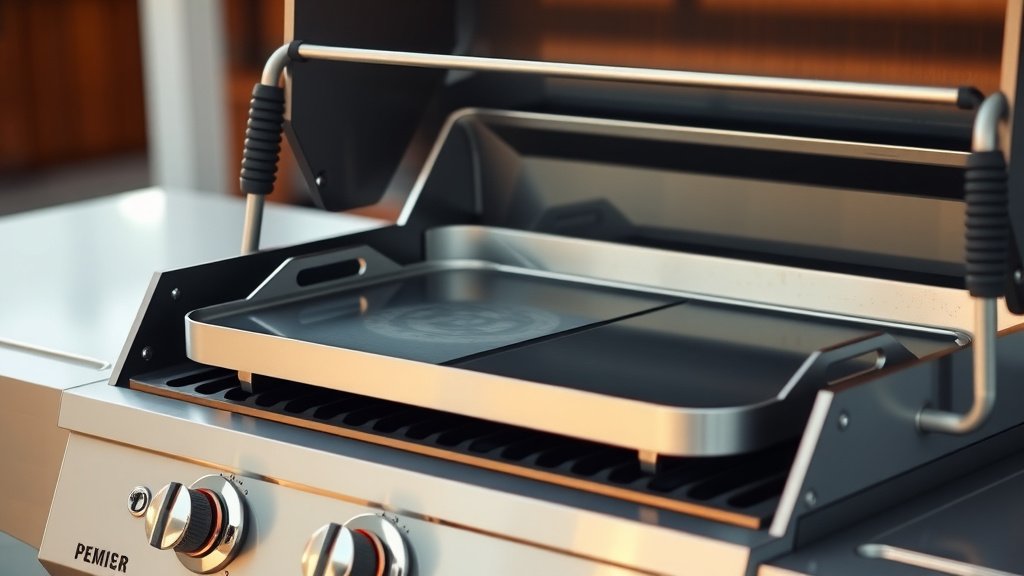
Yes, you can absolutely put a griddle on a gas grill, transforming your outdoor cooking setup for a wider variety of foods.
This allows you to enjoy breakfast foods, stir-fries, and delicate items typically not suited for grill grates, expanding your culinary horizons.
- Using a griddle on your gas grill expands your cooking options considerably.
- Select griddles made from robust materials like cast iron or heavy steel.
- Ensure your griddle fits properly and distributes heat evenly across its surface.
- Always prioritize safety with adequate ventilation and a stable griddle placement.
- Maintain your griddle through regular cleaning for lasting performance and great meals.
Can You Put A Griddle On A Gas Grill?
Absolutely, attaching a griddle to your gas grill is a fantastic way to diversify your outdoor cooking capabilities.
It opens up a world of culinary possibilities, letting you prepare foods usually reserved for indoor kitchens.
Why Consider a Griddle for Your Gas Grill?
Imagine the aroma of sizzling bacon and fluffy pancakes cooked outdoors. A griddle makes this dream a reality, taking your backyard gatherings up a notch.
It adds versatility, letting you cook things your traditional grill grates simply cannot handle with ease.
Breakfast Bliss and Beyond
With a griddle, you can prepare a full breakfast spread right on your grill. Think about eggs, hash browns, and golden-brown pancakes under the open sky.
But the fun doesn’t stop there. Griddles are perfect for fajitas, quesadillas, stir-fries, and even smash burgers.
Even Heat, Better Searing
A good griddle provides a flat, solid surface that distributes heat very evenly. This consistency is ideal for achieving a perfect crust on your food.
Unlike grill grates, which allow juices to drip away, a griddle keeps everything contained. This means juicier burgers and more flavorful veggies.
Types of Griddles for Your Grill
When choosing a griddle, you will find several options. Each material offers unique benefits for your grilling adventures.
Understanding the differences helps you pick the best match for your needs and cooking style.
Cast Iron Griddles: The Classic Choice
Cast iron is a perennial favorite for good reason. It holds heat exceptionally well, providing a consistent cooking surface.
Many cooking experts suggest cast iron for its durability and its ability to develop a natural non-stick surface over time with proper seasoning.
Steel Griddles: Durable and Reliable
Steel griddles, particularly those made from heavy gauge carbon or stainless steel, are another strong contender. They heat up faster than cast iron.
Steel also offers excellent durability and is generally easier to clean, making it a practical option for many grillers.
Non-Stick Options (with cautions)
Some griddles come with a non-stick coating. These are easy to use initially and require less seasoning.
However, we found that non-stick surfaces can degrade under high heat. Using metal utensils can also scratch them, reducing their lifespan.
What to Look for in a Gas Grill Griddle
Choosing the right griddle can feel a bit like selecting the perfect fishing lure; there are many options. Focus on compatibility, material, and size.
You want a griddle that truly enhances your grilling, not one that causes frustration.
Checklist: Choosing Your Griddle
- Material: Cast iron or heavy steel for durability and heat retention.
- Size: Ensure it fits your grill without blocking too much airflow.
- Handles: Look for sturdy, heat-resistant handles for safe movement.
- Grease Management: A drip tray or lip helps manage excess fat.
- Compatibility: Check if it works with your specific gas grill model.
Getting Your Griddle Ready
Once you have your griddle, a little preparation goes a long way. Think of it as preparing a canvas before painting your masterpiece.
A well-prepared griddle ensures better cooking results and a longer life for your equipment.
Seasoning for Success
Most griddles, especially cast iron and steel, need seasoning. This involves applying a thin layer of oil and heating it until it polymerizes.
Proper seasoning creates a natural, non-stick surface and protects against rust. It is a simple yet crucial step for longevity.
Placement and Stability
Place your griddle directly on top of your grill grates. Make sure it sits level and stable, without wobbling.
For best results, we found that placing the griddle over two or more burners helps achieve even heat distribution across its surface.
Cooking Like a Pro on Your Grill Griddle
Cooking on a griddle is different from direct grilling. You are cooking on a solid, hot surface, not over open flames.
Embrace these differences, and you will unlock a new level of outdoor cooking expertise.
Heat Management is Key
Your gas grill’s burners provide excellent control over griddle temperature. Start with medium heat and adjust as needed for different foods.
Creating zones with varying heat levels across the griddle allows you to cook different items simultaneously at their ideal temperatures.
What Can You Cook?
The possibilities are vast, limited only by your imagination. Here are some popular ideas that truly shine on a griddle:
| Food Type | Why It’s Great on a Griddle |
|---|---|
| Pancakes & Eggs | Perfectly flat, even cooking without sticking. |
| Smash Burgers | Achieves a delicious, crispy crust. |
| Fajitas & Stir-fries | Keeps all ingredients contained and sizzling. |
| Grilled Cheese | Evenly browned, perfectly melted goodness. |
| Sautéed Veggies | Cooks small pieces without falling through grates. |
Safety First: Tips for Griddle Use
Outdoor cooking always requires attention to safety. Using a griddle on your gas grill adds a few specific considerations to keep in mind.
Always practice safe grilling habits to ensure a worry-free experience for everyone.
- Ensure your griddle is stable and does not tip.
- Use heat-resistant gloves when handling hot griddles.
- Always keep a fire extinguisher or baking soda nearby.
- Provide good ventilation; cook outdoors or in an open area.
- Never leave a hot grill or griddle unattended.
Cleaning and Care for Longevity
After the delicious meal, proper cleaning is essential. It extends the life of your griddle and ensures it is ready for the next use.
A well-maintained griddle is a happy griddle, always prepared to deliver great food.
For cast iron and steel, scrape off any food residue while the griddle is still warm. Then, apply a thin layer of cooking oil to prevent rust.
Avoid harsh soaps, especially on seasoned surfaces, as they can strip away the protective layer. A simple scrape and oil often suffice.
Conclusion
Adding a griddle to your gas grill is a smart upgrade, dramatically expanding your cooking repertoire. It allows you to explore new recipes and cooking methods right in your backyard.
With the right griddle and proper care, you are all set to enjoy countless delicious meals, from savory breakfasts to perfectly seared dinners.
So go ahead, embrace the griddle, and transform your gas grill into an even more versatile outdoor cooking station. Happy grilling!
Can I use any griddle on any gas grill?
Not every griddle fits every gas grill perfectly. You need to ensure the griddle’s size is appropriate for your grill’s cooking surface and that it allows for proper airflow. Check your grill’s dimensions and the griddle’s specifications before purchasing.
How do I prevent my food from sticking to the griddle?
Proper seasoning is key for cast iron and steel griddles; this creates a natural non-stick surface. Always preheat your griddle adequately, and use a little cooking oil or butter before adding food. If food still sticks, your griddle may need re-seasoning or more oil.
Is it safe to leave a griddle on my gas grill permanently?
It is generally not recommended to leave a griddle on your gas grill permanently. Exposure to weather can lead to rust, especially for cast iron and steel. Remove and store your griddle in a dry place after each use and cleaning to maintain its condition.
Can I use metal spatulas on a griddle?
For cast iron and steel griddles, metal spatulas are perfectly fine and even preferred for scraping food. However, if you have a griddle with a non-stick coating, always use plastic, silicone, or wood utensils to avoid scratching the surface.
How do I clean a griddle after cooking?
While the griddle is still warm (but not scalding hot), use a metal scraper to push off any food residue. You can then wipe it clean with a paper towel. For seasoned griddles, apply a thin layer of cooking oil after cleaning to protect it. Avoid using harsh soaps on seasoned surfaces.
