
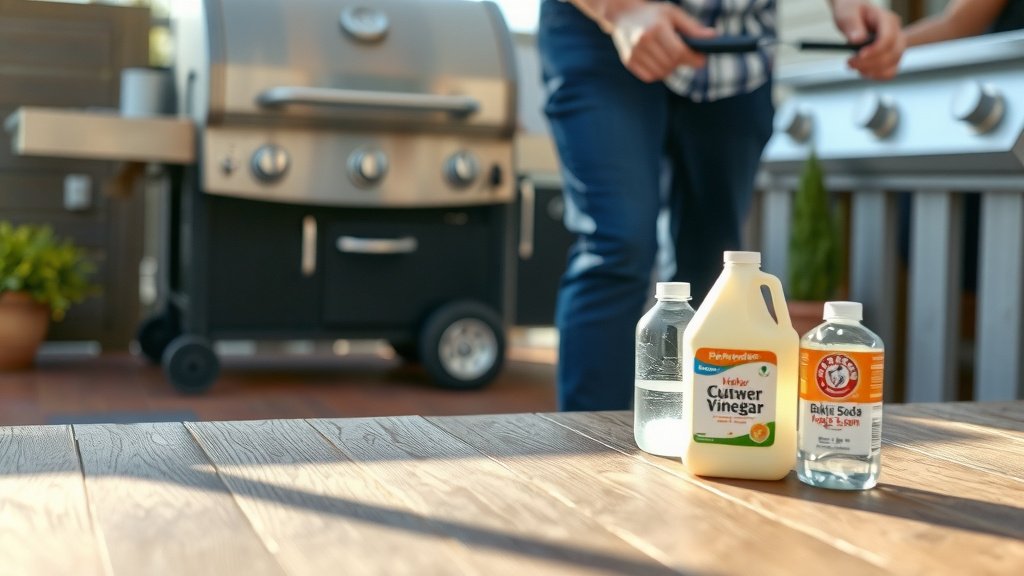
You can effectively clean a BBQ grill with vinegar and baking soda by first scraping off loose debris, then spraying grates generously with white vinegar, letting it sit, and finally applying a paste of baking soda and a little water.
Allowing this baking soda paste to sit overnight before scrubbing with a stiff brush and rinsing thoroughly can break down even the toughest grease and carbon buildup on your grill.
- Vinegar and baking soda offer a natural, powerful way to deep clean your BBQ grill.
- Start by scraping away large food bits, then apply vinegar as a degreaser.
- A baking soda paste acts as a gentle abrasive to lift stubborn grime.
- Allowing these solutions to work overnight enhances their cleaning power significantly.
- This method helps maintain your grill’s longevity without harsh chemicals.
How To Clean BBQ Grill With Vinegar And Baking Soda?
Cleaning your BBQ grill with vinegar and baking soda is a fantastic, natural approach to tackling stubborn grease and burnt-on food. These common household items create a powerful cleaning duo, leaving your grates sparkling without harsh chemicals.
Why Use Natural Cleaners for Your Grill?
Many grill owners wonder about the best cleaning methods. Using natural options like vinegar and baking soda can save you money and protect your health. We found that these common pantry items are incredibly effective.
Plus, opting for natural solutions means you avoid introducing harsh chemicals that might linger on your cooking surfaces. You’re aiming for a clean, safe cooking environment, right?
The Appeal of Vinegar and Baking Soda
Vinegar, especially white vinegar, is a mild acid known for its degreasing properties. It works to break down sticky, oily residues. Baking soda, on the other hand, is a gentle abrasive and a deodorizer.
When combined, they create a fizzy reaction that helps lift and loosen tough grime. Think of it as a natural power-washer for your grill, without the actual power-washer!
Gathering Your Grill Cleaning Arsenal
Before you dive in, let’s make sure you have everything ready. Having your tools at hand makes the cleaning process much smoother. Nobody likes running back and forth while working on a project!
Essential Tools You’ll Need
Here’s a quick checklist of the items you’ll want to gather for a successful grill cleaning session:
-
White vinegar (a full spray bottle is ideal)
-
Baking soda (at least a full cup)
-
A stiff-bristled grill brush or wire brush
-
A large bucket or bin (big enough for your grates)
-
Dish soap (mild, for final rinse)
-
Sponges or scrubbing pads
-
Rubber gloves (to protect your hands)
-
Warm water
Step-by-Step Guide: Cleaning Your Grill Grates
Let’s get those grates gleaming! This process is straightforward and yields impressive results. You’ll be amazed at how well these simple ingredients work.
Step 1: The Initial Scrape-Down
First things first, make sure your grill is cool. Never clean a hot grill this way. Use your stiff grill brush to scrape off any large, loose food particles. You want to remove the biggest chunks before applying liquids.
Step 2: The Vinegar Spray Method
Remove your grates from the grill. Place them in a large bucket or a utility sink. Liberally spray them with white vinegar. We found that saturating the grates completely is key for effective degreasing.
Let the vinegar soak on the grates for about 15-20 minutes. This gives it time to start breaking down the grease. You might even see some of the grime starting to loosen.
Step 3: Baking Soda Power Paste
While the vinegar is working, create a thick paste using baking soda and a little water. Aim for a consistency like pancake batter. You want it thick enough to stick to the grates effectively.
Generously apply this paste all over the grates, focusing on the dirtiest areas. Make sure to cover all the gunk that the vinegar might not have loosened yet. It’s like giving your grill a spa treatment!
Step 4: The Overnight Soak (Optional, but Recommended!)
For the best results, cover your grates with the baking soda paste. Then, place them inside a large plastic trash bag or wrap them tightly in plastic wrap. Let them sit overnight. This extended contact time supercharges the cleaning action.
Many experts say an overnight soak allows the baking soda to really penetrate and lift the hardened carbon. It’s a game-changer for really tough jobs.
Step 5: Scrub, Rinse, and Admire!
The next morning, remove the grates from their soak. Use your stiff grill brush or scrubbing pad to scrub away the loosened grime. You’ll likely find that burnt-on bits come off much easier now.
Rinse the grates thoroughly with warm water. You might want to use a little dish soap during this rinse to ensure all residue is gone. Look at those gleaming grates – almost like new!
Tackling Stubborn Grime: Extra Tips
Sometimes, even with the best approach, you encounter super tough spots. Don’t worry, there are a few extra tricks you can use to banish that grime for good.
For Seriously Stuck-On Bits
If you have patches that just won’t budge, try making a thicker baking soda paste. Apply it directly to the problem area and let it sit for another hour or two. You can also add a few drops of vinegar directly on top of the paste to activate more fizzing action. Targeted treatment can be very effective.
When to Reapply or Repeat
For grills that haven’t seen a deep clean in a while, one round might not be enough. If you still see significant buildup, don’t hesitate to repeat the vinegar spray and baking soda paste steps. Consistency is key when fighting years of grime, we’ve learned. It’s about patience and persistence.
Beyond the Grates: Cleaning Other Grill Parts
While the grates are often the main focus, don’t forget the rest of your grill. A clean exterior and drip pan contribute to the overall enjoyment and longevity of your equipment.
Side Tables and Exterior
For stainless steel or painted surfaces, a mix of equal parts vinegar and water in a spray bottle works wonders. Spray, wipe with a soft cloth, and buff dry for a streak-free shine. This helps keep your grill looking sharp.
Drip Pan Care
The drip pan collects grease and food debris. Empty it regularly. For deep cleaning, spray it with vinegar, sprinkle baking soda, and let it sit. Then, scrub with dish soap and hot water. This prevents grease fires and unwanted pests (CDC).
Benefits of This Natural Cleaning Duo
Using vinegar and baking soda for your grill cleaning offers several advantages. Here’s a quick overview of why this method is so popular:
| Cleaning Agent | Primary Benefit | What It Tackles |
|---|---|---|
| White Vinegar | Natural Degreaser | Grease, oils, light carbon |
| Baking Soda | Gentle Abrasive & Deodorizer | Burnt-on food, stubborn carbon, odors |
| Combination | Enhanced Scrubbing Power | Tough, caked-on residue |
Safety First: What to Keep in Mind
While natural cleaners are generally safe, always work in a well-ventilated area. If you have sensitive skin, wearing rubber gloves is a good idea. Always ensure your grill is completely cool before starting any cleaning process to avoid burns or steam injury.
Remember to rinse thoroughly. You don’t want any baking soda residue on your grates when you cook next. A quick rinse with water and a little dish soap will ensure all cleaning agents are gone.
Conclusion
Cleaning your BBQ grill with vinegar and baking soda is a powerful, budget-friendly, and environmentally conscious method. By following these steps, you can tackle even the toughest grease and carbon, ensuring your grill is always ready for your next culinary adventure. A clean grill performs better and lasts longer, making your grilling experience more enjoyable. So, grab your vinegar and baking soda, and let’s get those grates spotless!
How often should I clean my grill with vinegar and baking soda?
For best results, aim for a deep clean using this method at least once every few months, or before and after grilling season. For lighter maintenance, a quick scrub after each use with a grill brush is helpful, but the vinegar and baking soda provide a thorough rejuvenation.
Can I use apple cider vinegar instead of white vinegar?
While apple cider vinegar has some cleaning properties, white vinegar is generally preferred for grill cleaning due to its higher acidity and lack of sugar. White vinegar is more effective at breaking down grease and leaves less residue.
Is it safe to use a wire brush with this cleaning method?
Yes, a stiff-bristled wire brush is often recommended for scrubbing away the loosened grime after the vinegar and baking soda have worked their magic. Always inspect your grates afterward to ensure no loose bristles remain, as research indicates this is a safety precaution (NIH).
What if the baking soda paste dries out too quickly?
If your baking soda paste dries out before you can scrub, simply re-wet the grates with a little more vinegar or water. This will reactivate the paste and make it easier to scrub off. You can also make the initial paste a bit wetter next time.
Will vinegar and baking soda harm my grill’s finish or material?
No, white vinegar and baking soda are generally safe for most grill materials, including cast iron and stainless steel, when used as directed. They are non-corrosive and won’t damage the finish. Always rinse thoroughly to remove all cleaning agents.
