How to Cook Cowboy Steaks on a Pit Boss
Cook cowboy steaks on a Pit Boss by smoking them at low heat, then searing over high heat until a thermometer reads your target temperature. Rest the thick bone-in ribeyes before slicing.
On this page (9 sections)
- How do you cook cowboy steaks on a Pit Boss?
- How should you prepare thick bone-in ribeyes?
- What Pit Boss temperature should you use?
- How do you know when cowboy steaks are done?
- Should you flip cowboy steaks while smoking?
- How long should cowboy steaks rest?
- What equipment can help with grilling cowboy steaks?
- What should you do if the steak browns too quickly?
- How should you choose your cooking method?
Cook cowboy steaks on a Pit Boss by smoking the thick bone-in ribeyes at low heat, then searing them over high heat. Use an instant-read thermometer to decide when they are done; time alone is unreliable for steaks that vary in thickness.
Cowboy steaks are bone-in ribeyes, so the bone and thick center make temperature checks especially useful. Pat the steaks dry, season them, and allow enough space around each steak for smoke and heat to circulate.
How do you cook cowboy steaks on a Pit Boss?
Set the Pit Boss for low indirect heat, smoke the steaks until they are below your target, then sear them hot. Keep the lid closed during the smoke phase and check the center with a thermometer as the steaks approach the finish.
- Pat the steaks dry and season both sides.
- Preheat the Pit Boss at a low setting, following your model's manual.
- Place the steaks on the grate away from direct flame or the hottest area.
- Smoke until the internal temperature is about 10–15°F below your desired serving temperature.
- Raise the grill heat or transfer the steaks to a hot searing surface.
- Sear both sides, checking the thickest part of the meat as you go.
- Remove the steaks at your preferred temperature and rest before slicing.
That 10–15°F gap is a practical starting point, not a guarantee. Carryover cooking can raise the temperature during the rest, and steak thickness, grill behavior, and searing time all affect the result.
For a broader look at cuts and how they behave over heat, see what is the best steak for grilling. Cowboy steaks suit this method because their substantial ribeye cut can benefit from a slower warm-up before the final sear.
How should you prepare thick bone-in ribeyes?
Dry the surface and season the steaks before they go on the grill. A dry exterior browns more readily during searing, while even seasoning helps flavor the whole cut.
If the steaks are refrigerated, take them out while the grill heats, but don't leave raw meat at room temperature for an extended period. Keep raw steak and its juices away from ready-to-eat foods, and wash hands and utensils after handling.
Avoid trimming away the rib bone. It is part of the cut and can make it harder to position the steak, so place the meat securely on the grate with the bone toward the cooler side if one side of the grill runs hotter.
Use a clean plate and separate utensils for the cooked steaks. Don't reuse a plate that held raw meat unless it has been washed.
What Pit Boss temperature should you use?
Use a low setting for the smoke phase, then high heat for searing. The exact setpoint depends on your Pit Boss model and how it manages heat, so check its instructions and watch the steak's internal temperature.
For another model-specific approach, see the Pit Boss 700 steak guide.
A pellet grill can have hotter and cooler areas. If one steak is thinner or closer to a hot spot, rotate its position as needed rather than assuming every steak will finish at the same time.
For another pellet grill steak method using a thinner cut, see sirloin steak on a Pit Boss pellet grill. Sirloin cooks differently from a thick cowboy ribeye, so use the cowboy steak's center temperature as your main cue.
How do you get a hot sear on a Pit Boss?
Use the Pit Boss's searing option if your model has one, or use a separate grill-safe hot surface. Follow the equipment instructions and avoid placing cookware on the grill unless the manufacturer permits it.
A cast iron pan or griddle can provide a concentrated searing surface when suitable for your setup. For a separate flat-top approach, see how to cook steak on a Pit Boss griddle.
Don't rush the smoke phase by leaving the steaks over direct high heat. The center needs time to warm, and a very hot exterior can darken before the thickest part reaches your chosen doneness.
How do you know when cowboy steaks are done?
Check the thickest section with a meat thermometer, avoiding the bone. Insert the probe from the side if needed so the sensing tip reaches the center of the meat.
USDA advises cooking whole cuts of beef to at least 145°F, followed by a 3-minute rest. If you prefer a different level of doneness, understand that it may be below USDA's recommended minimum; use a reliable thermometer and make your choice deliberately.
Check more than one spot when the steak is especially thick or the first reading seems inconsistent. The bone can interfere with a reading, so reposition the probe into the meat.
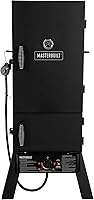
This Masterbuilt is a propane and charcoal vertical smoker with a stainless steel burner, push-button ignition, a wood chip tray, and a water pan. It can suit someone who wants a dedicated smoking appliance alongside a grill, but it does not replace the Pit Boss searing step.
Should you flip cowboy steaks while smoking?
Flip once during the smoke phase if needed for even cooking, then turn often enough while searing to control browning. The goal is even heat exposure, not a fixed number of flips.
Keep the lid closed as much as practical during smoking because repeated openings release heat and smoke. During searing, stay close and watch the crust, since the hotter phase can change the surface quickly.
If you are also cooking a strip loin cut with a similar two-zone approach, compare T-bone steaks on a Pit Boss grill. The tenderloin side of a T-bone can cook faster than its strip side, while a cowboy ribeye has a different shape and bone.
How long should cowboy steaks rest?
Rest the steaks for several minutes on a clean plate before slicing. A short rest lets the temperature even out and reduces juices running across the cutting board.
Slice the meat away from the bone, then cut across the grain into serving pieces. The bone can be served separately or saved for another use.
Don't cover the steaks tightly if you want to preserve a crisp seared surface. A loose tent of foil can keep them warm, but trapping steam may soften the crust.
What equipment can help with grilling cowboy steaks?
A reliable thermometer matters more than a timer for thick steaks. A second cooking surface can help with the sear, while a compact grill can be useful for other outdoor cooking needs.
The Camco Kuuma is a stainless steel gas grill with a single burner, a latch, and mounting options for compatible Kuuma rails, rods, or a pedestal. It may work for a small cooking setup where portability matters.
The Cuisinart tabletop charcoal grill has a 196 square inch grate, dual vents, and a locking lid. Use it only on a stable outdoor surface and follow its safety instructions; it is not a Pit Boss pellet grill.
What should you do if the steak browns too quickly?
Move it to a cooler area or pause the sear while the center catches up. If the outside is darkening before the center reaches your target, reduce the direct heat and keep checking with the thermometer.
If flare-ups occur, move the steak away from the flames and let them settle. Don't spray water into a grease flare-up; follow your grill's fire guidance and keep a clear path to the controls.
When steaks finish at different times, remove each one separately. Their thickness and placement can create different cook times even when they start together.
How should you choose your cooking method?
For cowboy steaks on a Pit Boss, choose low-and-slow heat followed by a controlled sear when you want a browned outside and a more gradual warm-up through the thick center. Choose a direct hot cook only if the steaks are thinner and you can monitor them closely.
Use the thermometer to make the doneness decision, then rest and slice across the grain. For a different steak thickness, follow the related Pit Boss pellet grill steak method or the guide to cooking steaks on a Pit Boss pellet grill.
Frequently asked questions
How long do cowboy steaks take on a Pit Boss?
Timing depends on steak thickness, grill temperature, and how close the meat is to the heat. Use a thermometer instead of a fixed time: smoke the steak until it is below your target, then sear and check the center often.
Rest it before slicing.
What temperature should a Pit Boss be for cowboy steaks?
Use a low grill setting for the smoke phase, then raise the heat or use a separate hot surface for searing. Pit Boss models and temperature controls differ, so follow your grill manual and check the steak with a meat thermometer rather than relying on the display alone.
Should you sear cowboy steaks before or after smoking?
Smoke the steaks first, then sear them over high heat. This gives the thick center time to warm before the outside gets its final browning.
Move the steaks away from direct heat if the exterior darkens too quickly, and use a thermometer to guide the finish.
Do you need to rest cowboy steaks after grilling?
Yes, let cowboy steaks rest for several minutes after cooking so the juices settle before you slice. Keep them on a clean plate and avoid cutting into the meat right away.
Slice across the grain, working around the bone.