
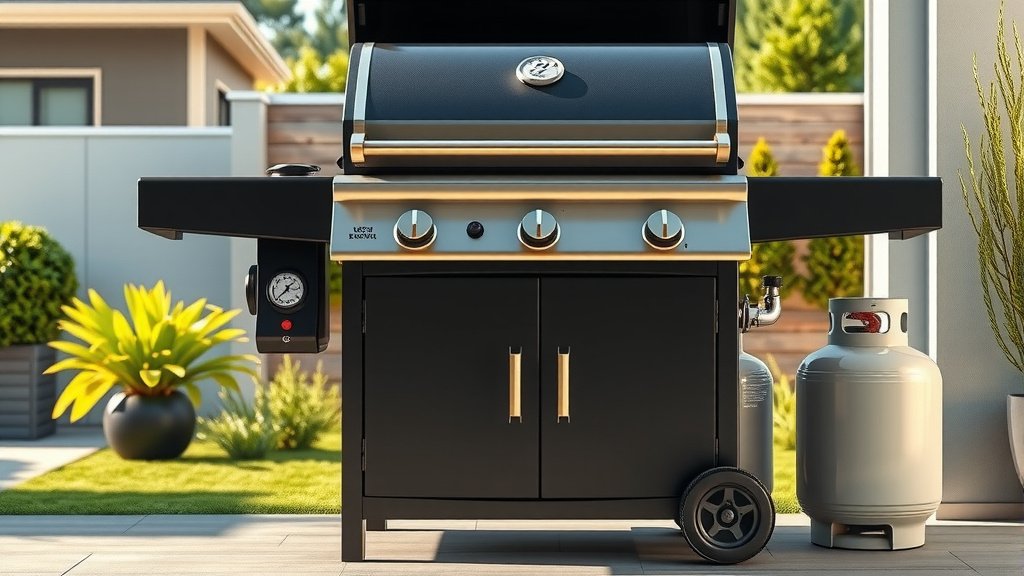
No, you generally cannot use a natural gas grill with propane fuel without proper conversion. The two fuels operate at very different pressures and require specific components to function safely and efficiently.
Attempting to use a natural gas grill with propane directly can lead to a dangerously large flame or, conversely, a very weak, inefficient flame, posing significant safety risks and poor cooking results.
- Your natural gas grill needs specific parts for propane.
- Fuel pressure is the main difference between the two gases.
- Without conversion, your grill will not work properly or safely.
- A professional conversion kit is usually needed for safety and performance.
Can You Use A Natural Gas Grill With Propane?
You cannot simply swap fuel types. A natural gas grill uses a different orifice size and regulator pressure than a propane grill. This difference is critical for safe operation.
The Core Difference: Fuel and Pressure
Think of it like different car engines. One runs on diesel, the other on gasoline. Both are fuels, but they aren’t interchangeable without modifications. Natural gas and propane work similarly.
Each gas needs a very specific setup. This ensures the correct amount of fuel mixes with air for a good flame. We found this is a fundamental principle in gas appliance design (National Fire Protection Association).
What is Natural Gas?
Natural gas primarily contains methane. It comes from pipelines and delivered at a low pressure. This constant, low-pressure supply makes it convenient for home use.
It’s generally lighter than air. If there’s a leak, it tends to dissipate upwards. This is a key difference compared to propane.
What is Propane?
Propane, or LP gas, is stored as a liquid in tanks. It vaporizes into a gas when released. This vapor operates at a much higher pressure than natural gas.
Propane is heavier than air. If it leaks, it collects in low areas. This requires different safety considerations and ventilation.
The Critical Component: The Orifice
Inside your grill, a tiny brass fitting called an orifice controls gas flow. Imagine it like a nozzle on a hose. Its size determines how much gas gets through.
Natural gas orifices are larger. Propane orifices are smaller. This difference ensures the correct fuel-to-air mixture for each gas.
Why Conversion is Not Simple Plug-and-Play
Just connecting a propane tank to a natural gas grill without changing parts is dangerous. It’s not like changing batteries. The grill is set up for one specific fuel type.
The wrong pressure or orifice size can lead to serious safety concerns. Many experts say this is the most common mistake home grillers make (Gas Appliance Manufacturers Association).
What Happens If You Don’t Convert?
Using the wrong fuel without conversion results in two main problems: poor performance and safety hazards. Neither is good for your outdoor cooking!
Natural Gas Grill on Propane (Without Conversion)
If you connect a natural gas grill to a propane tank, you’ll likely get a weak flame. Propane’s higher pressure tries to push through an orifice that is too large for its specific combustion needs.
This means too little propane gets through. The result? Barely hot burners, a yellow, flickering flame, and food that takes forever to cook. It’s frustrating and inefficient.
Propane Grill on Natural Gas (Without Conversion)
Connecting a propane grill to a natural gas line is far more dangerous. The propane grill has much smaller orifices meant for high-pressure propane.
When low-pressure natural gas flows through these small holes, too much gas can escape. This creates a dangerously large, uncontrolled flame, sometimes called “flame-thrower” effect. This is a severe fire hazard and could cause serious injury.
So, Can You Convert Your Grill?
Yes, you absolutely can convert most grills. Many grill manufacturers offer conversion kits. But it’s not a universal solution; some models are not designed for conversion.
Always check your grill’s manual first. The manual will tell you if conversion is possible and what kit you need. We found that consulting the manual prevents many conversion errors.
Conversion Kits: Your Best Friend
A proper conversion kit includes everything needed. This typically means new orifices for each burner, a different regulator, and often new gas lines. Sometimes, a new manifold is also part of the kit.
These kits are designed to precisely match the fuel type. They ensure the correct gas pressure and flow for optimal performance and safety. Think of it as getting the exact right key for a lock.
| Feature | Natural Gas Grill | Propane Grill |
|---|---|---|
| Fuel Type | Methane (Pipeline) | Propane (Tank) |
| Pressure (psi) | Low (0.25-0.5) | High (10-15) |
| Orifice Size | Larger | Smaller |
| Regulator | Low-pressure NG | High-pressure LP |
Is DIY Conversion Recommended?
You might be handy, but gas appliance conversions are serious business. Even a small error can lead to gas leaks, fires, or explosions. We found that DIY attempts often lead to safety compromises.
Many experts strongly recommend professional installation (Consumer Product Safety Commission). They have the tools, knowledge, and experience to do it right. Your peace of mind is worth it.
Here’s a quick checklist before attempting any conversion:
- Read your grill’s manual thoroughly.
- Confirm a manufacturer-approved conversion kit exists.
- Understand gas pressures and safety risks.
- Have the right tools for the job.
- Know how to perform a leak test.
Safety First: A Griller’s Golden Rule
When working with gas, safety is not an option; it’s a requirement. Gas leaks are invisible but dangerous. Always prioritize prevention.
A simple leak test with soapy water is essential after any gas line work. Bubbles mean a leak. Never use an open flame to check for gas leaks.
- Always keep your grill in a well-ventilated area.
- Never store propane tanks indoors or in enclosed spaces.
- Regularly check hoses and connections for cracks or damage.
- Perform a leak test with soapy water after changing tanks or doing maintenance.
- Keep a fire extinguisher nearby and accessible.
When to Call a Professional
If you feel uncomfortable at any point, stop and call a certified technician. They can safely handle the conversion for you. This applies to new installations or conversions alike.
For natural gas hookups, local codes often require a licensed plumber or gas fitter. Don’t risk your home or your family’s safety trying to save a few dollars.
Enjoying Your Converted Grill
Once your grill is properly converted, you can enjoy perfectly cooked meals. Whether it’s the convenience of natural gas or the portability of propane, your grill will perform its best.
The satisfaction of a safe, efficient grill is a joy. So, get grilling, knowing your setup is exactly right for the fuel you choose!
Conclusion
While you cannot directly use a natural gas grill with propane without modifications, converting your grill is often possible. This requires a specific manufacturer-approved kit, including new orifices and a suitable regulator. Ignoring these vital differences between natural gas and propane can lead to significant safety hazards and poor grilling performance. Always consult your grill’s manual, consider professional installation for peace of mind, and prioritize safety with thorough leak tests. Getting it right means enjoying years of delicious, worry-free grilling.
Can a universal conversion kit work for any grill?
No, universal conversion kits are rare and often unreliable. Each grill model has specific parts and pressure requirements. Always look for a conversion kit designed specifically by your grill’s manufacturer for your exact model. Using non-approved parts can void warranties and create unsafe conditions.
How long does a grill conversion typically take?
A professional conversion can take anywhere from one to a few hours, depending on the grill’s complexity and type. For an experienced technician, swapping out orifices and regulators is a fairly straightforward process. However, careful leak testing adds time but is absolutely necessary.
Does converting my grill affect its warranty?
Yes, using a non-approved conversion kit or having the conversion done improperly by an unlicensed individual can often void your grill’s manufacturer warranty. Always check your warranty information and use only manufacturer-approved kits and services when converting your grill.
What is the cost of converting a grill?
The cost varies greatly depending on your grill model and whether you DIY or hire a professional. Conversion kits typically range from $50 to $200. Professional installation can add another $100 to $300 or more, especially if new gas lines need to be installed or inspected by a licensed technician.
Are there any maintenance differences after converting my grill?
Generally, the basic maintenance of cleaning grates and burners remains the same. However, if you convert to natural gas, you’ll no longer need to check propane tank levels or replace tanks. For both fuel types, regular inspection of gas lines and connections for leaks is always a good practice.
