
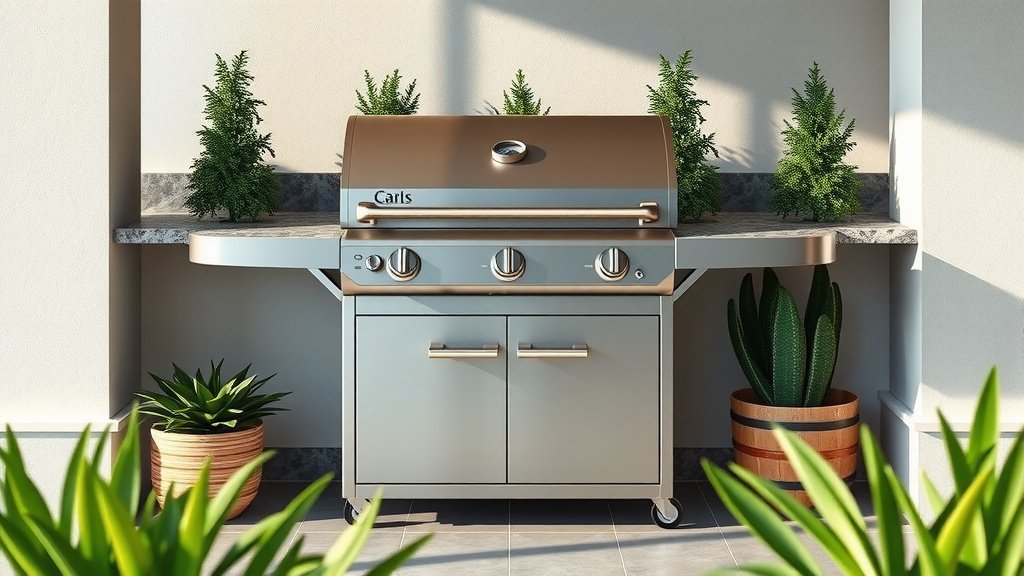
A natural gas grill connects directly to your home’s gas line, offering a continuous fuel supply for cooking without needing propane tanks. This grill type provides uninterrupted grilling power, making it a favorite for many home chefs.
You’ll find these grills use a clean-burning natural gas fuel, known for its convenience and often lower operational cost compared to traditional propane.
- Natural gas grills connect directly to your home’s gas line, so you never run out of fuel during a cookout.
- They offer great convenience, eliminating the need to refill or exchange propane tanks.
- You might find them more budget-friendly over time, as natural gas is often cheaper than propane.
- Installation requires a professional to connect to your existing gas line for safety and compliance.
What Is A Natural Gas Grill?
A natural gas grill is a cooking appliance designed to use your home’s natural gas supply. It provides a steady, reliable flame for all your grilling needs without the hassle of portable fuel tanks.
Think of it like an outdoor stove burner, always ready to go. You just turn a knob, and the flame ignites instantly.
How Does a Natural Gas Grill Actually Work?
It’s simpler than you might imagine. Your grill connects to a dedicated natural gas line, often installed by a professional. This line brings gas directly from your home’s supply to the grill’s burners. You open the gas valve, hit the igniter, and voilà, you have heat!
The internal components are similar to a propane grill, but the gas delivery system is different. It’s all about having a constant fuel flow.
The Continuous Fuel Line
The core difference is the gas line. Unlike a propane tank, this line stays connected. You don’t have to worry about the gas running out mid-sear, which is a common stress for many grill masters (Consumer Reports). It truly offers uninterrupted cooking pleasure.
This fixed connection means you can grill all evening long, or even for an all-day smoking project, without a single interruption. It’s a huge plus for those who love to entertain often.
Ignition and Burner Systems
Natural gas grills use the same reliable ignition systems as propane models. You’ll usually find a push-button igniter or rotary igniter that sparks the gas. This creates an immediate flame over the grill’s burners, giving you quick cooking temperatures. The flame is usually very consistent, which helps you control your heat precisely.
The burners distribute the heat evenly across the cooking grates. Many models feature multiple burners, allowing you to create different heat zones for diverse cooking techniques.
Why Consider a Natural Gas Grill for Your Home?
The biggest benefit is pure convenience. Imagine never having to check a fuel gauge or run to the store for a propane tank. This means more time enjoying your food and less time worrying about fuel, a point often highlighted by homeowner surveys (Hearth, Patio & Barbecue Association).
Another strong reason is the potential cost savings over time. Natural gas is typically less expensive per therm than propane. While the initial setup might be more, the long-term savings can be substantial, especially if you grill frequently.
No More Tank Swaps
This is a game-changer for many. You simply turn on the gas, and you’re ready to cook. No more struggling with heavy tanks or wondering if you have enough fuel for that last burger. It takes the guesswork out of grilling and lets you focus on your food.
This continuous supply is perfect for spontaneous cookouts or if you host large gatherings. You can keep grilling as long as you like without thinking twice about your fuel reserves.
Cost-Effective Grilling Over Time
While installing a natural gas line can be an upfront investment, the ongoing cost of natural gas is often lower. For avid grillers, this difference adds up. We found that many homeowners see their fuel bills decrease after switching.
It’s a smart financial move if you envision years of outdoor cooking. Think of it as investing in an appliance that will consistently save you money on each subsequent use.
Environmentally Friendly Choice?
Many experts say natural gas is a cleaner-burning fossil fuel than propane. It produces fewer greenhouse gas emissions, which is a small but meaningful benefit for the environment (Environmental Protection Agency). If you’re conscious about your environmental footprint, this could be a factor in your decision to choose natural gas.
Every little bit helps, and choosing natural gas can be part of a broader effort to reduce your impact. It’s another reason why natural gas grills are a popular option.
Understanding Natural Gas Grill Installation
Connecting a natural gas grill is a bit more involved than setting up a propane one. You’ll need a gas line extended to your grilling area. This is typically a job for a licensed professional. Safety is paramount when dealing with gas lines, so hiring an expert is always the smartest approach.
They will ensure all connections are secure and up to code. This peace of mind is worth the investment, knowing your grill is safely installed and ready for use. Proper installation prevents leaks and ensures efficient operation.
Professional Installation is Key
A certified plumber or gas technician will handle the installation. They will run a gas line from your home to the grill location, install a shut-off valve, and make the final connection. This process ensures your grill operates safely and efficiently. Don’t try this yourself; gas work requires specialized knowledge and tools.
They also perform crucial leak tests to guarantee everything is sealed correctly. This step is non-negotiable for your family’s safety. Always choose a professional with a proven track record.
What About Converting a Propane Grill?
Some propane grills can be converted to natural gas, but it’s not a universal feature. It requires a specific conversion kit and often involves replacing orifices and other components. You should always check your grill’s manual and consult a professional. Attempting to convert a grill not designed for it can be dangerous and voids warranties.
If your grill is convertible, ensure the kit is from the original manufacturer. This guarantees compatibility and safety. A professional will also advise if your specific model is a good candidate for conversion or if buying a dedicated natural gas grill is a better option.
Safety First: Natural Gas Grill Checkpoints
Safety is always number one when working with gas appliances. Here’s a quick checklist to help you stay safe:
- Regularly inspect the gas line for any visible damage or kinks.
- Ensure the shut-off valve is easily accessible in case of an emergency.
- Perform a simple soap and water test for leaks if you suspect an issue.
- Keep the area around the grill clear of combustibles.
- Never leave a lit grill unattended, especially with young children or pets nearby.
- Always follow the manufacturer’s instructions for operation and maintenance.
Natural Gas vs. Propane: Which One is For You?
Choosing between natural gas and propane often comes down to personal priorities and your home’s setup. Both offer excellent grilling experiences, but they have distinct differences (National Grid). Let’s look at a simple comparison.
| Feature | Natural Gas Grill | Propane Grill |
|---|---|---|
| Fuel Source | Direct home gas line | Portable tanks (20lb) |
| Fuel Availability | Continuous, unlimited | Limited by tank size |
| Initial Setup | Professional line install | Tank purchase/exchange |
| Running Cost | Generally lower per use | Higher per use |
| Portability | Fixed location | Highly portable |
If you value portability for camping or tailgating, a propane grill is your friend. But for backyard grilling with unlimited fuel, natural gas is often the preferred choice.
Think about how you use your grill and your long-term plans. This will help you decide which fuel type best suits your outdoor cooking lifestyle.
Maintaining Your Natural Gas Grill
Keeping your natural gas grill in top shape is key to its longevity and performance. Regular cleaning of grates and burners is essential. Just like any outdoor appliance, it benefits from routine care. This keeps your food tasting great and your grill working efficiently. We found that simple maintenance prevents bigger issues.
Make sure to clean out grease trays regularly to prevent flare-ups. A well-maintained grill cooks better and lasts longer, providing you with many years of delicious meals.
Cleaning Grates and Burners
After each use, brush your grates to remove food residue. For a deeper clean, you can remove them and wash them with soapy water. The burners should be checked periodically for blockages, which can happen from food drippings or insects. Clear any obstructions with a soft brush (Weber Grills Maintenance Guide). Keeping these parts clean ensures even heat distribution.
A clean burner system means your grill heats up faster and performs as it should. It truly makes a difference in your overall grilling experience.
Protecting Your Grill
A good quality grill cover is your best defense against the elements. It protects your grill from rain, snow, and UV rays, preventing rust and wear. Storing your grill in a covered area, if possible, also helps extend its life. This simple step can add years to your grill’s lifespan and keeps it looking new. Many experts say a cover is a non-negotiable accessory.
Regularly check for loose parts or damaged hoses. Addressing small issues quickly can prevent them from becoming major repairs. It’s all about being proactive in grill care.
Conclusion
A natural gas grill offers incredible convenience and a consistent, economical way to enjoy outdoor cooking. You’ll love the freedom of never running out of fuel and the ease of simply turning a knob to ignite your flame. While professional installation is a must, the long-term benefits of a fixed gas line often outweigh the initial effort. It’s a fantastic choice for any serious home griller looking for a reliable and efficient cooking experience.
If you’re ready to upgrade your grilling game and enjoy endless cookouts without interruption, a natural gas grill might be the perfect addition to your backyard. Happy grilling!
What kind of hookup do I need for a natural gas grill?
You need a dedicated natural gas line run to your grilling area, typically installed by a licensed plumber or gas technician. This line connects directly from your home’s existing gas supply to the grill.
Is natural gas better than propane for grilling?
Neither is inherently “better,” but they offer different advantages. Natural gas provides unlimited fuel and can be cheaper over time, while propane offers portability. The “best” choice depends on your specific needs and access to a home gas line.
Can a natural gas grill be moved easily?
No, natural gas grills are fixed in place due to their direct connection to your home’s gas line. They are designed for a permanent location in your backyard or patio, unlike portable propane grills.
Are natural gas grills safer than propane grills?
Both types of grills are safe when properly installed and maintained. Natural gas is lighter than air, so leaks tend to dissipate quickly. However, propane systems are also very safe with correct tank handling and regular hose inspection. Professional installation is key for natural gas safety.
Do natural gas grills heat up as fast as propane grills?
Generally, natural gas and propane grills heat up at similar rates and reach similar maximum temperatures. Performance depends more on the grill’s design and burner power (BTUs) than on the type of gas itself. You should find comparable cooking capabilities with both.
