
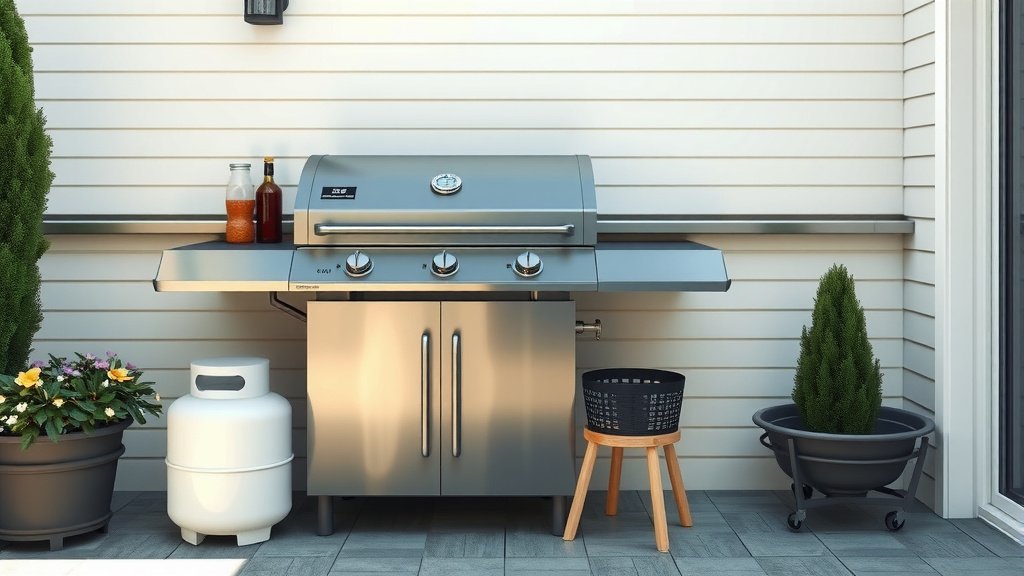
You can buy gas for your grill, specifically propane tanks, at a variety of locations including hardware stores, big-box retailers, grocery stores, and many gas stations.
Finding where to buy gas for grill propane means looking for tank exchange programs or dedicated propane refill stations that offer fresh fuel.
Here’s a quick overview of how to get your grill ready:
- Propane tank exchanges are super convenient at most grocery stores or hardware chains.
- For a cheaper option, propane refill stations found at U-Haul or RV centers offer better value.
- Always check your tank’s expiration date before refilling or exchanging it.
- Consider having a backup tank so your grilling never stops unexpectedly.
Where To Buy Gas For Grill?
Finding propane for your grill is usually quite simple, with many places ready to help you get cooking. Most places offer either tank exchange services or direct refills, each with its own benefits.
The Convenience of Propane Tank Exchange
Propane tank exchange is a popular choice for many grill enthusiasts. You simply bring your empty tank and swap it for a full, recertified one. This option is fast and very straightforward.
Hardware Stores and Home Improvement Centers
Places like Home Depot, Lowe’s, and Ace Hardware are prime spots for tank exchanges. You’ll often find clearly marked cages outside the store. Many people find these locations ideal for their easy access and regular hours.
Grocery Stores and Supermarkets
Many larger grocery stores, such as Kroger, Walmart, and Target, also offer propane exchange services. This lets you grab a fresh tank while doing your weekly shopping, saving you an extra trip.
Gas Stations and Convenience Stores
For those last-minute grilling emergencies, a local gas station or convenience store might be your savior. Brands like Circle K or 7-Eleven often have propane cages, making it easy to refuel your grill late at night or early in the morning.
Opting for Propane Tank Refills
Refilling your propane tank is another solid option, often giving you more propane for your money. This method involves taking your empty tank to a station where an attendant fills it up.
Dedicated Propane Dealers and Distributors
Look for specific propane businesses in your area. These places focus solely on propane, meaning they often have expert staff and the best prices per gallon. Many experts say this is the most cost-effective way to get fuel (Propane Education & Research Council).
U-Haul and RV Supply Centers
Surprisingly, U-Haul locations are fantastic for propane refills. They typically have large tanks and trained staff. RV supply stores also offer this service, understanding the need for consistent fuel for travelers and campers.
Local Hardware and Feed Stores
Some smaller, independent hardware stores or agricultural feed stores provide refill services. They often offer a more personal touch and can be a great option for supporting local businesses.
Comparing Exchange vs. Refill: What’s Best for You?
Deciding between an exchange and a refill often comes down to convenience versus cost. Both have their merits, depending on your grilling habits and schedule.
| Feature | Tank Exchange | Tank Refill |
|---|---|---|
| Convenience | Very high (quick swap) | Moderate (wait for fill) |
| Cost | Generally higher per gallon | Lower per gallon (you pay for actual fuel) |
| Amount of Propane | Standard 15-pound fill (labeled 20 lbs) | Full 20-pound fill (actual tank capacity) |
| Tank Condition | Recertified tanks, but not your original | You keep your own tank, checked for safety |
| Availability | Widespread at many retail stores | Fewer locations, often specialized |
Online Options and Delivery Services
Did you know you can sometimes get propane delivered? Services like Propane Taxi or Tankfarm offer the convenience of having tanks brought right to your door. This can be a huge time-saver, especially for busy individuals.
Important Safety Tips When Handling Propane
Always prioritize safety when dealing with propane tanks. We found that understanding these basic rules keeps everyone safe (National Fire Protection Association).
- Always transport tanks upright and securely in your vehicle.
- Never leave tanks in a hot car or direct sunlight for long periods.
- Store tanks outdoors, in a well-ventilated area, away from direct heat sources.
- Check hoses and connections for leaks before each use with a soap and water solution.
- Make sure your tank has a valid certification date to be refilled or exchanged.
Knowing When to Buy Gas for Your Grill
Running out of gas mid-cookout is a common nightmare. How do you avoid it? Many experts suggest having a propane tank gauge, which shows you how much fuel is left. A simple scale can also tell you the remaining weight.
Checking Your Propane Tank’s Date
Propane tanks have a service life and a recertification date stamped on them. Generally, a tank needs to be inspected or recertified every 5 to 10 years (DOT regulations). If your tank is past its date, it won’t be refilled or exchanged, so always check this first.
Your Propane Checklist for a Perfect Cookout
Before you light up the grill, a quick check can save you trouble. This simple list will help ensure you have everything ready for grilling success.
- Is your propane tank full or nearly full?
- Are there any visible dents or damage on the tank?
- Is the tank’s certification date still valid?
- Are all hose connections tight and leak-free?
- Do you have a backup tank, just in case?
Conclusion
Getting gas for your grill doesn’t have to be a chore. Whether you prefer the quick swap of an exchange or the cost savings of a refill, many options are available right in your neighborhood. Remember to prioritize safety and check your tank’s condition to ensure a smooth, delicious grilling experience every time. Happy grilling!
What is the difference between a 15lb and 20lb propane tank?
Most propane tanks are physically designed to hold 20 pounds of propane. However, for safety reasons and to allow for gas expansion, exchange tanks are typically filled with about 15 pounds of propane. When you get a refill, you usually pay for the full 20 pounds.
Can I refill an expired propane tank?
No, you cannot refill an expired propane tank. Propane tanks have a re-qualification date stamped on the collar, usually valid for 5 or 10 years from the manufacture date. If your tank is past this date, it must be inspected and recertified before it can be legally refilled or exchanged.
How do I know when my propane tank is almost empty?
There are a few ways to check. You can buy a magnetic or in-line propane gauge that connects to your tank. A simpler method is to pour hot water down the side of the tank; the area where the tank feels cold indicates the propane level. Also, if the flame on your grill is weak or inconsistent, you might be low.
Is it cheaper to exchange or refill a propane tank?
Generally, it is cheaper to refill a propane tank than to exchange it. When you exchange, you often pay for the convenience and only receive about 15 pounds of propane. Refilling allows you to pay for the exact amount of propane you get, often up to 20 pounds, leading to better value per gallon.
Can I store my propane tank indoors?
No, you should never store a propane tank indoors, including in your garage, basement, or shed. Propane tanks must always be stored outdoors in a well-ventilated area, away from direct sunlight, heat sources, or ignition sources. This prevents the risk of gas leaks accumulating in enclosed spaces.
