
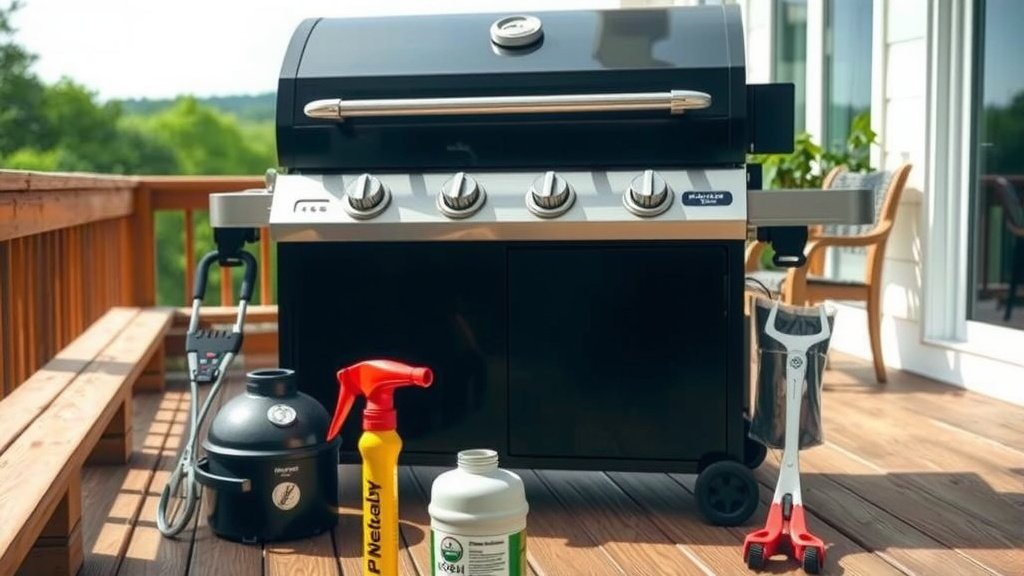
Converting an LP grill to natural gas typically involves replacing the LP regulator and hose with a natural gas hose and quick-connect fitting, as well as changing the burner orifices to accommodate the lower pressure of natural gas.
This process ensures your grill operates safely and efficiently with the continuous fuel supply of a natural gas line, providing a convenient and permanent grilling solution.
- Switching your grill from LP to natural gas offers endless fuel and convenience.
- The process usually requires a specific conversion kit and some technical steps.
- You’ll need to replace the LP orifices with natural gas orifices for proper fuel flow.
- Safety is key throughout the conversion; always check for leaks afterwards.
- Consider hiring a certified professional if you’re not comfortable with DIY tasks.
How To Convert LP To Natural Gas Grill?
Converting your liquid propane (LP) grill to natural gas allows for a continuous fuel supply and more convenience. This modification involves specific parts and careful steps to ensure safe and efficient operation.
Why Switch to Natural Gas?
Imagine never running out of fuel in the middle of a cookout. That’s the main draw of natural gas. You get an uninterrupted gas supply right from your home’s utility line.
Many homeowners find natural gas more cost-effective over time compared to frequently refilling LP tanks. It offers a consistent, reliable flame without the hassle of tank exchanges.
Also, natural gas is often seen as a cleaner-burning fuel, which some grill enthusiasts prefer. No more lugging heavy propane tanks around your yard!
Is Your Grill Convertible?
Before you get too excited, let’s make sure your grill is a good candidate for this change. Not all grills are designed to be converted, so a little detective work is in order.
Check Your Grill’s Manual
The first place to look is always your grill’s owner’s manual. Most manufacturers will clearly state if their models are field-convertible. This information is usually found in the specifications section.
If your manual mentions a conversion kit or instructions for natural gas, you’re likely in luck. If it warns against conversion, it’s wise to heed that advice for safety reasons (Consumer Reports).
Looking for a Conversion Kit?
For convertible grills, manufacturers often sell a specific natural gas conversion kit. These kits typically include new burner orifices, a natural gas hose, and a quick-connect fitting.
Using a manufacturer-approved kit ensures all parts are compatible and safe. Trying to piece together generic parts can be risky and may void your warranty.
Understanding the Key Differences
LP and natural gas are both excellent fuels, but they operate differently in your grill. The main distinction lies in their pressure and density.
LP is stored under high pressure and expands significantly when released. Natural gas, supplied by your utility, operates at a much lower pressure.
This difference means that burner orifices – the tiny holes where gas enters the burner – need to be different sizes. LP orifices are smaller, while natural gas orifices are larger to allow more gas flow at lower pressure.
| Feature | Liquid Propane (LP) | Natural Gas (NG) |
|---|---|---|
| Pressure | High (10-11 inches water column) | Low (3.5-7 inches water column) |
| Orifice Size | Smaller | Larger |
| Supply | Portable tanks | Utility line (fixed) |
| Cost | Varies by tank refill | Often lower, continuous bill |
Essential Tools and Parts You’ll Need
Gathering everything before you start makes the process smoother. Here’s what you’ll generally need for a successful conversion.
- A manufacturer-specific natural gas conversion kit
- Adjustable wrench or orifice wrench
- Screwdriver set (Phillips and flathead)
- Pipe thread sealant (rated for gas)
- Leak detection solution (soapy water)
- Safety gloves and eye protection
The Conversion Process: Step-by-Step
Ready to get your hands a little dirty? This is where the real transformation happens. Remember, take your time with each step.
Safety First, Always!
Before touching anything, disconnect your LP tank completely. Ensure the grill is cool. Work in a well-ventilated area, preferably outdoors.
Safety is paramount when working with gas lines. If you ever feel unsure, stop and call a professional (National Fire Protection Association).
Removing LP Components
Carefully disconnect the existing LP hose and regulator from your grill. You might need a wrench for this. Set these parts aside; you won’t need them for natural gas.
Swapping Orifices
This is the most critical step. You’ll need to access the burner valves and unscrew the small LP orifices. They look like tiny brass nuts.
Replace them with the larger natural gas orifices from your conversion kit. Be gentle but firm when tightening to prevent leaks, but avoid over-tightening.
Installing the Natural Gas Components
Attach the new natural gas hose and quick-connect fitting to your grill’s manifold. Apply gas-rated pipe thread sealant to any threaded connections for a secure seal.
Then, connect the other end of the hose to your home’s natural gas supply line. Make sure it’s a dedicated line for the grill, properly installed by a professional.
Leak Testing is Non-Negotiable
After everything is connected, it’s time to check for leaks. Mix a solution of dish soap and water. With the gas supply on, brush the soapy water over all connections.
If you see any bubbles forming, you have a leak. Turn off the gas immediately and re-tighten the connection. Repeat until no bubbles appear (Gas Appliance Manufacturers Association).
Should You DIY or Call a Pro?
While this conversion can be a DIY project for some, it requires careful attention to detail and a good understanding of gas systems. When in doubt, call a professional.
Many experts say that if you’re not comfortable with gas work, or if your grill isn’t clearly designed for conversion, hiring a licensed technician is the safest option. They can ensure proper installation and adherence to local codes.
Consider DIY if you:
- Are comfortable working with gas lines
- Have experience with home repairs
- Understand your grill’s mechanics well
- Have the exact manufacturer-approved kit
- Are patient and detail-oriented for leak testing
Post-Conversion Considerations
After your successful conversion, you might need to make some minor adjustments. Fire up your grill and observe the flame.
You may need to adjust the air shutter on each burner to achieve a proper blue flame with minimal yellow tips. This ensures efficient burning and optimal heat output.
Keep your grill clean and perform routine maintenance. Enjoy your new, convenient natural gas grilling experience!
Conclusion
Converting your LP grill to natural gas is a rewarding project that can bring lasting convenience to your outdoor cooking. By understanding the differences between the fuels and following the safety-focused steps, you can successfully make the switch.
Remember to always prioritize safety, check your grill’s compatibility, and don’t hesitate to seek professional help if you’re uncertain. Happy grilling with your newly converted natural gas setup!
Can all LP grills be converted to natural gas?
No, not all LP grills are designed for conversion. You must check your grill’s owner’s manual or the manufacturer’s website to confirm if your specific model is convertible and what type of conversion kit is required.
What is the most critical safety step when converting a grill?
The most critical safety step is thorough leak testing after all connections are made. Using a soapy water solution on all gas fittings will reveal any leaks through bubbling, which must be fixed before operating the grill.
Why are different orifice sizes needed for LP and natural gas?
LP and natural gas operate at different pressures. Natural gas requires larger orifices because it flows at a lower pressure, allowing enough fuel to pass through to the burners. LP, being at higher pressure, uses smaller orifices.
Do I need to hire a professional for natural gas line installation to my grill?
Yes, connecting a natural gas line from your home to your grill should always be done by a licensed and qualified professional. This ensures proper sizing, safe installation, and adherence to local building codes for fixed gas lines.
What kind of pipe thread sealant should I use for gas connections?
You should use a pipe thread sealant specifically rated for gas lines. Look for products clearly marked for natural gas or LP applications at your hardware store. This ensures a proper, gas-tight seal on all threaded fittings.
