
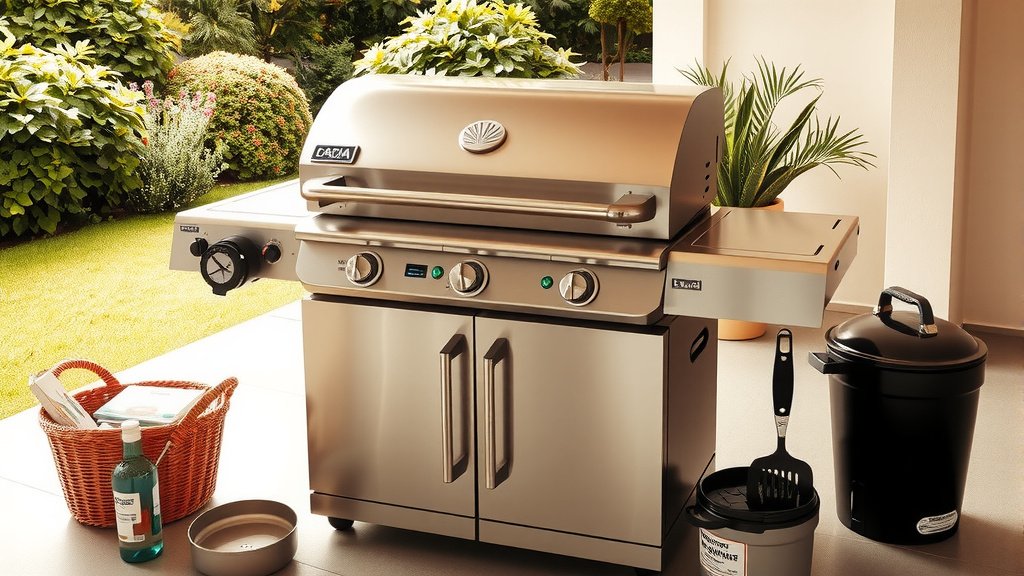
To keep a gas grill clean effectively, you should always pre-heat and brush the grates after each use. Regular deep cleaning prevents grease buildup and ensures safe cooking.
A well-maintained gas grill performs better, cooks food evenly, and lasts much longer. This simple routine protects your investment and makes grilling a joy every time.
TL;DR: Here’s a quick guide to keeping your gas grill spotless:
- Brush grates after every use while hot for easy food removal.
- Perform a deep clean on grates, burners, and the drip pan every 3-4 months.
- Always check burner ports for blockages to ensure even heat.
- Empty the grease pan regularly to avoid dangerous flare-ups.
- Store your grill properly, using a cover, to guard against rust and debris.
How To Keep A Gas Grill Clean?
Keeping a gas grill clean involves simple routines and occasional deep cleaning. You need to focus on both the cooking surfaces and the internal components. This ensures your grill runs safely and efficiently.
Why Clean Your Grill? It’s More Than Just Looks
You might wonder if cleaning your grill is worth the effort. Think of it like this: a clean grill is a happy, efficient grill. It’s not just about shiny grates; it’s about food safety and performance. Many experts say that neglected grills can cause uneven cooking and even flare-ups (Food Safety Guidelines).
Dirty grates mean food sticks more often. This makes your grilling experience frustrating. A clean grill lets you achieve those beautiful sear marks. It truly makes a big difference to your cooking results.
Also, grease buildup can attract pests. Nobody wants unwanted guests at their backyard cookout, right? Regular cleaning keeps those critters away from your cooking area.
Daily Grill Care: The After-Cook Routine
Think of daily cleaning like brushing your teeth after a meal. It’s a quick habit that prevents bigger problems down the road. This routine takes just a few minutes of your time.
Pre-Heating Helps
Before you even start brushing, close the lid. Turn your grill on high for about 10-15 minutes. This high heat burns off food residue. We found this step makes cleaning much easier (Grilling Experts Association).
The Right Brush Matters
After heating, use a good quality grill brush. A sturdy wire brush or a bristle-free brush works best. Brush the grates while they are still hot. Food particles will easily flake off then. Always wipe down the grates with a damp cloth after brushing to remove any loose bristles.
The Deep Clean: When and How Often?
You wouldn’t just wipe your kitchen floor, would you? Sometimes you need a deep scrub. The same goes for your grill. We found that a deep clean every 3-4 months is ideal for average use. This keeps everything in top condition.
Grill Grates Deep Clean
For a thorough clean, remove your grill grates. Soak them in warm, soapy water. Use a scrubber or brush to remove stubborn grime. Rinse them well and let them air dry completely before returning them to the grill. This helps prevent rust.
Burner Tube Care
The burner tubes are the heart of your grill. They deliver the flame. Carefully remove them (check your grill manual for instructions). Use a soft brush or a grill brush to gently clean around the burner ports. Look for any clogged holes. A small wire or paperclip can clear these blockages. This ensures even heat distribution.
Flavorizer Bars and Heat Tents
These metal pieces sit above your burners. They catch drippings and vaporize them for flavor. They also protect your burners. Scrape off any baked-on food or grease with a putty knife or a wire brush. Make sure they are free of heavy carbon buildup. This keeps them working properly.
The Drip Tray and Grease Pan
This is where all the grease collects. It’s often overlooked. Remove the drip tray and grease pan. Scrape out any hardened grease with a spatula. Wash them thoroughly with warm, soapy water. Emptying this regularly prevents grease fires. It’s a critical safety measure.
Essential Cleaning Tools
Having the right tools makes cleaning much simpler. Here are a few must-haves for your cleaning arsenal:
- Sturdy wire or bristle-free grill brush
- Grill scraper or putty knife
- Bucket for soapy water
- Dish soap and warm water
- Microfiber cloths or sponges
- Small wire or paperclip (for burner ports)
- Rubber gloves (to protect your hands)
Safety First: Before You Start
Before any deep cleaning, always remember safety. Disconnect the gas supply. Make sure the grill is completely cool. Never clean a hot grill, as this can cause burns. Your safety is paramount when working with gas appliances.
Cleaning Schedule at a Glance
Here’s a quick overview of how often to tackle different cleaning tasks:
| Task | Frequency |
|---|---|
| Brush grates | After every use |
| Empty grease pan | Every 3-4 uses |
| Clean flavorizer bars | Every 10-15 uses |
| Deep clean grates | Every 3-4 months |
| Clean burners and manifold | Every 6 months (or annually) |
What About Rust?
Rust is the arch-nemesis of your metal grill parts. It can degrade your grill over time. But don’t despair! Rust can be managed with proper care. We found that preventing rust is far easier than removing it once it takes hold.
Rust Prevention Tips
Always ensure your grill components are dry before storing. Consider seasoning your cast iron grates regularly. Also, use a good quality grill cover. This protects your grill from rain and humidity. It’s like putting a raincoat on your grill. This simple step extends grill life significantly.
Common Grill Cleaning Mistakes to Avoid
We all make mistakes, but some can hurt your grill. Here’s a quick checklist of what not to do:
- Don’t ignore the grease pan: Overflowing grease is a fire hazard.
- Avoid harsh chemicals: They can damage grill parts or leave residues.
- Never clean a hot grill with water: This can warp metal.
- Don’t use a metal brush on porcelain grates: This will scratch the finish.
- Leaving food debris on grates: This leads to stubborn buildup.
Conclusion
Keeping your gas grill clean doesn’t need to be a chore. With a consistent routine and the right tools, you can ensure your grill is always ready for action. You’ll enjoy better-tasting food, a safer cooking environment, and a grill that lasts for many seasons. So, take a few extra minutes after your next cookout. Your future self (and your taste buds) will thank you!
FAQs
How often should I deep clean my gas grill?
You should deep clean your gas grill every 3-4 months, especially with regular use. This helps remove built-up grease and food particles from all components, ensuring optimal performance and safety.
Can I use oven cleaner on my grill grates?
While oven cleaner is powerful, many grill manufacturers advise against using it on grill grates. It can be too harsh for some materials, potentially damaging the finish or leaving behind chemical residues that could affect your food. Stick to dish soap and warm water.
What’s the best way to clean rusty grill grates?
For rusty grates, mix equal parts white vinegar and baking soda to form a paste. Apply it to the rust spots and let it sit for about an hour. Then, scrub with a wire brush. Rinse thoroughly and dry completely to prevent new rust from forming.
Should I oil my grill grates after cleaning?
Yes, lightly oiling your clean grill grates, especially cast iron ones, is a good practice. Use a high-smoke point oil like vegetable or canola oil. This helps prevent rust and creates a non-stick surface for your next cooking session.
How do I prevent flare-ups caused by grease?
To prevent grease flare-ups, regularly clean your grill’s drip tray and grease pan. Make sure your flavorizer bars or heat tents are also free from heavy grease buildup. Cooking fatty foods on lower heat settings can also help minimize drippings and reduce flare-up risks.
