
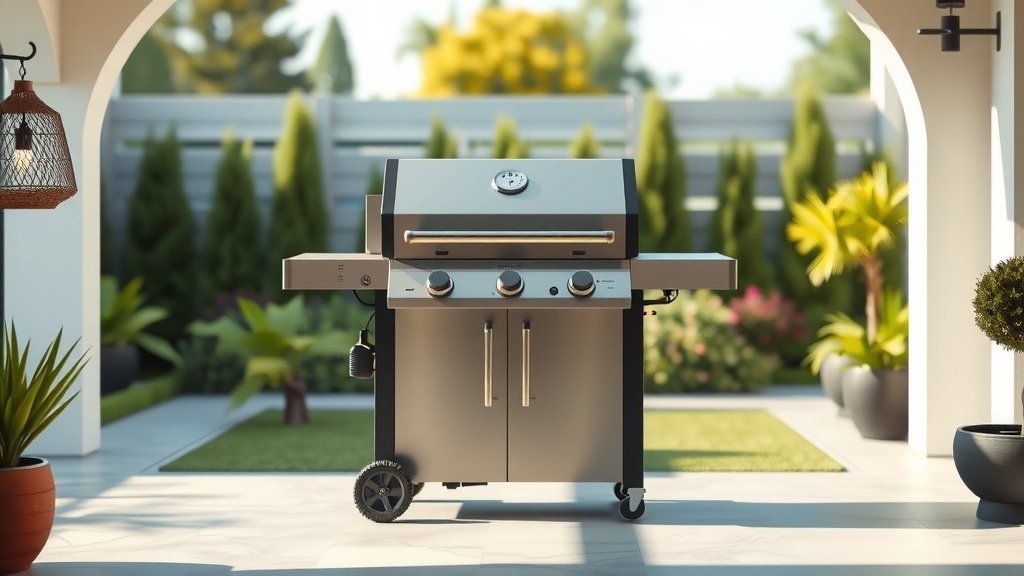
To use a propane grill for the first time, perform a crucial safety check, connect your tank, and then test for leaks. After that, you can follow your grill’s instructions to light it safely and start cooking.
Always prioritize safety with propane; ensure all connections are tight and never store the tank indoors or use a damaged hose.
Here’s a quick summary of what you’ll find:
- Your first step is always a thorough safety inspection of your grill and tank.
- Connecting your propane tank correctly is simpler than you think, but precision matters.
- A leak test is non-negotiable before every use to ensure you’re grilling safely.
- Learning to light your grill takes just a few steps, often involving turning a knob and pressing an igniter.
- The initial “burn-off” is important for cleaning and seasoning your brand-new grates.
How To Use A Propane Grill For The First Time?
Using a propane grill for the first time involves a series of easy, important steps focused on safety and proper setup. You’ll soon be grilling your favorite foods like a pro.
Your First Steps: Safety First
Before you even think about lighting your new grill, take a moment for a safety check. We often find that rushing can lead to avoidable issues (Consumer Product Safety Commission). Look over your grill for any loose parts or damage from shipping.
Is everything in place? Are the gas lines free of kinks? You want to be sure your grill is stable on a level surface. This simple inspection prevents unexpected wobbles or gas line problems.
Propane Tank: Placement and Inspection
Where should your propane tank sit? It needs to be upright and secure, usually on a designated spot or hook on your grill. Check the tank itself for any dents or rust. Also, inspect the hose that connects to the tank. It should be pliable, without cracks or fraying.
A good hose is crucial for safe gas flow. Many experts say that proper tank and hose maintenance extends your grill’s life and safety (National Fire Protection Association).
Connecting Your Propane Tank
Connecting the propane tank is straightforward. First, make sure all grill burner knobs are in the “off” position. Then, grab your propane tank and align its valve with the regulator on your grill’s hose.
The connector usually has a large black knob. Screw it clockwise until it’s hand-tight. You don’t need tools here; overtightening can damage the seal. Is it snug? Great!
The All-Important Leak Test
This step is critical, truly. You absolutely must perform a leak test every time you connect a new tank, or if you suspect a problem. Here’s how:
- Turn on the propane tank valve slowly, counter-clockwise, all the way. You might hear a slight hiss.
- Mix some dish soap with water to create a soapy solution. Think about a 50/50 mix, like making bubbles for kids.
- Dab or brush this soapy solution onto all connections: where the hose meets the tank, and where the hose meets the grill.
- Now, watch closely. Do you see any bubbles forming?
If you see bubbles, you have a leak! Immediately turn off the propane tank. Tighten the connection again and retest. If bubbles persist, do not use the grill; you might need a new hose or regulator. Safety first, always!
Lighting Your Propane Grill
Okay, the moment you’ve been waiting for! Lighting your grill is next. Follow these general steps, but always check your grill’s manual first:
| Step | Action | Why This Matters |
|---|---|---|
| 1 | Open the grill lid. | Prevents gas buildup, which can be dangerous. |
| 2 | Slowly open the propane tank valve. | Allows gas to flow without sudden pressure. |
| 3 | Turn ONE burner knob to HIGH. | Start with one to avoid overwhelming the system. |
| 4 | Press the igniter button immediately. | Sparks the gas to create a flame. |
| 5 | Verify the burner is lit. | Look for a blue flame. If not, turn off, wait 5 min, retry. |
Did you hear the “whoosh” and see the flame? Excellent! Now you can turn on other burners to your desired setting. If it doesn’t light after a few tries, don’t keep pressing the igniter. Turn everything off, wait about five minutes for any gas to clear, and try again. Sometimes the gas just needs a moment to flow.
First Burn-Off: Seasoning Your Grill
Once your grill is lit, you’ll want to do an initial “burn-off.” This helps remove any manufacturing oils or dust. Close the lid and let the grill preheat on high for about 15-20 minutes. It’s like giving your grill a hot bath before its first job.
This process also seasons the grates, preparing them for your food. We found that a good burn-off and subsequent brushing can make a big difference in preventing sticking (Grill Manufacturer’s Association Guidelines).
Preheating for Success
After the burn-off, turn down the burners to your target cooking temperature. Just like your oven, a grill needs to preheat. Typically, 10-15 minutes of preheating will get your grates hot enough. How do you know it’s ready?
A good sign is when you can hold your hand about an inch above the grate for only 2-3 seconds before it gets too hot. This indicates a solid medium-high heat, ideal for searing.
Your First Grilling Session Tips
You’re ready to cook! Here are a few tips for your inaugural grilling adventure:
- Keep it simple: Start with something forgiving like hot dogs, burgers, or chicken breasts.
- Don’t overcrowd: Give your food space to breathe. Too much food lowers the grill temperature.
- Lid up for less heat, lid down for more: The lid acts like an oven. Keep it closed to cook thicker items or to build up heat.
- Use a meat thermometer: This is your best friend for perfectly cooked, safe food.
- Clean as you go: After cooking, turn up the heat for a few minutes, then brush the grates while they’re warm.
Post-Grill: Cleaning and Shut-Down
When you’re finished cooking, turn the burners to high for a few minutes to burn off any remaining food bits. Then, brush the grates clean with a good grill brush. Finally, turn all burner knobs to “off.”
Crucially, close the propane tank valve completely. This prevents any gas from leaking out and saves your propane for next time. It’s a small habit that makes a big difference.
Troubleshooting Common Newbie Questions
Why Won’t My Grill Light?
Many new grill users face this. Did you open the tank valve slowly? Sometimes the excess flow safety device can activate if opened too fast. Try turning off the tank, waiting a minute, then opening it very slowly. Also, check your igniter battery; it might be dead.
Why Is My Flame Low?
A low flame often points to the safety bypass activating. This happens when the regulator senses a large gas surge. Turn off everything, disconnect the tank, wait 10 minutes, then reconnect and try again with slow steps. Make sure all burner knobs are off when you connect the tank (we found this is key).
Pre-Grill Checklist for Every Cookout
Before every grilling session, run through this quick list:
- Is your propane tank full enough? (Give it a quick shake or weigh it).
- Are all gas connections tight?
- Did you perform a leak test if you just changed the tank?
- Are your grill grates clean from the last use?
- Do you have all your cooking tools handy?
- Is your fire extinguisher or a bucket of sand nearby (just in case)?
Conclusion
Using a propane grill for the first time is an exciting milestone. By taking a few careful steps—prioritizing safety checks, connecting your tank properly, performing a leak test, and following lighting instructions—you set yourself up for success. Remember the burn-off, preheating, and a good post-cook cleanup. You’ve got this! Soon, grilling will feel like second nature, opening up a world of delicious outdoor cooking.
What should I cook on my propane grill for the very first time?
For your first time, it’s best to choose simple, forgiving foods. Burgers, hot dogs, chicken breasts, or even corn on the cob are great options. They cook relatively quickly and help you get a feel for your grill’s heat zones without too much pressure.
How do I know if my propane tank is empty?
You can often tell if your propane tank is getting low by feeling its weight. A simple method is to pour a cup of hot water down the side of the tank. The propane inside absorbs the heat, leaving a cool spot at the liquid level. Where the tank feels cold, that’s your propane level. You’ll typically see condensation there too.
Can I use my propane grill if it’s windy?
While you can use a propane grill in light wind, strong winds can be problematic. They can blow out flames, make it harder to maintain temperature, and even increase fire risk if embers or hot grease are carried. Position your grill to shield it from the wind, but never place it against a wall or under an overhang. If the wind is very strong, it’s safer to wait.
How often should I clean my grill grates?
For best results and food hygiene, you should clean your grill grates after every use. Turn the grill on high for a few minutes after cooking to burn off food residue, then use a stiff wire brush (or a non-wire alternative) to scrape them clean while they’re still warm. A deeper cleaning of the entire grill is recommended a few times per year, depending on frequency of use.
What if my grill igniter stops working?
If your grill’s igniter stops working, first check if it uses a battery and replace it if needed. Many grills have a manual lighting option. You can use a long grill lighter or a match lit on a stick to ignite the burner. Always open the grill lid, turn on the gas to one burner, then immediately light it manually through the grate opening.
